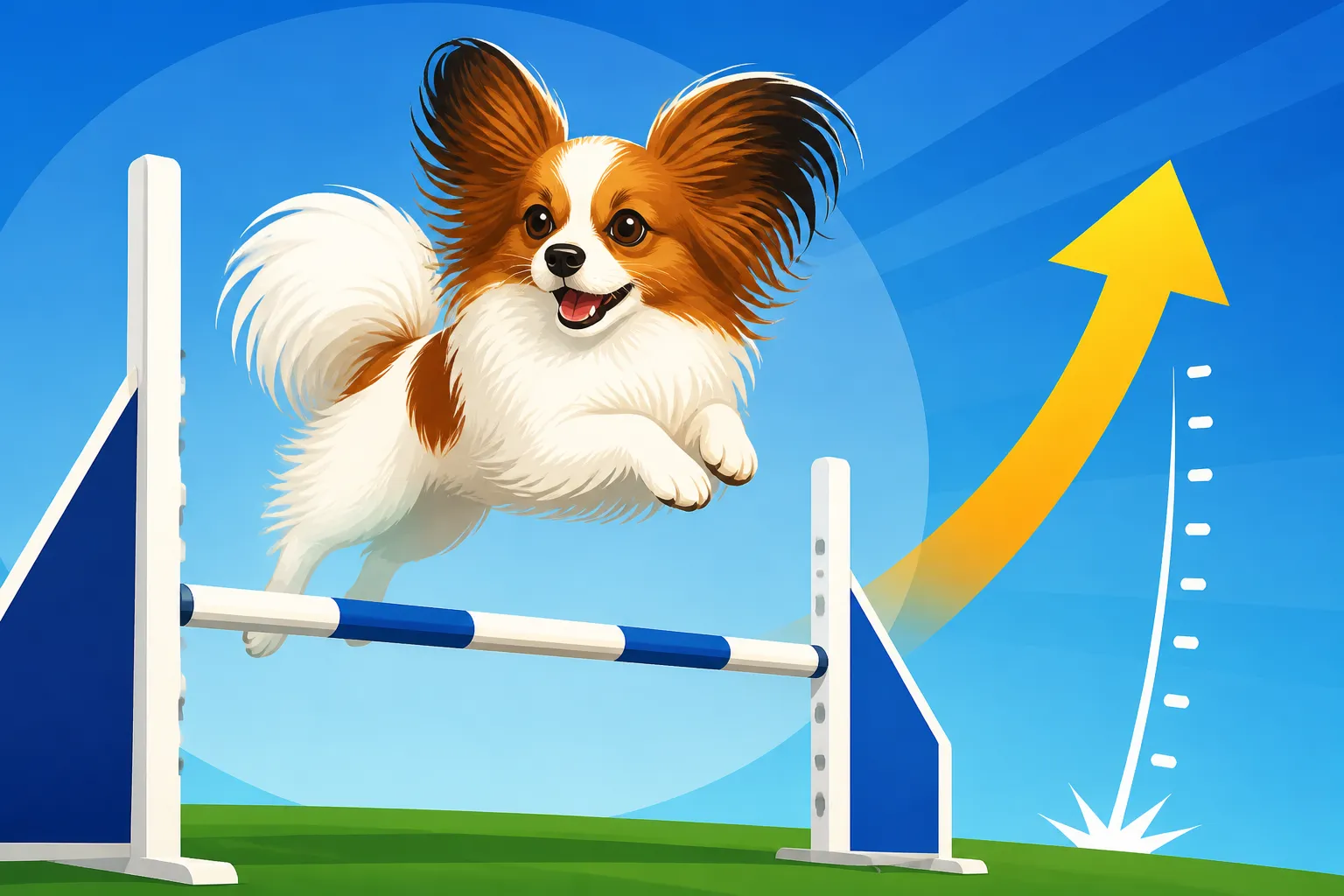
How High a Papillon Jumps in Competition
Many Papillon owners dream of seeing their energetic little butterflies soar over agility jumps, but often wonder what the actual competition requirements are for such a tiny breed. It can be a bit confusing to decipher the various organizations' rules and figure out exactly how high your spirited companion will need to leap. This guide will demystify the official jump heights for Papillons in agility competitions, helping you understand the standards and prepare your dog safely for a thriving agility career.
Understanding the Official Jump Heights for Papillons in Agility
Papillons are incredible athletes, defying their delicate appearance with boundless energy and a fierce love for working. When you start looking into agility, one of the first questions that pops up is, "Just how high do these little guys have to jump?" It's a completely valid concern, especially given their size! Unlike larger breeds, Papillons fall into the "toy" or "small dog" categories, which means they have specific, often scaled, jump heights designed to protect their joints and ensure fair competition. The exact height can vary slightly depending on the sanctioning organization, but the principle remains the same: it's all about accommodating their unique stature.
Measuring Your Papillon for Jump Height Categories
Before you can even think about what jump height your Papillon will face, you need to know their official measurement. This isn't just a casual measurement with a tape measure at home; competitive agility organizations have very specific protocols for measuring a dog's height at the highest point of their shoulder blades, known as the withers. This measurement determines which jump height category your dog will compete in. Typically, dogs are measured on a flat, level surface, sometimes with a special measuring stick or wicket, to ensure accuracy and consistency across all competitors. It's a precise process, and usually, certified judges or officials are the ones to do it at designated measurement events or at trials. Getting this right is crucial, because competing in the wrong height class can lead to disqualification.
For Papillons, who are generally quite small, this means they'll almost always fall into one of the lowest height categories. Most organizations will have a maximum height for a given jump division, so if your Papillon measures, say, 10 inches at the withers, they will compete in the class designated for dogs under a certain height, or at a specific jump height that accommodates their size. This careful categorization ensures that a tiny Papillon isn't expected to clear the same hurdles as a much taller Miniature Poodle, for instance. This system is in place to create a level playing field and, more importantly, to safeguard the physical well-being of the dogs participating in the sport.
Common Agility Organizations and Their Jump Height Rules
There are several major agility organizations, and each has its own set of rules, including specific jump heights. While the general idea is consistent, the exact numbers can differ, which is why it's important to know which organization's rules you're following if you plan to compete.
The American Kennel Club (AKC) is one of the most popular organizations in the United States. For Papillons, who are almost always under 10 inches tall at the withers, they typically jump at the 8-inch height. This is the lowest standard jump height for most dogs, though there are often "Preferred" classes that offer even lower heights for dogs who might need it due to age, injury, or simply a desire for less demanding competition. In the Preferred class, a Papillon might jump as low as 4 inches. For a typical, healthy Papillon, the 8-inch class is where you'll find them for standard competition.
Another prominent organization is the United States Dog Agility Association (USDAA). USDAA often offers a slightly wider range of height classes, sometimes with "titling" and "performance" options. For very small dogs like Papillons, they might offer jump heights starting as low as 4 inches or 8 inches, depending on the dog's measured height. For example, a Papillon measuring under 10 inches might jump at 8 inches, or even 4 inches in certain "Performance" classes where the focus is more on participation than maximum challenge. It’s always best to check their official rulebook for the most up-to-date and precise categories.
Then there's the United Kennel Club (UKC), which also offers agility trials. Their height categories are similar to other organizations, with specific jumps for the smallest dogs. The goal across all these groups is to provide a challenge appropriate for the dog's size, keeping their well-being and longevity in the sport in mind. Knowing which organization you intend to compete with will dictate the exact jump heights you'll train for. Remember to also consider Which Jump Height a Papillon Competes At more broadly, as variations do exist.
Here's a simplified look at how jump heights generally compare for Papillons in common organizations:
| Organization | Dog Height at Withers | Standard Jump Height (Inches) | Preferred/Performance Jump Height (Inches) |
|---|---|---|---|
| AKC | Up to 10 inches | 8 | 4 |
| USDAA | Up to 10 inches (approx.) | 8 | 4-6 |
| UKC | Up to 10 inches (approx.) | 8 | 4-6 |
Note: These are general guidelines; always refer to the specific organization's current rulebook for definitive jump height classifications as they can change.
Factors Influencing a Papillon's Jump Height and Performance
While the rules set the bar (literally!), how your individual Papillon performs over those jumps involves a lot more than just their measured height. Papillons are generally agile and athletic, but like any dog, their personal capabilities and physical condition play a huge role in their success and safety in agility. It's not just about clearing the bar; it's about doing it efficiently, confidently, and without putting undue stress on their body.
Physical Conditioning and Health
A Papillon's physical condition is paramount for agility success. Even at a modest 8-inch jump height, repetitive jumping, weaving, and running can take a toll if your dog isn't properly conditioned. Strong core muscles, flexible joints, and good stamina are essential. Think of it like training a human athlete; they don't just show up on game day without preparation! Regular, appropriate exercise, a balanced diet, and maintaining a healthy weight are foundational. An overweight Papillon will find jumping much harder and riskier, increasing the strain on their small joints and making them more prone to injury.
It's also crucial to be aware of common health issues that can affect a Papillon's ability to jump. Patellar Luxation Is the Papillon Problem You Will Actually Meet, and this condition, where the kneecap slips out of place, can severely impact a dog's jumping ability and comfort. Even a mild case can be exacerbated by the demands of agility, leading to pain or further damage. Before starting any intensive training, a thorough vet check is non-negotiable. Your vet can assess your Papillon's joint health, especially their knees, and advise if agility is a safe sport for them. Knowing Whether a Papillon's Knees Limit Agility is critical for their long-term well-being and to ensure you're not inadvertently causing harm. Some Papillons, even with excellent health otherwise, simply aren't built for the repetitive strain of jumping, and recognizing this early is an act of responsible ownership.
Mental Readiness and Confidence
Agility isn't just a physical sport; it's a mental game too! A confident Papillon who understands the task and trusts their handler will perform much better than one who is hesitant or stressed. Building this confidence starts with positive reinforcement training and gradually introducing obstacles. Papillons are incredibly intelligent and eager to please, which makes them fantastic agility candidates, but they can also be sensitive. Harsh corrections or pushing them too hard can quickly diminish their enthusiasm and make them shut down, or even develop an aversion to the sport.
Think about how you'd feel if you were asked to do something you weren't sure about, with someone yelling at you. It wouldn't be fun, right? The same goes for our dogs. Making training fun and rewarding builds a strong bond and a dog who wants to participate. The Papillon Is the Smartest Toy Breed There Is, and they thrive on mental stimulation. Engage their clever minds with puzzle toys from brands like Amazon (easy to find a variety online!) and keep training sessions short, positive, and varied. This mental engagement translates directly into better focus and a more confident performance on the course, leading to a truly joyful partnership on the agility field.
Training Techniques and Handler Skills
Effective training techniques and a skilled handler are just as important as the dog's natural talent. Agility isn't just about teaching your dog to jump; it's about teaching them to navigate a complex course with speed and accuracy, responding to your cues. Consistency, clear communication, and reward-based methods are key. For beginners, resources like BAXTER & Bella offer online puppy and dog training programs that can lay a fantastic foundation for good behavior and basic obedience, which are surprisingly important for agility. While they don't teach agility specifically, the concepts of focus, recall, and impulse control are invaluable for any dog sport.
Starting agility training at the right age is also important. The Age a Papillon Can Start Jumping and Why a Papillon Should Not Jump Before a Year are crucial topics that often get overlooked by enthusiastic new owners. While puppies can learn foundation skills like body awareness, tunnel work, and basic commands, they absolutely should not be jumping full-height obstacles or engaging in repetitive, high-impact activities until their growth plates have closed, usually around 12-18 months of age. Premature jumping can cause long-term joint damage that could prematurely end an agility career or, worse, cause chronic pain. Patience in the early stages pays off immensely in terms of your dog's health and longevity in the sport.
Training Your Papillon for Success at Competition Heights
Okay, so you've got a healthy, confident Papillon and a good understanding of the competition heights. Now, how do you actually train them to jump safely and effectively? It's a gradual process that prioritizes safety and builds skills progressively. You can't just set a jump bar at 8 inches and expect your Papillon to intuitively know what to do. It requires breaking down the skill into manageable steps, ensuring both physical safety and mental preparedness.
Starting with Foundation Skills and Low Jumps
Before your Papillon ever clears a competition-height jump, they need a strong foundation. This means mastering basic obedience commands like "stay," "come," and "wait," as well as developing good body awareness. Start with very low jump bars, often just an inch or two off the ground, or even just a flat board on the ground to teach them to step over. The goal here isn't height, it's understanding the concept of going over an obstacle without fear or hesitation. Gradually increase the height in tiny increments, always keeping the dog's confidence and form in mind. Never force them or make them uncomfortable; a happy jumper is a safe jumper.
Focus on developing a strong "go on" or "over" cue. Reward them generously for successful attempts with high-value treats and enthusiastic praise. You want them to associate jumping with positive experiences, building enthusiasm for the sport. Remember, agility is about speed and accuracy, so you're not just teaching them to get over the bar, but to do it fluidly and quickly. Incorporating exercises that build rear-end awareness, such as walking over cavalettis (small ground poles) or stepping into elevated platforms, can strengthen the muscles needed for jumping and help them understand where their back legs are in space, which is crucial for efficient jumping.
Progressive Height Training and Jump Grids
Once your Papillon is confidently clearing low jumps, you can start incorporating progressive height training. This means slowly increasing the jump height towards their eventual competition height. Don't jump from 2 inches to 8 inches overnight! Incremental steps are key, sometimes only increasing by half an inch or an inch at a time. Watch their form carefully: are they clearing the jump easily? Are they knocking bars? Are they hesitating or showing any signs of struggling? Any of these can indicate that the jump is too high or that they need more practice at their current height. The goal is to make each increase feel easy and achievable for them.
Jump grids are a fantastic training tool. These are a series of jumps spaced out at specific distances, designed to help a dog develop a consistent stride pattern and build confidence. By setting up 3-5 jumps in a straight line, gradually increasing the height or keeping them consistent, you can teach your Papillon to approach obstacles rhythmically. This reduces hesitation and helps them learn to judge distances naturally, which is vital for both speed and safety. You can find pre-made agility jump sets on platforms like Amazon that are adjustable, making it easy to create these grids at home for practice. Just ensure any home equipment is sturdy, stable, and safe for your small dog. Building a consistent jumping stride is crucial for both speed and safety in competition.
Ensuring Safety and Preventing Injury
Safety should always be your top priority, especially with a small, delicate breed like the Papillon. One of the biggest concerns is protecting their joints, particularly their knees. Whether a Papillon's Knees Get Worse With Age is a real worry for owners, and proper training can help mitigate some risks. Always warm up your Papillon before training sessions with a brisk walk and some light stretches, and cool them down afterward to prevent muscle strain. Don't overdo it with repetitive jumping, especially when they are still developing or new to the sport. Short, frequent sessions are much better than long, exhausting ones that can lead to fatigue and sloppy form, increasing the risk of injury.
Pay close attention to your dog for any signs of discomfort or pain, such as limping, reluctance to jump, or changes in their gait. If you notice anything unusual, stop training immediately and consult your veterinarian. Preventing injury is far easier than dealing with How a Papillon Recovers From Knee Surgery. Ensure your training surfaces are safe – ideally, grass or padded matting, not slick concrete or uneven terrain that could cause slips or awkward landings. And remember, while 8 inches might not seem high to us, it's a significant leap for a little Papillon. Every jump should be treated with respect for their small body and its limitations.
Beyond the Jumps: Other Agility Considerations for Papillons
While jump height is a core component of agility, it's only one piece of a much larger puzzle. Papillons excel in agility not just because they can jump, but because of their overall athleticism, intelligence, and willingness to work with their handlers. To truly succeed and enjoy the sport, there are many other elements to consider that contribute to a well-rounded agility performance.
Mastering All Obstacles on the Course
Agility courses are far more than just jumps! They include tunnels, weave poles, dog walks, A-frames, and teeters. Each of these obstacles requires specific training and skills. Papillons often take to tunnels with gusto, finding them fun and fast, but weave poles can be a significant challenge for any dog, requiring precision, coordination, and mental focus. How a Papillon Manages Weave Poles involves breaking down the skill into very small steps, often using guides or channels to teach the correct movement pattern before progressing to independent weaving. The teeter-totter can also be a little intimidating due to its movement and noise, so building confidence slowly and positively is crucial. Whether the Teeter Frightens a Papillon is a common concern, and patient, positive training with lots of treats and praise helps them overcome any apprehension and view it as another fun challenge.
Contact obstacles like the A-frame and dog walk require the dog to touch specific "contact zones" with at least one paw as they ascend and descend. This is a crucial safety measure, ensuring they don't leap off too early and risk injury. Training a reliable contact behavior is essential and often takes a significant amount of dedication. Building a Papillon's Confidence on Contacts involves repetition and consistency, often starting with low planks and gradually introducing height and movement. A well-rounded agility dog isn't just a good jumper; they're proficient at every element of the course, able to tackle each with confidence and correct execution.
Speed, Accuracy, and Handler Communication
In competition, it's not enough to simply clear the jumps and complete the obstacles; you also need to do it quickly and accurately. This is where the partnership between handler and dog truly shines. Your Papillon relies on your clear, timely cues to navigate the course. Effective handler communication involves a combination of verbal commands, body language, and hand signals, all delivered with precision and consistency. You'll be running the course with your dog, guiding them through each obstacle, often anticipating their next move and directing them with subtle shifts in your body.
How Fast a Papillon Runs a Course is often astonishing! They might be small, but they can be incredibly quick, darting through tunnels and leaping over jumps with surprising speed. However, speed without accuracy means faults and penalties. Knocks, missed contacts, or incorrect obstacle performance will cost you precious points or time. This is why foundation training, where your Papillon learns to perform each obstacle correctly, is so important. As you progress, you'll work on linking obstacles together into short sequences, gradually building up to full courses. This progressive training helps your dog anticipate and flow through the course with you, creating a seamless and exciting dance between handler and dog.
The Joy of the Sport and Long-Term Enjoyment
Ultimately, agility should be a fun and enriching experience for both you and your Papillon. While competition is exciting, the journey of training and bonding with your dog is often the most rewarding part. Papillons thrive on having a "job" and spending quality time with their people. Agility provides incredible physical and mental stimulation, which is vital for this intelligent breed. How Many Times a Week a Papillon Should Train depends on their age, fitness, and your goals, but consistency is more important than intensity. Over-training can lead to burnout or injury, while regular, shorter sessions keep them engaged and fit.
Remember to celebrate every success, no matter how small, and keep training positive and engaging. If you and your Papillon are having fun, you're doing it right! Whether you're aiming for championship titles or simply enjoying the challenge and camaraderie of local trials, agility is a wonderful way to deepen your bond and showcase the incredible athleticism of these tiny, winged wonders. It's a testament to their spirit that these small dogs truly can "beat bigger dogs at their own size" when it comes to the thrill and demands of the agility course. Starting a Papillon in Agility is an adventure that can bring years of joy.
Disclaimer
This article is for general informational purposes only and does not constitute professional advice. Laws, prices and regulations vary by location and change over time. Consult a qualified professional for guidance on your specific situation.