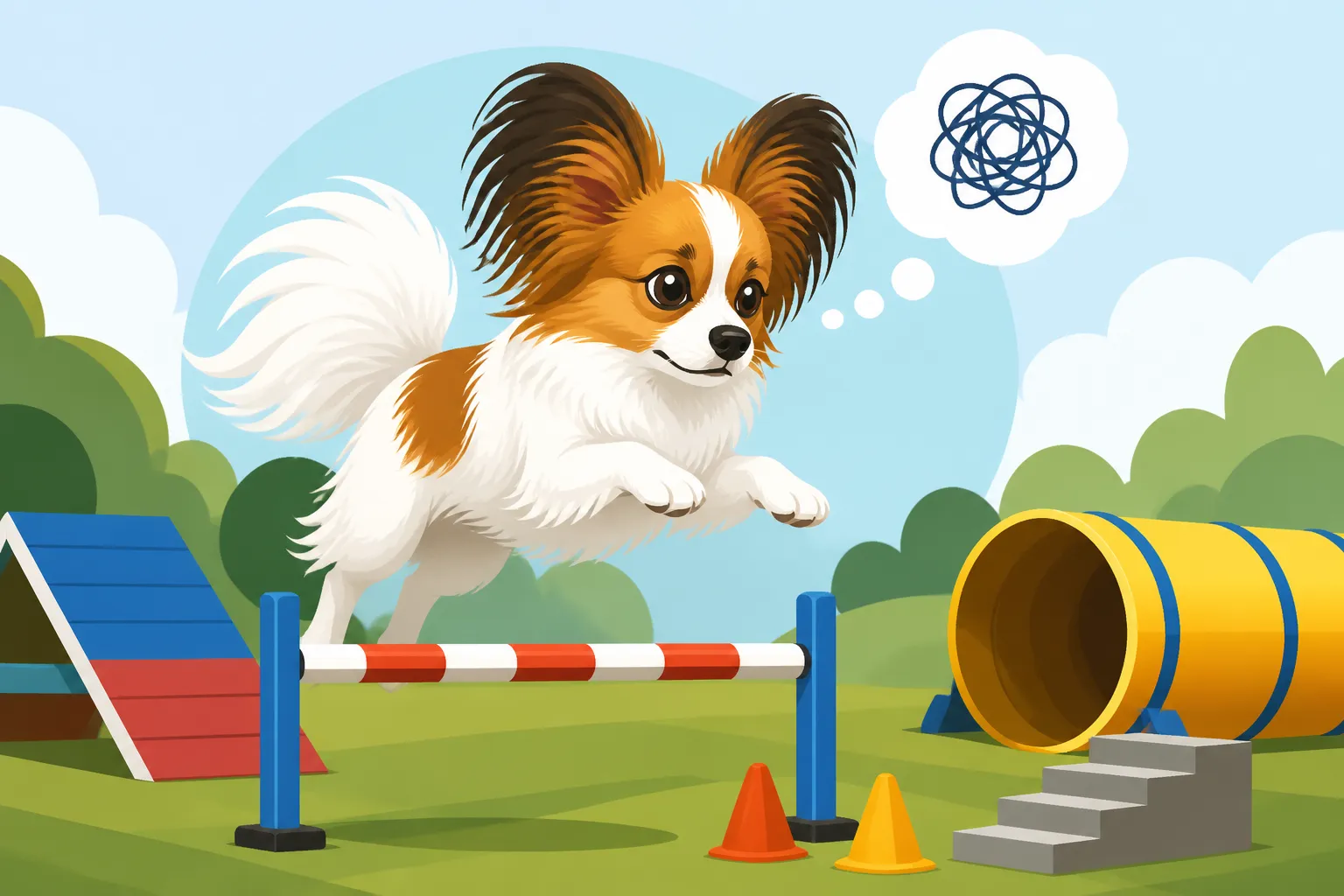
Which Obstacles a Papillon Struggles With
It's an amazing feeling to watch your Papillon dart across an agility course, those butterfly ears flying, making every obstacle look effortless. They're quick, agile, and often possess an intelligent spark that makes them naturals for the sport. Yet, even these brilliant little athletes can hit a snag. Sometimes, a particular obstacle just seems to baffle them, leading to missed contacts, knocked bars, or simply a refusal that leaves you wondering what went wrong. It's frustrating when you know your dog is capable, but they just can't seem to get over that one thing. This guide will explore which agility obstacles Papillons might struggle with, delve into the reasons behind these challenges, and offer practical, empathetic advice to help your tiny champion overcome them.
Where Papillons Typically Shine on the Agility Course
Before we dive into the tricky bits, let's acknowledge just how incredibly talented Papillons usually are in agility. Their small size is often a huge advantage, allowing them to navigate tight turns and collect themselves quickly between obstacles. They are renowned for their speed and tight turns, often leaving larger dogs in their dust on complex courses.
Natural Agility and Enthusiasm
Papillons possess a natural athleticism and an incredible zest for life that translates beautifully into agility. They love to run, jump, and solve puzzles, which are all fundamental aspects of the sport. Their compact build means they can weave through poles and make sharp turns without much body roll, giving them an edge in intricate sequences. Owners often marvel at their innate understanding of body language and their desire to please, making them highly trainable for precise commands. They're often seen flying over hurdles with grace, their energy infectious. You'll find many Papillons truly thrive in the fast-paced, exciting environment of an agility trial.
Speed and Precision
One of the biggest assets a Papillon brings to the agility ring is sheer speed, especially over shorter distances and within tight turns. They can accelerate rapidly and brake on a dime, making them phenomenal at obstacle transitions. Their light weight also means less impact on their joints when landing, which can contribute to a longer agility career if proper care is taken. When it comes to precision, their intelligence really shines. They pick up on cues quickly, and once they understand a sequence, they often execute it with remarkable accuracy. This combination of speed and precision makes them formidable competitors, often dominating the lower jump heights and delighting crowds with their spirited performances. How Fast a Papillon Runs a Course can be truly astounding to witness.
Common Agility Obstacles That Challenge Papillons
Despite their many talents, some obstacles can present a unique set of challenges for the Papillon. These aren't necessarily weaknesses, but rather areas where their small stature or particular behavioral traits might require a different approach to training.
The Teeter-Totter or See-Saw
The teeter-totter is frequently cited as one of the most challenging obstacles for many small dogs, and Papillons are no exception. The sudden, sometimes loud, thud as the teeter hits the ground can be incredibly startling, even frightening, for a sensitive dog. Imagine being a tiny dog, stepping onto a moving plank that suddenly shifts beneath you and then crashes down with a noise that’s amplified to your sensitive ears. It’s no wonder some Papillons approach it with trepidation, or even refuse it outright. The fear often isn't about the act of walking across, but the unexpected noise and movement at the pivot point and end.
Many Papillons are intelligent enough to anticipate the drop, and some will try to jump off early or simply refuse to put their full weight on it. This can lead to contact zone violations or, worse, a negative association with the obstacle. Building confidence on the teeter requires immense patience and positive reinforcement, often starting with very gradual movements and desensitization to the sound.
Weave Poles
While many Papillons excel at weave poles once they master them, the initial learning curve can be steep for some. The repetitive, intricate footwork required to successfully navigate 6 to 12 poles in a tight zigzag pattern demands both physical coordination and mental focus. For a breed that loves speed, being forced to slow down and meticulously weave can sometimes be counter-intuitive or frustrating.
The challenge often lies in teaching the muscle memory and understanding the handler's precise body cues. Some Papillons, being so eager to please and to go fast, might try to "pop out" of the weaves early or skip poles in their excitement. This isn't a lack of ability, but rather a need for clear, consistent training that breaks down the process into small, manageable steps. How a Papillon Manages Weave Poles successfully takes time and dedication.
Contact Obstacles with Slopes: A-Frame and Dog Walk
The A-frame and dog walk involve running up and down a steep incline, requiring the dog to hit a designated "contact zone" at the bottom to avoid penalties. For some Papillons, the sheer height and angle of these obstacles can be intimidating. While they are agile jumpers, descending a steep, narrow plank can feel precarious, especially if they are looking for speed.
The challenge here often revolves around confidence and maintaining a consistent pace while ensuring they hit those contact zones. A Papillon that rushes down might launch off the end before touching the contact, while one that is unsure might inch down too slowly, or even try to jump off the side. Their small size means the contact zone itself represents a proportionally larger part of their stride, and an eager dog might overrun it. The goal is to teach them to confidently and consistently navigate the entire length, from ascent to descent, always hitting their mark. Building a Papillon's Confidence on Contacts is crucial for these pieces of equipment.
Understanding the Root Causes of Agility Challenges
It's easy to just label an obstacle as "hard," but understanding why it's difficult for a Papillon can help tailor your training approach. It’s rarely about a lack of intelligence or physical capability, but often a combination of perception, physical mechanics, and past experiences.
Perceived Instability and Noise Sensitivity
Many Papillons are sensitive souls, despite their bold outward appearance. The teeter-totter, with its movement and loud bang, can trigger their natural caution. Dogs, especially small ones, rely heavily on their sense of balance and stability. A teeter-totter actively disrupts that, and the sudden noise can be truly jarring. It's not unlike how some people dislike rollercoasters – it's the unexpected motion and loud sounds that create anxiety.
This sensitivity can extend to other obstacles too. If a dog walk wobbles slightly, or if the A-frame makes a creaking sound under their weight, a sensitive Papillon might hesitate. Their keen hearing and delicate perception mean they notice things larger, heavier dogs might not. A patient, gentle approach focused on positive association is vital.
Proportionality of Obstacles to Body Size
Imagine if you had to climb a ladder where each rung was three feet apart, or navigate a balance beam that was only an inch wide for a significant portion of its length. That’s a bit what it’s like for a Papillon on certain agility obstacles. The contact zones, for instance, are the same size for a ten-pound Papillon as they are for an eighty-pound Border Collie. This means the Papillon has less "wiggle room" or stride length to hit the mark, requiring incredibly precise footwork.
Similarly, the weave poles, while adjustable in height for small dogs, still demand tight turns and body awareness that can feel cramped. The size of the obstacles in relation to their small bodies means that every movement needs to be more deliberate and controlled. Their tiny legs have to work harder and more precisely than a larger dog's to maintain momentum and accuracy. This is why consistency in training and clear communication from the handler are so paramount.
Lack of Foundation and Confidence Building
Sometimes, a Papillon's struggle isn't with the obstacle itself, but with an underlying lack of confidence or insufficient foundational training. Agility isn't just about running; it's about trust between dog and handler, body awareness, and a solid understanding of basic obedience cues. If a Papillon hasn't been properly desensitized to new environments, sounds, or surfaces, they might be more prone to hesitation on certain obstacles.
For instance, a dog that hasn't learned to focus on its handler amidst distractions might struggle with weave poles because its attention is pulled elsewhere. A dog that lacks confidence in its own body might find the height of the dog walk intimidating. When to Start a Papillon in Agility is important, as rushing can lead to these confidence issues. A solid foundation includes consistent positive reinforcement, teaching them to love the game, and slowly introducing new challenges. Many find structured online training platforms, such as those offered by BAXTER & Bella, can provide excellent guidance for building these crucial early skills from the comfort of home, before even stepping foot on an actual course.
Strategies for Conquering Tricky Agility Obstacles
The good news is that with the right approach, nearly all Papillons can learn to navigate every agility obstacle with confidence and speed. It just takes patience, positive reinforcement, and a willingness to understand your dog's perspective.
Systematic Desensitization and Positive Reinforcement
For obstacles like the teeter-totter, systematic desensitization is key. This means breaking down the fear-inducing elements into tiny, manageable steps and gradually exposing your dog while associating it with positive experiences. Start by just having them walk on a slightly raised board that doesn't move. Gradually introduce a very low teeter, or even just the plank on the ground, and reward heavily for any interaction. You can muffle the sound of the teeter hitting the ground by placing soft mats or blankets underneath it during early training.
Use high-value treats – think cheese, boiled chicken, or whatever your Papillon goes absolutely crazy for. Clicker training works wonders here; How a Clicker Lands With a Papillon often shows that these smart dogs pick up on it very quickly, marking the exact moment of success. Celebrate every small success, even if it's just a tentative step. The goal is to build a positive association so strong that the potential fear is overshadowed by the joy of earning a reward and the fun of working with you. Consider investing in some smaller, home-use contact trainers which can be found on sites like Amazon, to practice this desensitization in a low-pressure environment.
Breaking Down Complex Obstacles into Simpler Steps
Weave poles, in particular, benefit from being broken down. Trying to teach 12 poles at once can be overwhelming for both dog and handler. There are several popular methods, such as the channel method (poles are spread wide, then gradually narrowed), the 2×2 method (teaching pairs of poles, then linking them), or guide wires. All these methods share the common goal of simplifying the movement.
Start with just a few poles, ensuring your Papillon understands the rhythm and the handler's cues. Reward them profusely for correctly navigating even two poles. Gradually add more poles as their confidence and muscle memory grow. Consistency is paramount. Short, frequent training sessions are far more effective than long, infrequent ones. How Short a Papillon's Training Session Should Be is especially true for Papillons, who can get bored with repetition quickly but thrive on focused bursts of activity.
Building Confidence and Body Awareness
For contact obstacles, confidence is king. Ensure your Papillon is comfortable on different surfaces and at varying heights. Practice walking on narrow planks or benches at home (safely, of course). Use targets or platforms to teach them to put their feet precisely where you want them. For example, place a non-slip mat at the end of a low plank and reward them for putting all four paws on it. This translates directly to hitting those contact zones.
You can also help build their overall body awareness through games and exercises that challenge their balance and coordination. Things like walking over cavalettis, stepping through ladders laid on the ground, or even simple tricks like paw targeting can improve their understanding of where their feet are in space. This general conditioning will make them feel more secure on all obstacles. Remember, What Mental Work a Papillon Needs is just as important as physical exercise; building their understanding and problem-solving skills will make them more resilient in the agility ring.
Here’s a quick overview of common agility challenges for Papillons and potential solutions:
| Obstacle | Common Papillon Challenge | Why It's Challenging | Training Strategy |
|---|---|---|---|
| Teeter-Totter | Startled by sound/movement, tries to jump off, refuses. | Noise sensitivity, perceived instability, sudden drop. | Systematic desensitization to sound, gradual introduction of movement, soft landings (mats), high-value rewards at critical points, building confidence on stable platforms first. |
| Weave Poles | Skipping poles, popping out, slow learning curve. | Intricate footwork, demands precision over speed, handler cues. | Break down into smaller sets (2×2 method, channel method), clear and consistent hand/body cues, short and frequent training sessions, high-value rewards for correct execution, building speed gradually once accuracy is established. |
| A-Frame/Dog Walk | Rushing contact zones, hesitation at height/descent, jumping off. | Proportionality to body size, height, maintaining speed with contact. | Target training for contact zones, slow and controlled descents, rewarding all four paws in contact, building confidence on lower/wider ramps, proofing speed gradually, ensuring footing is secure (non-slip surfaces). |
| Tunnels | Occasionally hesitates if too dark or long (less common). | Poor visibility, perceived confinement. | Not usually a major issue, but if hesitant, start with short, straight tunnels, gradually increase length and bends, toss treats or a favorite toy ahead to encourage entry, ensure positive association. |
| Jumps | Rarely an issue, but poor form can knock bars. | Over-excitement, not fully understanding "straight line" jumping. | Focus on straight approaches and exits, teaching proper jump form (tight tuck), grid work (sequential jumps), ensuring no Whether a Papillon's Knees Limit Agility issues, maintaining appropriate jump height for size and ability. |
Ultimately, success in agility with a Papillon isn't just about clearing obstacles; it's about strengthening your bond, building their confidence, and celebrating their incredible spirit. Every challenge is an opportunity to learn and grow together.
Disclaimer
This article is for general informational purposes only and does not constitute professional advice. Laws, prices and regulations vary by location and change over time. Consult a qualified professional for guidance on your specific situation.