What a Papillon Chews
Papillon chewing behavior stems from teething, boredom, anxiety, and natural instincts, threatening furniture and shoes.
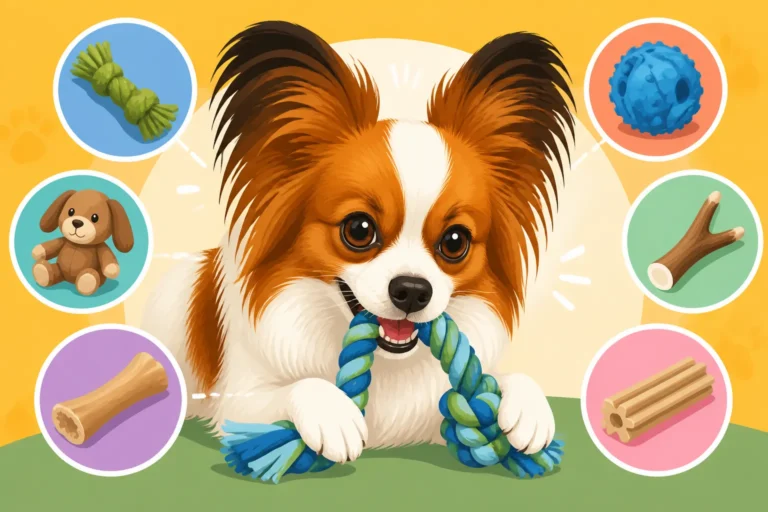
Papillon chewing behavior stems from teething, boredom, anxiety, and natural instincts, threatening furniture and shoes.
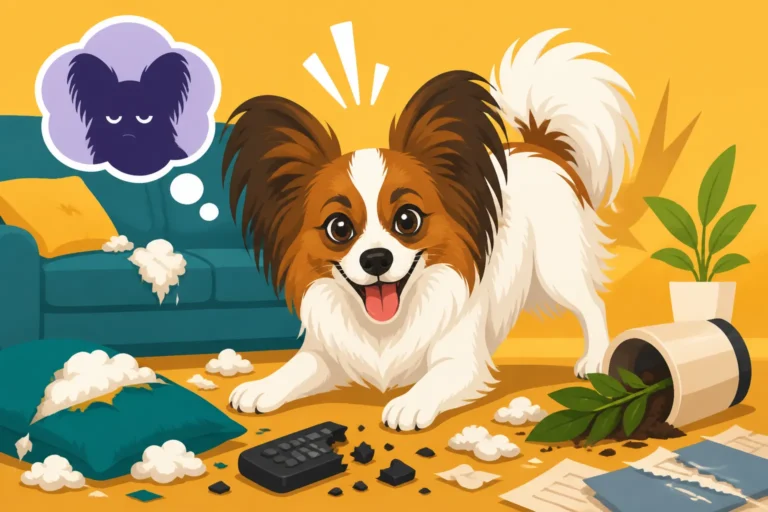
Destructive Papillon behaviors stem from unmet physical and mental needs, requiring targeted outlets for their high energy and intelligence.
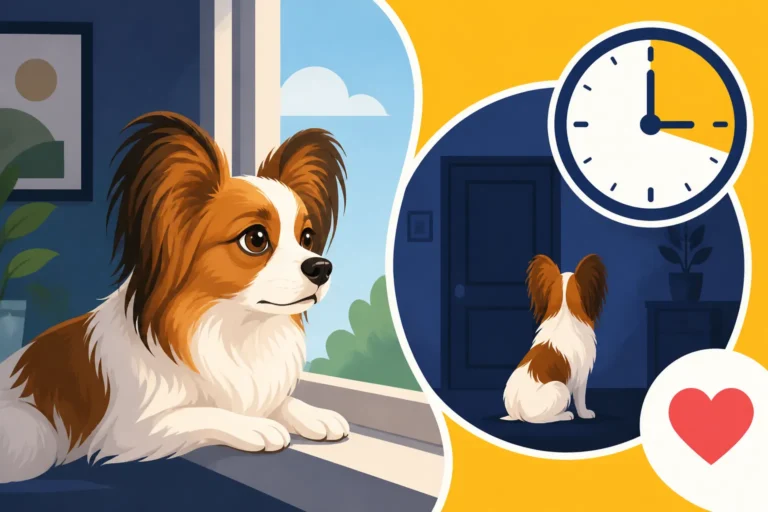
Papillon alone time limits depend on age, allowing puppies two hours while trained adult dogs safely handle four to six hours daily.
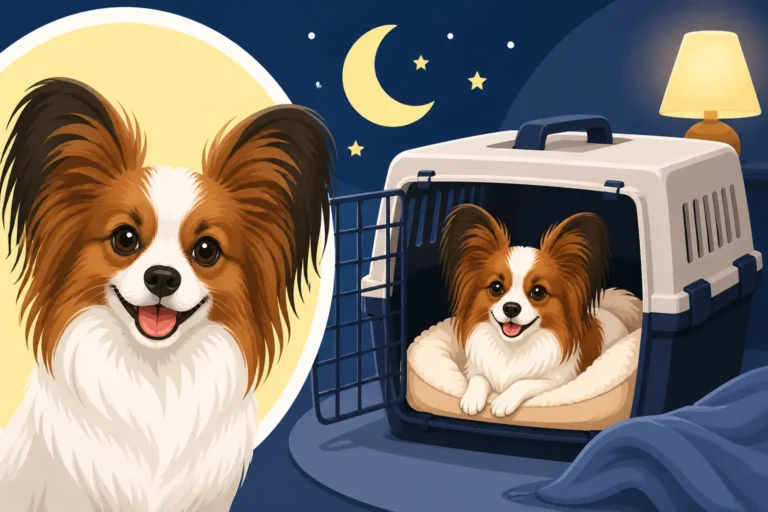
Crating a Papillon overnight provides a secure den for sleep and manages house training by preventing nighttime accidents.
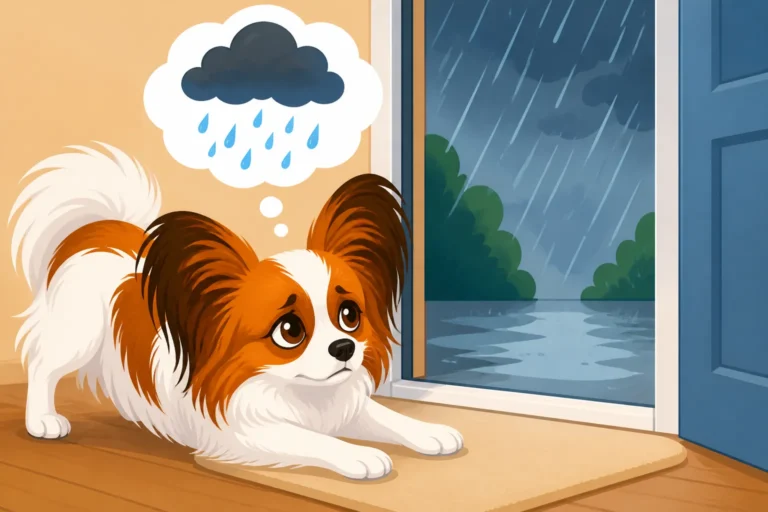
Papillon rain refusal stems from single-layer coats and tiny sizes, causing rapid heat loss and severe discomfort outdoors.

Litter box training for Papillons offers a viable, stress-reducing bathroom alternative for apartment owners and tiny dogs.
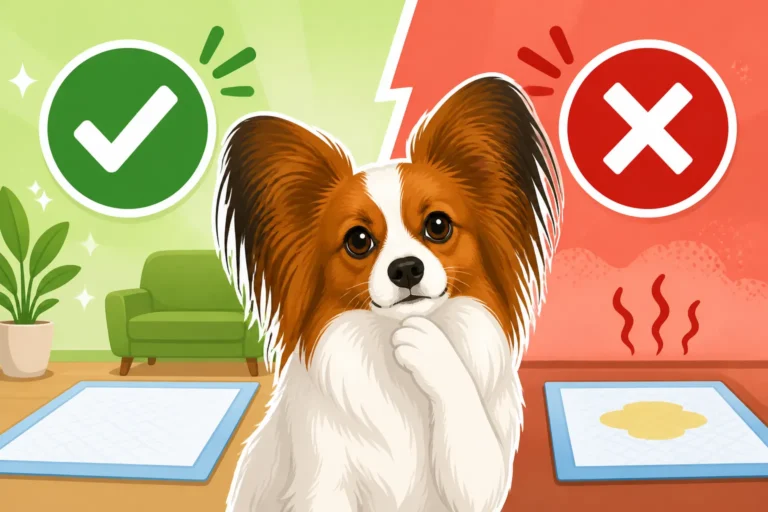
Indoor potty pads for Papillons create house training confusion, extending indoor accidents and complicating long term habits.
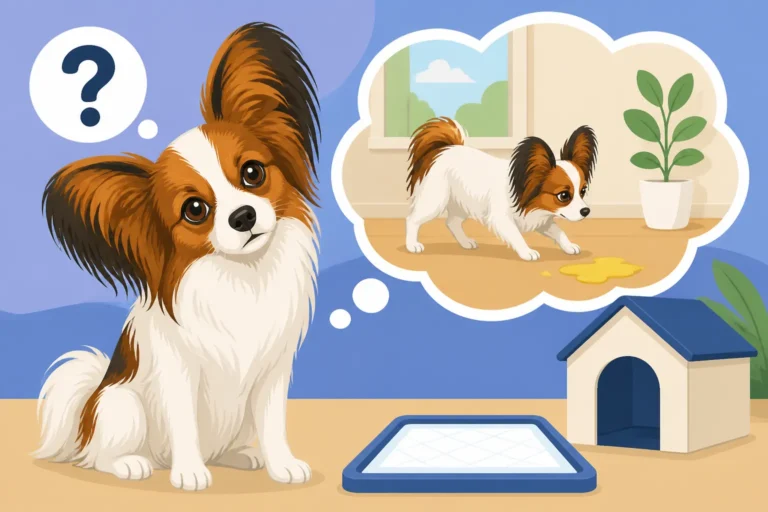
Small Papillon bladders and rapid metabolisms require frequent bathroom breaks every hour or two to prevent indoor accidents.

Papillon house training typically reaches reliable completion between six and nine months of age or their first birthday.

Papillon barking behavior and sharp senses explain how small dogs function as effective alarm systems and household watchdogs.