How Many Papillon Litters Are Bred a Year
Papillon litter frequency lacks exact numbers because hobby breeders limit litters and commercial mills avoid public registration data.
The price tag is the smallest number.
Purchase and adoption costs, insurance, routine vet care, food and grooming budgets, and the emergencies that change the total.
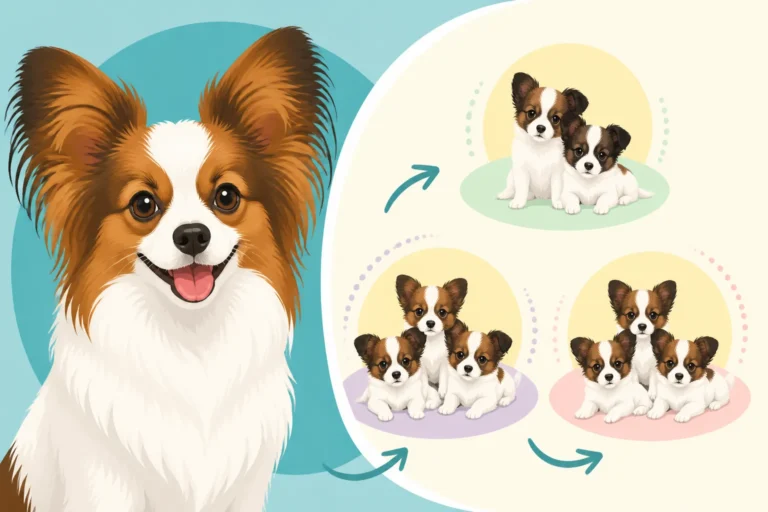
Papillon litter frequency lacks exact numbers because hobby breeders limit litters and commercial mills avoid public registration data.

Papillon puppy development at ten weeks explains physical maturity, hypoglycemia risks, and socialization benefits for toy breeds.

Papillon puppy shipping costs, including ground transport and air cargo methods, explain travel expenses for bringing your new pet home.

Papillon puppy buyers travel across state lines because breed rarity and health testing for issues like patellar luxation limit local options.

A Papillon puppy deposit secures your place in a litter, signaling a serious mutual commitment between you and the breeder.

AKC limited registration for Papillon puppies means the purebred dog cannot produce registered offspring or join breeding programs.

A Papillon breeder contract outlines health guarantees, required veterinary checks, and lifelong welfare responsibilities for puppies.

Neuroaxonal Dystrophy testing for Papillon puppies reveals whether responsible breeders screen for this serious inherited neurological disorder.

Progressive Retinal Atrophy type 1 in Papillons causes gradual vision loss, typically manifesting between two and six years of age.

Papillon knee certification by breeders prevents patellar luxation, protecting your puppy from joint pain, arthritis, and costly surgery.