Whether a Papillon Suits an Older Owner
A Papillon can be a good companion for an older owner, but a small dog is not automatically an easy dog. Papillons are lively, clever, and closely attached to their people; they also need training, daily activity, and careful handling. This guide looks at how their needs fit different routines and mobility levels, and what to plan for before bringing one home.
What living with a Papillon is really like
A small dog with a lively daily routine
Papillons are toy dogs, but many have the energy and curiosity of a much larger breed. A walk, playtime, short training sessions, and chances to sniff and explore can all be part of a satisfying day. They often enjoy learning tricks or practicing simple cues, so activity does not have to mean a long or strenuous outing. A few brief sessions spread across the day may suit both dog and owner better than one demanding exercise routine.
Their intelligence can be a delight, especially for someone who enjoys interacting with a dog. It can also mean that a Papillon gets bored when the day is quiet and predictable. A dog left without much to do may invent its own entertainment, such as barking at hallway sounds or pestering its owner for attention. Food puzzles, gentle games, and short indoor training sessions can help. For more on the breed’s activity needs, see What a Papillon Needs Every Day.
A senior who has the time and interest to engage with a dog may find this rewarding. Someone hoping for a companion who will simply sleep beside them for most of the day might find a young Papillon more demanding than expected. Individual temperaments vary, though, and an adult dog with a known personality may be a more predictable match than a puppy.
Affectionate companionship, with a need for company
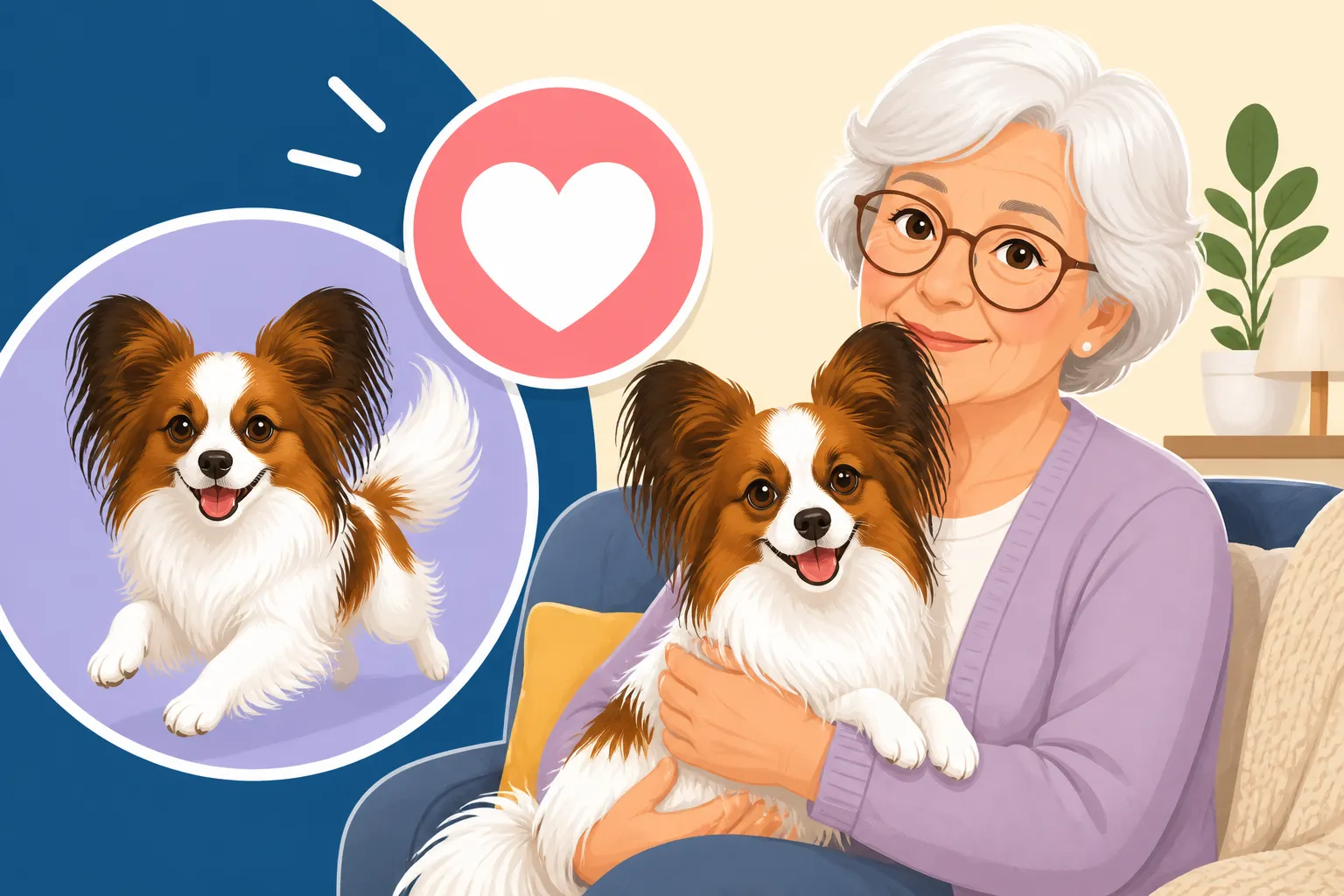
Many Papillons form close bonds with their people and like to stay nearby. That can make them lovely companions for someone who spends a lot of time at home. They may follow their owner from room to room, settle near a favorite chair, or eagerly join in everyday routines.
That attachment can become difficult if the dog is expected to spend long stretches alone. A Papillon may need gradual practice being comfortable by itself, and some dogs are more prone than others to distress when separated. If you regularly attend appointments, visit friends, or have planned periods away, think through who could provide care. A neighbor, family member, dog sitter, or trusted boarding arrangement can help maintain a reliable routine.
Consider what would happen if your own circumstances changed, too. A temporary illness, a planned stay in hospital, or a move to housing with different pet rules can affect daily care. It is sensible to identify a backup person before bringing a dog home rather than trying to organize help during an emergency.
Matching the dog to your mobility and home
Handling, stairs, and everyday safety
Papillons are small and fine-boned, which can make them easy to lift for some owners, but their size also calls for care. They can be injured by falls, rough handling, or a jump from furniture. If bending, lifting, or steadying a dog is difficult, do not assume that the dog’s light weight makes every task effortless. A wriggling dog can be awkward to pick up, especially when the owner is unsteady.
Look at the home from the dog’s point of view. Slippery floors can make it harder to get traction, while steep or open stairs can be a concern for a small dog. A secured gate, non-slip runners, and a comfortable bed placed where the dog spends time can reduce unnecessary climbing. If the dog is allowed on a sofa or bed, decide in advance how it will get up and down safely. Whether a Papillon Needs Ramps to Furniture offers more detail on considering ramps and steps.
It also helps to practice safe handling before there is a problem. Teach the dog to come to a stable spot for a harness, brushing, or a lift rather than grabbing at it when it is excited. If you have limited grip strength or balance, ask a trainer or veterinary professional to demonstrate a comfortable, secure way to handle the dog. A predictable routine is safer for both of you.
Barking, visitors, and shared housing
Papillons can be alert and vocal. Some bark at sounds in a hallway, visitors at the door, or dogs passing outside. In a detached home, that may be manageable; in an apartment or senior living community, repeated barking can strain relationships with neighbors and staff. It is worth asking about pet rules and noise expectations before adopting.
Training can help, but it is not a switch that reliably turns barking off overnight. Owners can teach a quiet cue, reward calm behavior, and manage triggers by closing blinds or moving the dog away from a busy window. A predictable greeting routine can also help when visitors arrive. If the dog has already developed strong barking habits, a qualified trainer can help identify what is maintaining the behavior. See How to Teach a Papillon a Quiet Cue for practical training ideas.
Think about the dog’s behavior around visitors, too. A Papillon may be reserved at first, excited, or quick to alert when someone enters. If frequent caregivers, home-health staff, or visitors will come and go, plan introductions and provide a safe place where the dog can settle. How a Papillon Greets a Stranger discusses what those first meetings may look like.
Care needs to plan for before adoption
Grooming, teeth, and routine veterinary care
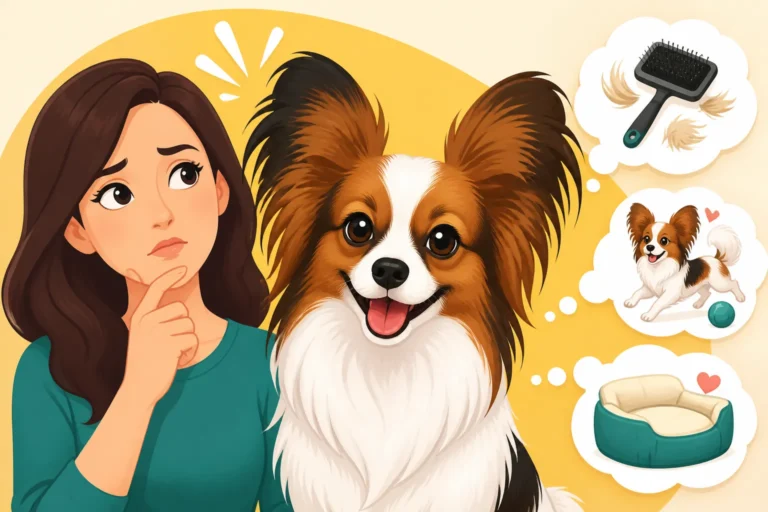
A Papillon’s long coat looks elaborate, but it usually needs regular brushing rather than elaborate styling. Feathering behind the ears, on the chest, and around the legs can tangle, especially after walks or play. If arthritis, hand pain, or limited dexterity makes brushing uncomfortable, consider whether another household member or groomer can help. Keeping sessions short and gentle can make coat care easier for both dog and owner. For an overview of the breed’s coat, see The Papillon Has No Undercoat.
Dental care deserves particular attention. Small dogs can have crowded teeth, and brushing a small mouth may take patience and practice. A daily home routine, dental checks, and professional care when recommended by a veterinarian can help maintain oral health. Before choosing a dog, consider whether you can manage the routine yourself or arrange consistent help. The Teeth in a Papillon's Small Jaw explains why dental care is an important part of Papillon ownership.
Routine veterinary visits are another practical consideration. Ask a veterinarian what preventive care is appropriate for the individual dog, and make a plan for transportation if driving becomes difficult. A trusted friend, family member, or pet transport option may be useful for appointments. If carrying supplies or managing food deliveries is a challenge, Chewy may be one option to consider for arranging routine pet essentials; check whether its services suit your location and needs.
Choosing an adult dog or a puppy
A puppy can be a joyful choice, but it comes with intensive early care. House training, frequent supervision, socialization, and basic manners take time and consistency. Puppies may also dart underfoot, chew household items, and need to go outside often. For an older owner with a busy schedule or balance concerns, those demands deserve honest consideration. See The First Year With a Papillon Puppy for a closer look at the early stages.
An adult Papillon may be a better fit when you want a clearer sense of the dog’s temperament, activity level, and habits. A rescue or responsible breeder may be able to share how the dog behaves around people, other pets, and ordinary household activity. That information is not a guarantee of how a dog will settle in a new home, but it can help you ask more useful questions. What Papillon Owners Wish They Had Known is also helpful when weighing the breed’s everyday realities.
| Consideration | A potentially good fit | A reason to pause and plan |
|---|---|---|
| Daily activity | You enjoy short walks, play, and brief training sessions | You want a dog that needs little interaction |
| Mobility | You can safely manage walks, grooming, and handling | Balance, grip, or bending limitations make routine care difficult |
| Time at home | You can provide company and a predictable routine | The dog would be alone for long periods without backup care |
| Noise | You are comfortable training an alert dog | Barking could create problems in shared housing |
| Grooming and teeth | You can manage home care or arrange help | Regular brushing and dental routines would be hard to maintain |
| Future care | You have a trusted person who can step in | There is no practical backup for illness or travel |
Making the decision with confidence
Ask practical questions before committing
If you are considering a Papillon, make a list of ordinary tasks rather than judging only by how charming the dog looks. Could you take the dog outside in bad weather? Can you manage a leash and a small, quick-moving animal at the same time? Who will help with grooming, veterinary trips, or care if you are unwell? Answering these questions in advance can prevent a stressful mismatch.
Meet the specific dog more than once if possible. Watch how it moves, responds to handling, settles after excitement, and behaves around unfamiliar people. Ask about its exercise habits, barking, housetraining, medical history, and comfort being alone. With a puppy, ask what support and information will be provided as the dog grows. With an adult dog, ask what routines it already knows and what situations are difficult for it.
A trial period or foster-to-adopt arrangement, where available, can help you see how the dog fits your real routine. A short visit may show affection and energy, but living together reveals whether the daily schedule, noise level, and care tasks are manageable. Keep in mind that a dog may need time to settle, so early behavior in a new home is not always its final personality.
Build a support plan that works in real life
Good planning does not mean you have to do everything alone. A family member might handle longer walks, a groomer might take on coat maintenance, and a neighbor could be the backup for an unexpected appointment. If mobility changes from day to day, organize the routine so the dog can still get exercise and attention without depending on you to do every task in every circumstance.
Set the home up before the dog arrives. Put food, leash, grooming supplies, and waste bags somewhere easy to reach. Keep a secure harness and leash near the door, and choose a resting place away from frequent foot traffic. Chewy may be useful for arranging regular supplies if carrying shopping is inconvenient, while a local pet shop can be helpful when you want to inspect an item in person. Choose whichever option makes replenishing essentials straightforward.
Finally, think about long-term responsibility. Papillons can live for many years, and a dog adopted in retirement may still need care if your health, housing, or support network changes. Discuss a backup arrangement with someone you trust and keep the dog’s important records accessible. The right match is not about being young or exceptionally active; it is about having a realistic plan for this particular dog’s needs.
A Papillon can suit an older owner who enjoys an engaged, affectionate companion and can meet the dog’s everyday needs, either independently or with reliable help. The best decision comes from matching the individual dog’s energy and habits to your home, mobility, schedule, and support system—not from the breed’s small size alone.
Disclaimer
This article is for general informational purposes only and does not constitute professional advice. Laws, prices and regulations vary by location and change over time. Consult a qualified professional for guidance on your specific situation.