Whether Detangler Helps a Papillon
That gorgeous, flowing Papillon coat is undeniably a huge part of their charm, but let's be honest, it can also be a source of endless frustration when those delicate strands decide to stage a rebellion and form a mat. You pick up your sweet little butterfly dog, run your fingers through their beautiful fur, and wham – there it is, a tangle nestled stubbornly behind an ear or tucked under an armpit. It feels impossible to get out without causing discomfort or, worse, yanking a chunk of that precious fringe. This guide is here to walk you through the world of detanglers, explaining what they are, how they work, and if they really can be the magic solution you're hoping for when it comes to keeping your Papillon's coat tangle-free and fabulous.
Understanding Your Papillon's Unique Coat and Why It Tangles
Before we even dive into detanglers, it’s crucial to understand the very thing we’re trying to manage: your Papillon’s exquisite coat. Unlike many other long-haired breeds, the Papillon has a very distinct type of fur that makes it both beautiful and, at times, prone to particular kinds of tangles. It's not just "long hair"; there's a science to it!
The Papillon's Single Coat Structure
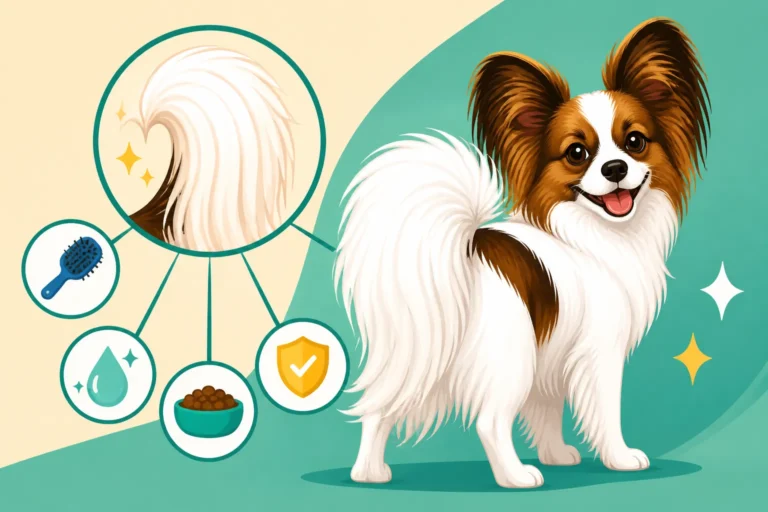
One of the defining characteristics of a Papillon's coat is that it’s a single coat. What does this mean, exactly? It means there's no dense, fluffy undercoat lurking beneath the longer, silken outer layer. Breeds like Pomeranians or Huskies have a thick undercoat that provides insulation and volume, but also a breeding ground for mats if not diligently managed. Your Papillon, however, boasts a singular, flowing outer coat that feels incredibly soft and silky to the touch. This distinct structure gives them that elegant, light-as-air appearance. You can learn more about this unique coat in A Papillon's Coat Is All Fringe and No Undercoat.
Because there's no fuzzy undercoat to trap shed hairs and create dense mats, Papillon tangles tend to be different. They're often finer, more superficial knots that can form quickly but sometimes loosen just as easily with the right approach. However, this also means that without the cushion of an undercoat, the skin is closer to the surface, making accidental tugs during grooming more noticeable and potentially uncomfortable for your sensitive little friend. It's a double-edged sword: less bulk means quicker drying and often less shedding, but the fine nature of the hair makes it susceptible to static and friction-induced tangles.
Where Tangles Love to Hide on a Papillon
Despite the single coat, certain areas on a Papillon are absolute magnets for tangles and mats. It’s almost as if the universe conspired to place the most delicate, easily matted hair in the spots that see the most action or friction. Knowing these hotspots can help you be proactive with your grooming, rather than reactive after a mat has already formed.
The ears are probably the number one offender. Those magnificent, fringed butterfly ears are truly glorious, but the fine hair behind and beneath them, where the ear leather meets the head, is constantly rubbing against the neck, collars, and even your Papillon's own body when they sleep. This friction, combined with the delicate texture, makes them prime candidates for wispy mats that can quickly become solid knots if left unchecked. You'll find yourself brushing these areas almost daily, especially if your Papillon loves to burrow or shake their head with gusto.
Beyond the ears, keep a close eye on the chest frill, the "culottes" (the long feathering on the back of their hind legs), and the tail plume. These areas all feature long, flowing hair that can easily get caught, stepped on, or pick up debris. The armpits and groin area are also notorious for tangles because of constant movement and rubbing against the body. When your Papillon curls up for a nap, these spots get compressed, and any loose hairs or minor tangles can quickly become compressed mats. Even the smallest tangles can escalate rapidly, so regular, thorough checks are essential.
The Magic and Reality of Detangling Products
So, you've got a tangle. Now what? This is where detangling products come into play, promising to make the impossible possible. But what are they actually doing, and how do you choose one that truly helps your Papillon?
How Detanglers Work Their Wonders
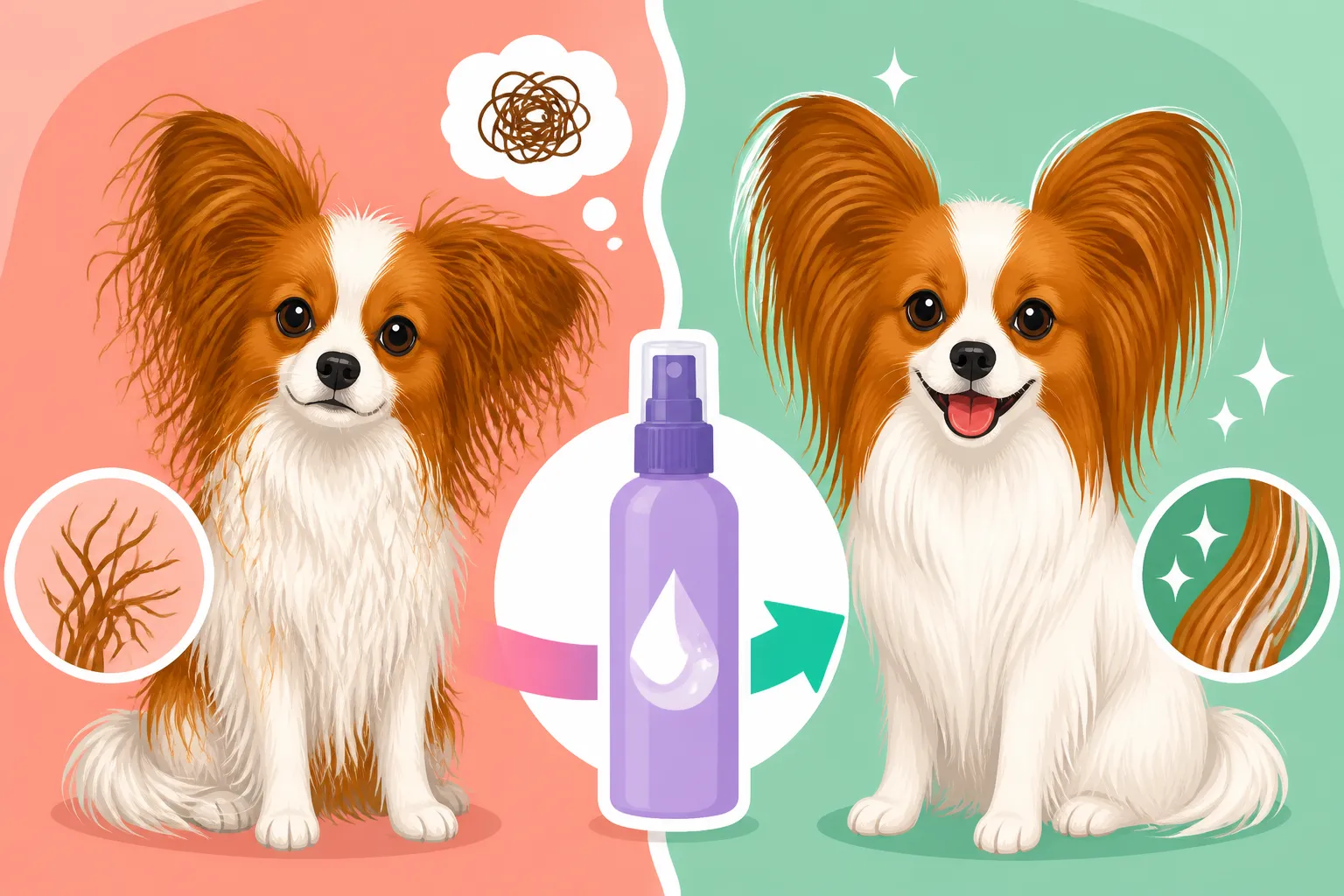
At their core, detanglers are formulated to reduce friction and increase the "slip" of the hair, allowing individual strands to separate more easily. Think of it like trying to untie a knot in a dry, brittle piece of string versus one that's been lightly oiled. The oiled string is much more cooperative.
Most detanglers contain a blend of ingredients designed for this purpose. Silicones are very common; they coat the hair shaft, making it feel smoother and creating a barrier that reduces friction between individual hairs. Conditioners, often fatty alcohols or humectants, hydrate the hair, making it more pliable and less prone to breaking when you're trying to comb through a knot. Some might also include natural oils (like argan or coconut oil, though often in very small, non-greasy amounts) or protein derivatives to strengthen and protect the hair. The goal is to create a slick surface that allows your comb or brush to glide through, gently teasing apart the tangle rather than ripping through it.
Detanglers come in various forms: sprays, leave-in creams, or even conditioning rinses used during baths. Sprays are often the most convenient for spot-treating individual tangles or for a quick refresh between full grooming sessions. Leave-in creams or balms can provide a more intense conditioning effect for stubborn areas, while a good quality conditioning rinse during a bath can help prevent tangles from forming in the first place by properly hydrating the coat. The "magic" isn't in dissolving the mat, but in making the strands less likely to grab onto each other, transforming a stubborn knot into a more manageable snarl.
Choosing the Right Detangler for Your Papillon
With so many detangling products on the market, how do you pick one that's suitable for your delicate Papillon? It's not just about what smells good; the right formula can make all the difference in protecting their skin and coat.
First and foremost, always look for products specifically formulated for dogs. Human shampoos and conditioners, including detanglers, often have a pH level that is too acidic for canine skin, which can lead to irritation, dryness, or other skin issues over time. Dog-specific formulas are pH-balanced to be gentle on their skin. Read the ingredients list. You want something that's non-greasy and lightweight. Heavy, oily formulas can weigh down your Papillon's fine coat, making it look stringy or dirty, and can even attract more dirt and dust, leading to more tangles!
Many reputable brands offer excellent detangling sprays or conditioners. You can often find a good selection from online retailers like Chewy or Amazon, where reviews from other small dog owners can be incredibly helpful. Look for phrases like "lightweight," "non-greasy," "silicone-free" (if you prefer to avoid silicones), and "hypoallergenic" if your Papillon has sensitive skin. Brands focused on show dogs often have high-quality grooming lines that cater to long, silky coats, so those are good places to start looking. Ultimately, a little trial and error might be necessary to find the perfect detangler that works best for your Papillon’s unique coat and your grooming routine.
Step-by-Step: Using a Detangler Effectively
Using a detangler isn't just about spraying it on and hoping for the best. There's a technique involved to maximize its effectiveness and ensure your Papillon has a comfortable experience. Patience is your most powerful tool here.
Start by isolating the tangled area. You don't want to spray the entire dog if only a small knot needs attention. Gently hold the hair above the tangle to prevent pulling on the skin as you work. Lightly mist the detangler directly onto the mat, ensuring it penetrates the knot without saturating the surrounding clean hair. Some products might suggest leaving it on for a minute or two to allow the ingredients to penetrate and work their magic. For very dense knots, you might even apply a small amount with your fingers directly into the mat.
Next, using a wide-toothed comb or a specialized detangling comb, begin working at the very ends of the tangle, gradually moving towards the skin. This is critical. Never try to pull the comb straight through the middle of the mat. Hold the hair close to the skin with one hand to minimize any tugging or discomfort for your Papillon. Gently pick apart the strands, using small, short strokes. As the tangle starts to loosen, you can switch to a finer comb or even a pin brush. If you encounter resistance, stop, spray a little more detangler, and try again. The goal is to slowly and carefully separate the matted hair, piece by piece, until it's entirely free. Remember, your Papillon's comfort is paramount; a painful grooming session can make them resistant to future ones.
Beyond the Bottle: Comprehensive Tangle Prevention
While detanglers are a fantastic tool for managing existing knots, the real secret to a beautiful, tangle-free Papillon coat lies in prevention. It's about establishing a consistent grooming routine that supports the health and integrity of their fine hair.
The Essential Brushing Routine
For a Papillon, brushing isn't just a periodic activity; it's an essential, almost daily ritual. Because their single coat can develop tangles quickly, regular brushing helps to remove loose hairs before they can bind together and form mats. Think of it as proactive maintenance rather than emergency repair. Even if your Papillon hasn't been out playing in the brambles, static electricity, friction from movement, and simply existing can cause tiny tangles to form.
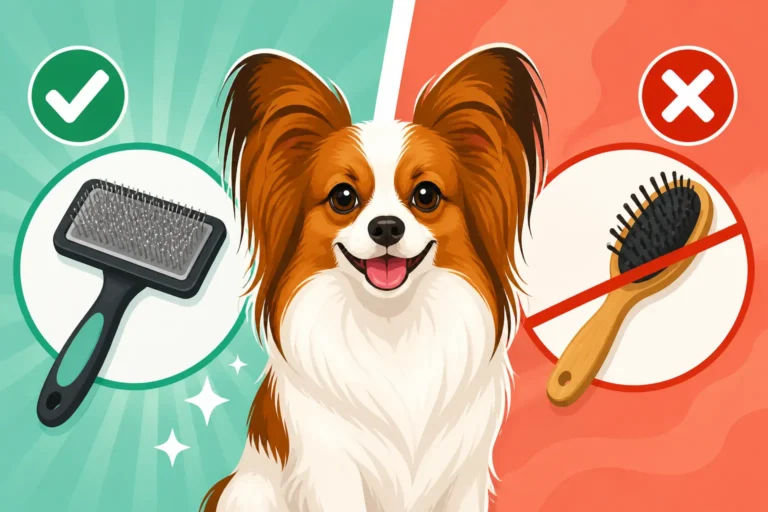
A good brushing session should take about Why a Papillon's Long Coat Takes Twenty Minutes a Week, and it should involve a combination of tools. A pin brush is excellent for getting through the longer feathering without damaging the coat, while a greyhound comb or a fine-toothed metal comb is crucial for checking for smaller tangles and working through delicate areas like behind the ears or in the armpits. Always brush in layers, starting from the bottom of the coat and working your way up, ensuring you reach all the way down to the skin. Missing the base of the hair is a common mistake that allows mats to form close to the skin, where they are harder to detect and remove. Make it a positive experience with praise and treats, so your Papillon looks forward to their pampering session. For more details on what tools to use, check out Which Brush a Papillon Needs.
Strategic Bathing and Conditioning
Bathing a Papillon isn't just about getting them clean; it's another opportunity to manage their coat and prevent tangles. Proper technique and product choice during bath time can significantly reduce future matting. Never, ever, bathe a Papillon who has existing mats without attempting to detangle them first. Water can tighten mats, making them incredibly difficult, if not impossible, to remove without resorting to shaving.
Always use a high-quality, moisturizing dog shampoo and follow up with a good conditioner. The conditioner helps to smooth the hair cuticles, making the coat silkier and less prone to tangling. When rinsing, ensure all shampoo and conditioner are thoroughly washed out, as residue can attract dirt and cause stickiness, leading to tangles. After the bath, gently blot your Papillon with a towel; rubbing vigorously can create more tangles. Then, use a blow dryer on a cool or low-heat setting, brushing the coat as you dry to separate the strands and ensure they dry straight and smooth. This step is often overlooked but is absolutely vital for preventing mats from forming as the coat dries. For information on frequency, see How Often a Papillon Should Be Bathed.
Environmental and Lifestyle Factors
Your Papillon’s environment and daily activities play a significant role in coat health and tangle formation. Being mindful of these factors can help you protect their beautiful fur. For instance, static electricity can be a real enemy to a Papillon's fine coat, causing strands to fly apart and tangle easily. In dry climates or during winter, consider using a humidifier indoors or an anti-static spray lightly misted on their brush.
If your Papillon loves to explore outdoors, especially in areas with burrs, twigs, or long grasses, be extra vigilant. These natural elements are notorious for getting caught in long coats and quickly forming mats. A quick brush-down after every outdoor adventure, focusing on the legs, belly, and tail, can save you hours of detangling later. Even their harness or collar can cause friction mats in the chest or neck area. Ensure collars fit well and aren't constantly rubbing, and consider a soft, well-fitting harness that minimizes chafing. Some owners even put on a lightweight dog shirt or sweater during walks in messy areas to protect the longer fringes. Taking these small preventative steps can go a long way in keeping your Papillon's coat in pristine condition.
When to Call in the Pros or Consider a Trim
Despite your best efforts, sometimes mats happen. And sometimes, they get beyond what you can comfortably or safely manage at home. Knowing when to admit defeat and seek professional help is crucial for your Papillon's well-being.
Recognizing Mats That Are Too Far Gone
There's a big difference between a small, superficial tangle that you can work out with a detangler and a deep, dense mat that's pulled tight against the skin. If a mat is close to the skin, feels hard, or covers a significant area, attempting to detangle it yourself can cause considerable pain to your Papillon. Pulling on matted hair tugs on the underlying skin, which can be incredibly sensitive. Not only is this painful, but it can also lead to skin irritation, abrasions, or even hematomas.
Beyond the immediate pain, severe matting can hide a host of other issues. Mats can restrict movement, making it uncomfortable for your Papillon to walk, run, or even lie down. They trap moisture, dirt, and parasites against the skin, creating a breeding ground for bacterial or fungal infections. They can even restrict blood flow in severe cases. If you're struggling to get a comb through a mat with gentle effort after applying detangler, or if your Papillon is clearly showing signs of discomfort or pain during the process (growling, snapping, trying to escape), it’s a sign that the mat is too far gone for home remedies. It’s important to recognize How a Papillon Hides Pain and not let small signs escalate.
The Professional Groomer's Touch
When mats are too severe for at-home removal, a professional groomer is your best friend. They have the specialized tools, training, and experience to handle matted coats safely and efficiently. A skilled groomer can often assess whether a mat can be painstakingly "dematted" or if shaving is the kindest, safest option. Dematting, when possible, involves carefully separating the matted hair using various tools and products, but it is a time-consuming and often expensive process, depending on the severity and extent of the matting.
In many cases, if the matting is extensive or too tight, the groomer will recommend a full shave. While it might be a shock to see your beautiful Papillon shorn down, it's often the most humane course of action. It relieves the dog from pain, allows the skin to breathe, and provides a fresh start for coat regrowth. A good groomer will also be able to check for any underlying skin issues that might have been hidden by the mats. Don't feel guilty if this is the path you need to take; your Papillon's comfort and health always come first. For more information, you might want to read Whether a Papillon Needs a Professional Groomer.
Strategic Trimming for Tangle Management
While the Papillon breed standard typically calls for an untrimmed coat, many pet owners find that strategic trimming can be a lifesaver for tangle management and their dog's comfort. This isn't about giving your Papillon a full-body shave (unless medically necessary, as mentioned above), but rather about tidying up problem areas.
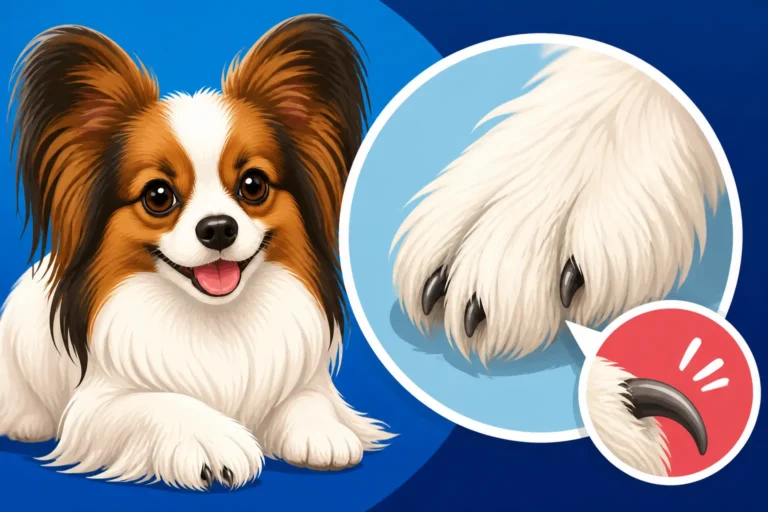
Light trimming of the hair between the paw pads can prevent dirt and debris from accumulating, which can lead to tangles and also help with traction on slippery floors. A sanitary trim around the rear can prevent messes and subsequent matting. Some owners also opt for a very subtle trim on the ends of the culottes or the chest frill if the hair is constantly dragging on the ground, picking up every leaf and stick, or simply becoming too much of a magnet for tangles. This kind of trimming should always be done conservatively to maintain the Papillon's distinctive look. It's a balance between maintaining that gorgeous long coat and ensuring your dog's daily comfort and ease of grooming. Discussing these options with a professional groomer can help you make an informed decision about what's best for your individual Papillon. Whether a Papillon Should Be Trimmed offers more insights into this topic.
| Detangling Method | Pros | Cons | Best For |
|---|---|---|---|
| Detangler Spray | Easy to apply, provides instant slip, spot treatment | Can be messy, might not penetrate very dense mats | Small, superficial tangles; quick touch-ups |
| Conditioning Rinse | Prevents tangles during bathing, moisturizes entire coat | Requires a full bath, less effective on existing severe mats | Proactive tangle prevention, maintaining coat health |
| Manual Picking | Gentle, minimal product needed, precise | Very time-consuming, requires extreme patience | Very small, delicate tangles; finishing off larger detangled areas |
| Professional Grooming | Expertise, specialized tools, safest for severe matting | Can be costly, may result in shaving, stressful for some dogs | Extensive, dense mats; when home methods fail or cause discomfort |
| Strategic Trimming | Prevents future mats in problem areas, improves hygiene | Changes the coat's natural length, needs regular upkeep | Problem areas like paw pads, sanitary, extreme feathering |
Disclaimer
This article is for general informational purposes only and does not constitute professional advice. Laws, prices and regulations vary by location and change over time. Consult a qualified professional for guidance on your specific situation.