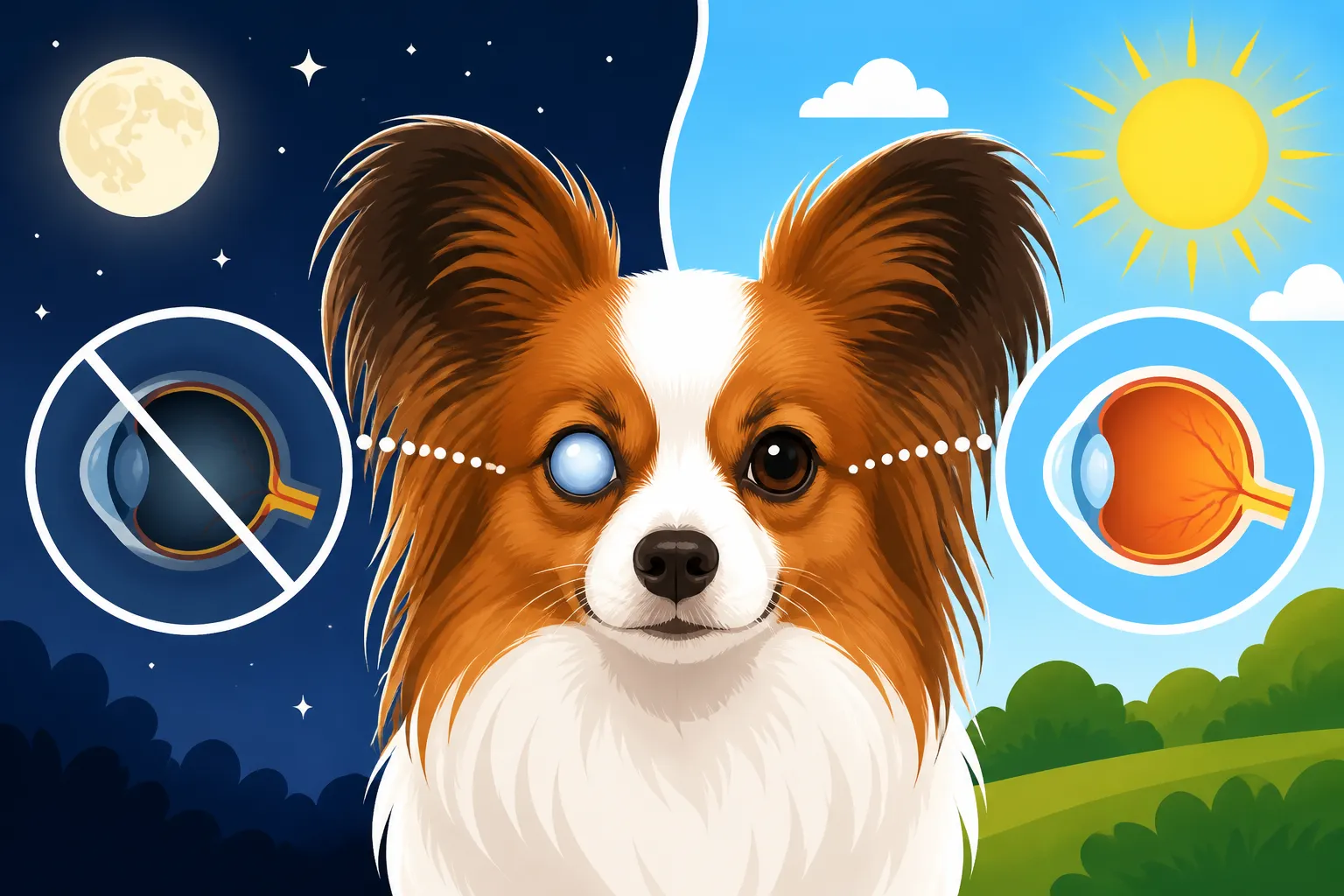
Why a Papillon Can Go Blind at Night and Still See in Daylight
It can be truly heartbreaking and baffling to watch your lively, intelligent Papillon suddenly struggle to navigate familiar spaces as evening descends, yet seem perfectly fine once the sun is fully up. This distressing phenomenon, where a dog loses their night vision but retains their daylight sight, often leaves owners feeling confused, worried, and desperately searching for answers. This guide aims to demystify why your cherished Papillon might be experiencing this specific type of vision loss, diving deep into the underlying causes and offering comprehensive support for you and your furry family member.
Understanding Progressive Retinal Atrophy (PRA) in Papillons
Progressive Retinal Atrophy, or PRA, is a general term for a group of inherited eye diseases that affect the retina, the light-sensitive tissue at the back of the eye. In simple terms, it's a condition where the photoreceptor cells in the retina gradually degenerate over time, leading to eventual blindness. What makes PRA so challenging for owners is its insidious nature; it’s not an injury or a sudden trauma, but a slow, relentless process.
What is PRA and How Does It Affect Vision?
Imagine the retina as the film in an old camera. It captures light and converts it into electrical signals that the brain interprets as images. When PRA strikes, these crucial photoreceptor cells—rods and cones—begin to malfunction and die off. Different forms of PRA affect these cells in various ways and at different rates, but the end result is a progressive loss of vision. It’s like the film slowly degrading, first losing its ability to capture faint light, then eventually losing its ability to capture anything at all. For a Papillon, this means a gradual dimming of their world.
The Specifics of Papillon PRA1
Among the many forms of PRA, Papillons are particularly susceptible to a specific type known as PRA1, or sometimes referred to as Papillon PRA. This isn't just any generic retinal atrophy; it's a form that has been extensively studied and is well-understood within the breed. Unlike some other forms of PRA that might manifest in older age, PRA1 in Papillons can often begin to show its subtle signs when dogs are still relatively young adults, typically between three and six years old, although it can vary. Understanding this specific type of PRA is crucial for any Papillon owner. It's not a rare, obscure condition; it's something breeders should be actively working to eliminate, and owners need to be aware of.
The Genetic Basis of PRA1 in Papillons
The reason we understand Papillon PRA1 so well is because its genetic blueprint has been identified. It's an autosomal recessive inherited disease. This means that for a Papillon to develop PRA1, it must inherit two copies of the faulty gene—one from its mother and one from its father. Dogs that inherit only one copy of the faulty gene are considered "carriers" and will not develop the disease themselves, but they can pass the gene on to their offspring. The specific gene mutation responsible for this form of PRA in Papillons is a frameshift mutation in the CNGB1 gene. This tiny error in the genetic code has profound implications for the health of the photoreceptor cells, particularly the rods. This genetic link is why a breeder should have tested their breeding dogs.
The Science Behind Night Blindness in Papillons
The phenomenon of a dog losing night vision while retaining daylight vision seems counterintuitive, but it makes perfect sense once you understand the biology of the eye. It all comes down to the two main types of photoreceptor cells in the retina: rods and cones.
Rod Cells vs. Cone Cells: Their Roles in Vision
Think of your Papillon’s eye like a sophisticated camera with two different types of sensors.
Rod cells are incredibly sensitive to light and are responsible for vision in low-light conditions, like dusk, dawn, or deep shadow. They detect shades of gray, allowing for shape and movement perception even when it's dim. They're also much more numerous than cones in a dog's retina, making them paramount for their excellent night vision compared to humans.
Cone cells, on the other hand, are responsible for color vision and sharp detail, thriving in bright light conditions. They allow your Papillon to see clearly and perceive the vibrant world around them during the day. Dogs have fewer types of cone cells than humans, which is why their color spectrum is more limited, but their daytime acuity is still very good.
Why Rod Degeneration Leads to Night Blindness First
In many forms of Progressive Retinal Atrophy, including PRA1 in Papillons, the rod cells are affected first or more severely. The specific defect caused by the CNGB1 gene frameshift directly impacts these rod cells. When these rods start to degenerate, they can no longer effectively convert faint light into signals for the brain. It's like the night vision setting on a camera failing.
Initially, your Papillon might seem perfectly normal during the day because their cone cells are still functioning. They can still see colors (albeit a limited range), distinguish shapes, and navigate with ease in well-lit environments. But as soon as the light dims, their primary sensors for low-light conditions—the rods—fail them. This is why a Papillon loses night vision first, leading to awkwardness, hesitation, and bumping into things in dim light, while still confidently chasing a toy in the sunshine.
How the CNGB1 Gene Impacts Rod Function
The CNGB1 gene provides instructions for making a specific protein component of a cyclic GMP-gated channel, which is crucial for the proper functioning of rod photoreceptor cells. This channel is like a gate that opens and closes to allow ions to flow in and out of the cell, an essential step in converting light into an electrical signal.
When the CNGB1 gene has a frameshift mutation, as it does in Papillon PRA1, it results in a non-functional or severely impaired protein. This means the ion channels in the rod cells don't work correctly. Over time, this malfunction leads to the rods becoming unhealthy and eventually dying off. Without functional rod cells, the retina simply cannot process low light, causing the complete loss of night vision. It’s a very specific and targeted attack on the very cells responsible for your Papillon's ability to see in the dark.
Recognizing the Early Signs of Night Blindness
Spotting the early signs of night blindness in your Papillon can be tricky because their initial struggles might be subtle and easily attributed to other things. They are masters at adapting, and their small size means they might simply refuse to go into a dimly lit room rather than stumble through it. However, if you know what to look for, you can often pick up on these cues before the problem becomes severe.
Subtle Changes in Behavior at Dusk and Dawn
One of the first indicators that something is amiss will often be observed during transitional lighting periods – that magical hour of dusk or the quiet moments just before full sunrise. Your Papillon might become noticeably hesitant to move from a brightly lit room into a hallway that’s only lit by a dim night light. They might cling closer to your legs, seeming more dependent on your presence to guide them.
You might notice they are slower to react to toys or treats thrown in a shadowy corner, even if they would have instantly pounced on them during the day. Perhaps they’ll bump into a piece of furniture they normally navigate flawlessly, or they might seem to "freeze" for a moment, trying to process their surroundings before taking a tentative step. These are not signs of forgetfulness or stubbornness; they're signs of a dog struggling to see.
Navigating Familiar Environments in Low Light
A truly telling sign of night blindness is when your Papillon, in their own home, starts to struggle with routes they know like the back of their paw. The furniture hasn't moved, the layout is the same, but in dim light, it's as if they've suddenly entered an unfamiliar maze. They might begin to bump into doorways, table legs, or even the side of their dog bed. They might be more reluctant to go outside for their last potty break if it's already dark, pausing at the threshold, or needing more encouragement than usual.
If your Papillon usually bounces downstairs with gusto but now hesitates, takes each step slowly, or even refuses to go down in low light, that's a significant red flag. They're no longer relying on visual cues but possibly starting to use their memory, scent, and whiskers to navigate, which aren't as effective in their old routine. It’s crucial to remember that a Papillon with PRA won't necessarily be bumping into things constantly in the early stages, but these specific behaviors in low light are very telling.
Increased Startle Response and Reluctance to Move
When a Papillon can’t see well in the dark, their other senses become heightened, particularly their hearing. This can lead to an increased startle response. A sudden noise that wouldn’t have bothered them during the day might make them jump or cower in the dark, simply because they can’t visually identify the source of the sound. They lose the visual context that helps them feel safe and understand their environment.
This heightened anxiety, coupled with their impaired vision, can lead to a general reluctance to move or explore when it's dim. They might prefer to stay curled up in their bed or right next to you, where they feel secure. This isn't laziness; it's a coping mechanism. They're trying to minimize their risk of bumping into objects or feeling disoriented. Observing these combined behavioral shifts, especially those related to diminished light, should prompt a visit to your veterinarian for an eye examination.
The Progression of Vision Loss: From Night to Day
Once night blindness sets in due to PRA1, it's unfortunately just the beginning of a longer, albeit usually slow, journey of vision loss. While the rods are the first to go, the disease will eventually impact the cones as well, leading to a more comprehensive visual impairment.
The Gradual Loss of Daylight Vision
After the initial phase of night blindness, the cone cells, which are responsible for daylight and color vision, will also begin to degenerate. This process is typically slower than the rod degeneration, which is why your Papillon can continue to see reasonably well in daylight for a significant period. However, over time, you will notice a gradual deterioration of their daytime vision.
This might manifest as them struggling to find a dropped treat on a patterned rug, or perhaps they become less adept at tracking a fast-moving toy in a bright room. Their overall visual acuity diminishes, meaning the world becomes a blurrier, less detailed place even under full sunlight. It’s a slow fade, not a sudden switch, giving both you and your dog time to adjust, which can be comforting for many owners. The question of how many years before a Papillon's daylight vision goes truly depends on the individual dog and the specific progression of their PRA1, but it's often a matter of years rather than months.
Compensatory Behaviors in Visually Impaired Papillons
Papillons are incredibly resilient and adaptable creatures. As their vision declines, they instinctively begin to rely more heavily on their other senses: hearing, smell, and touch. You might notice them sniffing the ground more intently during walks, using their nose to gather information about their surroundings. Their ears will be constantly twitching, picking up on the subtle sounds that help them map their environment. They will also use their whiskers to feel their way around obstacles, especially if kept at a natural length.
They develop a mental map of their familiar surroundings, so consistency is key. Moving furniture around will suddenly become a major challenge for them, as it disrupts their learned navigation system. This reliance on other senses is a beautiful testament to their will to thrive, but it also highlights the increasing strain their vision loss puts on them. It’s a brave adaptation, but it’s still an adaptation to a significant challenge.
The Timeline of Vision Loss
For most Papillons affected by PRA1, the journey from initial night blindness to complete blindness in all lighting conditions is a marathon, not a sprint. While night blindness often becomes apparent in early to mid-adulthood (around 3-6 years), total blindness typically takes several more years to develop. Some Papillons might retain some degree of daylight vision well into their senior years.
This slow progression allows dogs to gradually adjust and learn coping mechanisms. It also gives owners time to make necessary adjustments to their home environment and routine. While there is no way to predict the exact timeline for an individual dog, regular veterinary eye check-ups can help monitor the progression and offer guidance on what to expect. Many owners wonder whether some Papillons never lose daylight vision, and while the progression varies, ultimately, PRA1 is a progressive disease, and complete blindness is the eventual outcome in affected individuals.
| Stage of PRA Progression | Affected Cells | Symptoms Observed | Impact on Daily Life |
|---|---|---|---|
| Early Stage | Rods primarily | Night blindness (hesitation in dim light, bumping into objects at night), increased startle response in dark. | Minimal during day, increased caution at night. |
| Mid Stage | Rods and some Cones | Significant night blindness, reduced clarity in daylight, difficulty with depth perception. | More noticeable struggles even in well-lit areas, but still able to navigate. |
| Late Stage | Rods and Cones | Complete or near-complete blindness in all lighting conditions. | Significant reliance on other senses, needs structured environment, may bump into things even in familiar places. |
Diagnosis and Genetic Testing for Papillon PRA1
If you suspect your Papillon is experiencing vision issues, especially night blindness, getting an accurate diagnosis is the crucial first step. Early diagnosis allows you to understand what's happening, plan for the future, and even make informed breeding decisions if your dog is intact.
Veterinary Ophthalmic Examinations
The first point of contact should always be your regular veterinarian, who can perform an initial eye examination. However, for a definitive diagnosis of PRA, particularly in its early stages, a referral to a board-certified veterinary ophthalmologist is highly recommended. These specialists have advanced equipment and expertise to thoroughly examine the retina.
During an ophthalmic exam, the specialist will typically perform several tests:
- Ophthalmoscopy: Using an ophthalmoscope, they will look directly at the retina to check for changes such as thinning of the retinal layers, changes in blood vessels, or increased reflectivity (tapetal hyperreflectivity), which are classic signs of retinal degeneration.
- Electroretinography (ERG): This is the gold standard for diagnosing PRA. An ERG measures the electrical activity of the retinal cells in response to light. In dogs with PRA, the ERG will show a decreased or absent electrical response, indicating the photoreceptor cells are not functioning correctly. This test can detect PRA even before clinical signs of vision loss are apparent.
- Pupillary Light Reflex (PLR): While dogs with PRA may still have a normal PLR (pupil constriction in response to light) even when functionally blind, it's still part of a comprehensive eye exam.
These exams are essential for confirming PRA and ruling out other eye conditions that might cause similar symptoms, such as cataracts in a Papillon or glaucoma.
The Importance of DNA Testing
Given that Papillon PRA1 is an inherited genetic condition, DNA testing plays an incredibly important role in diagnosis and, more critically, in responsible breeding. A DNA test can definitively identify whether a dog is clear, a carrier, or affected by PRA1. This test screens for the specific CNGB1 frameshift mutation that causes the disease.
The process is simple: usually, a buccal swab (swabbing the inside of the cheek) is taken and sent to a specialized veterinary genetics laboratory. Reputable labs like OptiGen or Paw Print Genetics offer these breed-specific tests. The DNA test for Papillon Retinal Atrophy can be performed at any age, even on young puppies, and only needs to be done once in a dog's lifetime. This means that a breeder can test their dogs before breeding, ensuring they do not produce affected puppies. For owners of an affected Papillon, the DNA test confirms the diagnosis and provides valuable information about the genetic cause of their dog's blindness.
Interpreting Test Results and Breeding Considerations
Understanding the results of a PRA1 DNA test is straightforward:
- Clear: The dog does not have the mutation and cannot pass PRA1 to its offspring.
- Carrier: The dog has one copy of the mutation. It will not develop PRA1 itself but can pass the mutation to 50% of its offspring.
- Affected: The dog has two copies of the mutation and will develop PRA1.
For responsible breeders, these results are invaluable. To avoid producing affected puppies, carriers should only be bred to clear dogs, and affected dogs should not be bred at all. This is a critical step in preserving the health of the Papillon breed. Knowing whether two carrier Papillons should be bred is a resounding "no" if the goal is to prevent affected puppies. Pairing two carriers has a 25% chance of producing affected offspring, 50% chance of producing carriers, and only a 25% chance of producing clear offspring. It’s a gamble that responsible breeders will not take. The more breeders who test and make informed decisions, the closer we get to eradicating PRA1 from the Papillon population. This information is also vital for understanding the genetic legacy of your own Papillon, especially if you have siblings or relatives from the same line.
Living with a Papillon Experiencing Vision Loss
Having a Papillon with vision loss, especially if it progresses from night blindness to full blindness, can feel overwhelming. However, with a few adjustments and a lot of love, your dog can continue to lead a happy, fulfilling life. Papillons are incredibly adaptable and can thrive even without perfect sight.
Creating a Safe and Predictable Environment
The most crucial step in supporting a visually impaired Papillon is to ensure their environment is safe and predictable. Consistency is paramount.
- No Moving Furniture: Once your Papillon has mentally mapped your home, resist the urge to rearrange furniture. If you must move something, guide them around the new layout several times.
- Clear Pathways: Keep floors clear of clutter. Shoes, bags, and random objects can become tripping hazards.
- Block Off Hazards: Use baby gates to block off stairs, fireplaces, or other areas that could be dangerous.
- Soft Landings: Consider placing soft rugs or mats near furniture from which they might jump, or better yet, introduce ramps or steps to help them get on and off beds and sofas, protecting their knees as well.
- Scent Markers: Some owners use distinct scents (like vanilla extract or essential oils diluted and dabbed safely) at doorways or near important items like their water bowl or dog bed to help their dog navigate.
- Supervised Outdoors: Always keep your blind Papillon on a leash when outside, even in a fenced yard, unless you have made the yard completely safe and familiar. This prevents them from wandering into unforeseen dangers.
Remember, a blind Papillon learns a house through repetition and consistency, building a reliable mental map based on memory, smell, and touch. Any changes can be disorienting and frightening.
Maintaining Routine and Emotional Well-being
Dogs, especially Papillons, thrive on routine. This becomes even more critical for a visually impaired dog.
- Consistent Schedule: Stick to a regular schedule for feeding, potty breaks, and playtime. Predictability reduces anxiety.
- Verbal Cues: Start using clear verbal cues for everything. "Step up," "watch out," "this way," "stop," or their name before you approach them can help them anticipate your actions and avoid being startled. Always speak to them before petting them.
- Comforting Touch: Your touch becomes an even more important form of communication and reassurance. Gentle strokes and reassuring cuddles can help them feel safe and loved.
- Interactive Play: While retrieving might become harder, engage them in games that use their other senses. Scent work (hiding treats for them to find), puzzle toys, or toys that make noise are fantastic ways to keep their minds engaged and prevent boredom.
- Socialization: Don't isolate your visually impaired Papillon. Continue to socialize them with familiar, calm dogs and people, always ensuring their safety and comfort. Introduce new friends slowly and verbally, letting them sniff.
Maintaining their mental and emotional well-being is just as important as their physical safety. A confident, happy blind Papillon is a joy to behold.
Assistive Tools and Lifestyle Adjustments
Beyond environmental changes, there are various tools and adjustments that can significantly improve your Papillon's quality of life:
- "Blind Dog" Harness or Vest: A special harness or vest can signal to other people (and sometimes other dogs) that your Papillon cannot see, prompting them to be more cautious.
- Halo Devices: For dogs prone to bumping their heads, a "halo" device can be worn to protect their head and face by acting as a bumper. It usually attaches to a harness and extends around their head, alerting them to obstacles before they make contact.
- Ramps and Steps: These are not only good for protecting a Papillon's knees from luxating patella but also provide safe, consistent ways for a blind dog to access furniture they still enjoy.
- Safe Walking Gear: A comfortable harness is always preferable to a collar for a Papillon, especially a blind one. It provides better control and reduces pressure on the neck if they unexpectedly pull or run into something.
- Enrichment Toys: Invest in a variety of toys that engage smell and sound. Snuffle mats, KONGs filled with treats, and squeaky or crinkly toys can provide hours of entertainment and mental stimulation.
Embracing these tools and making lifestyle adjustments can empower your Papillon to navigate their world confidently and continue to enjoy their life to the fullest. They may be blind, but they are still the same loving, intelligent Papillon underneath.
Prognosis and Management of PRA1
When facing a diagnosis of PRA1 in your Papillon, understanding the prognosis and available management strategies is crucial. While there isn't a cure for this genetic condition, there's a lot you can do to support your dog and ensure their comfort and quality of life.
Are There Treatments to Slow or Stop PRA?
This is often the most heartbreaking question for owners: can a Papillon's PRA be slowed, stopped, or even reversed? Unfortunately, as of now, there are no proven medical treatments or surgical interventions that can halt, reverse, or significantly slow the progression of PRA1 in Papillons. Because it is a genetic degenerative disease, once the photoreceptor cells begin to die, that process cannot currently be stopped.
Beware of any claims of "miracle cures" or unverified supplements that promise to restore or preserve vision. These are typically ineffective and can be costly, diverting resources and hope from genuine supportive care. Research into gene therapy and other advanced treatments for various forms of PRA is ongoing, but these are still in experimental stages and not yet available for general use in pets. For now, the focus remains on supportive care and environmental adaptations.
The Role of Regular Veterinary Check-ups
Even though there's no cure for PRA1, regular veterinary check-ups remain incredibly important.
- Monitoring Overall Health: Your veterinarian can monitor your Papillon's overall health and ensure they are coping well with their vision loss. They can identify any secondary issues that might arise.
- Eye Health Assessment: While the PRA won't be cured, eye exams can ensure there are no other concurrent eye conditions, such as cataracts, dry eye (whether a Papillon gets dry eye), or glaucoma, which might complicate matters or cause discomfort. A Papillon needs a yearly eye exam to catch any new issues or monitor the progression of known conditions.
- Addressing Behavioral Changes: Your vet can help you understand and address any behavioral changes that might be linked to vision loss, such as increased anxiety or changes in sleep patterns.
- Nutritional Support: While specific supplements don't cure PRA, your vet can advise on a balanced diet and general antioxidant support, which can be beneficial for overall eye health, even if it doesn't stop the PRA progression. For instance, some veterinarians may suggest supplements containing antioxidants like Vitamins C and E, lutein, or omega-3 fatty acids, not as a cure, but as part of general wellness.
Having a strong relationship with your vet, and potentially a veterinary ophthalmologist, will be a cornerstone of managing your Papillon’s health journey. Pet insurance providers like Healthy Paws can often provide coverage for these crucial diagnostic tests and ongoing vet visits, helping alleviate some of the financial burden for owners navigating a long-term health condition like PRA.
Supporting Your Papillon's Quality of Life
The most vital aspect of managing PRA1 is focusing on maintaining your Papillon's excellent quality of life. They may lose their sight, but they never lose their spirit, their joy, or their ability to love.
- Emotional Support: Provide plenty of love, reassurance, and physical contact. Your calm demeanor will help your dog feel secure.
- Mental Stimulation: Keep their minds active with engaging, non-visual activities. Scent games, interactive puzzle toys, and learning new verbal cues are wonderful ways to provide enrichment.
- Safe Exercise: Continue with regular walks on a leash in familiar, safe areas. Exercise is crucial for both physical and mental health.
- Consistency, Consistency, Consistency: Reinforce routines and keep their environment as stable as possible. This builds their confidence and reduces stress.
- Patience and Understanding: There will be moments of frustration, for both you and your Papillon. Remember that they are doing their best to adapt to a profoundly changed world. Your patience and understanding are their greatest assets.
Many Papillons with PRA go on to live long, happy lives, full of walks, cuddles, and trick-learning. While their vision may be compromised, their capacity for life and love remains fully intact. Supporting them through this journey means celebrating their resilience and providing the adaptations they need to thrive.
Disclaimer
The information provided in this article is for general informational purposes only and is not a substitute for professional veterinary advice. Always consult with a qualified veterinarian or veterinary ophthalmologist for any health concerns or before making any decisions related to your Papillon's health and treatment.