Which Ramp Height Suits a Papillon
It's a common sight for us Papillon parents, isn't it? That moment you see your tiny, fearless butterfly dog winding up for a grand leap off the sofa or the bed, and your heart jumps right into your throat. We know they think they're ten feet tall and indestructible, but their little joints, especially those delicate knees, tell a very different story over time. Choosing the right ramp for your Papillon isn't just about convenience; it's a vital part of protecting their long-term health and preventing painful, expensive injuries. This guide is all about finding the perfect ramp height to keep your agile companion safe.
Understanding Your Papillon's Unique Needs
When we talk about Papillons, we're talking about a breed that packs a huge personality into a very small package. Their zest for life often means they're eager to join you on every adventure, even if it involves defying gravity from a height that would make a much larger dog pause. But beneath that brave exterior, there's a physical vulnerability we, as their guardians, must acknowledge and protect.
The Delicate Balance of Size and Spirit
A Papillon typically weighs between 5 to 10 pounds and stands about 8 to 11 inches tall at the shoulder. That's not much stature when you're looking at a standard 24-inch tall sofa or a 30-inch tall bed. For a dog that's only a foot high, a jump from a couch is like a human leaping from a two-story building. Each time they land, the impact reverberates through their small bones and joints. They don't have the mass or the robust skeletal structure of a larger breed to absorb that kind of shock repeatedly. They are fine-boned, agile, yes, but not built for sustained high-impact landings. It's truly a testament to their spirit that they attempt these feats at all, but it's our job to be the grown-ups in the room. You can find more details on their typical measurements in What a Papillon Weighs and How Tall It Stands.
Why Knees Are the Big Concern
One of the most common orthopedic issues Papillons face is patellar luxation, often simply called a "slipping kneecap." Imagine your knee joint as a pulley system, with the kneecap (patella) sitting in a groove at the end of the thigh bone. In patellar luxation, that kneecap slips out of its groove, causing pain and a telltale skip in their step. While some dogs are genetically predisposed to this condition, repeated trauma from jumping on and off furniture can certainly exacerbate it or even bring it on in a dog that might otherwise have been fine. We frequently hear stories from owners whose Papillons developed knee issues later in life, and often, it's linked to years of unprotected jumping. It's a heartbreaking reality, and many owners eventually face significant vet bills to address it. Patellar Luxation Is the Papillon Problem You Will Actually Meet details this further. This is precisely why ramps aren't just a luxury; they're a preventative measure.
Choosing the Perfect Ramp: Height, Incline, and Features
Once you've accepted that ramps are a non-negotiable part of Papillon ownership, the next step is finding the right one. It's not a one-size-fits-all situation, and what works for one piece of furniture might be completely unsuitable for another.
Matching Ramp Height to Your Furniture
The absolute first step is to measure the height of the furniture your Papillon needs to access. Don't guess! Grab a tape measure and get an accurate reading from the floor to the top of the cushion or mattress.
Here's a general guideline for common furniture heights and suggested ramp considerations:
| Furniture Type | Typical Height Range | Ideal Ramp Height Range | Optimal Incline (Approx.) | Key Considerations for Papillons |
|---|---|---|---|---|
| Sofa/Chair | 18-24 inches | 24-36 inches | 20-25 degrees | Ensure stable footing, soft landing area, easy access. |
| Bed (Low) | 20-28 inches | 30-42 inches | 20-25 degrees | Longer ramp provides gentler slope. |
| Bed (High/Platform) | 28-36 inches | 40-54 inches | 25-30 degrees | Might need a steeper incline, so prioritize excellent traction. |
| Car/SUV | 20-30 inches | 40-60 inches | 20-30 degrees | Portability, non-slip surface for outdoor use, weight capacity. |
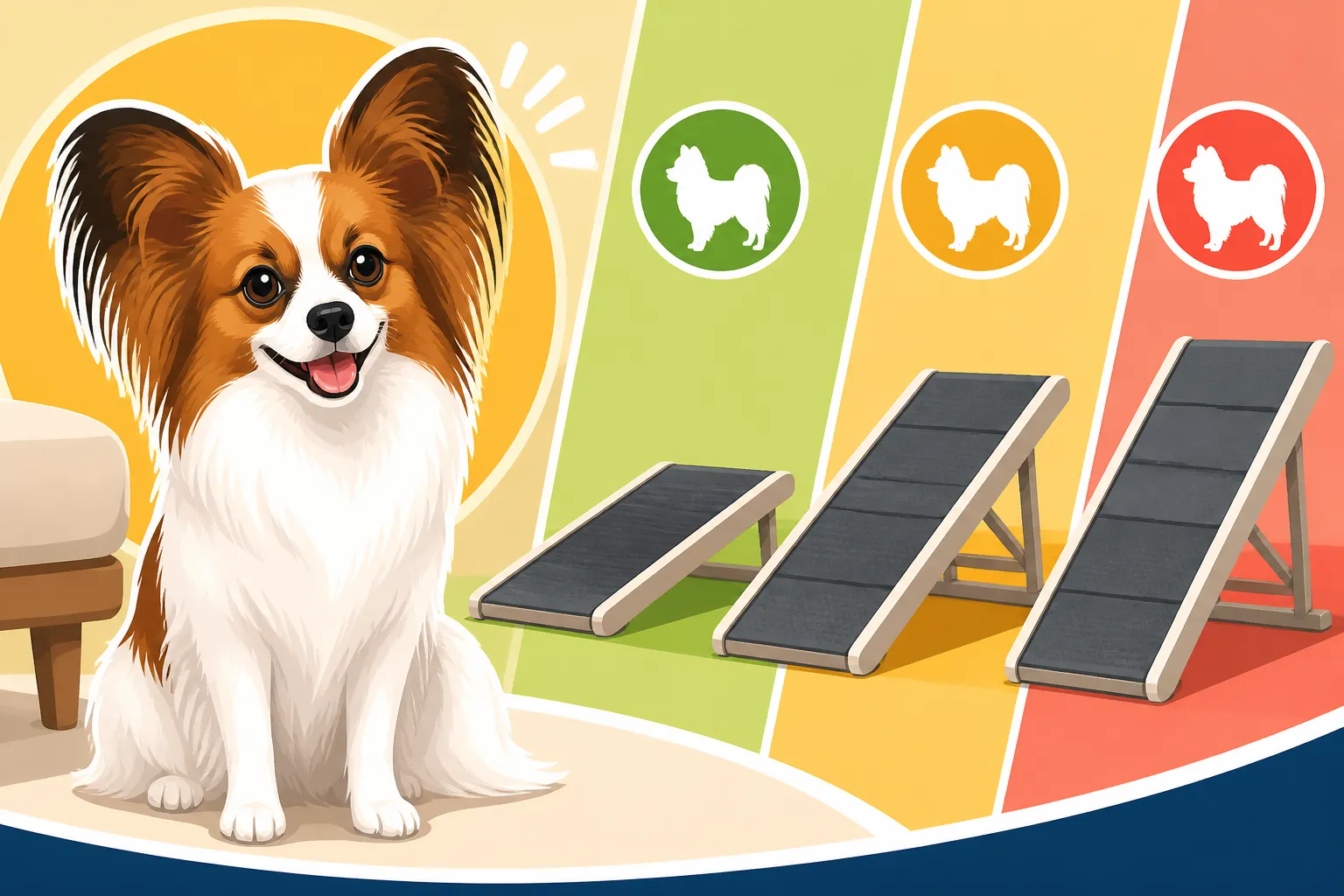
The Golden Rule: Longer Ramp = Gentler Slope. A ramp that is just barely tall enough for your furniture will be steep. A ramp that is significantly longer will have a much more gradual incline, making it easier and safer for your Papillon to ascend and descend. For example, if your sofa is 24 inches high, a 36-inch long ramp will be steeper than a 48-inch long ramp. Always err on the side of a longer ramp if space allows. Adjustable ramps are fantastic for this, as they let you fine-tune the height and incline. You can often find a good selection of these on sites like Amazon or Chewy, which makes comparing features much simpler.
Incline, Traction, and Surface Material: Non-Negotiables
Beyond mere height, the quality of the ramp's surface and its angle are paramount for a Papillon.
Gentle Incline is King
A steep incline will deter your Papillon from using the ramp, and more importantly, it can still put strain on their knees. A good rule of thumb is to aim for an incline that doesn't feel like climbing a hill. Think of a long, gradual slope rather than a short, sharp ascent. If the ramp feels too steep for you to comfortably walk up, it's definitely too steep for your Papillon.
Traction, Traction, Traction
This cannot be stressed enough. A slick plastic or smooth wooden ramp is an accident waiting to happen. Your Papillon needs secure footing, both for confidence and safety. Look for ramps with:
- Carpeted surfaces: This is often the best option, providing excellent grip. Ensure the carpet is well-secured and not prone to slipping or bunching.
- Sandpaper-like coatings: Some ramps have a textured, non-slip coating that works well. Make sure it's not too abrasive for their delicate paw pads.
- Rubber treads: Good quality rubber can also provide sufficient grip.
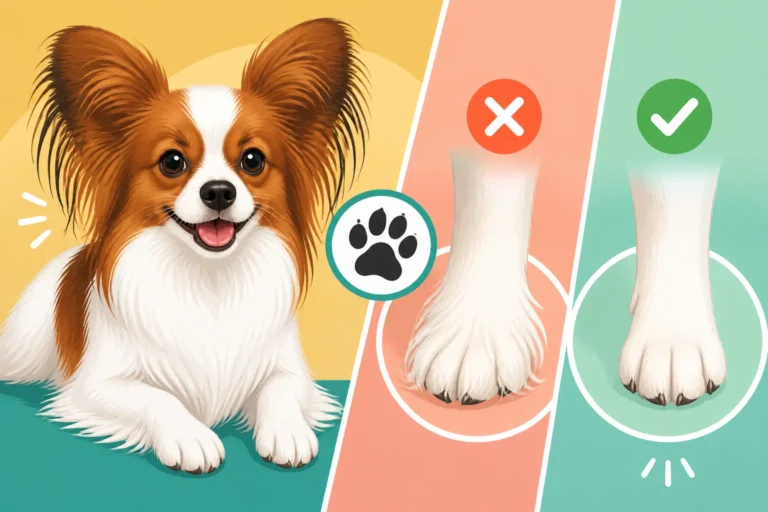
Without proper traction, your Papillon might hesitate, slip, or even try to jump off the ramp midway, defeating the whole purpose. Slipping can lead to fear of the ramp, and potentially, serious injury. Remember, their tiny nails, while they do help with traction on some surfaces, are not enough to compensate for a truly slick ramp. For more on nail care, see Why a Papillon's Nails Affect Its Knees.
Sturdy and Stable Materials
Ramps need to be stable. Flimsy, wobbly ramps will make your Papillon nervous and quickly discourage them from using it. Look for ramps made of:
- Wood: Often sturdy and aesthetically pleasing.
- High-quality plastic: Can be lighter for portability, but ensure it's rigid and doesn't flex.
- Aluminum: Great for portable car ramps due to its strength-to-weight ratio.
The ramp should have non-slip feet on its base to prevent it from sliding on hardwood or tile floors. A locking mechanism that secures the ramp to the furniture edge is also a fantastic feature, preventing accidental dislodgement as your Papillon moves on and off.
Ramps for Every Corner of Your Papillon's World
Your Papillon's adventurous spirit doesn't stop at the living room. Thinking about all the places they might jump from is key to comprehensive injury prevention.
Home Sweet Home: Beds and Sofas
This is where most of us start our ramp journey. Our beds and sofas are often central to our Papillons' lives—they want to snuggle, play, and just be near us.
- Beds: If your bed is particularly high, consider an extra-long ramp. Even if your Papillon can jump up, landing down is often more jarring. For a tall king-size bed, you might need a ramp in the 40-50 inch range. Remember Whether a Papillon Should Be Stopped From Jumping Off Furniture — the answer is usually yes!
- Sofas and Chairs: These are usually a bit lower than beds but still pose a significant jump risk. A ramp in the 30-40 inch range should cover most standard sofas. Place the ramp in an easily accessible, well-lit area where your Papillon will naturally use it.
Some owners prefer to use dog stairs rather than ramps for lower furniture. While stairs can work for some, a ramp is generally considered safer for joint health as it removes the impact of stepping down. However, if using stairs, ensure they are wide, stable, and have shallow risers.
On the Go: Car Ramps and Outdoor Safety
Your Papillon probably loves car rides, but the repeated jumping in and out of a vehicle, especially an SUV or truck, can be incredibly damaging.
- Car Ramps: Portable, foldable ramps are invaluable. They often come with a carrying handle and are designed to extend to reach varying vehicle heights. Ensure the surface is rugged and weatherproof for outdoor use. Many models available on Chewy or Amazon are specifically designed for vehicle entry and exit.
- Decks and Patios: If you have a raised deck or patio, a dedicated outdoor ramp can save your Papillon from unnecessary jumps. These ramps need to be even more durable and weather-resistant.
Thinking proactively about these scenarios can make a huge difference in your Papillon's joint longevity.
Encouraging Ramp Use and Long-Term Joint Health
Having the perfect ramp is only half the battle; getting your Papillon to actually use it is the other. With their intelligence and eagerness to please, Papillons are generally quick learners, but consistency and positive reinforcement are key.
Training for Success
Start training your Papillon to use the ramp as soon as you get it, ideally when they're still puppies. When to Start Training a Papillon Puppy emphasizes the importance of early positive exposure.
- Introduce it gently: Place the ramp near the furniture it's intended for, but don't force your Papillon onto it. Let them sniff and explore.
- Use high-value treats: Place treats on the ramp's surface, starting at the bottom and gradually moving them up. Lure them onto the ramp with praise and excitement.
- Make it a game: Turn it into a fun activity. Play "follow the leader" up and down the ramp.
- Consistency is vital: Every single time they want to get on or off the furniture, gently guide them to the ramp. Don't let them jump, even once, if you can help it. This might mean physically blocking their jump path or lifting them to the ramp if they're persistent.
- Be patient: Some Papillons take to it instantly, others need more time. Never scold them for not using it; just redirect and reward.
Beyond Ramps: Holistic Joint Support
While ramps are a cornerstone of preventing orthopedic issues, a comprehensive approach to joint health will serve your Papillon even better.
- Weight Management: Keeping your Papillon at a healthy weight is crucial. Extra pounds put immense strain on their delicate joints, exacerbating conditions like patellar luxation. Even an extra ounce or two on a 7-pound dog is significant. Regular, measured feeding and high-quality food, like those offered by brands such as Ollie, can make a difference. Always consult your vet for the ideal weight range for your individual dog. Why an Overweight Papillon Strains Its Knees explains this in detail.
- Joint Supplements: Many veterinarians recommend joint supplements containing glucosamine, chondroitin, and MSM, especially as Papillons age. These can help support cartilage health and reduce inflammation.
- Regular, Appropriate Exercise: Daily walks and play sessions that don't involve high-impact jumps are important for muscle strength and overall health. A strong core and leg muscles help support the joints.
- Regular Vet Check-ups: Your veterinarian can monitor your Papillon's joint health, advise on preventative care, and recommend specific treatments if issues arise. This is especially true for senior Papillons, whose needs change significantly. Caring for a Papillon Past Eleven provides excellent advice on this stage of life.
Investing in good ramps and consistent training now can save you a world of heartache (and potentially large vet bills) down the road. It allows your vivacious Papillon to continue enjoying their favorite spots safely, giving them a better quality of life for many years to come.
Disclaimer
This article is for general informational purposes only and does not constitute professional advice. Laws, prices and regulations vary by location and change over time. Consult a qualified professional for guidance on your specific situation.