Whether a Papillon Can Run on Hot Asphalt
Oh, the joys of a beautiful sunny day with your lively Papillon! You want to get out, stretch those little legs, and enjoy some fresh air. But then you step outside, feel the radiating heat from the pavement, and a sudden wave of panic washes over you. Is this safe for my tiny dog? Can a Papillon run on hot asphalt without burning their delicate paw pads? This is a worry that haunts many of us who share our lives with these wonderful, spirited little dogs, and it's a completely valid concern. Unlike our own tough, shoe-protected feet, our Papillons' paws are exposed to whatever surface they walk on. This guide is here to shed light on the very real dangers of hot asphalt and, more importantly, to give you actionable steps to keep your Papillon's precious paws safe and sound, so you can both enjoy those outdoor adventures worry-free.
Understanding the Danger: Why Hot Asphalt Is a Serious Threat to Papillon Paws
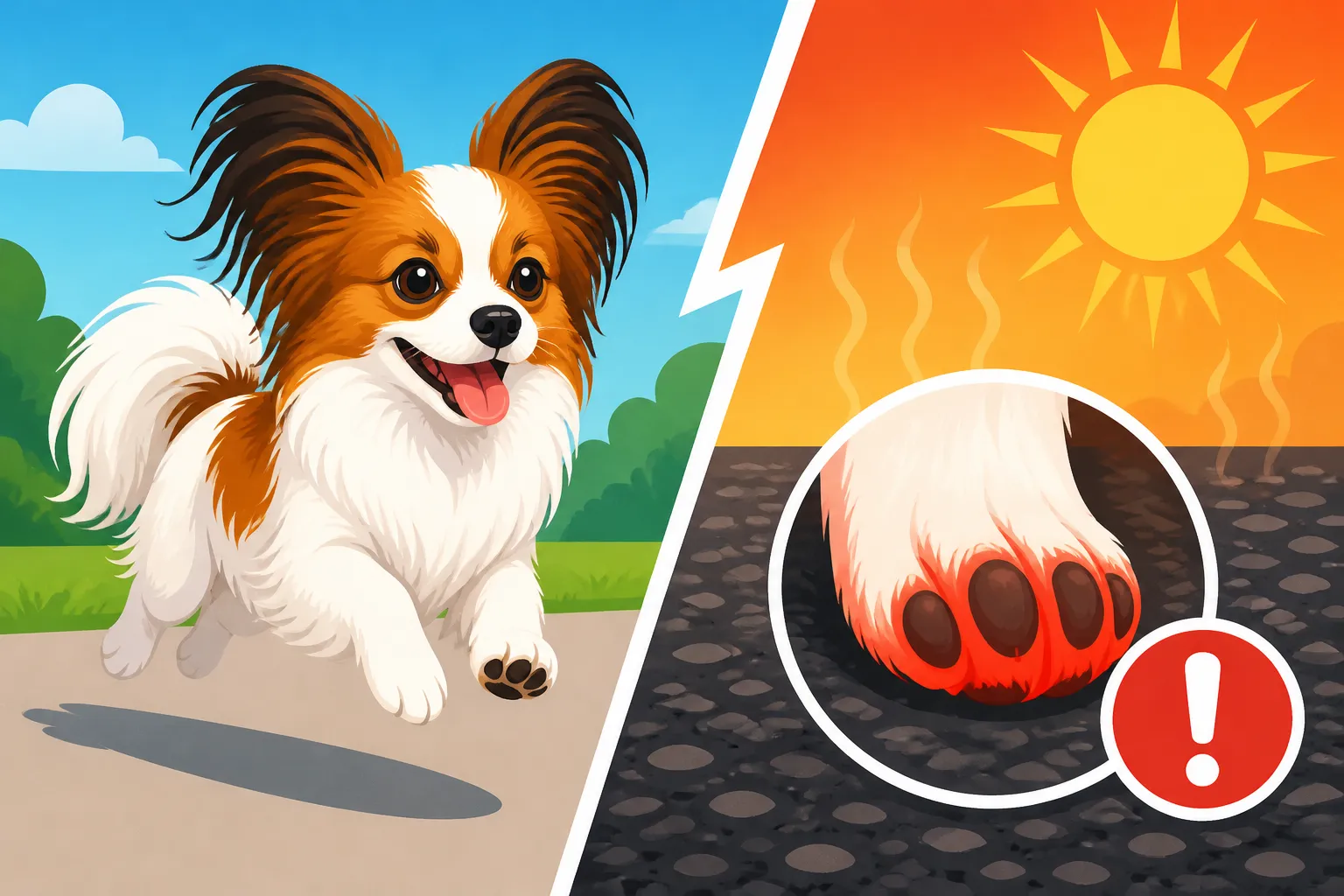
It's easy to forget that what feels comfortable to us in our sneakers can be scorching hot for our dogs. When you're standing on pavement, you might notice the heat radiating up, but your shoes offer a crucial layer of protection. Your Papillon, however, has no such luxury. Their paw pads, while built for durability, have a limit, and hot asphalt can quickly exceed it, leading to painful and potentially serious burns.
The Anatomy of a Papillon's Paw Pad
Let's take a moment to appreciate what those adorable little paws are actually made of. A Papillon's paw pads are essentially thick, fatty cushions covered with pigmented, keratinized skin – designed for traction, shock absorption, and protection against minor abrasions. They're surprisingly tough for their size, capable of navigating various terrains. However, they aren't insulated against extreme temperatures in the same way our shoe-clad feet are.
Beneath that tough outer layer, the pads contain sweat glands, which are one of the few places a dog can sweat, helping them to regulate body temperature. But this also means they are directly in contact with the ground and absorb heat readily. Unlike the fur that covers the rest of their body, providing some insulation, the paw pads themselves are bare. Imagine walking barefoot on a sizzling sidewalk – that's precisely what your Papillon experiences. Because Papillons are so small, their paws are closer to the ground, absorbing heat even more quickly and efficiently than a larger dog's paws might. This makes them particularly vulnerable, especially considering How Much Exercise a Papillon Needs daily, often on urban surfaces.
How Hot is Too Hot? The Science of Surface Temperature
This is where many owners get caught out. The air temperature you see on your phone or hear on the news is not the same as the ground temperature. Asphalt, being a dark material, absorbs and retains heat from the sun far more efficiently than the air around it. On a sunny day, the asphalt can be significantly hotter than the ambient air temperature. We're talking about a difference that can turn a pleasant 77°F (25°C) air temperature into a searing 125°F (52°C) pavement. At 87°F (30°C) air temperature, the asphalt could hit a shocking 143°F (62°C). And if the air climbs to 100°F (38°C), that pavement might be an agonizing 160°F (71°C).
To put that into perspective for us humans: skin can suffer damage in just 60 seconds at 120°F (49°C), and in as little as five seconds at 140°F (60°C). These aren't just uncomfortable temperatures; they are burn-inducing temperatures. So, while you might feel a pleasant breeze, the ground beneath your Papillon's paws could be a silent, invisible threat, causing damage that you might not even realize until it's too late. It’s a harsh reality that often goes overlooked until a mishap occurs.
Recognizing the Signs of Burned Paws in Your Papillon
Early detection is absolutely critical when it comes to paw pad burns. If you suspect your Papillon has walked on hot asphalt, or if they start showing any unusual behavior during or after a walk, you need to investigate immediately. The signs can range from subtle discomfort to overt pain.
One of the first things you might notice is your Papillon limping, holding a paw up, or simply refusing to walk further. They might try to shift their weight or walk gingerly, as if stepping on glass. If you continue the walk, they might eventually lie down and refuse to move, or try to find a patch of grass to stand on. Once you get home, pay close attention to their paws. Excessive licking or chewing at their paw pads is a huge red flag – it’s an instinctual attempt to soothe discomfort or pain. Visually, you might see redness, swelling, or even blisters on the pads. In more severe cases, the pads might appear darker than usual, or the outer layers of skin could be peeling away. If you gently touch their pads, they might feel unusually hot, even after being indoors for a while. Beyond the physical signs, behavioral changes can also signal pain: lethargy, a loss of appetite, or an unusual irritability can all stem from the discomfort of burned paws. Knowing What a Papillon Does All Day can help you spot these changes more quickly.
Preventing Paw Burns: Practical Strategies for Papillon Owners
The good news is that paw pad burns are entirely preventable with a little awareness and planning. As dedicated Papillon owners, our goal is to ensure their safety and comfort, and that includes protecting those precious paws from scorching surfaces. It means being proactive rather than reactive, especially during warmer months.
The Five-Second Rule and Beyond
You've likely heard of the "five-second rule," and it's truly your best friend when assessing surface temperature. It's simple: place the back of your bare hand firmly on the pavement, concrete, or any other ground surface where your Papillon will be walking. If you can't hold your hand there comfortably for at least five seconds, it is absolutely too hot for your dog's paws. Do not pass go, do not collect $200; find an alternative walking surface or activity.
This rule isn't just for asphalt, mind you. Concrete sidewalks can also absorb a lot of heat, as can artificial turf in parks or yards. Even sandy beaches can get incredibly hot. Always check every surface your Papillon will encounter. And remember, the five-second rule is a minimum guide. If it feels borderline, err on the side of caution. It's far better to turn around and find a cooler path than risk a burn. Think about the entire path you plan to take. Is there consistent shade? Are there grassy verges? If not, a different route or time of day is essential.
Essential Gear: Paw Protection Options for Your Papillon
Sometimes, avoiding hot surfaces entirely just isn't possible, or perhaps your Papillon is an agility superstar who needs to train regardless of minor surface heat. This is where paw protection gear comes into play. There are a few options, each with its own benefits and drawbacks, so you can choose what works best for your specific Papillon and your lifestyle. For example, if you often wonder Whether a Papillon Should Wear Boots, the answer is a resounding "yes" when the pavement is hot.
Dog Boots/Booties: These offer the most comprehensive protection. Good quality dog boots act as a barrier against extreme heat, rough terrain, and even cold or icy conditions. They come in various sizes and materials, designed to stay on while still allowing for natural paw movement. Brands like Ruffwear are known for their durable options, and you can find a wide selection of various brands and styles on platforms like Chewy or Amazon. Getting the right fit is crucial to prevent rubbing or falling off, which can be a bit of a trial-and-error process. Start with short wear times indoors to get your Papillon accustomed to them.
Paw Balms/Waxes: Products like Musher's Secret or other paw balms are excellent for conditioning your Papillon's paw pads. They create a breathable, protective layer that can guard against minor abrasions, dryness, and chapping. While they offer some minimal barrier against slightly warm surfaces, they are not a substitute for boots on hot asphalt. Think of them as preventative care to keep pads healthy and supple, making them less prone to cracking, which in turn makes them less vulnerable to injuries. You can find many effective paw balms on Chewy or even at your local pet supply store.
Here's a quick comparison of paw protection methods:
| Protection Method | Pros | Cons | Best Use Case |
|---|---|---|---|
| Dog Boots | Excellent heat barrier, protects from sharp objects, versatile for various weather | Can be bulky, some dogs resist, proper fit essential, need consistent checking for rubbing | Hot asphalt, snow, rough terrain, extended walks, agility training |
| Paw Balms/Waxes | Conditions pads, mild protection from rough surfaces, natural feel, prevents cracking | No significant heat barrier against truly hot asphalt, can be messy, reapplication needed | Daily conditioning, mild surface protection, preventing minor irritation |
| Timing Walks | Free, natural approach, avoids equipment fuss | Limits outdoor activity times, requires strict adherence, not always feasible on a busy schedule | All owners, as a primary preventive measure whenever possible |
| Grassy Areas | Natural, safe surface, comfortable for paws, promotes natural gait | May not always be available, can be damp or dirty, potential for pests (ticks) | Anytime a safe, cool, natural alternative is available |
Timing Your Walks and Avoiding Peak Heat
One of the simplest and most effective strategies requires no special gear at all: adjust your walking schedule. During warmer months, avoid walking your Papillon during the hottest parts of the day. This typically means skipping walks between 10 AM and 4 PM, when the sun is highest and pavement temperatures are at their peak.
Instead, aim for early morning walks, right after sunrise when the ground has had all night to cool down. Or, plan for late evening strolls, after the sun has begun to set and the ambient temperature, along with surface temperatures, has dropped significantly. On particularly scorching days, even early morning or late evening might not be enough. In these cases, sticking to grassy parks or shaded trails can provide a cooler, safer surface. If your neighborhood has no such options, consider foregoing a traditional walk altogether and opting for indoor playtime, puzzle toys, or training sessions. Papillons are smart cookies and often enjoy mental stimulation as much as physical exercise. What a Papillon Does All Day often includes these types of indoor activities, so leaning into them on hot days is a win-win. Remember to always carry water for both you and your Papillon, regardless of the temperature, to stay hydrated.
What to Do If Your Papillon's Paws Get Burned
Despite our best efforts, accidents can happen. Maybe you misjudged the heat, or your Papillon darted onto a hot patch before you could react. If you suspect your Papillon has burned paws, swift and appropriate action is key to minimizing pain and preventing complications. Don't panic, but do act quickly and calmly.
Immediate First Aid Steps at Home
The very first thing you need to do is get your Papillon off the hot surface immediately. If you're out on a walk, pick them up and carry them to a shaded, cool area, or directly home. Once safely off the hot ground, the priority is to cool their paws down.
- Cool the Paws: Gently rinse or soak your Papillon's paws in cool (not icy!) water. You can use a shallow basin, a hose on a gentle setting, or simply apply cool, wet towels to their pads. Continue this for 10-15 minutes to bring the temperature down. Avoid using ice directly on the skin, as it can cause further damage.
- Clean Gently: If the paws are dirty from the ground, gently clean them with a mild, pet-safe soap and cool water. Rinse thoroughly and then pat the paws dry with a clean towel. Be very gentle, as burned skin is incredibly sensitive.
- Prevent Licking: Dogs naturally want to lick and chew at injuries, but this can introduce bacteria, worsen the burn, and interfere with healing. If you have an Elizabethan collar (E-collar or "cone of shame"), put it on your Papillon immediately. If not, try to distract them or hold them gently to prevent them from accessing their paws until you can get proper veterinary advice.
- Observe and Support: Keep your Papillon resting and off their feet as much as possible. Offer water, but don't force food if they're in pain. Keep a close eye on their paws for any changes.
When to Seek Veterinary Care for Paw Burns
While immediate first aid is crucial, it's incredibly important to understand that any suspected paw pad burn warrants a visit to your veterinarian. What might seem like a minor burn to you could be much more serious for your Papillon, and complications like infection are a real risk.
You absolutely need to see the vet if you observe any of the following: blisters, deep redness, peeling skin, areas of discoloration (blackened or very dark patches), or if your Papillon is showing significant signs of pain such as persistent limping, crying, or refusing to put weight on a paw. Even if the burn seems minor, the vet can properly assess the depth and extent of the injury, clean the wound thoroughly in a sterile environment, and determine if antibiotics or pain medication are needed. They might also apply specialized bandages or dressings to protect the paws and promote healing. Leaving paw burns untreated can lead to severe infections, prolonged pain, and even permanent damage to the paw pads, affecting your Papillon's comfort and mobility in the long run. If you're ever concerned about your Papillon's overall health, remember that Whether a Papillon Needs a Yearly Eye Exam or general wellness checks are part of responsible ownership.
The Recovery Process and Long-Term Paw Care
The recovery process for burned paw pads can be lengthy, sometimes taking several weeks, depending on the severity of the burn. During this time, your Papillon will need strict rest and diligent care. Your veterinarian will likely provide specific instructions, which may include regular bandage changes, administering prescribed medications (antibiotics to prevent infection, pain relievers to manage discomfort), and restricting activity. It’s vital to follow these instructions precisely, even if your Papillon seems to be improving quickly. Premature activity can re-injure the delicate healing tissue.
Once the initial healing phase is over, you'll need to reassess your outdoor walking habits to prevent recurrence. This might mean sticking even more rigorously to early morning or late evening walks, exploring new routes with more grass and shade, or investing in high-quality dog boots for any unavoidable hot pavement excursions. Regularly using a paw balm can also help keep the pads conditioned and resilient, preventing dryness and cracking, which make paws more susceptible to injury. You can find excellent conditioning balms at stores like Chewy, or sometimes even through your vet. For a Papillon's general well-being, especially one recovering from injury, paying attention to their diet can also be beneficial, ensuring they get all the nutrients to support skin and tissue repair, perhaps through specialized foods or supplements you might find from a brand like Ollie. Considering how active many Papillons are, protecting those paws is just as important as Setting Up a House That Protects a Papillon's Knees to prevent other common injuries.
Disclaimer
This article is for general informational purposes only and does not constitute professional advice. Laws, prices and regulations vary by location and change over time. Consult a qualified professional for guidance on your specific situation.