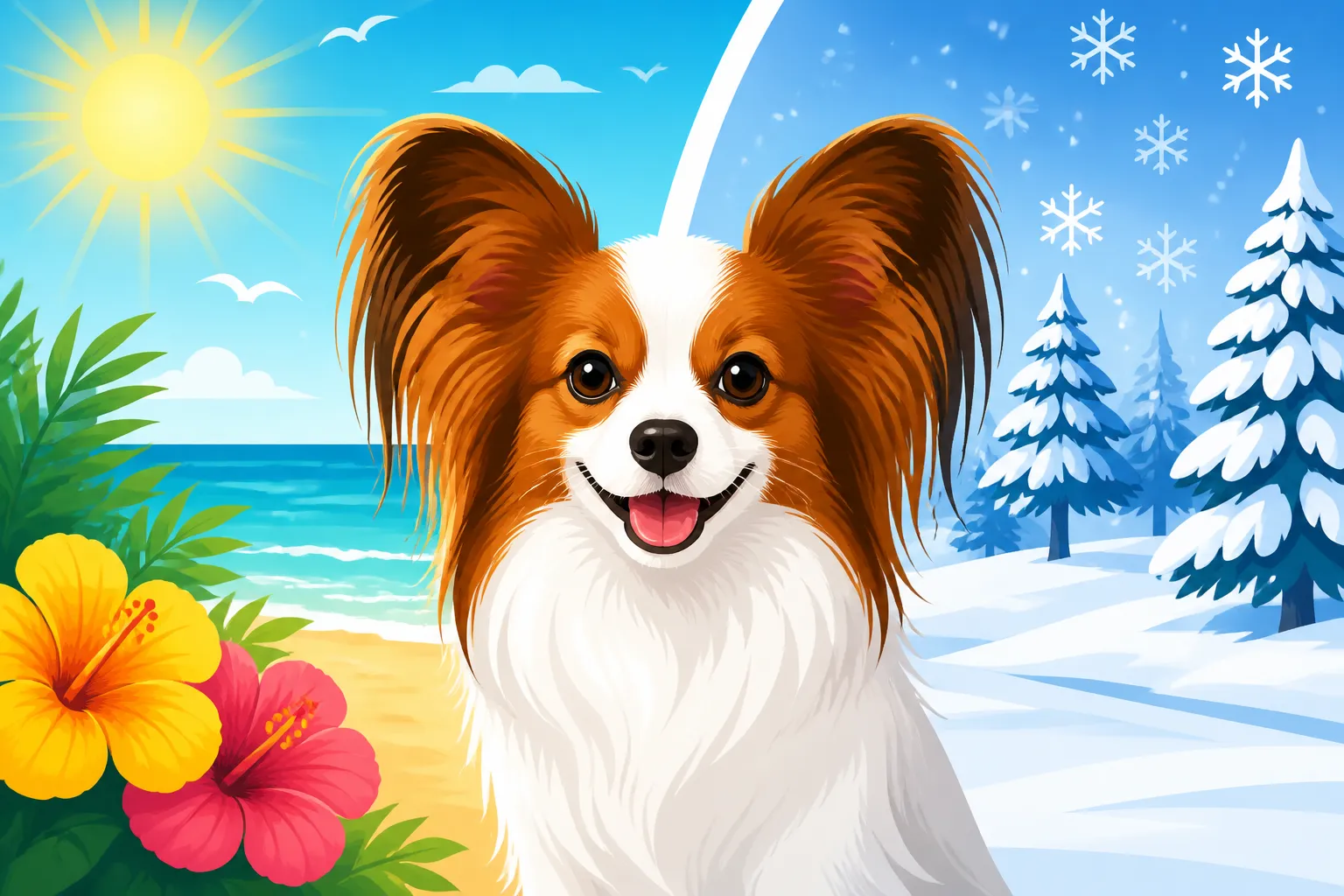
A Papillon in Summer and Winter
Oh, the weather outside can be frightful, and delightful, but for our dainty-looking Papillon friends, it presents a unique set of challenges! While these little butterfly dogs are surprisingly robust and energetic, their small size and single coat mean they can struggle with extreme temperatures. This guide is all about helping you navigate the seasons, ensuring your beloved Papillon stays comfortable, safe, and happy, whether the summer sun is blazing or winter winds are howling.
Understanding Your Papillon's Unique Thermoregulation
It's easy to look at a Papillon, with their elegant, flowing coats and delicate appearance, and assume they're super fragile when it comes to the weather. And while they're not built for arctic expeditions or desert hikes, understanding their specific physiological makeup can help us provide the best care, no matter the season. They're tougher than they look, but they're not invincible!
The Single Coat Advantage (and Disadvantage)
One of the most defining characteristics of a Papillon's coat is that it's a single layer. Unlike many breeds, like Huskies or Golden Retrievers, our Papillons don't have that dense, insulating undercoat. On the one hand, this is fantastic because it means less shedding overall, and it certainly helps them dissipate heat more efficiently when it's warm. They don't have that thick layer trapping heat against their body.
However, this "advantage" quickly becomes a disadvantage when the temperatures drop. Without that fluffy undercoat, there's very little natural insulation to keep them warm. Imagine trying to stay cozy in a thin silk scarf in a snowstorm – that's a bit like what a Papillon experiences without proper protection. When I take my little guy out on a brisk autumn morning, I can feel the chill right through his fine hair to his skin when I run my hand along his back. It makes you realize just how little barrier that single coat provides against the cold. This is why you'll find yourself reaching for a sweater or coat for your Papillon far more often than for, say, a Scottish Terrier, who has a much denser, wiry double coat. You can learn more about Why a Papillon Has No Undercoat.
Small Body, Big Surface Area
Another key factor in your Papillon's ability to regulate its temperature is its size. Papillons are tiny, typically weighing in at just a few pounds. This small body mass means they have a relatively large surface area compared to their body volume. Think of it this way: a small dog has a lot more skin per pound of body weight than a large dog.
In practical terms, this means that in cold weather, they lose body heat much, much faster than a larger dog. There's simply less mass to generate and hold onto heat. Conversely, in hot weather, that large surface area can mean they absorb heat more quickly from their surroundings, making them prone to overheating. Their metabolism works hard to maintain their core temperature, and in extremes, this can become exhausting. They might burn more energy trying to stay warm, or conversely, struggle to cool down when their system is overwhelmed by external heat. It’s a constant balancing act for their little bodies, and understanding this helps us provide them with the right level of intervention and protection.
Summer Care for Your Papillon: Beating the Heat
Summer, with its long sunny days, often means more outdoor fun. But for a small dog like a Papillon, those fun times can quickly turn dangerous if we're not vigilant about the heat. They might look like they're having a blast chasing butterflies, but their tiny bodies can't always tell them when they're pushing too hard in the sun.
Recognizing Heat Stress and Heatstroke
One of the most critical things you can do as a Papillon owner is to recognize the signs of heat stress and, more severely, heatstroke. These conditions can escalate incredibly fast in small dogs, and what starts as a bit of panting can become a life-threatening emergency in minutes. Don't ever think, "Oh, they'll be fine." It's not worth the risk.
Look out for these red flags:
- Excessive, uncontrollable panting: This is usually the first sign. It's more than just a little huffing; it's deep, rapid, and sustained.
- Lethargy or weakness: They might seem unusually tired, stumble, or even collapse.
- Bright red gums or tongue: This indicates their blood vessels are dilating trying to cool off.
- Glazed eyes: Their eyes might look unfocused or glassy.
- Vomiting or diarrhea: These are more severe signs and mean things are getting serious.
- Unsteady gait or disorientation: They might look drunk or confused.
If you suspect heat stress, act immediately. Get your Papillon into the shade or an air-conditioned space. Offer cool (not ice-cold) water. You can gently wet their paw pads, ears, and belly with cool water to help bring their temperature down, but avoid dousing them entirely with very cold water, as this can cause their systems to go into shock. Then, get them to a veterinarian immediately. Heatstroke is a medical emergency that requires professional intervention. Even if they seem to recover, internal damage can still be present.
Managing Outdoor Activities in Warm Weather
When the mercury rises, it's not about stopping outdoor fun entirely, but about smart planning. We want our Papillons to enjoy the fresh air, but safely. Think about shifting your routine to accommodate the heat.
The best times for walks and outdoor play are typically early in the morning, before the sun has had a chance to fully heat everything up, and late in the evening, after it's started to cool down. Avoid the midday heat, usually between 10 AM and 4 PM, when the sun is at its strongest and surfaces are hottest. This is crucial because a Papillon's paw pads are sensitive. Imagine walking barefoot on scorching asphalt – that's what your dog experiences. A good rule of thumb is to place the back of your hand on the pavement for five to seven seconds. If it's too hot for you, it's too hot for their paws. This simple test is a lifesaver, especially when you consider Whether a Papillon Can Run on Hot Asphalt. Opt for grassy areas, shaded parks, or even indoor training sessions during peak heat. Always, and I mean always, carry fresh water and a collapsible bowl for your Papillon, even for short outings. Portable water bottles with built-in dispensers are readily available on platforms like Amazon and can be incredibly convenient for staying hydrated on the go.
Keeping Cool Indoors and Out
Beyond smart scheduling, there are plenty of ways to actively help your Papillon stay cool. Indoors, air conditioning is your best friend. If you don't have AC, fans can help circulate air, but remember that fans primarily cool humans by evaporating sweat; dogs don't sweat like we do, so a fan alone isn't enough in extreme heat.
Cooling mats are fantastic inventions for Papillons. These mats contain a gel that activates with pressure, providing a cool surface for your dog to lie on. They don't require refrigeration or electricity, making them super convenient. You can also get cooling vests or bandanas that you wet and wring out; as the water evaporates, it helps cool your dog. If your Papillon enjoys a little splash, a shallow wading pool in the shade can be a fun way to cool off, but always supervise them. You might be wondering Whether a Papillon Needs a Cooling Mat, and the answer is often a resounding yes, especially if your home gets warm.
And, as a non-negotiable rule: never, ever leave your Papillon in a parked car, not even for a minute with the windows cracked. The temperature inside a car can skyrocket in a matter of minutes, even on a seemingly mild day, turning deadly before you realize it. It's a risk that's simply not worth taking.
Winter Care for Your Papillon: Embracing the Chill
While Papillons thrive on activity and love to prance around, winter can be a real challenge for them. Their single coat and small size mean they get cold very quickly. But with the right precautions, they can still enjoy the crisp air and even a dusting of snow!
Protecting Paws from Cold and Chemicals
Winter walks come with their own set of hazards for those tiny Papillon paws. Ice balls can form between their paw pads, causing discomfort and making it difficult to walk. Worse, rock salt and chemical de-icers used on sidewalks and roads can be extremely irritating to their sensitive skin and can be toxic if ingested when your dog licks their paws.
Before heading out, consider applying a paw balm or wax to create a protective barrier. If your Papillon tolerates them, dog boots are an excellent solution, offering both insulation and protection from harsh chemicals. It might take some patience and positive reinforcement to get them used to wearing boots, but it's worth the effort. After every winter walk, make it a habit to wipe your Papillon's paws thoroughly with a damp cloth to remove any salt, ice, or chemicals. Pay special attention to the areas between the pads.
Dressing for Success: Coats and Sweaters
This isn't about fashion, it's about function! Because of their lack of an undercoat and small stature, a Papillon genuinely needs extra warmth when the temperatures drop. A good quality coat or sweater isn't a luxury; it's a necessity for their health and comfort.
Look for coats that cover their back and belly, providing maximum coverage. Waterproof or water-resistant options are ideal for snowy or damp conditions. For very cold weather, an insulated coat offers the best protection. Ensure the fit is snug but not restrictive, allowing for full range of motion. It shouldn't chafe or be too loose that they can slip out. You can absolutely tell when a Papillon is grateful for their cozy layer – you'll see them prancing around with more vigor than if they were left shivering. This is exactly why the question of Whether a Papillon Needs a Coat in Winter comes up so often, and the answer, for most, is a definite yes.
Safe Winter Exercise and Potty Breaks
Even with a stylish new coat, winter means adjusting your outdoor activity levels. Long, leisurely strolls might need to be replaced with shorter, more frequent bursts of activity. The goal is to keep them moving enough to stay warm without exposing them to the biting cold for too long. Watch your Papillon closely for signs of cold: shivering, hunched posture, lifting paws, or reluctance to move are all indicators that it's time to head indoors.
When it's truly frigid, consider indoor games to burn off energy. Fetch in the living room, hide-and-seek with treats, or practicing new tricks can provide much-needed mental and physical stimulation. For potty breaks, ensure they have quick and easy access to a safe outdoor area, preferably one that's been cleared of snow and salt. Supervise them closely, and bring them back inside as soon as they've done their business. Don't underestimate How Long a Papillon Can Stay Out in Cold – it's often much shorter than you think. A good guideline is to bring them in if they start shivering uncontrollably or showing discomfort.
Nutritional Considerations for Seasonal Changes
Our Papillons might be small, but their nutritional needs are mighty, and they can subtly shift with the seasons. Just like we might crave hearty stews in winter and light salads in summer, our dogs' bodies also respond to environmental changes.
Adjusting Caloric Intake
In the dead of winter, when your Papillon might be expending more energy to simply stay warm, a slight increase in caloric intake might be appropriate. This isn't a license to overfeed, but rather a subtle adjustment to compensate for the extra energy burned. However, you absolutely must watch their weight carefully. Papillons are prone to patellar luxation, and carrying even a few extra ounces puts undue strain on those delicate knee joints. You don't want to accidentally contribute to a problem like What Patellar Luxation Does to a Papillon by overfeeding.
Conversely, in the peak of summer, if your Papillon's outdoor activity levels naturally decrease due to the heat, you might need to slightly reduce their food portion to prevent unwanted weight gain. An inactive dog needs fewer calories. The key here is observation and balance. Always consult your veterinarian before making significant changes to your dog's diet. They can help you determine the right amount based on your Papillon's age, activity level, and body condition.
Hydration All Year Round
Hydration is non-negotiable for dogs, regardless of the season. They need constant access to fresh, clean water. In summer, it might seem more obvious as they're panting more, but it's just as important in winter. Sometimes, dogs drink less in colder weather, but their bodies still need that vital fluid. Ensure their water bowl is always full and clean, and consider a ceramic or stainless steel bowl as they are easier to keep hygienic than plastic.
In summer, you might even consider adding a tiny splash of water or low-sodium broth to their kibble to encourage extra fluid intake. For those who feed fresh food, brands like Ollie offer moisture-rich options that contribute to overall hydration. In winter, ensure their water isn't too cold, as some dogs might be reluctant to drink icy water. A water fountain can encourage drinking by providing constantly circulating, fresh water, and you can find many options on Chewy or Amazon.
Supplements and Skin Health
The changing seasons can sometimes impact your Papillon's skin and coat health. Dry indoor heating in winter can lead to dry, flaky skin, while summer humidity might bring other issues. Omega fatty acid supplements, often derived from fish oil, can be incredibly beneficial year-round for supporting healthy skin and a shiny coat. They help maintain the skin's natural barrier, reducing dryness and irritation.
Always discuss any new supplements with your veterinarian before introducing them to your Papillon's diet. They can advise on the correct dosage and ensure it's appropriate for your dog's specific needs. A healthy diet, coupled with proper hydration and targeted supplements when needed, forms the foundation of year-round well-being for your little companion.
Grooming Adjustments for the Seasons
A Papillon's glorious, flowing coat is part of their charm, but it also demands specific care throughout the year. What works in one season might not be ideal in another, and understanding these nuances will keep their beautiful fringes free of mats and their skin healthy.
Coat Maintenance in Summer
While a Papillon's single coat doesn't usually require extensive grooming, summer can introduce new challenges. If your Papillon loves to splash in water, whether it's a lake or a kiddie pool, damp hair can mat more easily. Regular brushing becomes even more critical during warmer months to prevent tangles and mats, especially behind the ears, in the armpits, and on their "culottes" (the long feathering on their hind legs). You can find excellent brushes and combs on Chewy that are perfect for Papillon coats.
Keeping the hair around their paw pads neatly trimmed is also beneficial in summer. Excess hair can trap moisture, dirt, and debris, potentially leading to skin irritation or infections. Trimming this hair also provides better traction, which is important for preventing slips and falls on smooth surfaces, and can help dissipate heat. While you might be tempted to shave your Papillon for summer, resist the urge! Their single coat, while not an undercoat, still provides a layer of protection from the sun's harsh UV rays. Shaving can actually expose their delicate skin to sunburn and doesn't necessarily make them cooler. In fact, many people worry Whether a Papillon's Fringe Makes Summer Worse, but a light trim in necessary areas is usually sufficient, not a full shave.
Winter Coat Care
Winter, with its dry indoor air from heating systems, can make a Papillon's skin prone to dryness and static. To combat this, you might consider running a humidifier in the rooms where your Papillon spends most of its time. This adds moisture back into the air, benefiting both your skin and your dog's.
Continue with regular brushing to distribute natural oils throughout their coat, which helps to keep the skin moisturized and the coat healthy. Avoid excessive bathing in winter, as frequent washing can strip these essential oils, leading to further dryness. When you do bathe your Papillon, use a gentle, moisturizing shampoo and conditioner, and ensure their coat is thoroughly dry before they venture outside or are exposed to drafts. A damp Papillon in cold weather is a recipe for a chill! The goal is to maintain that silky texture and protect the underlying skin. This is all part of understanding Why a Papillon's Coat Is All Fringe and No Undercoat and how to best care for it throughout the year. You can also explore How Often a Papillon Needs Brushing for more detailed year-round advice.
Adapting Your Home Environment
Our homes are our Papillons' safe havens, and making a few seasonal adjustments can significantly impact their comfort and well-being. From cozy nooks to cool spots, creating the right environment is key to their health.
Safe Resting Spots for Hot Weather
When the temperatures soar, your Papillon needs reliable cool spots in the house. Think about areas with tile or linoleum flooring – these surfaces stay naturally cooler than carpet and are often favored by dogs looking to chill out. Raised dog beds, often made with mesh fabric, allow air to circulate underneath, preventing heat from building up.
Position beds and crates away from windows that get direct sunlight, especially during the hottest parts of the day. A dark, quiet room with air conditioning or a fan can become their summer sanctuary. Ensure they always have access to these cool zones, especially if you're not home to monitor them constantly. Giving them choices about where to rest helps them regulate their own temperature effectively.
Creating a Cozy Winter Retreat
Just as important as cool spots in summer are warm, draft-free retreats in winter. Papillons love to burrow and snuggle, so provide them with soft, plush beds, plenty of blankets, and even a "snuggle sack" if they enjoy tunneling. Many Papillon owners find that their dogs absolutely love to curl up under blankets, validating Whether a Papillon Burrows Under Blankets.
Consider elevated dog beds, which lift them off cold floors and away from drafts. If your home tends to be dry due to heating, a humidifier can help both your Papillon's respiratory system and their skin. For older Papillons, who might feel the cold more acutely or have joint stiffness, a heated bed on a low setting can provide immense comfort. It’s definitely worth considering Whether an Aging Papillon Needs a Warmer Bed as they move into their senior years.
Protecting Against Slips and Falls
While not strictly seasonal, protecting your Papillon from slips and falls is a year-round concern that can become more pronounced when they rush in from extreme weather, or if their activity levels change. Papillons are agile, but their small, fine-boned structure makes them susceptible to injuries, especially to their knees. This is particularly important for a breed prone to patellar luxation.
Hardwood, laminate, and tile floors can be like ice rinks for dogs, especially if they're moving quickly. Lay down rugs or runners in high-traffic areas and on paths to furniture. If your Papillon loves to jump on and off the sofa or bed, provide ramps or doggy steps. This small investment can prevent a potentially costly and painful knee injury. Many owners find themselves asking Whether a Papillon Needs Ramps to Furniture, and for the longevity of their Papillon's joint health, the answer is often yes. It's about proactive care to prevent problems down the line.
Common Seasonal Concerns and Solutions
Beyond the general care, each season brings its own specific set of health and comfort considerations for your Papillon. Being aware of these potential pitfalls and knowing how to address them can save you a lot of worry and your Papillon a lot of discomfort.
Allergies and Irritants (Summer)
Summer, with its abundant plant life, can bring seasonal allergies for some Papillons. Pollen from trees, grasses, and weeds can cause itching, skin redness, ear infections, or even respiratory symptoms. Insect bites, from fleas, mosquitoes, or other bugs, can also cause localized irritation or allergic reactions.
Signs of allergies include excessive scratching, licking (especially paws), rubbing their face, skin redness, or recurrent ear infections. If you notice these symptoms, a visit to your veterinarian is in order. They can help diagnose the specific allergen and recommend appropriate treatments, which might range from antihistamines to special shampoos, or even dietary adjustments. Keeping their environment clean, especially after walks in grassy areas, can help minimize exposure to pollen. A quick wipe down with a damp cloth after an outdoor excursion can make a big difference.
Cold-Related Illnesses (Winter)
Winter carries the risk of cold-related illnesses for small dogs like Papillons. Hypothermia, a dangerously low body temperature, can occur if they are exposed to cold for too long, especially if they are wet or very still. Frostbite is another concern, affecting exposed areas like paw pads, ear tips, and the tail, where blood flow is reduced in cold conditions.
Always bring your Papillon inside if they start shivering uncontrollably, seem lethargic, or lift their paws off the cold ground. If you suspect hypothermia, wrap them in warm blankets and contact your vet immediately. For frostbite, gently warm the affected area with lukewarm water (never hot!), and again, seek veterinary attention. Winter can also lead to "winter blues" – reduced outdoor activity can lead to boredom and even destructive behaviors. Combat this with increased indoor enrichment: puzzle toys (many great options on Chewy), interactive games, and short, engaging training sessions can keep their brilliant minds active and happy.
Flea, Tick, and Heartworm Prevention Year-Round
One common misconception is that flea, tick, and heartworm prevention are only necessary during the warmer months. This is absolutely not true for many regions! Fleas and ticks can survive indoors year-round, especially in heated homes. And mosquitoes, which transmit heartworm, can also pop up on surprisingly mild winter days or in sheltered environments.
Maintaining consistent year-round prevention is crucial for your Papillon's health. Discuss the best options with your veterinarian – there are many effective products available, including oral medications and topical treatments. Brands like Chewy often carry a wide range of vet-approved preventatives. Don't let your guard down, regardless of what the calendar says. Consistent protection is a cornerstone of a long and healthy life for your Papillon. You'll be glad you kept up with preventative care when you remember How Long a Papillon Lives.
Seasonal Care Checklist
To help keep all these tips organized, here’s a handy checklist for quick reference throughout the year.
| Category | Summer Care | Winter Care | Year-Round Best Practices |
|---|---|---|---|
| Outdoor Activity | Early/late walks, avoid midday heat, carry water | Shorter, more frequent walks, indoor play, dress warmly | Consistent exercise adjusted to conditions |
| Paws | Check for heat blisters, keep hair trimmed | Paw balm/boots, wipe off salt/ice after walks | Regular nail trims, inspect paw pads |
| Coat/Grooming | Brush frequently to prevent mats, light sanitary trims | Regular brushing, avoid over-bathing, humidify | Daily brushing, check for mats, use gentle products |
| Hydration | Constant fresh water, add water to food, cool bowls | Constant fresh water, ensure not too cold, accessible | Always available fresh water, check intake |
| Nutrition | Adjust calories if activity decreases, light meals | Slight calorie increase if active, monitor weight | High-quality diet, vet consult for changes |
| Home Environment | Cool resting spots (tile), fans/AC, shade outdoors | Warm, draft-free beds, blankets, humidifier, ramps | Non-slip surfaces, safe furniture access, quiet zones |
| Health & Safety | Watch for heatstroke, insect prevention | Watch for hypothermia/frostbite, chemical awareness | Year-round flea/tick/heartworm prevention, vet checks |
Disclaimer
This article is for general informational purposes only and does not constitute professional advice. Laws, prices and regulations vary by location and change over time. Consult a qualified professional for guidance on your specific situation.