Whether a Papillon Should Wear Boots
As a Papillon owner, you know their delicate little paws are often overlooked until there’s a problem. Many of us have cringed walking our tiny companions on scalding summer asphalt or seen them hobble on icy winter sidewalks, wondering if there's a better way to protect those precious pads. This guide aims to demystify the world of dog boots for Papillons, exploring when they’re genuinely useful, when they might be overkill, and what challenges you might face trying to get your butterfly-eared friend to wear them.
Understanding Your Papillon's Delicate Paws and Their Vulnerabilities
Our Papillons might have a robust, "big dog" attitude, but their physical structure often requires a bit more consideration, especially when it comes to their paws. These aren't the thick, calloused pads of a working dog; they're fine-boned and, frankly, a bit more sensitive.
The Anatomy of a Papillon Paw
Take a moment to really look at your Papillon's paw. You'll notice several key features. Firstly, the paw pads themselves are relatively thin compared to many other breeds. While they do offer some natural cushioning and grip, they aren't designed for extreme environments or prolonged exposure to harsh surfaces. Then there are the nails, which grow quickly and, if not kept trimmed, can splay the toes and even cause discomfort or injury. Why a Papillon's Nails Affect Its Knees is a good read on that topic. Finally, the charming feathering that Papillons are known for often extends down between their toes and around their feet. While beautiful, this hair can pick up debris, ice balls, or sticky substances, and it can also become a matting hazard if not regularly brushed. Whether a Papillon's Feet Need Trimming is something many owners ponder.
These specific anatomical traits mean Papillon paws, despite their small size, are quite vulnerable. A large breed might stride over gravel without a second thought, but a Papillon might feel every sharp edge. Their lightweight frame means they don't have the heavy-duty padding that a Golden Retriever or Labrador might possess. Think of it like walking barefoot versus wearing sturdy shoes – a Papillon often feels more of the ground beneath them than a larger, heavier-boned dog. This inherent sensitivity is why we, as responsible owners, need to be extra mindful of what surfaces they're walking on and for how long.
Why Papillon Paws Are Susceptible
The susceptibility of a Papillon's paws comes down to several factors inherent to their size and structure. Firstly, their proximity to the ground means they are directly exposed to whatever harsh conditions are present. In winter, this means direct contact with icy surfaces, road salt, and frozen ground. In summer, they are walking on pavement that can be significantly hotter than the ambient air temperature. A surface that feels merely warm to our hand can be scorching for a dog’s sensitive pads, potentially leading to burns.
Beyond temperature, there's the issue of urban and natural hazards. Broken glass, sharp pebbles, thorns, burrs, and even irritating chemicals from lawn treatments or road runoff can easily penetrate or abrade their delicate skin. Their light weight, while giving them incredible agility, also means they often land with less impact absorption than a heavier dog might have, making their pads more prone to injury from repetitive impact on hard surfaces. This vulnerability isn't just about pain in the moment; repeated minor injuries can lead to chronic irritation, infections, or even changes in gait, which, for a breed prone to Patellar Luxation Is the Papillon Problem You Will Actually Meet, is something to avoid at all costs. It's truly a frustration many of us face, watching our otherwise fearless little dogs tiptoe or refuse to walk on certain surfaces because their paws just can't handle it.
Why Boots Might Be More Than Just a Fashion Statement for Your Papillon
While some might view dog boots as a bit extravagant or just for "frou-frou" dogs, for a Papillon, they can be a genuinely practical tool for protection in specific circumstances. It's not about making a fashion statement; it's about safeguarding their health and comfort.
Extreme Weather Conditions
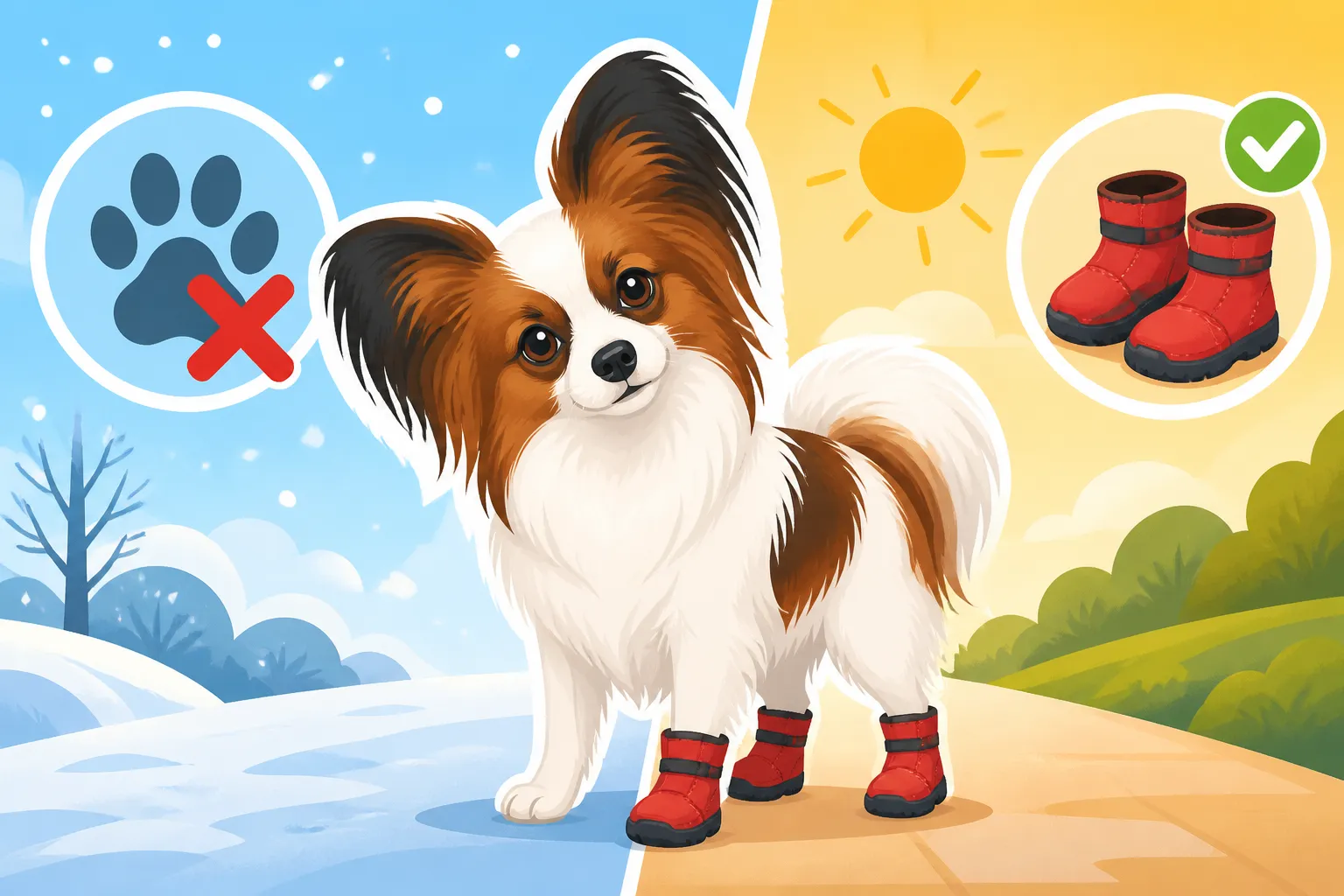
This is perhaps the most obvious and common reason why Papillon owners consider boots. Think about those blistering summer days. Asphalt, concrete, and even sandy paths can reach temperatures that are dangerous for bare paws. Imagine walking barefoot on a stovetop – that's what hot pavement can feel like to your dog. Boots provide a crucial barrier, protecting against painful burns and blisters. You can test the pavement yourself; if you can't hold the back of your hand on the surface for five seconds, it's too hot for your dog's paws.
Conversely, winter brings its own set of challenges. Freezing temperatures, ice, and snow can cause frostbite or uncomfortable chilling. More insidiously, de-icing salts and chemicals used on sidewalks can be corrosive, causing painful cracks and irritation to paw pads. When your Papillon licks their paws after a walk, they ingest these harmful substances. Boots prevent direct contact with these irritants and provide insulation against the cold. They also stop ice balls from forming between the toes, which can be incredibly painful and make walking almost impossible. Whether a Papillon Feels the Cold is a related concern for their overall well-being.
Rough Terrain and Urban Hazards
It's not just about temperature extremes. Our daily walks, whether in the city or on country trails, often present unforeseen dangers. City sidewalks can be littered with broken glass, discarded staples, sharp bits of plastic, or even old chewing gum that can be incredibly difficult to remove from paw feathering. A walk through a park might introduce thorns, burrs, or sharp sticks. Even seemingly innocuous gravel paths can be too abrasive for a Papillon's sensitive pads over time, leading to wear and tear or minor cuts.
Boots create a protective layer, allowing your Papillon to confidently navigate these environments without fear of injury. For dogs that love to explore, it means they can enjoy their sniffing and adventures without you constantly having to scan the ground ahead for potential threats. This peace of mind for both you and your Papillon is invaluable, turning what could be a stressful outing into an enjoyable exploration.
Medical and Post-Injury Protection
Sometimes, boots aren't about prevention, but about healing. If your Papillon has sustained a paw injury – perhaps a cut, a scraped pad, or even a blister from an unexpected encounter – a boot can protect the wound during recovery. It keeps the area clean, prevents dirt and bacteria from entering, and can stop your dog from licking or chewing at stitches or dressings. This is particularly important for dogs who are persistent lickers, as constant moisture can delay healing or lead to infection.
Beyond acute injuries, boots can also be beneficial for Papillons with certain medical conditions. Dogs with sensitive skin or allergies that manifest on their paws might benefit from boots to reduce exposure to environmental allergens like pollen or certain grasses. They can also provide extra cushioning for older dogs with arthritis or joint pain, making walks more comfortable. When considering long-term use for a medical condition, always consult your veterinarian to ensure the boots don't inadvertently cause other issues like skin irritation or fungal growth.
The Realities and Hurdles of Getting Your Papillon to Wear Boots
While the benefits of boots for your Papillon's paws are clear, actually getting them to wear them – and enjoy it – can be a whole different story. Many owners face a comical, yet frustrating, battle.
Fit and Comfort Issues
This is probably the biggest hurdle. Papillons have tiny, delicate feet, and finding boots that fit well can be incredibly challenging. Too loose, and they'll spin around, fall off, or become a tripping hazard. Too tight, and they'll pinch, restrict circulation, or cause painful rubbing and chafing. Unlike larger breeds where there's a wider range of standard sizes, Papillon paws often require a very specific, snug-but-not-tight fit. It's like trying to find Cinderella's slipper, but for four tiny feet!
The material also plays a role. Stiff, unyielding fabrics can feel unnatural and restrict movement, making your Papillon walk awkwardly. Imagine trying to walk in ski boots every day – that's the feeling some poorly designed dog boots might give. A boot that bunches up in the wrong places can quickly lead to raw spots or even cuts. This is why careful measurement and looking for adjustable straps are absolutely critical. You might find yourself ordering a few different brands or sizes from places like Chewy or Amazon to compare options until you find the perfect match.
Acceptance and Training
Let's be honest, most dogs don't instantly take to having things on their feet. For a spirited, independent Papillon, the reaction can range from utter bewilderment to outright rebellion. The first time you put boots on them, expect the "chicken walk," high-stepping, freezing in place, or even trying to shake or chew them off. This isn't them being difficult; it's a sensory overload. Their paws are incredibly sensitive, and suddenly having something encasing them feels very strange.
Successful boot introduction requires patience, positive reinforcement, and a gradual approach. Don't just slap all four on and expect a walk around the block. Start with one boot for a few seconds, pair it with high-value treats and praise, then take it off. Gradually increase the time and the number of boots, making it a positive game. Short periods of wear, ending on a high note, are key. Some Papillons, despite all efforts, simply never tolerate boots well, and that's okay. Pushing them too hard can create a negative association, making future attempts even harder. Consistency is key, but so is knowing when to perhaps try a different approach or alternative. Teaching a Papillon Puppy to Be Handled All Over from a young age can make this process a little smoother.
Material and Breathability Concerns
Just like our shoes, dog boots need to be made from appropriate materials. While waterproof materials are great for snow and rain, if they don't allow for proper air circulation, they can create a damp, warm environment that's a breeding ground for bacteria or fungus. This is particularly true if the boots are worn for extended periods or if your Papillon's paws sweat.
On the other hand, some breathable materials might not offer adequate protection against punctures or extreme temperatures. It's a delicate balance. Look for boots with breathable mesh panels if ventilation is a concern, or consider different boots for different seasons. Also, pay attention to the traction on the sole. Slick boots can be just as dangerous as bare paws on certain surfaces, leading to slips and falls. Ensuring the boots have a good grip is vital, especially for an active Papillon that loves to run and play.
Beyond Boots: Other Ways to Safeguard Your Papillon's Paws
While boots offer comprehensive protection, they're not the only solution, and for some Papillons, they might not even be the best solution. There are several other strategies to keep those tiny paws safe and sound.
Paw Balms and Waxes
For less extreme conditions, or as an everyday preventative measure, paw balms and waxes can be incredibly effective. Products like Musher's Secret or various natural paw balms create a protective barrier on the paw pads. They moisturize, preventing cracking and dryness, and offer a layer of defense against hot pavement, rough surfaces, and irritants like salt. They don't provide the same level of puncture protection as a boot, but they are fantastic for conditioning and minor environmental hazards.
Applying a paw balm is usually much easier to get a Papillon to accept than boots. It can be a pleasant, gentle massage time. Simply rub a small amount into their paw pads before a walk and after, especially in harsh weather. This can be a daily ritual that keeps their pads pliable and healthy, reducing the risk of splits and discomfort. It's a simple, often overlooked, step in Caring for a Papillon Past Eleven as well, as older dogs can have drier, more fragile paw pads.
Pavement Monitoring and Route Planning
Sometimes, the best protection is simply avoiding the danger. As owners, we have control over where and when we walk our dogs. This means being vigilant about the surfaces they'll be encountering. On a hot summer day, sticking to grassy areas, shaded sidewalks, or walking early in the morning or late in the evening can completely circumvent the need for boots. In winter, choosing routes that are less heavily salted or cleared of ice and snow naturally protects their paws.
This also extends to checking the ground ahead for hazards like broken glass, sharp debris, or discarded items. Being aware of your surroundings and making smart choices about your walking paths can prevent many potential paw injuries without needing any equipment at all. It might mean adjusting your routine slightly, but the benefit to your Papillon's paw health is significant.
Indoor Solutions and Limited Exposure
For those truly dreadful weather days, or when your Papillon simply refuses to wear boots, sometimes the best solution is to limit outdoor exposure or find indoor alternatives for exercise. Instead of a long walk on frozen ground, consider an extended indoor play session, a game of fetch in a hallway, or some mental enrichment with puzzle toys. What Mental Work a Papillon Needs is often just as important as physical exercise.
If a potty break is absolutely necessary outside, make it quick. Guide your Papillon to a small, safe patch of grass or snow, let them do their business, and bring them back inside promptly. Having a designated "potty spot" that you can quickly clear of snow or debris can be a lifesaver. While Papillons do need regular outdoor activity, prioritizing their paw health and comfort on extreme days is always the right call. It's about being flexible and creative in meeting their needs, even if it means altering your usual routine.
Choosing the Right Boots for Your Papillon (If You Decide To)
If you've weighed the pros and cons and decided that boots are the right choice for your Papillon, the next step is finding the perfect pair. This isn't a "one size fits all" situation, especially for a small breed with unique needs.
Key Features to Look For
When shopping for Papillon boots, prioritize these features:
- Traction: Look for non-slip soles made of durable rubber or similar material. This is crucial for stability on slippery surfaces like ice, wet pavement, or slick floors, preventing dangerous falls.
- Adjustability: Boots with Velcro straps or elastic closures that allow for a snug, yet comfortable, fit around the ankle are ideal. This prevents them from slipping off or twisting around, which can be just as irritating as no boots at all. Good adjustability helps accommodate the various widths of a Papillon's leg.
- Material: Consider the primary use. For winter, waterproof and insulated materials are best. For hot pavement, breathable mesh or lighter, heat-resistant fabrics are preferable. Always ensure the inner lining is soft and won't rub or irritate their delicate skin.
- Height: Boots that come up slightly higher on the leg tend to stay on better and offer more protection against snow and splashes. However, avoid boots that are so high they restrict leg movement or rub against the dewclaws.
Many owners find success with brands that specifically cater to smaller breeds or offer a wide range of sizes. Checking reviews on retailers like Chewy or Amazon can give you insights into how other small dog owners found the fit and durability.
Measuring for a Proper Fit
This is non-negotiable for success. An ill-fitting boot is useless and uncomfortable. Here's how to do it:
- Have your Papillon stand: Ensure they are putting weight on the paw you're measuring.
- Place paw on paper: Put one of their front paws (as front paws are often slightly larger) on a piece of paper.
- Trace: Carefully trace around the paw, including the nails.
- Measure width and length: Measure the widest part of the tracing and the longest part (from the back of the largest pad to the tip of the longest nail).
- Check sizing charts: Compare these measurements to the specific boot manufacturer's sizing chart. Don't assume sizes are universal.
Remember, you'll need four boots, and sometimes manufacturers sell them in sets of two. It's also a good idea to measure all four paws, as there can be slight variations, and use the largest measurement for consistency.
Introducing Boots Gradually
Even with the perfect fit, a Papillon needs time to adjust. Here's a stepwise approach:
- Start indoors: Begin in a familiar, low-stress environment.
- Positive association: Show the boots, let your Papillon sniff them, and offer treats and praise. Make it fun!
- One paw at a time: Put one boot on for just a few seconds, give a treat, then remove it. Repeat a few times.
- Gradual increase: Slowly increase the time the boot stays on, and then add a second boot, then a third, then all four.
- Short walks: Once they tolerate all four boots indoors, try a very short walk in the yard. Keep it positive and praise-filled.
- Consistency: Use the boots for short periods consistently before expecting them to wear them for a long walk.
If your Papillon seems genuinely distressed, take a break. It's better to go slowly and build positive associations than to force it and create a negative experience. Some dogs will never love them, but with patience, many can learn to tolerate them for necessary protection.
Paw Protection Options for Papillons
| Feature | Dog Boots | Paw Balms/Waxes | Pavement Monitoring/Route Planning |
|---|---|---|---|
| Primary Benefit | Comprehensive physical barrier | Moisturizes, provides light protective layer | Avoids hazards entirely |
| Protection Level | High (against extreme temps, punctures, chemicals) | Low to Medium (against mild temps, irritation) | High (when successfully implemented) |
| Best For | Extreme weather, rough terrain, post-injury | Daily conditioning, mild conditions, dryness | All conditions, especially when boots fail |
| Ease of Use | Can be challenging to fit/train acceptance | Generally easy to apply, well-tolerated | Requires owner vigilance and flexibility |
| Cost | Varies by brand, often a one-time purchase | Low, ongoing re-purchase | Free (but requires time/attention) |
| Considerations | Fit, breathability, training, dog's tolerance | Reapplication needed, limited puncture protection | May limit spontaneity, not always feasible |
Ultimately, whether a Papillon should wear boots is a decision unique to you and your dog. There’s no single right answer for every Papillon, or every owner. It's about understanding their needs, the environment they navigate, and their individual personality. For some, boots will be a lifesaver, allowing them to enjoy walks year-round without pain or worry. For others, paw balms and careful route planning will be more than sufficient. The most important thing is prioritizing your Papillon’s comfort and well-being, finding what works best to protect those delicate paws so they can continue to dance through life with their characteristic joy.
Disclaimer
This article is for general informational purposes only and does not constitute professional advice. Laws, prices and regulations vary by location and change over time. Consult a qualified professional for guidance on your specific situation.