Which Comb Reaches a Papillon’s Skin
It’s a common frustration for Papillon owners: you spend ages brushing their beautiful long coats, only to find mats still forming close to the skin. That seemingly endless feathering can hide a multitude of tangles, and if your comb isn’t reaching right down to their delicate skin, you're not truly getting the job done. This guide will walk you through choosing the right comb and technique to ensure your Papillon's coat is healthy, tangle-free, and gorgeous from root to tip.
Understanding the Papillon Coat: Why Reaching the Skin Matters
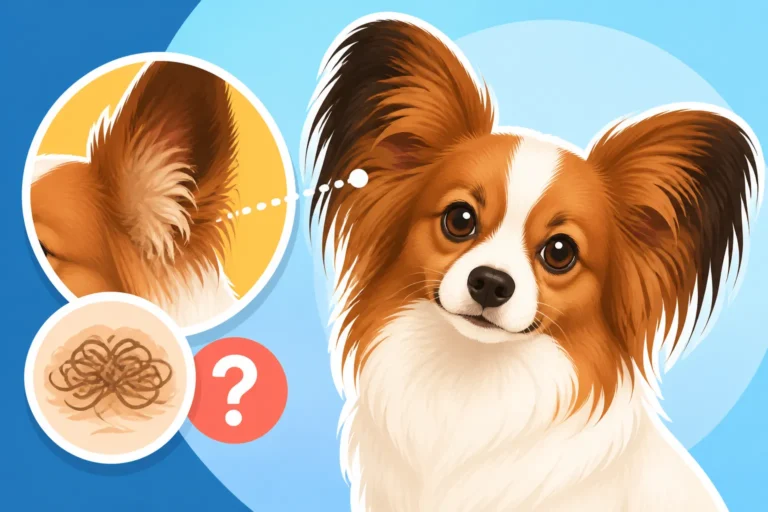
The Papillon’s coat is a thing of beauty, a cascade of fine, silky hair that gives them their distinctive elegant appearance. But beneath that lovely flowing exterior lies a challenge: a single coat with no undercoat, but still prone to matting if not properly cared for. Many owners make the mistake of only brushing the top layer, leaving the hair closer to the skin untouched and allowing insidious tangles to form.
Think of it like this: your Papillon's coat is designed to be free-flowing and airy. It's not a dense, insulating layer like a Husky's, which is why a Papillon's Coat Is All Fringe and No Undercoat. However, this very fineness means individual hairs can easily intertwine, especially where there's friction, moisture, or static electricity. When these tiny tangles aren't addressed, they quickly graduate to full-blown mats, pulling on the skin and causing discomfort, or even skin infections if left too long. These mats are often hidden right at the root, making them invisible until they become serious problems.
Ignoring the roots isn't just about aesthetics; it's about health and comfort for your little butterfly dog. Mats can restrict movement, cause painful tugging on the skin, and act as breeding grounds for bacteria, yeast, and even parasites. Imagine wearing a tight, tangled sweater that constantly pulls at your skin – that's what a neglected mat can feel like for your Papillon. Regularly reaching the skin with your grooming tools ensures proper air circulation, distributes natural oils, and removes loose hair before it has a chance to form those dreaded tangles. It also allows you to perform a skin check for any abnormalities, bumps, or dry patches.
The Anatomy of a Papillon's Feathering
The Papillon’s coat isn't uniform across its body. They have specific areas of lavish feathering – the glorious ear fringes that give them their name, the flowing culottes on their hind legs, the chest frill, and the magnificent tail plume. These are the areas where mats are most likely to occur and where reaching the skin with a comb becomes particularly critical.
The hair in these feathered areas is often longer and finer, making it more susceptible to knotting. For instance, the ear fringes, while beautiful, are constantly moving and brushing against things, making them a prime location for tangles. Similarly, the culottes can pick up debris and friction from movement. When a Papillon's Chest Frill Mats, it can be uncomfortable when they lie down or walk. Brushing the top layer of these areas might make them look neat, but the real work involves gently separating and detangling the hair from the skin outwards. This is where the right comb becomes indispensable, allowing you to systematically check for and remove any potential problem spots that might be lurking beneath the surface.
Why Your Regular Brush Might Not Be Enough
Many Papillon owners rely primarily on a pin brush or a slicker brush, and while these are excellent tools for general coat maintenance and distributing oils, they often don't effectively reach the skin through the dense feathering. A pin brush glides over the top layer, collecting loose hair and giving the coat a fluffy appearance, but its widely spaced pins might skip over nascent tangles deep within. A slicker brush is fantastic for removing shedding hair and breaking up small surface tangles, but its fine, angled pins can scratch the delicate skin if not used carefully, and it still might not penetrate fully to the root.
The challenge is that mats start at the base of the hair shaft, closest to the skin. If your brush only smooths the outer layer, you're creating a polished facade over a potential tangle disaster zone. This is why you might diligently brush your Papillon every day, only to discover a large, solid mat when you eventually try to part their hair near the skin. A proper comb, designed with teeth that can separate and penetrate, is the missing link in many grooming routines. It's not about replacing your brush, but complementing it. The brush does the initial work of surface detangling and stimulating the skin, but the comb is your ultimate tool for ensuring every strand is truly free from tangles, right where they begin.
The Right Tools for the Job: Combs That Go Deep
When it comes to reaching a Papillon's delicate skin, not all combs are created equal. You need something that can gently but effectively penetrate their silky coat without causing discomfort or snagging. The key is to look for combs with varying tooth densities and rounded tips, designed to work through fine hair.
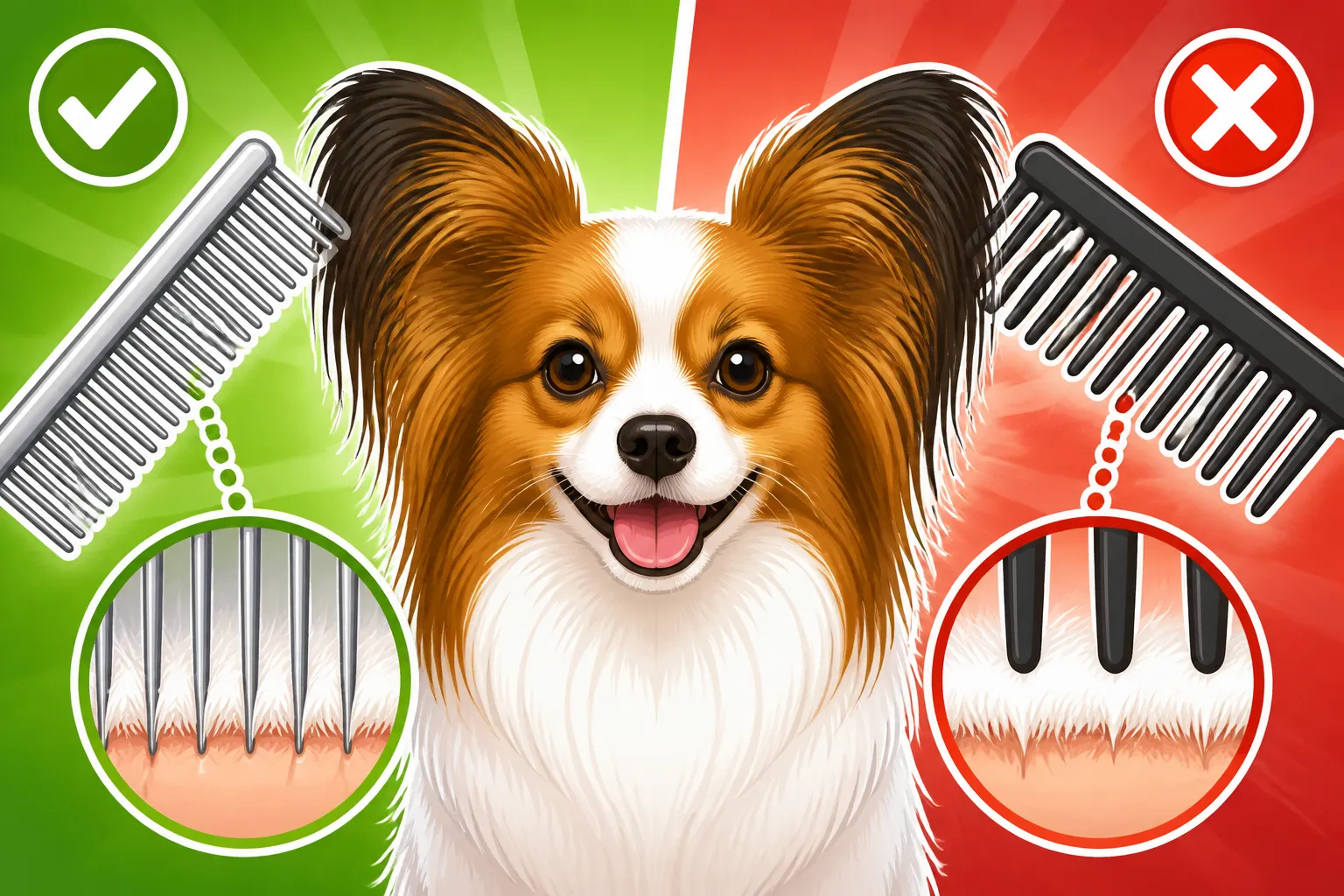
The single most effective tool for getting down to the skin and detecting those hidden mats is a good quality metal comb, often referred to as a "greyhound comb" due to its popularity in the show ring across many breeds. These combs typically feature two sections: one with wider-spaced teeth and another with finer-spaced teeth. This dual functionality makes them incredibly versatile for a Papillon's varied coat density. You can find excellent options on online retailers like Chewy or Amazon, allowing you to compare different brands and tooth configurations.
Metal Combs: The Workhorse of Papillon Grooming
A sturdy, all-metal comb with teeth that are smooth and preferably rounded at the tips is your best friend. Avoid plastic combs, as they tend to generate static electricity which can actually make tangles worse, especially in fine hair like a Papillon’s.
Here's why a metal comb works so well:
- Weight and Balance: Metal combs have a good weight, making them feel balanced in your hand and easier to control.
- Static Reduction: Metal conducts static away, preventing flyaways and making the grooming process smoother.
- Durability: A good metal comb will last a lifetime if cared for properly.
- Penetration: The smooth, stiff teeth can separate the hair effectively, allowing the comb to glide through to the skin.
When choosing, look for a comb that feels comfortable in your hand. The length of the teeth is also important; for a Papillon's longer feathering, you'll want teeth that are long enough to extend past the deepest part of their coat, typically around 1 to 1.5 inches.
Here's a quick comparison of common comb types for Papillons:
| Comb Type | Description | Ideal Use on Papillon | Pros | Cons |
|---|---|---|---|---|
| Greyhound Comb | Metal, dual-sided (wide and fine teeth) | All-purpose detangling, checking for mats, reaching skin, finishing | Versatile, penetrates well, good for all coat areas, reduces static | Can be intimidating for beginners, needs gentle hand |
| Flea Comb | Very fine, closely spaced teeth | Checking for fleas/dander, removing eye boogers, small facial tangles | Excellent for delicate areas, precise | Too fine for general coat, pulls healthy hair if not careful |
| Rake Comb | Wider, longer, often rotating teeth | Heavy shedding breeds, removing undercoat (not applicable to Papillons) | Good for dense coats | Too aggressive and unnecessary for Papillon's single coat |
| Buttercomb | High-quality metal, often longer, rounded pins | Show quality grooming, delicate coats, very effective detangling and finishing | Smooth glide, prevents damage, luxurious feel | More expensive, requires careful handling |
Other Brushes and Tools That Complement Your Comb
While the metal comb is paramount for reaching the skin, it’s not the only tool you’ll need. A good grooming routine involves a combination of brushes and aids:
- Pin Brush: Ideal for initial detangling, smoothing the coat, and distributing natural oils. Use this before the comb to remove superficial tangles.
- Slicker Brush: Great for fluffing up the coat and catching loose hairs, especially useful for areas like the culottes and chest. Use with a light hand to avoid scratching the skin.
- Detangling Spray: A good quality detangling spray can make a world of difference. Spritzing a little onto the coat before combing can help lubricate the hair, making it easier for the comb to glide through knots without pulling. You can often find these at your local pet store or even on platforms like Amazon.
- Scissors with Rounded Tips: Essential for carefully snipping out stubborn, solid mats that cannot be combed through. Always be extremely cautious and use only the tips of the scissors, holding them parallel to the skin to avoid accidental cuts.
- Nail Clippers/Grinder: Keeping nails trimmed is part of overall paw and limb health, which indirectly affects how your Papillon moves and whether its coat might drag and pick up debris.
Remember, a healthy coat also starts from within. While the focus here is on external tools, a balanced diet, such as what a brand like Ollie might provide, contributes to overall skin and coat health, making grooming easier in the long run.
Mastering the Technique: Combing Your Papillon to the Skin
Having the right comb is only half the battle; knowing how to use it effectively is crucial. The goal isn't just to make the coat look smooth, but to ensure there are no tangles or mats hiding close to the skin. This requires a systematic approach, patience, and a gentle touch.
Many Papillon owners find that their dog, while generally tolerant, might be sensitive to grooming. This is often because previous grooming sessions have been rushed or painful, especially if mats were pulled. Starting young and making it a positive experience is key. Even if you have an older dog, consistency and positive reinforcement can turn grooming into a bonding experience rather than a chore. How Long a Papillon Takes to Brush can depend on how well-behaved they are and how matted their coat is.
The Line Combing Method
The most effective way to ensure you're reaching the skin is using the "line combing" method. This technique involves systematically parting the hair and combing section by section, from the skin outwards.
Here's how to do it:
- Preparation: Start with a calm Papillon. Have all your tools ready: your metal comb, a pin brush, a slicker brush, and detangling spray. Place your Papillon on a non-slip surface, like a grooming table or even a sturdy kitchen counter with a towel down, to prevent them from jumping off.
- Initial Brush-Through: Begin with your pin brush or slicker brush to remove any loose hair and surface tangles. This prevents the comb from getting stuck immediately.
- Sectioning the Coat: Choose an area to start, typically the chest, shoulder, or side. Using your comb, part the hair horizontally or vertically, creating a small "line" of skin. Hold the section of hair above the line gently but firmly in your non-combing hand.
- Combing the Line: With the wide-toothed side of your metal comb, gently comb the hair below the line, working from the roots (near the skin) out to the ends. You should see the comb's teeth come through the hair and touch the skin. If the comb snags, stop immediately.
- Dealing with Tangles: If you encounter a tangle, do NOT pull the comb through it. Instead, hold the hair at the base of the tangle with your fingers to prevent pulling on the skin. Spritz a little detangling spray onto the tangle. Then, using the very tips of the wide-toothed comb, or even just a single tooth, gently pick at the edges of the tangle, working it apart strand by strand. Once it loosens, you can use the finer-toothed side of the comb to finish detangling, still working from the outside of the tangle inwards.
- Progressing Systematically: Once a section is completely tangle-free (meaning the comb glides smoothly from root to tip), create another line of parted hair just above it. Work your way across the body, overlapping slightly, until the entire area is done. Repeat this process for all parts of your Papillon's body, paying special attention to high-friction areas.
Tackling Specific Problem Areas
Certain areas of a Papillon's body are more prone to matting and require extra attention:
- Ears: The beautiful ear fringes are a magnet for tangles. Hold the ear leather at the base and comb small sections of fringe from root to tip. Be very gentle around the edges of the ear, as the skin is thin and delicate. How to Keep a Papillon's Ear Fringe Full often involves careful, regular combing.
- Armpits and Behind Legs: These areas experience a lot of friction from movement. Lift your Papillon's leg gently and carefully comb through the hair, ensuring you reach the skin.
- Culottes and Tail Plume: These long, flowing sections can easily pick up debris and mats. Work through them in small sections, always checking that the comb touches the skin. Whether a Papillon's Culottes Mat is a common concern.
- Chest Frill: Similar to the ears, the chest frill gets a lot of action. Part the hair and comb thoroughly, especially where it meets the front legs.
Remember to take breaks if your Papillon gets restless. Keep sessions positive with praise and small, soft treats. The goal is a thorough job without causing stress or pain.
Beyond the Comb: Maintaining a Tangle-Free Papillon
Once you've mastered the art of combing to the skin, maintaining that pristine, tangle-free coat becomes much easier. It's about consistency, prevention, and knowing when to use additional grooming aids or seek professional help. Regular grooming not only keeps their coat beautiful but also contributes to their overall well-being. Why a Papillon's Long Coat Takes Twenty Minutes a Week is due to this kind of routine maintenance.
The frequency of combing will depend on your individual Papillon's coat texture, lifestyle, and how prone they are to matting. Some Papillons might need a thorough comb-through every other day, while others with slightly less dense feathering might be fine with a few times a week. However, a quick daily run-through with a pin brush and a targeted comb check of key areas is always a good habit.
Prevention is Key: Daily Habits for a Healthy Coat
Integrating specific habits into your daily routine can significantly reduce the formation of mats and make full grooming sessions less arduous:
- Daily Spot Checks: Spend just five minutes each day checking the "hot spots" for mats: behind the ears, armpits, culottes, and under the collar or harness area. Catching a small tangle early is far easier than battling a large mat.
- Appropriate Accessories: Ensure your Papillon's collar or harness fits well and isn't constantly rubbing on their coat, which can cause friction and matting. A wider, flat collar made of smooth material might be better than a thin, round one for minimizing coat damage. Whether a Papillon Should Wear a Harness Instead of a Collar is often debated, but a good fit is paramount for either.
- Environmental Awareness: Be mindful of where your Papillon plays. Burrs, twigs, and sticky seeds can become instantly embedded in their fine coat, leading to immediate tangles. A quick comb-through after outdoor adventures, especially in grassy or wooded areas, can save you a lot of trouble later.
- Use Detangling Sprays: As mentioned, a quality detangling or conditioning spray can work wonders. A light mist before brushing or combing, especially on dry hair, can help the comb glide smoothly and prevent breakage. These are readily available from pet supply stores and online retailers.
- Regular Baths: A clean coat is less likely to tangle. Regular bathing (every 2-4 weeks, depending on lifestyle and coat condition) with a good quality dog shampoo and conditioner helps keep the hair clean, soft, and easier to manage. Ensure the coat is thoroughly combed out before bathing, as water can tighten existing tangles into solid mats. After bathing, thoroughly dry and comb through the coat to prevent new mats from forming as it dries.
When to Seek Professional Help
While home grooming is essential, there are times when calling in a professional groomer is the smartest choice. If you encounter a mat that is too large, too tight, or too close to the skin for you to safely remove, don't hesitate to seek help. Attempting to cut out a deeply set mat yourself can easily result in accidental cuts or nicks to your Papillon's delicate skin. Professional groomers have specialized tools and experience in handling severe matting safely and efficiently, often resorting to shaving down the matted area to relieve the dog of discomfort without injury.
A professional groomer can also provide valuable insights into your Papillon's specific coat type and recommend the best tools and techniques tailored to them. They can demonstrate proper line combing and offer tips for maintaining your Papillon’s unique feathering. Consider an occasional professional grooming session as a treat for your Papillon and a learning opportunity for yourself. It’s an investment in their comfort and health.
Ensuring your comb reaches your Papillon’s skin is not just a fancy grooming tip; it's a fundamental aspect of their care that directly impacts their health, comfort, and the overall beauty of their iconic coat. By using the right tools, mastering the proper technique, and maintaining consistent habits, you can keep your Papillon's coat looking magnificent and feeling great, from the tip of their butterfly ears to the plume of their tail.
Disclaimer
This article is for general informational purposes only and does not constitute professional advice. Laws, prices and regulations vary by location and change over time. Consult a qualified professional for guidance on your specific situation.