Whether Louis XIV Owned Dwarf Spaniels
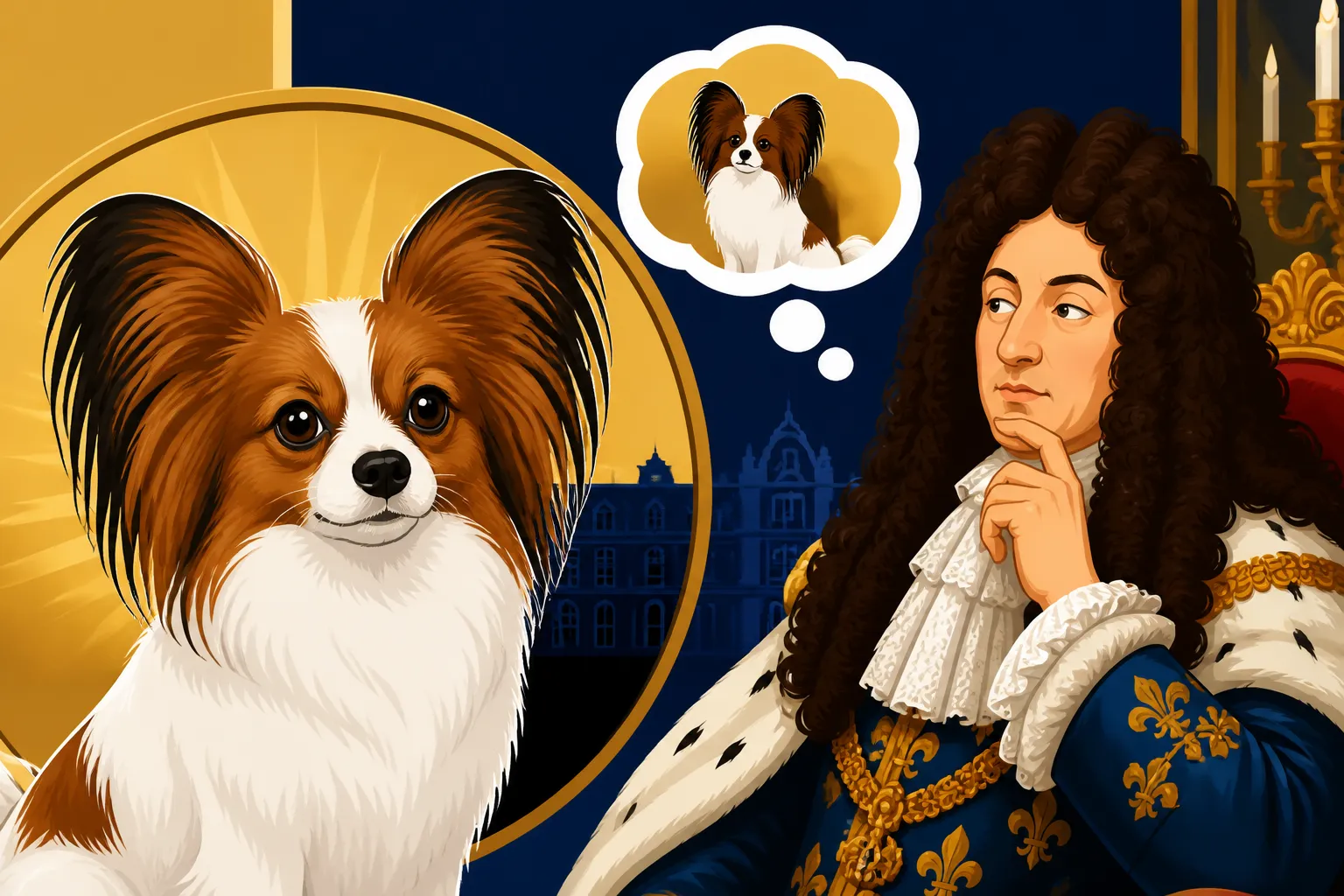
Louis XIV lived in a world where small spaniel-type dogs were familiar companions at European courts, but that does not mean he owned a Papillon in the modern sense. The historical record supports a connection between royal households and dwarf spaniels; identifying a particular dog as a Papillon is much less certain. Here’s how to separate the broad claim from what can actually be established.
Did Louis XIV own dwarf spaniels
The short answer is plausible, but the wording matters
Louis XIV’s court belonged to a period when small spaniels were kept and admired among European elites. So it is reasonable to connect his royal world with the kind of little spaniel often described historically as a “dwarf spaniel.” The difficulty is that this broad historical label does not always identify one consistent breed, and surviving accounts do not necessarily give us the sort of detailed identification an owner might expect today.
That makes the answer two-part. Louis XIV lived in a court culture where dwarf spaniels were known, and small dogs had a place in aristocratic households. But the stronger claim—that he owned a dog that can be confidently identified as a Papillon—is not established simply by saying he owned or encountered a dwarf spaniel.
The distinction is useful because breed histories are often retold as a neat chain: a king owned a dog, that dog was a Papillon, and the modern breed therefore has a direct royal connection. Historical evidence is usually less tidy. A small dog in a portrait or a reference to a “spaniel” may help show what kinds of dogs were valued, but it may not reveal the dog’s exact ancestry or name.
What “dwarf spaniel” meant in the period
“Dwarf spaniel” was a descriptive term for small spaniel-type dogs, not necessarily the name of a standardized breed with a fixed appearance. The dogs could vary in size, coat, color, and ear shape. The phrase tells us something about their small stature and spaniel-like character, but not enough to match every historical dog to a present-day breed.
The modern Papillon is part of the Continental Toy Spaniel family, alongside the drop-eared Phalène. Those modern breed terms are helpful when discussing today’s dogs, but they should not be projected automatically onto every small spaniel shown or described centuries ago. The wider background is explored in What a Dwarf Spaniel Was and Whether the Papillon Descends From a Spaniel.
A courtier or artist in Louis XIV’s time was not using today’s breed registry categories. Even when a dog looks remarkably Papillon-like to a modern viewer, that visual resemblance is not proof that it belonged to the same defined breed. Historical naming, breeding practices, and record-keeping were different from those used by modern kennel organizations.
What the evidence can and cannot tell us
Court culture is evidence of popularity, not individual ownership
Small companion dogs fit naturally into aristocratic life. They could be kept close to their owners, appear in domestic settings, and serve as fashionable companions. Royal courts helped shape tastes in clothing, art, and luxury goods; dogs, too, could signal refinement and status. This wider context makes the presence of small spaniel-type dogs in royal circles unsurprising.
But a dog’s popularity in a court or country does not prove that a specific monarch owned one. To make that individual claim confidently, historians would ideally want a clear written record, a reliably identified portrait, or another strong piece of evidence linking the monarch to the particular dog. General references to court dogs, or images of similar-looking animals, are weaker evidence.
That is why Which Courts Kept Dwarf Spaniels is a useful companion topic: it helps place the dogs in their broader social setting without turning every royal association into a claim of personal ownership. The same caution applies when considering Which Royal Households Kept Papillons. “Kept by royal households” may describe a pattern across time and place rather than establish that one named monarch owned a dog identical to the modern Papillon.
Portraits need careful interpretation
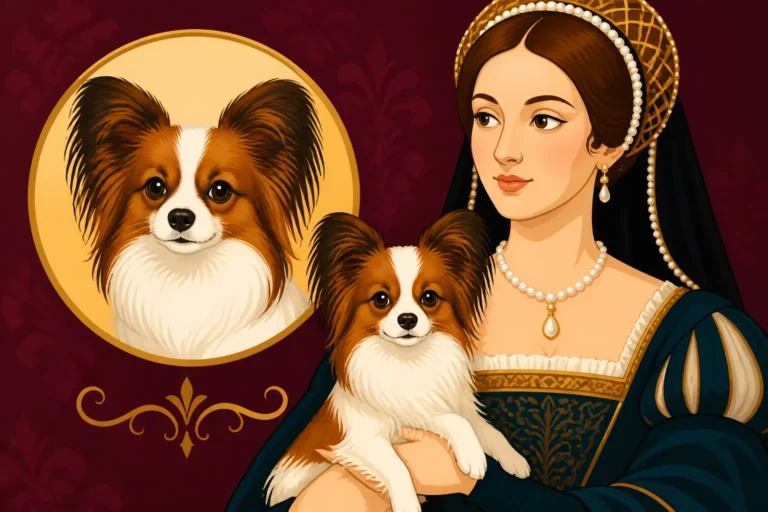
Paintings are valuable evidence, but they are not modern photographs or breed records. Artists might simplify a dog’s features, emphasize qualities that suited the composition, or depict an animal as a symbol of affection, luxury, or status. A little dog painted beside a noble sitter can tell us that small companions were culturally visible; it may not tell us the dog’s exact breed or ownership history.
The same caution applies to paintings associated with earlier dwarf spaniels. A dog with a small body, long coat, and upright-looking ears may resemble a Papillon, but appearance alone cannot establish a direct link to Louis XIV. Ear position, coat texture, proportions, and even the artist’s choices can be difficult to interpret from an old image.
For more on how artists contribute to the breed’s historical story, see Which Other Painters Included Dwarf Spaniels and Whether Titian Painted the Papillon's Ancestor. These histories are fascinating, but they work best as evidence of a long tradition of small spaniel-like dogs—not as a substitute for documentation about one monarch’s own pets.
| Historical clue | What it may support | What it does not prove on its own |
|---|---|---|
| Small spaniel-type dogs appearing in court culture | Dwarf spaniels were familiar among elites | Louis XIV personally owned a specific dog |
| A small dog in a royal portrait | Companion dogs were represented in elite life | The dog was a modern Papillon |
| A period reference to a spaniel | Spaniel-type dogs were recognized or described | The dog’s exact breed, appearance, or owner |
| Similarity between an old image and a Papillon | Possible resemblance across historical types | A direct, documented line to today’s breed |
How Louis XIV fits into Papillon history
The modern Papillon developed over a long period
The Papillon did not appear fully formed under one royal owner. Its history belongs to a broader story of small spaniel-type dogs that changed in appearance and were valued across generations. The modern breed’s most recognizable feature is its upright, fringed ears, but the Continental Toy Spaniel also includes the Phalène, whose ears hang down.
This is one reason it can be misleading to label every early small spaniel a Papillon. The breed’s recognizable forms took shape over time, and historical dogs did not necessarily fit today’s categories. To follow that longer development, read Where the Papillon Comes From and How Old the Papillon Breed Is.
The name Papillon means “butterfly” in French, a reference to the upright ears and fringe that suggest butterfly wings. The Phalène’s name means “moth,” reflecting its drop ears. Those familiar terms help describe modern varieties, but they should not be treated as labels that every earlier writer or painter would have used.
France’s role does not settle the ownership question
Because Louis XIV ruled France and the Papillon is strongly associated with French history, it is tempting to connect the king directly to the breed. France was an important part of the cultural environment in which small companion dogs were admired, but a country’s influence on a breed’s history is not the same as proof that a particular ruler owned one.
The breed’s history also involves wider European exchanges in dogs, fashion, and court culture. Small spaniels appeared across borders, and their development cannot always be assigned to one country or one household. The broader question is explored in Whether France or Belgium Owns the Papillon.
A careful account can therefore recognize Louis XIV’s historical setting without overstating what it proves. His court helps illustrate the world in which small, elegant companion dogs were fashionable. It does not, by itself, establish that the king had a dog that would meet today’s Papillon breed standard.
How to describe the claim accurately
Use cautious language when discussing royal dogs
If you are writing or talking about Louis XIV and dwarf spaniels, wording makes a real difference. “Small spaniel-type dogs were known in royal court culture” is a cautious statement about the broader setting. “Louis XIV owned a Papillon” is a much more specific claim, and it needs stronger evidence than a general association with France, royalty, or small dogs.
A balanced description might say that Louis XIV’s era was part of the history of European courtly interest in small spaniels, while the exact ownership and breed identity of any particular dog remain uncertain. This preserves the connection people find compelling without presenting an inference as a documented fact.
That care is especially helpful when discussing the word “Papillon.” Today, it names a specific breed with recognizable features and standards. Applied to a dog from several centuries ago, the word can be convenient shorthand, but it may imply a certainty about lineage and type that the historical evidence does not provide.
Keep the bigger history in view
The question is not only whether one king owned a small dog. It is also how companion dogs became part of European court life, how artists represented them, and how dog types changed over time. Louis XIV is one point of interest within that larger history, rather than a single origin story for the Papillon.
When you see an old portrait or read a claim about a royal Papillon, ask what the evidence actually shows. Is there a named dog and a contemporary record? Is the image securely identified? Or is the claim based mainly on resemblance and the broad popularity of dwarf spaniels? Those questions make it easier to enjoy the history while keeping fact and interpretation separate.
The most defensible conclusion is that dwarf spaniels belonged to the wider world of European courtly life associated with Louis XIV’s era, and a connection to the king is plausible in that broad context. But calling a particular dog owned by him a modern Papillon goes beyond what that general historical association can establish. For the larger portrait of the breed’s past, The Papillon Has Seven Hundred Years of Portraits Behind It offers a useful next step.
Disclaimer
This article is for general informational purposes only and does not constitute professional advice. Laws, prices and regulations vary by location and change over time. Consult a qualified professional for guidance on your specific situation.