Whether an Oversized Papillon Can Be Shown
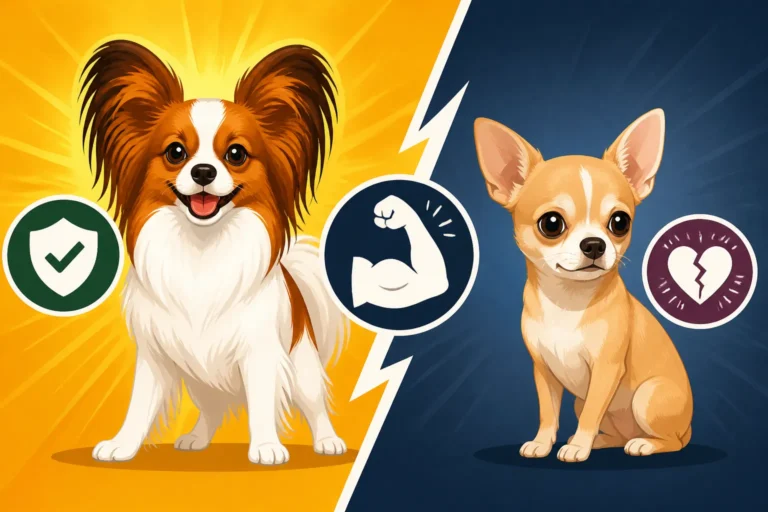
A Papillon can look oversized because of long legs, a fine build, or abundant coat, but appearance alone does not decide whether the dog can enter a conformation show. The key questions are the applicable breed standard, the dog’s measured height, and the show’s eligibility rules. Here’s how to tell the difference between a tall-looking Papillon and one that falls outside the standard.
What “oversized” means for a Papillon
Height is measured at the withers
In conformation, a dog is assessed against the breed standard—not against another Papillon standing nearby. The usual reference point for height is the withers, the highest point of the shoulder blades. A judge or show official measures from the ground to that point, with the dog standing naturally on a firm, level surface.
The Papillon standard used by the American Kennel Club gives a height range of 8 to 11 inches at the withers and disqualifies dogs over 12 inches. That leaves an important distinction: a dog above the preferred range is not necessarily automatically disqualified. A Papillon measuring more than 11 inches but not over 12 may be outside the standard’s stated range without meeting that specific disqualification.
The exact rules depend on the registry and country. If you plan to enter a show, check the breed standard and competition rules for that organization rather than relying on a general answer. What Height a Correct Papillon Stands and How Tall a Papillon Stands offer useful background on the breed’s expected size.
Looking tall is not the same as measuring tall
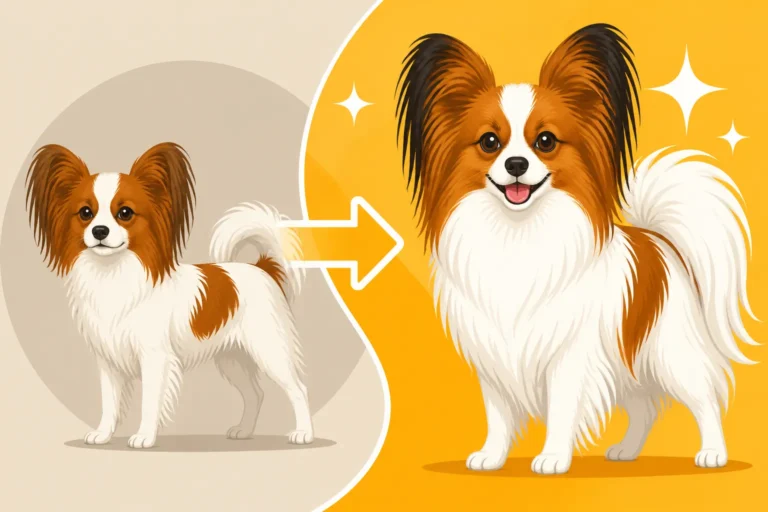
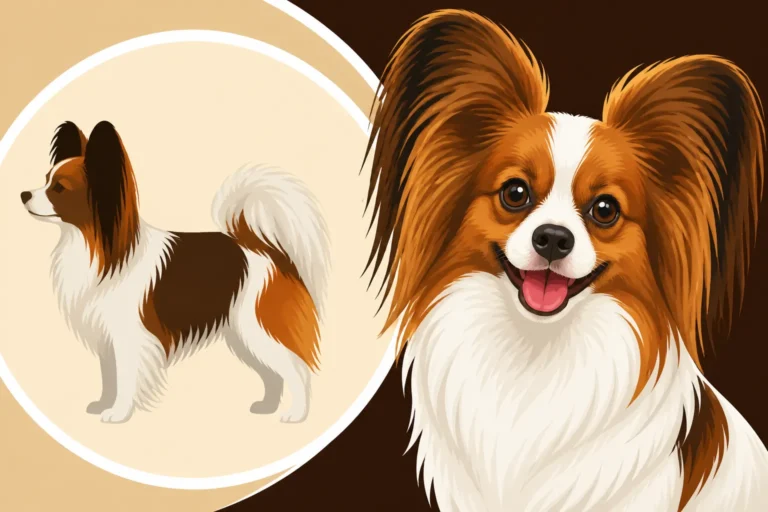
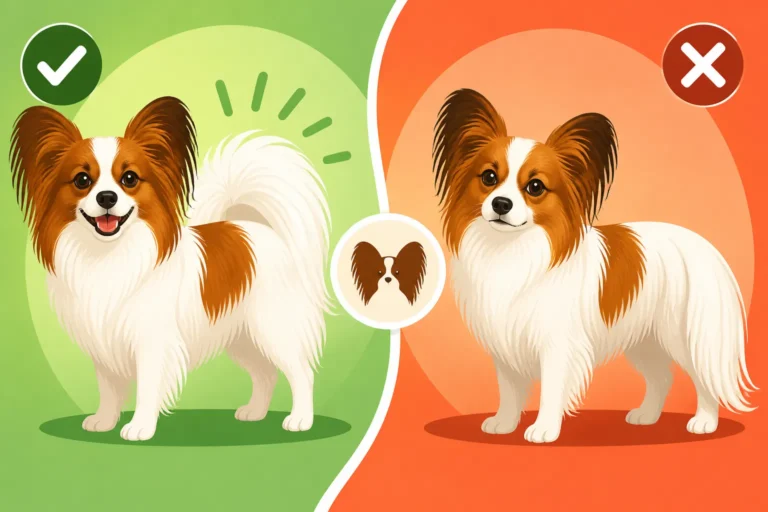
A Papillon’s outline can make its proportions hard to judge at a glance. The breed has a fine-boned appearance, long ear fringes, and a flowing coat that can add visual volume. A dog may look larger beside a compact Papillon even when the two measure similarly at the shoulder.
Posture also changes what you notice. A Papillon standing alert with its head and tail carried high may seem taller than one relaxing on the floor. A long-legged, lightly built dog can look bigger than a stockier dog of the same height. Conversely, a dense coat can make a dog appear broad without affecting its actual height.
This is why a photo, a guess based on weight, or a comparison with a littermate is not enough to determine show eligibility. For a fuller picture of the desired proportions, see What a Correct Papillon's Outline Looks Like. The important measurement is the dog’s height at the withers, not how large its coat makes it look.
| What you notice | What it may mean | What to check |
|---|---|---|
| The dog looks tall in photos | Camera angle or posture may exaggerate height | Measure at the withers on level ground |
| The dog looks broad or fluffy | Coat may add visual size without adding height | Assess the body beneath the coat |
| The dog is above the preferred height range | It may fall outside the ideal range but not be disqualified under every standard | Check the exact standard and disqualification wording |
| The dog is over the stated disqualification height | It may not be eligible for conformation competition under that standard | Confirm the measurement and ask the show organization |
Can an oversized Papillon enter a conformation show
The answer depends on how oversized the dog is
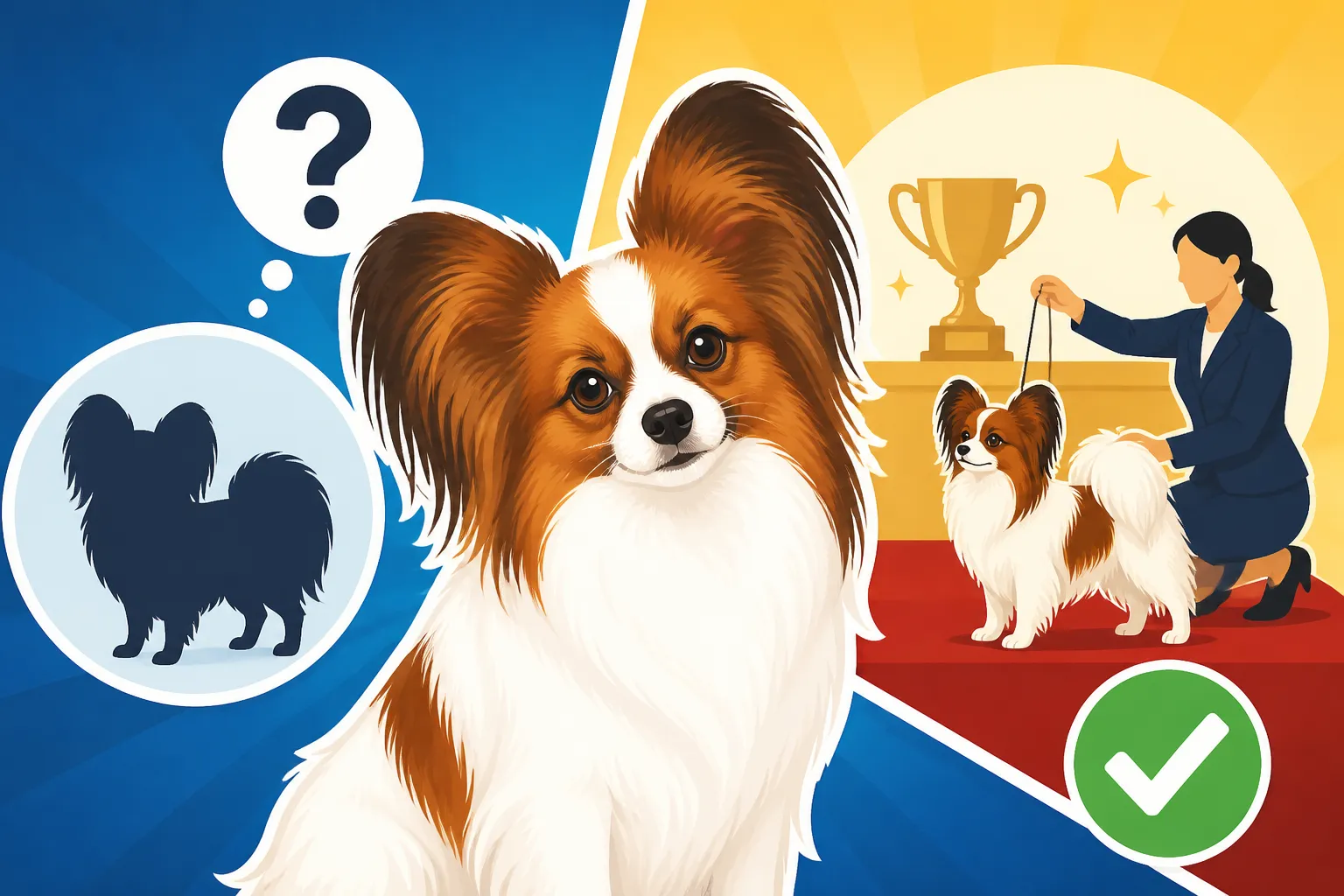
For an American Kennel Club conformation show, the distinction between the preferred range and the disqualification threshold matters. A Papillon between 11 and 12 inches is above the stated height range, but the standard’s explicit height disqualification applies to dogs over 12 inches. That does not mean a dog in the 11-to-12-inch range is ideal or guaranteed to fare well. It means the stated disqualification line is separate from the preferred measurement.
A dog measured over 12 inches may be disqualified under that standard. Because a borderline measurement can be affected by how the dog is positioned and where the measuring device is placed, it is sensible to get a careful measurement before entering. If the result is close to the threshold, ask the relevant registry or show organizer how measurement and eligibility are handled at that event.
An oversize dog may still be eligible for activities that do not judge the dog against the conformation standard in the same way. Obedience, rally, scent work, and other events have their own entry rules. Whether a Papillon Can Do Obedience Trials and Which Other Sports a Papillon Can Do can help you explore options if conformation is not a fit.
A judge considers more than height
A conformation judge evaluates the whole dog against the breed standard. Height is one part of that assessment, alongside structure, movement, proportions, coat, and other breed characteristics. Being within the preferred height range does not automatically make a Papillon a strong show prospect, and being somewhat above it does not tell you everything about the dog’s overall quality.
At a show, officials may measure a dog if its size is in question. The result can have practical consequences for whether the dog may continue in that competition, so a handler should not assume that a dog’s registration or previous entry settles the question. Registration establishes that the dog is recorded with a registry; it does not guarantee that the dog meets every conformation requirement.
For a sense of how breed-specific features are assessed, What a Papillon Judge Puts a Hand On First explains why a judge may examine structure rather than rely on appearance from across the ring. Which Faults Judges Penalize in a Papillon is also useful when you’re weighing a dog’s overall suitability, though a fault and a disqualification are not the same thing.
How to check your Papillon’s height
Measure carefully before entering
A home measurement is a helpful starting point, not an official show measurement. Ask your veterinarian, breeder, or an experienced conformation handler to help if you are unsure where the withers are or how to keep your dog standing squarely. A dog that is leaning, crouching, stretching its neck, or standing on an uneven surface can produce an unreliable reading.
For a basic check, place your Papillon on a firm, level floor and let the dog stand naturally. Locate the highest point of the shoulder blades, then measure vertically from the floor to that point. Avoid using the top of the head, the ears, the back, or the highest part of the coat as the reference. If you get a result close to a threshold, repeat the measurement on another occasion and have someone experienced confirm it.
Try to keep the process calm. Some dogs shift around when they see a ruler or measuring stick, and a tense dog may not stand as it would in the ring. A few relaxed practice sessions can make the measurement more consistent, but don’t stretch or force the dog into a position just to obtain a particular number.
Don’t try to disguise height with grooming or handling
Coat care can improve a Papillon’s presentation, but it cannot change the dog’s skeletal height. Nor should a handler use posture, stretching, or equipment to make a dog appear smaller. Show rules and good sportsmanship both rely on presenting the dog honestly.
It is reasonable to prepare a Papillon for the ring by getting it comfortable with standing, handling, and being examined. That training is about helping the dog feel secure, not concealing a feature. Keep grooming simple and suitable for the dog’s coat. If you already get routine combs or coat-care basics through Chewy, you can set aside familiar items for practice so grooming sessions feel consistent rather than like a new experience.
A travel kit can also make show days less stressful: a comb, water, a familiar mat, and cleanup supplies are practical whether your supplies come from a local shop or Chewy. Keep treats small and familiar, especially if your Papillon has a sensitive stomach. The aim is a comfortable dog, not an elaborate presentation that changes how the dog is built.
What to do if your Papillon is above the standard range
Confirm the rules before paying an entry fee
First, identify which registry and event you want to enter. Standards can differ between organizations and countries, and event rules can determine how a dog is measured or what happens if it falls outside the permitted range. How Papillon Standards Differ Between Countries is a useful starting point if you are comparing opportunities across registries.
Next, get a reliable measurement and compare it with the exact wording of the relevant standard. If your dog is close to the limit, contact the show organization or registry with a specific question: ask whether the height would make the dog ineligible, whether measurement is conducted at the show, and whether any separate class or activity is appropriate. Getting clarity beforehand is less frustrating than arriving with your dog and discovering that the entry cannot proceed.
A knowledgeable breeder or conformation mentor can help you interpret the standard, but the event’s rules are what matter for that particular entry. If your Papillon came from a breeder, you can also ask whether the dog’s adult height is consistent with the family line. That information may help set expectations, but it does not replace an actual measurement.
Keep the dog’s wellbeing and options in view
Finding out that a Papillon is too tall for a particular conformation class can feel disappointing, especially if you have already put time into training and grooming. But show eligibility is only one part of sharing an active life with a dog. A dog outside the preferred conformation range can still be a much-loved companion and may be suited to other activities, depending on health, temperament, training, and the rules of each sport.
Choose activities that are appropriate for your individual dog rather than assuming size alone determines what it can do. If you are considering agility or another athletic sport, discuss your Papillon’s joints and overall fitness with your veterinarian, especially if the dog has shown limping or discomfort. Small dogs still need thoughtful conditioning, safe equipment, and gradual training.
You can also make outings easier with familiar travel essentials. Some owners keep a spare water bowl and a washable mat with their dog’s gear; if you normally restock those basics through Chewy, keeping a dedicated set in the car can save last-minute packing. The important thing is that the dog is comfortable and safe, whether the destination is a show, a training class, or an ordinary walk.
Disclaimer
This article is for general informational purposes only and does not constitute professional advice. Laws, prices and regulations vary by location and change over time. Consult a qualified professional for guidance on your specific situation.