Whether a Papillon Can Do Obedience Trials
Many people look at a beautiful Papillon with their elegant butterfly ears and assume they're nothing more than dainty lapdogs, perfectly content to adorn a silk cushion. But oh, how wrong that assumption can be! These vibrant little dogs are brimming with intelligence, energy, and a profound desire to engage with their people, often leaving owners wondering if their clever companion could excel in something more structured. This guide is here to tell you definitively that not only can a Papillon do obedience trials, but they often thrive in them, and we'll walk through everything you need to know to get started.
Understanding Papillon Intelligence and Drive
It's easy to be charmed by their delicate appearance, but beneath that silky coat and those expressive eyes lies a keen mind and an eager spirit. Papillons are far from fragile ornaments; they are active, highly intelligent dogs with a surprising amount of drive. This combination makes them exceptional candidates for dog sports, especially those that challenge their minds and allow them to work closely with their human partners.
The Papillon's Natural Aptitude for Learning
The Papillon consistently ranks among the most intelligent dog breeds, often landing in the top ten across various intelligence studies. This isn't just a fun fact; it's a huge advantage when it comes to obedience training and trials. They pick up new commands with astonishing speed, often understanding a new cue in just a few repetitions. It’s like they’re just waiting for you to teach them something new. This quick comprehension means you can progress through training exercises at a much faster pace than with many other breeds, which is incredibly rewarding for both dog and handler. You'll find yourself reaching for more complex behaviors almost before you realize it, simply because your Papillon is already asking "What's next?" The Papillon Is the Smartest Toy Breed There Is is not just a catchy phrase; it's a truth you'll discover firsthand.
This high level of intelligence isn't just about learning tricks; it translates directly into a strong ability to understand and execute obedience commands. They can discriminate between subtle cues, respond reliably to verbal and hand signals, and string together multiple behaviors into a complex sequence. While their small size might make some assume they're less capable than larger working breeds, their mental horsepower is truly impressive, allowing them to compete on an equal footing, if not surpass, many dogs several times their size in the obedience ring.
Beyond the Lap Dog Stereotype
The historical role of the Papillon as a companion to European nobility might contribute to the "lap dog" misconception, but don't let those centuries-old portraits fool you. While they certainly excel at being affectionate companions who love a good cuddle, their modern incarnation is far more versatile. They possess a surprising athleticism and stamina for their size, capable of long walks, vigorous play, and intense bursts of mental concentration. Many Papillon owners find that without an outlet for their dog's considerable intellect and energy, they can become bored, which might manifest as excessive barking or destructive chewing.
Obedience trials offer a fantastic channel for this innate drive. It gives them a "job" to do, something their bright minds truly crave. When you see a Papillon confidently performing a retrieve, heeling precisely, or staying perfectly still for several minutes in a group, you witness a dog that is not just physically capable, but profoundly satisfied mentally. Their keen observation skills also make them excellent at following their handler's subtle body language, which is crucial for precision in the obedience ring.
The Foundations of Obedience Training for a Papillon
Embarking on the journey of obedience trials requires a solid foundation, built on understanding your Papillon's unique personality and strengths. It's not about forcing them into submission, but rather about channeling their eagerness to please and natural intelligence into structured, enjoyable activities.
Starting Early with Puppy Classes
Just like with any breed, the earlier you start, the better. Puppy classes are invaluable for a Papillon. They provide crucial socialization experiences, exposing your puppy to new sights, sounds, people, and other dogs in a controlled, positive environment. This early exposure helps build confidence and reduces the likelihood of shyness or fearfulness, which can be detrimental in the bustling atmosphere of an obedience trial. Beyond socialization, puppy classes introduce basic manners like sit, stay, come, and leash walking, all of which are the building blocks for more advanced obedience work. When to Start Training a Papillon Puppy is a topic many new owners ponder, and the answer is almost always "as soon as safely possible."
Think of puppy class as boot camp for their brilliant little brains. They learn quickly, so setting good habits from the start is paramount. A structured class also helps you, the owner, learn how to effectively communicate with your Papillon. Many online resources, like those offered by BAXTER & Bella, can supplement or even serve as a primary guide for early puppy training if local classes aren't readily available or if you prefer a self-paced approach. The consistent repetition and positive associations formed in these early stages will make the transition to formal obedience training much smoother and more enjoyable for both of you.
Positive Reinforcement and Motivation
Papillons respond incredibly well to positive reinforcement methods. They thrive on praise, tasty treats, and engaging play. Harsh corrections or negative training techniques are not only unnecessary but can be counterproductive, potentially damaging their sensitive spirit and undermining their desire to work with you. Their intelligence means they often "read" your emotions and body language very closely; a harsh tone or angry gesture can cause them to shut down or become anxious, rather than learn. How a Papillon Responds to Correction emphasizes this sensitive nature.
Finding what truly motivates your individual Papillon is key. Is it a high-value sliver of chicken? A squeaky toy? Or simply your enthusiastic praise? Most Papillons are quite food-motivated, making small, soft treats an excellent reward during training sessions. Keep sessions short, fun, and always end on a positive note. Their attention spans, especially when young, benefit from this approach. Consistency in rewards and expectations will solidify their understanding of what you're asking, making them eager participants in every session. What Motivates a Papillon is a crucial question every Papillon owner should ask themselves.
What to Expect in an Obedience Trial
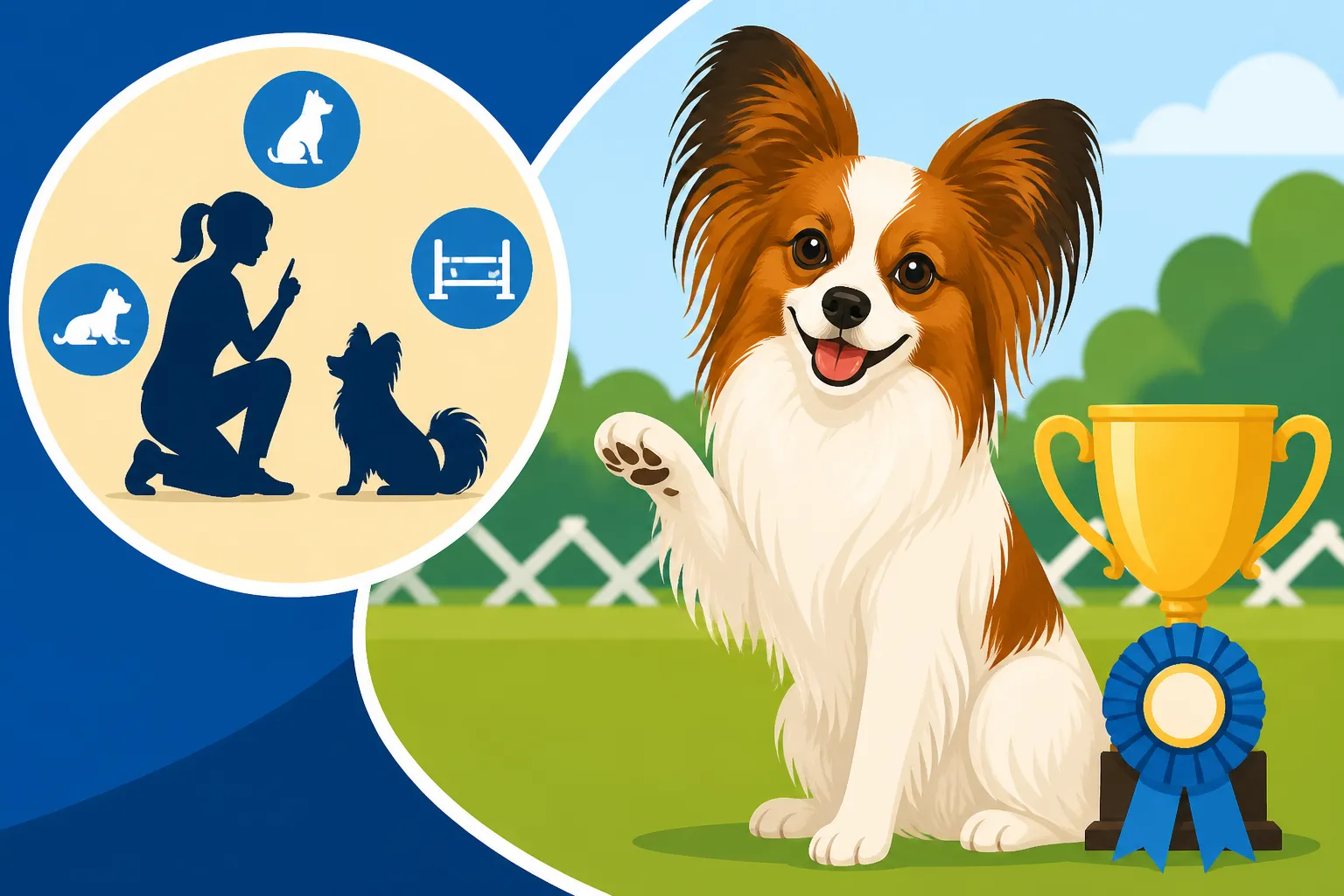
Obedience trials are structured competitions where dogs and handlers perform a series of exercises designed to demonstrate the dog's training and teamwork with its handler. It's not just about a dog knowing "sit" and "stay"; it's about precision, willingness, and a joyful performance.
Trial Levels and Exercises
Obedience trials typically have several levels, each increasing in difficulty. The entry-level, often called Novice or Beginner Novice, focuses on fundamental exercises like heeling on leash, coming when called (recall), standing for examination by the judge, and various stays (sit-stay and down-stay) in a group setting. Your Papillon will need to perform these exercises with precision and enthusiasm, showing that they are under your control and happy to work. As you progress, the exercises become more complex, incorporating off-leash heeling, retrieving dumbbells, scent discrimination, and longer stays with distractions.
Here's a simplified look at typical obedience trial levels and what they demand:
| Level | Key Exercises | On/Off Leash | Distractions |
|---|---|---|---|
| Beginner Novice/Novice | Heel (on leash), Sit-Stay, Down-Stay, Recall, Stand for Exam | Mixed | Minimal to moderate (other dogs, handler movement) |
| Graduate Novice | Figure 8 heeling, Go-Out, Recall over jump | Mixed | Moderate |
| Open | Off-leash heeling, Drop on Recall, Retrieve on Flat/Over Jump, Broad Jump, Command Discrim. | Off-leash | Significant (jump, retrieve items) |
| Utility | Scent Discrimination, Directed Retrieve, Signal Stays, Directed Jumping | Off-leash | High (multiple articles, varied jumps) |
Each level builds upon the last, requiring more finesse, focus, and a deeper understanding between you and your Papillon. It's a journey, not a sprint, and every ribbon earned is a testament to the hard work and bond you've built.
The Importance of Consistency and Practice
Success in obedience trials, especially with a Papillon, hinges on consistent training and practice. Their intelligence means they can learn quickly, but like any athlete, they need regular conditioning to maintain their skills and precision. Short, daily training sessions are far more effective than sporadic, long ones. Aim for 10-15 minute sessions a few times a day, focusing on one or two specific exercises. This keeps it fun and prevents burnout for both of you. You might be surprised by How Long a Papillon Will Work in a Session, as they can keep going if engaged.
Practice in different environments. What your Papillon performs perfectly in your quiet living room might fall apart at a busy park or a noisy trial venue. Gradually introduce distractions and new locations to help generalize their understanding of commands. Using a variety of high-value treats and toys can help maintain their enthusiasm. Remember, you're not just teaching them commands; you're teaching them to perform those commands reliably, regardless of what's happening around them. This level of focus is what separates a well-trained pet from an obedience competitor.
Common Challenges and How to Overcome Them
While Papillons are incredibly smart and eager, they aren't without their quirks. Understanding these common challenges and having strategies to address them will be vital for your success in obedience trials.
Managing the Papillon's Independent Streak
Despite their desire to please, Papillons can sometimes exhibit a charmingly independent streak. They are thinkers, and sometimes, their thoughts might diverge from your immediate command if something more interesting catches their eye. This isn't defiance; it's often a combination of high intelligence and a healthy sense of self-preservation or curiosity. For example, a sudden scent of a rabbit or the flash of a butterfly might momentarily override a "stay" command, especially in a novice dog. This is where consistent, high-value reinforcement comes in.
To combat this, make yourself the most interesting thing in the environment. Use exciting tones, varied rewards, and keep your training dynamic. If your Papillon starts to drift, immediately bring their focus back to you with a cheerful sound or a quick treat. Practice in increasingly distracting environments, but always set them up for success. If you know they can only hold a "stay" for 30 seconds with minor distractions, don't ask for a minute at a dog park right away. Build up their tolerance gradually, always rewarding generously for compliance. A robust "recall" (coming when called) is also essential, making sure that your Papillon chooses to return to you, even when other temptations are present. How Reliably a Papillon Comes When Called is a measure of this bond and training.
Handling Distractions and Maintaining Focus
Obedience trial rings are filled with distractions: other dogs, judges moving around, clapping spectators, strange smells, and ambient noise. For a small dog like a Papillon, these can feel overwhelming. Their sensitive nature means they can be more reactive to their surroundings than some larger, more stoic breeds. One of the biggest hurdles for any competing Papillon is learning to ignore all this "noise" and concentrate solely on their handler.
The key to overcoming distraction is gradual exposure and positive association. Start by practicing in your home with minor background noise, then move to your yard, a quiet park, and eventually, busier public spaces. Reward heavily for any sign of focus on you amidst distractions. Use a consistent verbal marker (like "yes!" or a clicker) immediately followed by a treat or toy to mark the exact moment they offer focus or correct behavior. This helps them understand that focusing on you, even with interesting things happening, leads to good things. Remember, patience is a virtue here. It takes time for any dog to develop a bulletproof focus, and even more so for a small, observant breed like the Papillon.
The Benefits of Competing in Obedience
Beyond the ribbons and titles, engaging in obedience trials with your Papillon offers a wealth of benefits that enrich both your lives, strengthening your bond and providing vital outlets for their natural abilities.
Strengthening the Bond with Your Papillon
There's something incredibly powerful about working as a team with your dog, especially in a challenging environment like an obedience ring. The communication, trust, and shared experience forge an unbreakable bond. Your Papillon learns to trust your cues and guidance, and you learn to read their subtle body language and anticipate their needs. This deep level of understanding extends far beyond the trial ring, improving your relationship in everyday life. A Papillon that regularly trains with you is often more responsive, more confident, and more attuned to your presence.
The time spent training is quality time, where you are both actively engaged in a common goal. This shared endeavor creates a partnership based on mutual respect and enjoyment. It’s an investment in your relationship that pays dividends in loyalty, understanding, and companionship. Knowing that your Papillon looks to you for direction and finds joy in working with you is one of the most rewarding aspects of the sport.
Mental Stimulation and Physical Fitness
Papillons are not content to simply sit around all day. Their sharp minds and energetic bodies require regular engagement. Obedience trials provide an excellent form of both mental and physical exercise. Learning and executing complex routines keeps their brains active and prevents boredom, which, as any Papillon owner knows, can lead to mischievous behaviors. The precision required in heeling, the muscle memory for retrieves, and the mental fortitude for long stays all contribute to a highly stimulated dog. What a Papillon Needs Every Day definitely includes mental challenges.
Physically, while obedience might not seem as strenuous as agility, it still demands physical control, stamina, and coordination. Heeling patterns involve changes in pace and direction, retrieves require bursts of speed, and jumps (in higher levels) build strength and agility. This regular activity helps maintain a healthy weight and muscle tone, which is especially important for a breed prone to Patellar Luxation Is the Papillon Problem You Will Actually Meet. A fit Papillon is a happy Papillon, and obedience training contributes significantly to their overall well-being.
Getting Started with Obedience Trials
So, you're convinced your intelligent little Papillon is destined for the obedience ring? That's fantastic! Getting started might seem a bit daunting at first, but with the right approach and resources, you'll be well on your way.
Finding a Good Training Club or Instructor
This is perhaps the most crucial first step. While you can certainly teach your Papillon the basics at home, a good training club or experienced obedience instructor provides invaluable guidance, structured classes, and opportunities to train with distractions. Look for instructors who use positive reinforcement methods and have experience with small breeds. They can help you refine your handling skills, troubleshoot challenges, and introduce you to the specific rules and expectations of obedience trials. Ask other dog owners for recommendations, check local kennel club websites, or even search online for "dog obedience classes near me."
Many local clubs offer beginner obedience classes specifically designed for those new to the sport. These classes typically cover the Novice exercises and provide a supportive environment to learn. Don't be afraid to visit a class before enrolling to observe the teaching style and see if it's a good fit for you and your Papillon. An engaging and patient instructor can make all the difference in making your obedience journey a positive one.
Essential Gear and Resources
You don't need a lot of fancy equipment to start training, but a few basics will make your journey smoother:
- Leash and Collar/Harness: A comfortable 6-foot training leash is essential. For Papillons, a well-fitting flat buckle collar or a secure harness (like those available on Amazon, which offers a wide variety of styles and sizes) is perfect. Avoid retractable leashes for obedience training as they don't provide consistent control.
- High-Value Treats: As mentioned, Papillons are often very food motivated. Experiment to find what your dog loves most – small pieces of cooked chicken, cheese, or specialized training treats work wonders.
- Clicker (Optional but Recommended): A clicker can be an incredibly effective communication tool, precisely marking the exact moment your Papillon performs the correct behavior. Many trainers swear by them.
- Dumbbell: For later stages, you'll need a retrieve dumbbell. Small, lightweight plastic or wooden dumbbells are available, suitable for your Papillon's size.
- Books and Online Resources: Educating yourself is key. There are countless books on positive reinforcement training and obedience techniques. Online platforms, such as BAXTER & Bella, also provide structured courses and communities where you can learn from experienced trainers and connect with other dog owners. These resources can complement your in-person classes and help you continue training at home.
Remember, the world of dog obedience is incredibly welcoming. Many people initially get involved just for fun and the fantastic bond it creates, and then find themselves hooked by the challenge and the sheer joy of watching their Papillon shine in the ring. So, if you've been wondering if your little butterfly dog has what it takes, the answer is a resounding "yes!" Get out there, have fun, and enjoy the incredible journey.
Disclaimer
This article is for general informational purposes only and does not constitute professional advice. Laws, prices and regulations vary by location and change over time. Consult a qualified professional for guidance on your specific situation.