How a Papillon Shares a House With a Cat
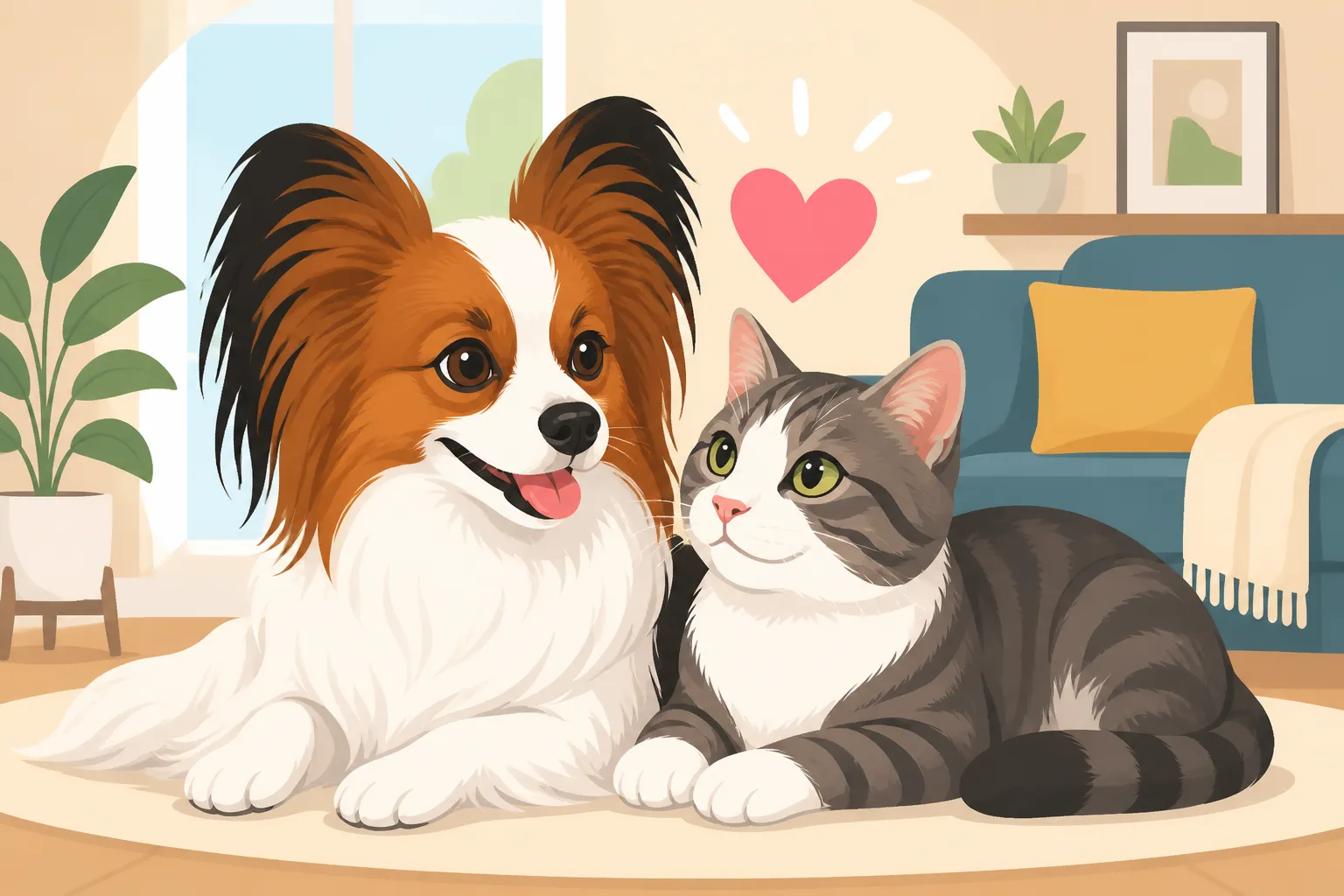
Bringing a new Papillon into a home where a feline friend already reigns supreme, or vice-versa, can feel like you're setting up a potential rivalry rather than a harmonious coexistence. Many dog owners, especially those with small, spirited breeds like Papillons, worry about how their energetic pup will interact with a cat, often envisioning endless chases, hissing, and general mayhem. But I'm here to tell you that with understanding, patience, and some clever planning, a Papillon and a cat can absolutely share a happy home, even if it doesn't look exactly like those perfect internet videos right away. This guide will walk you through the real steps and considerations for fostering peace between your tiny butterfly dog and your independent kitty.
Understanding Papillon and Cat Natures
Before you even think about introductions, it’s crucial to understand the fundamental differences and potential overlaps in how Papillons and cats experience the world. This insight will be your secret weapon in setting them both up for success.
Papillon Playfulness Versus Cat Independence
Papillons are, by and large, incredibly vivacious, intelligent, and people-oriented dogs. They thrive on interaction, playtime, and being the center of attention. They often have a playful curiosity that extends to everything in their environment, including other pets. While they don't typically possess the intense prey drive of some terrier breeds, their sheer enthusiasm can be overwhelming for a more sedate or shy cat. A Papillon’s zest for life often means they want to engage, chase, and investigate, which can easily be misinterpreted as a threat by a cat who prefers to observe from a distance or on their own terms. It’s not aggression; it’s just a mismatch in preferred interaction styles.
Cats, on the other hand, are masters of subtle communication and generally value their personal space. While many cats are playful, they often choose when and how they engage. They might enjoy a good romp with a toy but may not appreciate a bouncy, insistent canine trying to initiate play when they're simply trying to nap or eat. A cat's independent nature means they need to feel secure in their environment and have control over their interactions. If they feel cornered or constantly pestered, they will naturally resort to defensive behaviors like hissing, growling, or even a well-placed swat, which can understandably be startling for a Papillon.
Reading Their Communication Styles
One of the biggest hurdles in establishing peace is the vast difference in canine and feline communication. Dogs, including Papillons, tend to be more overt with their body language – tail wags, play bows, direct eye contact, excited barks. These are all perfectly normal and friendly signals in the dog world. However, a cat might interpret a direct stare as confrontational, a wagging tail as agitation, and a playful bark as an outright threat. A cat communicates with slow blinks, ear positions, tail flicks, and subtle changes in posture that a dog might totally miss.
For instance, a cat slowly blinking at you is a sign of trust and affection, but a Papillon might just see it as a lack of engagement. A cat's tail held high is confidence, but a low, twitching tail can signal annoyance or fear. Your role will be to become a fluent translator, understanding what each animal is trying to say and intervening when misunderstandings inevitably arise. This often means teaching your Papillon to respect a cat's "no" signals and giving your cat the space to communicate without feeling pressured.
The Impact of Early Experiences
Just like humans, a Papillon's early experiences with other animals can heavily influence how they interact with a cat. A puppy that was raised around cats from a young age, or whose mother was comfortable with felines, is often more accepting and less likely to view a cat as a novel, chase-worthy object. This early exposure helps them learn appropriate boundaries and reduces curiosity-driven harassment. The Vaccination Schedule a Papillon Puppy Needs is an important part of getting a puppy out and about safely for socialization.
Conversely, a Papillon who has never encountered a cat, or worse, had a negative experience, might approach a feline with either excessive excitement, fear, or a combination of both. Similarly, a cat who has lived with calm dogs might be more tolerant, while one who has never met a dog, or had a bad encounter, will be far more wary. Understanding this background can help you gauge the level of patience and intervention needed during the introduction process. A cat, especially, needs to know it has safe zones and that you are there to advocate for its comfort.
The Art of Introduction: Slow and Steady Wins the Race
Introducing a Papillon and a cat is not a race. It’s a carefully choreographed dance that requires immense patience and a step-by-step approach. Rushing things can set you back significantly.
Scent Swapping and Visual Acclimation
The very first step, even before they see each other, is to introduce their scents. Scent is incredibly important to both dogs and cats, and it’s how they gather vital information about their environment and others in it. Take a soft cloth and rub it gently on your cat’s cheeks and flank, then place it near your Papillon’s bedding or food bowl. Do the same with your Papillon, letting your cat investigate the dog’s scent. You can also swap bedding or toys between their separate areas. Observe their reactions: a relaxed sniff is good; bristling fur or growling is a sign to slow down.
Once they're somewhat accustomed to each other's smell, you can move to visual contact, but always with a barrier. A baby gate across a doorway is excellent for this. This allows them to see, hear, and smell each other without direct physical interaction. Keep these initial sessions short and positive. Feed them treats on opposite sides of the gate, play with toys, or simply sit calmly near them. The goal is to create positive associations with each other's presence. Avoid allowing either animal to fixate intensely, growl, hiss, or lunge. If these behaviors occur, quietly separate them and try again later for a shorter duration.
Supervised, Controlled Meetings
When both animals seem relaxed behind the barrier, you can graduate to supervised, controlled meetings in the same room. For your Papillon, keeping them on a leash is paramount. This gives you immediate control and prevents them from rushing or chasing the cat, which is a common Papillon inclination when excited. Keep these sessions brief – just a few minutes at first. Reward both animals with high-value treats for calm behavior. If your Papillon offers a play bow to the cat, that's often a good sign of friendly intent, but if the cat clearly isn't interested and is exhibiting stress signals like flattened ears, a puffed tail, or growling, then it’s time to calmly end the session.
Focus on creating a calm atmosphere. Never force interaction. If the cat chooses to approach, great. If they prefer to observe from a high perch, that's fine too. Consistency is key here. Repeat these short, positive interactions several times a day. If you find your Papillon is constantly fixated on the cat, consider working on their "leave it" command separately, or engaging them in a game of "find it" with treats to redirect their attention during these sessions. Resources like BAXTER & Bella offer structured online training programs that can be incredibly helpful for teaching impulse control and focus, which are invaluable skills when introducing new pets.
Gradual Increase in Freedom
Only once both your Papillon and your cat are consistently showing relaxed body language during supervised, leashed interactions should you consider allowing them off-leash in the same room, and even then, supervision is non-negotiable. Start with very short periods, always ensuring the cat has clear escape routes and high places to retreat to. Never leave them unsupervised until you are absolutely certain they are comfortable and safe together – and even then, many owners prefer to keep them separate when not at home, just to be on the safe side.
This phase is all about observing and intervening. If your Papillon starts to chase, immediately interrupt and redirect. A sharp clap, a loud "nope," or a quick lead correction (if still leashed) can work, followed by redirection to an appropriate toy or a calm "sit" and reward. Avoid punishment, which can create negative associations. If the cat is the one being aggressive, give them space. Never reprimand a cat for defending itself. The goal is for both to learn to coexist peacefully, and that means respecting boundaries. Remember that How a Papillon Shows Affection is often very physical, which can be off-putting to a cat.
Creating a Harmonious Shared Space
Even with the best introductions, their physical environment plays a massive role in their long-term success. It's about designing a home where both feel secure and have their needs met.
Vertical Space for Cats
This is absolutely non-negotiable for multi-pet households, especially when a small, active dog like a Papillon is involved. Cats feel safe and secure when they have options to get away and survey their surroundings from above. Invest in good quality cat trees, wall-mounted shelves, or even clear off the tops of bookshelves where your cat can lounge undisturbed. These elevated perches offer your cat a crucial escape route and a sense of control, allowing them to observe the Papillon without feeling vulnerable. Without these safe havens, a cat is far more likely to feel stressed and resort to defensive behaviors.
Think about your cat's perspective: if they're constantly on the ground where the Papillon can reach them, they might feel perpetually on edge. Vertical spaces become their sanctuary, a place where they can relax, nap, and feel safe from an overly enthusiastic Papillon. You can even place their favorite blankets or toys on these high spots to encourage their use. Products like multi-tiered cat trees or modular climbing shelves available on Amazon can transform your cat's world.
Safe Feeding Zones and Water Stations
Food is a high-value resource, and it's essential to keep your Papillon and cat's meals completely separate. Papillons are generally not picky eaters and will happily gobble up cat food if given the chance. More importantly, eating in peace is vital for both animals. Feed your cat in an elevated location (on a counter, a cat tree, or behind a baby gate where the Papillon cannot reach) and your Papillon in their designated area. Ensure they eat at separate times or with a barrier between them.
For water, it's generally fine to have shared water bowls, but consider having multiple stations throughout the house, some of which are elevated for the cat, just in case. This ensures both have easy access to fresh water without feeling competitive or threatened. If you notice your Papillon trying to guard the water bowl, then individual water stations become a must. Managing Getting a Picky Papillon to Eat might also be a factor if one animal is less food-motivated than the other, as the faster eater might try to steal.
Strategic Litter Box Placement
This is a big one that many new multi-pet owners overlook until it becomes a problem. Papillons, like many dogs, are often drawn to cat litter boxes. Why? Well, they're curious, and sometimes, well, cat feces can be surprisingly appealing to them. This is obviously unhygienic and can cause digestive upset for your dog. More importantly, if a cat feels their litter box is not safe or constantly being investigated, they might start eliminating outside the box, leading to serious behavioral problems.
Place litter boxes in areas where your Papillon cannot easily access them. This could mean a room with a baby gate that has a small "cat door" cut into it (or one that the cat can easily jump over, but the dog cannot), or a specialized litter box enclosure (you can find many clever designs on Amazon) that only allows cat access. Some owners use top-entry litter boxes which deter dogs. Ensure your cat has at least one more litter box than the number of cats in the home, plus one (e.g., one cat, two boxes), spread throughout the house, with at least one in a dog-free zone. This prevents your cat from feeling pressured or cornered while doing their business.
Dedicated Quiet Retreats
Just like humans, animals need their own space to decompress. Ensure both your Papillon and your cat have their own designated "safe zones" where they can retreat and be left undisturbed. For your Papillon, this might be a crate with a cozy bed, or their own dog bed in a quiet corner. For your cat, this could be a cat tree, a cozy bed tucked away in a quiet room, or even a cardboard box that they love to hide in.
These retreats are especially important during times of stress, like when guests are over, or if one animal is feeling overwhelmed by the other. Teach children and guests to respect these spaces, ensuring no one bothers the animals when they are in their retreats. These personal sanctuaries are vital for both mental well-being and maintaining peace in a multi-pet household. Crating a Papillon Overnight provides a great opportunity to give your dog a safe and predictable space.
Addressing Common Challenges
Even with the best intentions and preparations, living with a Papillon and a cat isn't always smooth sailing. Here's how to navigate some common bumps in the road.
Papillon Chasing the Cat
This is perhaps the most frequent challenge when introducing a small, energetic dog to a cat. Your Papillon’s natural exuberance and curiosity can easily translate into chasing, which, while not always malicious, is terrifying and stressful for a cat. If your Papillon starts chasing, immediate intervention is key. A loud clap, a sharp "no," or a physical block (stepping between them) can break the chase.
The most effective long-term solution involves redirecting your Papillon's energy and rewarding calm behavior. When your Papillon spots the cat and remains calm, immediately praise and reward them. If they start to fixate, redirect their attention with a squeaky toy or a quick training exercise. Practice "leave it" with the cat from a distance, gradually decreasing the distance as your Papillon masters the command. Ensure your Papillon is getting enough exercise and mental stimulation to prevent boredom-induced mischief. A well-exercised and mentally engaged Papillon is less likely to constantly pester the cat. You'll want to understand How Much Prey Drive a Papillon Has to best manage this behavior.
Cat Swatting or Hissing
While it can be alarming, a cat swatting or hissing at your Papillon is usually just the cat setting a boundary. This is their way of saying, "Back off, I need space!" It’s crucial that you respect these signals and ensure your Papillon learns to respect them too. Never punish your cat for communicating their discomfort. Instead, intervene by gently removing your Papillon from the situation or redirecting their attention.
If the cat is consistently aggressive, it's a sign that they feel threatened or don't have enough safe spaces. Revisit your environmental setup: does your cat have enough vertical territory? Are their feeding and litter areas truly secure? Sometimes, cats who are overly reactive might benefit from calming pheromone diffusers or discussions with your veterinarian about anxiety management. Understanding How Sensitive a Papillon Is can help you explain these interactions to them without causing undue stress.
Resource Guarding
Resource guarding can happen over anything high-value: food, toys, sleeping spots, or even your attention. While it’s more commonly seen between dogs, it can absolutely occur between a dog and a cat. If your Papillon is guarding their food bowl from the cat, feed them in separate, secure locations. If they’re guarding a favorite toy, ensure they have plenty of toys and rotate them, or keep high-value items put away when not in use.
The trickiest form of resource guarding can be over human attention. Both Papillons and cats can be attention-seekers. Ensure you give both animals dedicated one-on-one time daily. Praise and reward them when they are calm in each other's presence, but don't force them to share lap time if it causes tension. If your Papillon starts nudging the cat off your lap, gently move the Papillon and give the cat some solo cuddle time. You might even consider having two separate "cuddle zones" on the sofa to avoid conflict.
The Papillon That Barks at the Cat
A Papillon’s bark is often part of their charming, communicative nature, but it can be utterly irritating and frightening for a cat. Whether it’s an alert bark, a demand bark, or a "play with me" bark, constant barking at the cat will erode any chance of peace. Addressing this requires patience and consistent training. Start by identifying why your Papillon is barking. Are they excited? Frustrated? Trying to initiate play? Trying to get your attention?
Once you understand the trigger, you can address it. If it's excitement, work on impulse control and redirect their energy. If it's demand barking, ignore the bark and only reward quiet behavior. Teach your Papillon a "quiet" cue. Teaching a Papillon to Alert Once and Stop can be very useful here. When your Papillon sees the cat and remains silent, reward them heavily. If they bark, calmly interrupt the behavior and remove them from the situation for a brief timeout, then try again. This consistency teaches them that barking at the cat doesn't get them what they want.
Table: Key Needs for Papillons and Cats in a Shared Home
To help visualize how to best accommodate both your Papillon and your cat, here’s a quick overview of their key needs in a shared living situation:
| Need / Area | Papillon Considerations | Cat Considerations | Overlap & Shared Harmony |
|---|---|---|---|
| Physical Space | Ground level exploration, play areas, cozy dog beds. | Vertical space (cat trees, shelves), hiding spots. | Clear pathways, enough room for both to move freely. |
| Feeding | Designated bowl, separate feeding times/areas if guarding. | Elevated bowls, quiet eating spot, secure from dog. | No shared food bowls; ensure dog cannot access cat food. |
| Litter Box | Must be inaccessible to dog. | Private, clean, multiple boxes, dog-free zones. | High-sided boxes or cat-only access points (gates). |
| Play & Exercise | Interactive toys, walks, training, mental stimulation. | Solo play (wand toys), independent exploration, climbing. | Respectful play sessions, separate toy stashes. |
| Quiet Retreats | Crate, dog bed in a quiet corner. | Cat tree, secluded bed, cardboard boxes. | Each animal has an undisturbed "safe zone." |
| Introductions | Leashed, supervised, short duration, positive reinforcement. | Scent swapping first, barriers, clear escape routes. | Gradual, patient, always positive association focused. |
| Training | "Leave it," "stay," impulse control, recall. | None needed for dog interaction, but positive reinforcement for calm. | Consistent redirection of dog, rewarding calm in both. |
| Human Attention | One-on-one cuddle time, training sessions. | One-on-one cuddle time, gentle play. | Shared space, but individual attention always available. |
Ultimately, creating a peaceful home for both your Papillon and your cat is a marathon, not a sprint. There will be days of perfect harmony, and days where you wonder if they'll ever truly get along. Patience, consistency, and a deep understanding of both their needs and communication styles will be your most valuable tools. Embrace the process, celebrate the small victories, and remember that with your guidance, your tiny butterfly dog and your independent feline can absolutely become the best of friends, or at the very least, respectful housemates.
Disclaimer
This article is for general informational purposes only and does not constitute professional advice. Laws, prices and regulations vary by location and change over time. Consult a qualified professional for guidance on your specific situation.