How a Papillon’s Tail Should Be Carried
A Papillon’s tail is meant to be carried high in a graceful arch over the back, with its long plume falling to one side. If you are comparing your dog with breed descriptions, or wondering whether a suddenly lowered tail is normal, it helps to separate the breed’s typical outline from everyday changes in posture and mood. This guide explains what to look for and when a change deserves attention.
What a Papillon’s Tail Should Look Like
The breed’s characteristic tail carriage
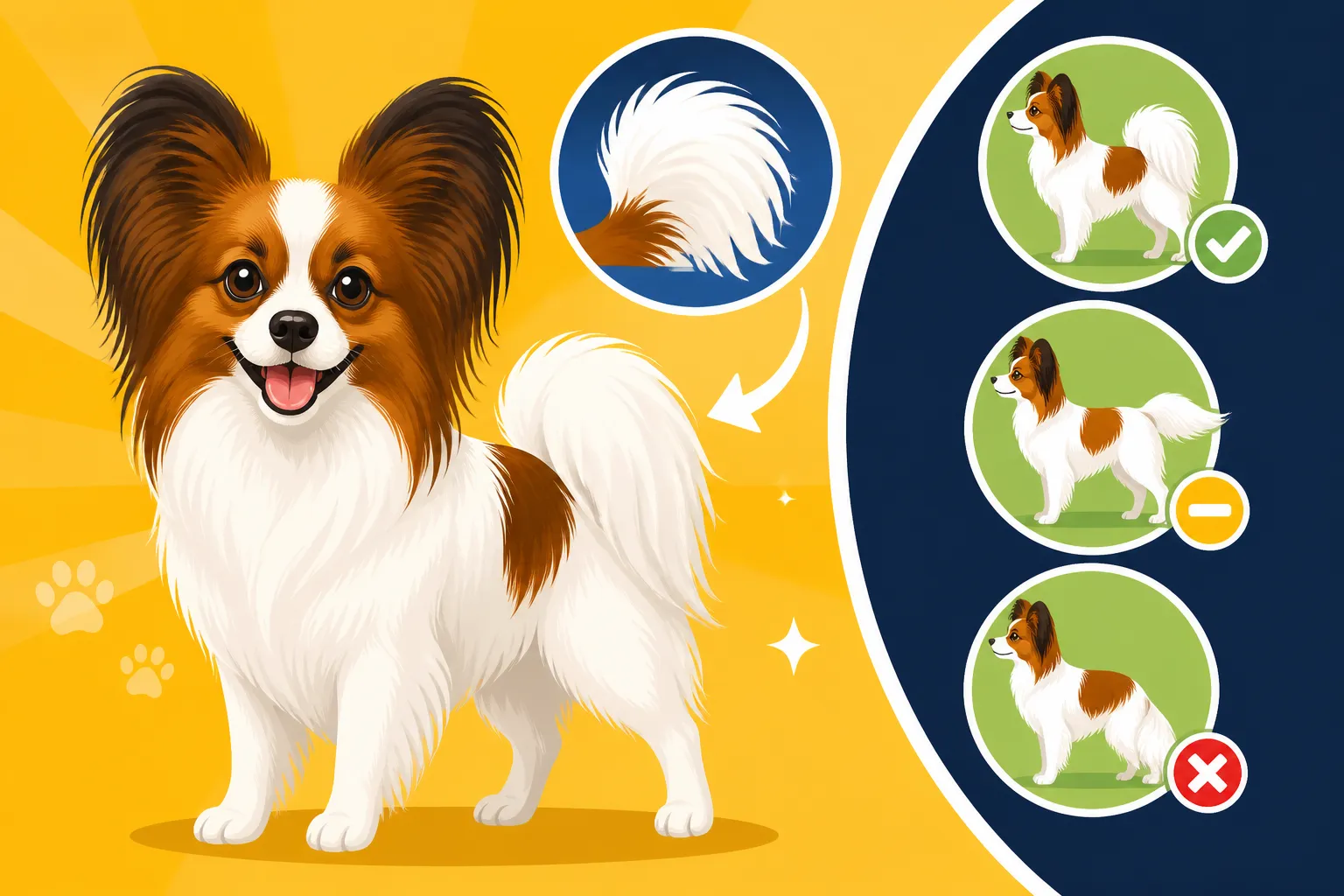
A Papillon has a long, high-set tail that arches over the back. The tail is covered in a flowing plume, which typically falls to one side rather than forming a tight curl. The overall impression should be light and elegant, not stiff or tightly curled. The tail is part of the breed’s outline, so its shape and carriage are considered alongside the dog’s proportions and movement.
That description refers to the tail’s usual carriage when the dog is alert and standing naturally. It does not mean a Papillon must hold its tail in exactly the same position every minute of the day. A dog relaxing on the sofa, sniffing the ground, or feeling unsure in a new place may carry its tail lower than it does while greeting a familiar person.
The difference between an arch and a tight curl can be easy to miss in a very fluffy coat. Try looking at the tail’s base and its direction rather than judging only by the plume. The plume can drape over the back and hide the tail underneath; a naturally arched tail is not necessarily curled into a ring.
How the tail fits the Papillon’s outline
The tail helps create the Papillon’s distinctive silhouette, but it is only one part of the picture. A dog’s overall balance, body proportions, coat, and movement matter too. If you are trying to understand the full outline, What a Correct Papillon's Outline Looks Like offers useful context, while How a Papillon Should Move explains why posture is best considered together with movement.
In show descriptions, the standard is a guide to the breed’s ideal appearance. Individual dogs may vary, and a tail that looks different in one photograph is not enough to judge its structure. The camera angle, the dog’s level of excitement, and the way the plume is lying can all change what you see. Breed standards can also differ in wording between countries, so How Papillon Standards Differ Between Countries is relevant if you are comparing descriptions from different kennel organizations.
A tail that is held high does not need to look rigid or strained. The familiar outline is an arched tail with a soft, flowing plume, not a tightly clamped curl. For information about how tail carriage fits into other breed features, see Which Faults Judges Penalize in a Papillon. That can help explain show terminology, but it should not be used to diagnose a pet’s health or judge whether a dog is comfortable.
Why the plume can make the tail look different
The plume can make a Papillon’s tail appear larger, more curved, or more dramatic than the underlying tail actually is. Long strands may spread over the back, fall to one side, or shift when the dog turns. Coat condition and grooming can also change how clearly you can see the tail’s shape.
A few tangles in the plume may pull the hair into an unusual direction, but they should not be yanked or brushed out forcefully. Check gently for knots, especially where the plume meets the body and underneath where the hair can rub against bedding or a harness. The guide What a Papillon's Tail Plume Needs covers the practical care of this area.
If you need a comb or detangling product, you may find options at Chewy, but choose tools suited to a fine, feathered coat and follow product directions. A comb should glide through the hair without tugging the skin. If a mat is tight against the skin, it is safer to ask a groomer or veterinarian for help than to pull at it with scissors.
How Tail Carriage Changes With Mood and Activity
Relaxed, alert, and excited posture
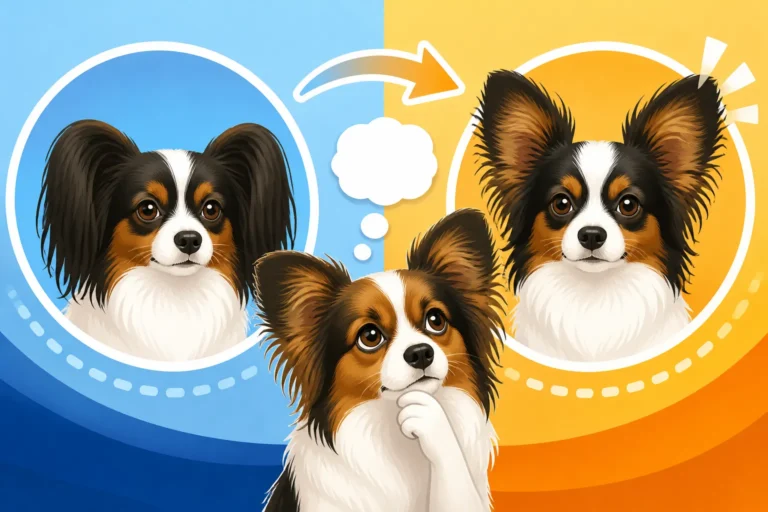
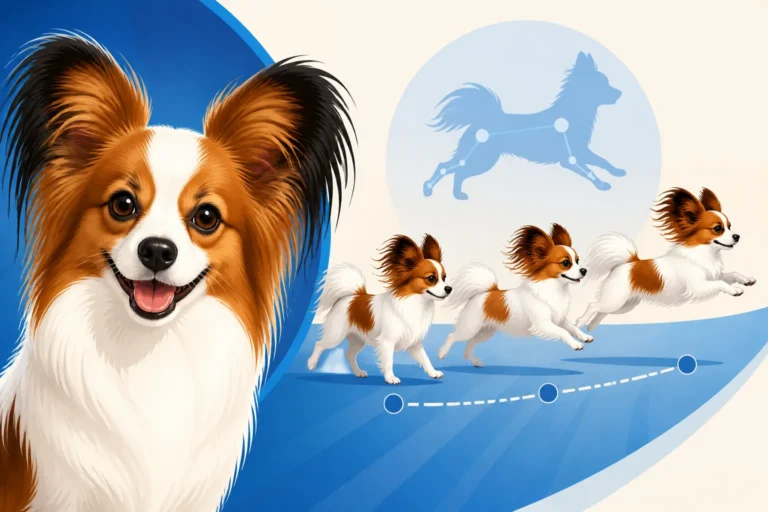
A Papillon may carry its tail differently depending on what is happening around it. When alert, it may hold the tail in its familiar arch. During a happy greeting, the tail may move or the plume may sway; when resting, it may relax downward or lie beside the dog. These ordinary shifts can make a single snapshot misleading.
Look at the whole dog rather than focusing only on the tail. A relaxed Papillon may have a loose body, soft facial expression, and easy movement even if the tail is lower than usual. An excited dog may be more animated throughout its body. Tail position can be one clue to a dog’s state, but it is not a complete emotional “translation.”
If your Papillon has just come home or is visiting an unfamiliar place, it may take time to settle. A dog that is cautious around new people may hold itself differently from the way it does at home. How a Papillon Adjusts to a New Home offers more on those settling-in changes, including why patience and predictable routines can help.
When a low or tucked tail may signal worry
A tail held low or tucked close to the body can be a sign that a dog feels worried, frightened, or uncomfortable. Think about what has changed: Is there a loud noise, an unfamiliar dog, a crowded room, or a new handling routine? Give your Papillon space and a way to move away rather than forcing a greeting or repeatedly lifting the tail to inspect it.
A dog’s body language is more informative when you observe several signals together. A tucked tail paired with a lowered body, pinned-back ears, avoidance, or trembling may suggest fear or stress. A low tail by itself does not prove a particular emotion, and some dogs naturally carry themselves differently when tired or concentrating.
If you are unsure, make a note of when the posture appears and what is happening nearby. For example, a Papillon that lowers its tail only when a large dog approaches may be reacting to that situation, while a tail that stays low at home and during walks may call for a closer look. Avoid correcting or scolding the dog for a posture that may reflect unease.
When a change deserves a closer look
A sudden, persistent change in tail carriage is worth taking seriously, especially if it appears alongside pain, reduced activity, trouble walking, or reluctance to be touched. Notice whether the change began after a fall, rough play, a collision, or an unusually vigorous activity. Do not pull, bend, or test the tail to see whether it hurts.
A Papillon may hide discomfort, and behavior changes can be subtle. The guide How a Papillon Hides Pain explains why changes in movement, appetite, or willingness to play may matter even when a dog is not crying or visibly limping. If the tail is suddenly limp, appears painful, or is accompanied by weakness or difficulty passing urine or stool, contact a veterinarian promptly.
A veterinarian can assess the tail and the rest of the dog, then decide whether an examination or further testing is needed. It is helpful to describe what you first noticed, whether the tail position changes during the day, and whether your dog reacts when moving or being handled. A short video of the posture at home can also provide useful context, as long as you do not delay urgent care to record it.
Caring for a Papillon’s Tail and Feathering
Gentle brushing and checking for tangles
A Papillon’s tail plume benefits from gentle, regular care. Start with your dog relaxed, separate a small section of hair, and work from the ends toward the base so that small tangles do not become painful knots. Use your fingers to loosen a minor snag before using a comb, and stop if your dog shows discomfort.
Pay attention to places where the plume may rub or collect debris. After a walk, check for leaves, burrs, or other material caught in the feathering. If you need grooming supplies, Chewy is one place to look for a suitable comb or coat-care product; the important part is choosing something gentle and using it without pulling. For a heavily tangled plume, a professional groomer can advise on safe removal.
A brief check also gives you a chance to notice changes in the skin or tail. Look for redness, swelling, sores, unusual odor, or a spot your dog repeatedly licks or chews. The plume can conceal the skin, so part the hair carefully rather than assuming that a change in how it hangs is only a grooming issue.
Trimming, bathing, and everyday handling
The long plume is a feature of the Papillon’s appearance, so routine care generally focuses on keeping it clean and free of tangles rather than cutting it short. Small hygiene trims may be appropriate for some dogs, but avoid making a major change to the tail’s coat based on a single knot or a messy day. If you are unsure what should be trimmed, ask a groomer who is familiar with feathered breeds.
After bathing, make sure the plume is rinsed and dried thoroughly. Damp hair that stays tangled can be harder to manage later. Handle the tail gently during grooming, and let your dog take breaks if it becomes restless. For products such as shampoo or detangler, Chewy may offer choices, but check that the product is intended for dogs and follow the directions on its label.
Teach children and visitors not to pull on the plume or use it to guide the dog. Long hair can look like something to grab, particularly to a small child, but the tail is part of the dog’s body and should be handled with care. If your Papillon avoids grooming, start with short, positive sessions and reward calm behavior rather than trying to complete an entire grooming routine at once.
Looking at the tail in daily life
A useful baseline is to notice how your dog carries its tail during familiar activities: standing at home, walking, greeting you, and settling down. You do not need to monitor every movement. Simply knowing what is typical for your own Papillon makes it easier to spot a meaningful change without worrying over every temporary dip in posture.
The dog’s size and overall build can affect how the plume appears, but the tail should still look like a natural part of the body rather than something that is being held stiffly. If you are learning about the breed’s proportions more broadly, What a Papillon Weighs and How Tall It Stands can help put the tail into context with the rest of the dog.
A tail that rests lower during a nap is usually a different situation from one that suddenly hangs limp throughout the day. Likewise, a plume that looks uneven after a bath may simply need gentle grooming, while pain, swelling, or a marked behavioral change deserves veterinary attention. When in doubt, focus on the pattern and the dog’s comfort rather than trying to make the tail match a photograph.
Common Questions About Papillon Tail Carriage
Should a Papillon’s tail always be over its back?
No. The breed’s characteristic outline includes a high-set tail arched over the back, but a pet dog’s posture naturally changes with activity and mood. It may relax its tail when resting, lower it while sniffing, or carry it differently when uncertain. A single moment with the tail down is not enough to conclude that something is wrong.
What matters is the change from your dog’s normal pattern. If your Papillon is otherwise comfortable and the tail returns to its usual carriage when alert, that is different from a sudden, persistent change accompanied by tenderness or difficulty moving. Observe the whole dog and seek veterinary advice if you are concerned.
Is a tightly curled tail typical?
The expected Papillon outline is an arch over the back, with the plume flowing to one side; it is not a tightly curled ring. However, thick feathering can make the tail look more curled in a photo than it is in person. Look at the tail’s base and the dog’s relaxed posture, not only the shape made by the hair.
If you are considering a puppy or comparing adult dogs, remember that an image cannot show how the dog carries its tail throughout normal movement. Ask to see the dog standing and walking comfortably, and consider the whole outline rather than making a decision from one still pose.
What should I do if my Papillon’s tail suddenly droops?
First, avoid lifting or manipulating the tail to test it. Note when the change started and whether there was a fall, rough play, or another possible injury. Watch for signs such as pain, swelling, reduced energy, an unusual gait, or difficulty urinating or defecating.
Contact your veterinarian if the tail stays unusually low, appears limp or painful, or the change comes with other concerning signs. A sudden change can have different causes, and a professional examination is the safest way to determine what is happening. Chewy can be useful for everyday grooming supplies, but a change in tail posture that may involve pain is a veterinary question, not a grooming problem.
Disclaimer
This article is for general informational purposes only and does not constitute professional advice. Laws, prices and regulations vary by location and change over time. Consult a qualified professional for guidance on your specific situation.