Whether the Papillon Is More Dog Than It Looks
A Papillon’s small frame can make it look like an easy, delicate lapdog, but owners often discover a bright, busy companion with plenty of opinions. That mismatch can be frustrating if you expect a quiet ornament or assume little dogs need little training. This guide explains what “more dog than it looks” means in everyday life, from exercise and barking to safe handling and companionship.
The Papillon’s size does not define its personality
A small dog with a working mind
Papillons are toy dogs, but “toy” describes their size and breed group, not a need to be carried everywhere or left without things to do. Many are alert, quick to learn, and keen to take part in whatever is happening around them. A Papillon may be only a few pounds, yet still want to follow a scent, investigate the visitor at the door, learn a trick, or race around the living room.
That eagerness can be delightful when you enjoy teaching and interacting with your dog. It can also catch people off guard. A Papillon who has learned to open a treat puzzle may soon start experimenting with other household challenges, such as nosing at a bag on a chair or barking when a delivery arrives. Cleverness does not automatically mean good judgment; it means the dog may notice patterns and repeat behaviors that get a response.
Training is part of making that intelligence pleasant to live with. Short, upbeat sessions can teach practical skills such as coming when called, settling on a mat, waiting at a doorway, and being comfortable with grooming. For more on the breed’s quick learning, see The Papillon Is the Smartest Toy Breed There Is. It is useful to think of training not as a way to make a Papillon less spirited, but as a way to help that spirit fit into family life.
Confidence can be bigger than the body
Many Papillons approach the world with surprising confidence. A dog who weighs less than a large dog’s head may still trot over to investigate, bark at a much bigger canine, or insist on being part of a game. That boldness is charming, but it can create risk if people assume the Papillon will naturally stay out of trouble because of its size.
A Papillon’s small body is vulnerable to accidental knocks, rough play, and falls. A large dog may not intend harm while bounding over, but the size difference still matters. Children can also injure a small dog by hugging too tightly, picking it up awkwardly, or dropping it. Teach children to sit on the floor for calm interactions and to let the dog approach rather than grabbing it. The same principle applies with other dogs: supervise introductions and step in before play becomes too physical.
Confidence is not proof that every social situation feels safe. A Papillon may bark or rush forward because it is excited, worried, or trying to create distance. Watch its body language and give it room to move away. A Papillon Has No Idea It Is Small explores this mismatch between a little dog’s self-assurance and the practical limits of its size.
What a Papillon needs from an ordinary day
Exercise means movement and mental work
Papillons generally benefit from regular activity, but their needs are not met by exercise alone. A walk gives a dog movement, new smells, and a chance to explore at a manageable pace. Play, training, and food-search games can add mental engagement. Some Papillons enjoy dog sports, while others are happiest with neighborhood walks and lively games at home.
The right routine depends on the individual dog’s age, health, fitness, and temperament. A young, energetic Papillon may want more play than an older dog, while a dog with a health concern may need its activity adjusted with veterinary guidance. Instead of trying to tire a Papillon out with one long outing, consider combining shorter walks with a few small activities. A five-minute training session and a sniffing game can be more satisfying than repeating the same walk without much opportunity to explore.
Give physical activity a safe setup. A secure harness and leash are sensible for walks, and outdoor play should happen in an enclosed area or on leash rather than relying on a small dog’s recall around distractions. If you are choosing suitable games and daily movement, How Much Exercise a Papillon Needs offers a focused look at the breed’s activity needs.
Boredom can show up as barking or mischief
A Papillon with little to do may invent a job. That could mean sounding the alarm at every hallway noise, following family members from room to room, pestering for attention, or chewing something it should leave alone. These behaviors can feel like “too much dog” when the dog’s day has no predictable outlets for curiosity and interaction.
Try setting up a simple rhythm. Offer a walk or play period, a short training session, quiet time, and an appropriate chew or food puzzle. Rotate a few safe toys rather than leaving every toy out all the time. Puzzle toys should be chosen for the dog’s size and chewing style, and supervised at first. If you shop online, Chewy is one place owners may look for small-dog enrichment toys, but check the product dimensions and instructions rather than assuming an item labeled for dogs will suit a tiny Papillon.
Barking needs its own plan, too. Scolding may add excitement or attention without teaching the dog what to do instead. Notice what sets off the barking, reduce unnecessary exposure where practical, and reward a quiet response or a cue to settle. If barking is a daily strain, How Much a Papillon Barks can help you think through common triggers and management approaches.
| Everyday need | What it can look like | Why it matters |
|---|---|---|
| Physical activity | Walks, supervised play, and movement suited to the dog | Supports fitness and provides chances to explore |
| Mental engagement | Short training sessions, sniffing games, or puzzle toys | Gives an alert dog something appropriate to focus on |
| Rest | A quiet bed or comfortable crate area | Helps prevent constant stimulation and overexcitement |
| Social practice | Calm, supervised introductions to people and dogs | Builds safer habits without forcing interaction |
| Grooming and handling | Gentle brushing, nail care, and routine body handling | Makes everyday care less stressful over time |
Training, companionship, and living with other dogs
Social skills need patient teaching
A Papillon’s size does not make socialization optional. Introduce the dog to a variety of everyday sights and sounds at a pace that allows it to stay relaxed. This might include visitors entering the home, walking past traffic at a comfortable distance, hearing household appliances, or meeting a calm dog. The aim is not to make the Papillon greet everyone. It is to help the dog feel safe and learn that it can observe without rushing toward, barking at, or hiding from every new thing.
With larger dogs, choose calm, controlled introductions and give both animals room. Do not place a Papillon on the ground in the middle of a group of excited dogs and expect it to work things out. Keep play brief enough that the small dog does not get overwhelmed, and interrupt if a bigger dog barrels into it or the Papillon’s body language turns tense. How a Papillon Behaves With Large Dogs is relevant if your household or social circle includes bigger canine companions.
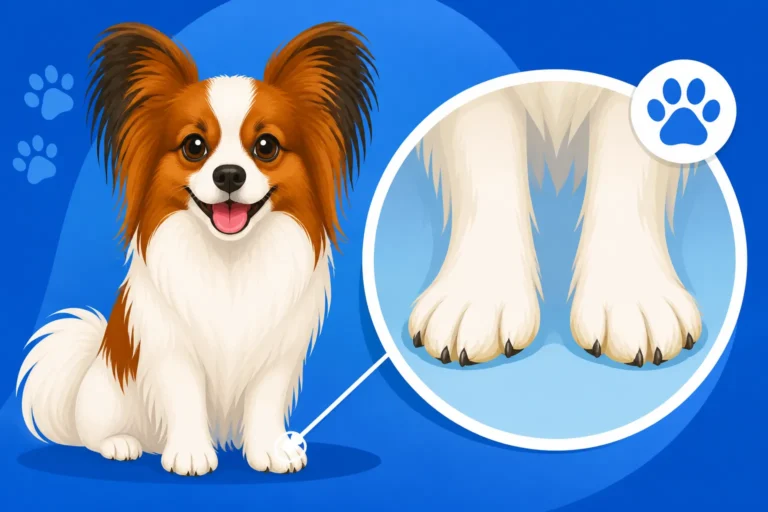
Training should also include handling. Practice gentle touches to paws, ears, and coat, paired with rewards, so brushing and routine care become familiar rather than a wrestling match. A Papillon may have long feathering that needs regular attention, and tiny nails can be tricky to trim if the dog pulls away. When ordering supplies through Chewy or another retailer, look for tools sized for a small dog and introduce them gradually; a new brush is not useful if the dog is frightened of it.
Alone time and attention both matter
Papillons often enjoy being close to their people, but that does not mean they should be expected to spend every moment in someone’s arms. At the same time, a dog who is suddenly left alone for long stretches may struggle if it has not learned how to rest independently. Build alone-time skills gradually: begin with brief separations while the dog is calm, provide a safe resting place, and return before the dog becomes distressed when possible.
If a Papillon barks, scratches at a door, or panics when left, avoid treating it as stubbornness. Those signs can reflect distress, and simply leaving the dog to “get used to it” may make the problem harder. A predictable routine, gradual practice, and appropriate professional help can be important when the dog’s reaction is severe. For a closer look at realistic expectations, read How Long a Papillon Copes Alone.
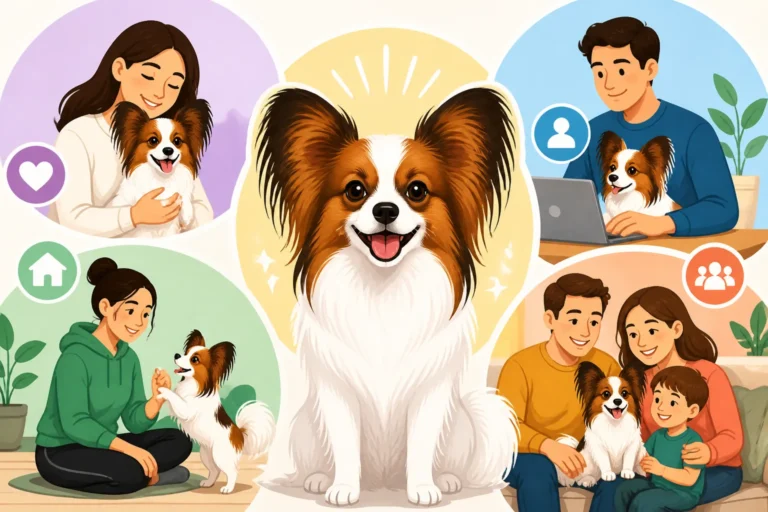
It also helps to offer attention that is not constant high-energy play. Teach a settle cue, reward the dog for relaxing on its bed, and make quiet companionship part of the day. A Papillon can be affectionate and sociable without being entertained every minute. Families who want a dog that rarely asks for interaction may find this level of involvement demanding; people who enjoy teaching, playing, and including a dog in daily routines may find it rewarding.
Is the Papillon a good fit for your home
A small dog still needs thoughtful safety
The Papillon’s size can make it convenient in some homes, but it also asks for care. Use barriers or supervision around stairs and furniture if the dog is prone to jumping down. Keep floors as nonslip as you can, and avoid rough play that could lead to a fall. Teach visitors not to pick up the dog without asking, and make sure the Papillon has a place to retreat when the house is busy.
For everyday purchases, Chewy may be one option for finding small-sized harnesses, beds, and grooming supplies. Check measurements carefully: an item can be described as “small” and still fit poorly on a particular dog. A harness should sit securely without rubbing, and a bed should be easy for the dog to enter and leave. If a Papillon has a health or mobility concern, ask a veterinarian what home adjustments are appropriate rather than relying on product labels.
Also consider the household’s noise and activity level. A Papillon may adapt to apartment living, but shared walls make alert barking more important to address. A fenced yard can provide a useful place for play, yet it does not replace walks, training, or supervision. The fit depends less on having a large home and more on whether the dog can be safely included and given appropriate outlets.
The right fit depends on expectations
A Papillon may suit a first-time owner who is prepared to train consistently and learn about small-dog handling. The breed is not automatically effortless because it is compact. House training, barking, grooming, socialization, and alone-time practice still require patience. Whether a Papillon Suits a First Time Owner can help you weigh those responsibilities against the breed’s appealing qualities.
Before bringing one home, ask yourself a few practical questions. Can you provide daily interaction and safe activity? Are you willing to teach calm behavior rather than accepting barking as inevitable? Can everyone in the household handle a small dog gently? If you work away from home, do you have a plan for breaks, companionship, and gradual alone-time training? These questions matter more than whether the dog can fit in a carrier.
The Papillon is “more dog than it looks” because its small body comes with a capable, curious personality and real needs for training, companionship, and thoughtful care. It is not a miniature accessory or a dog that should be protected from every normal experience. With safe boundaries, kind training, and an engaging routine, its confidence and intelligence can become some of its most enjoyable traits.
Disclaimer
This article is for general informational purposes only and does not constitute professional advice. Laws, prices and regulations vary by location and change over time. Consult a qualified professional for guidance on your specific situation.