What the CNGB1 Frameshift Does to a Papillon’s Rods
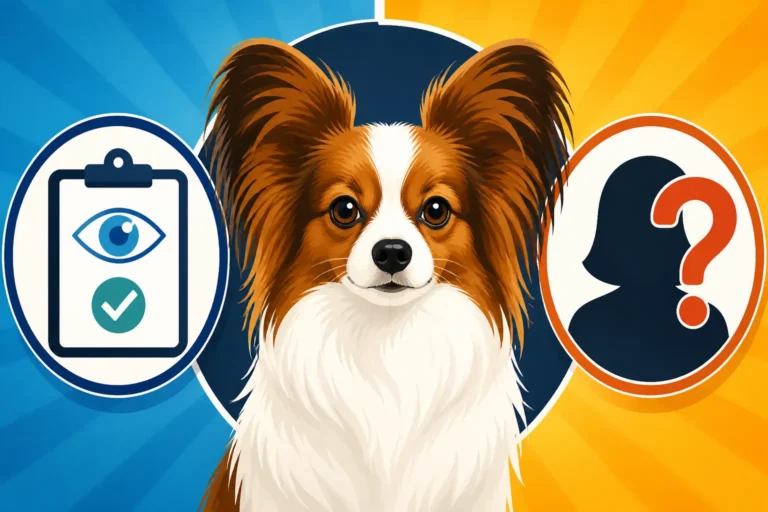
It’s truly disheartening to hear those unfamiliar, complex terms like "CNGB1 frameshift" when you're just trying to understand your beloved Papillon's health. The fear that comes with a potential genetic eye condition can be overwhelming, especially when the jargon makes it hard to grasp what's actually happening to their precious vision. This guide is here to untangle that confusion, breaking down exactly what the CNGB1 frameshift is, how it specifically impacts the rod cells in your Papillon's eyes, and what the progression of this genetic condition means for their eyesight.
Understanding the CNGB1 Gene and Its Role in Vision
When we talk about vision in our dogs, we're really talking about a marvel of biological engineering, and the CNGB1 gene plays a crucial, though often unsung, role in this process. It's one of those behind-the-scenes players that, when it’s working correctly, you never even notice. However, when something goes awry, its absence or malfunction has profound effects, especially on how our Papillons perceive the world around them, particularly in low light.
The Basics of Rod and Cone Cells
To fully appreciate the CNGB1 gene, we first need a quick primer on the two main types of photoreceptor cells in the retina: rods and cones. Think of your dog's retina as the camera film at the back of their eye, and these cells are the light sensors.
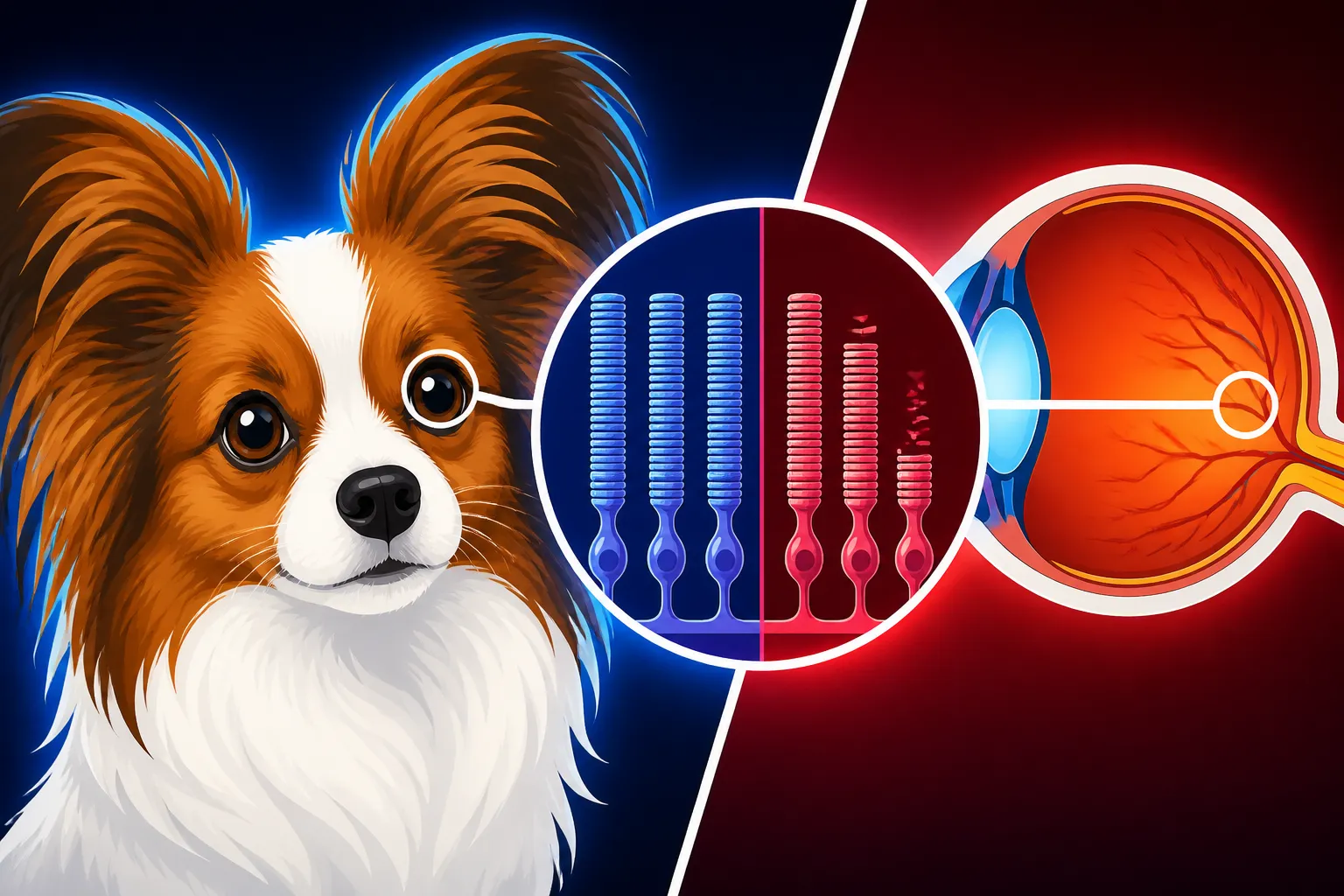
Rods are the superstars of low-light vision. They are incredibly sensitive to light and are responsible for detecting motion and vision in dim conditions, essentially providing grayscale vision. This is why dogs, with their higher concentration of rods compared to humans, tend to see much better in the dark than we do. They help your Papillon navigate your house at dusk, spot a squirrel scampering in the twilight, or find their favorite toy under the sofa when the lights are low. Without healthy rods, navigating these scenarios becomes incredibly challenging, turning familiar spaces into confusing obstacles once the sun goes down.
Cones, on the other hand, are all about bright light and color vision. While dogs don't see the full spectrum of colors that humans do (they are often described as being red-green colorblind, perceiving the world in shades of blue, yellow, and gray), cones are vital for their daytime acuity and distinguishing details in well-lit environments. Both types of cells work in concert, but their individual functions are distinct, meaning a problem with one can lead to very specific types of vision loss. For a deep dive into how dogs see in the dark, you might find this article on Why a Papillon Can Go Blind at Night and Still See in Daylight helpful.
How the CNGB1 Gene Supports Rod Function
Now, let's bring it back to CNGB1. This gene provides instructions for making a specific protein component of the cyclic GMP-gated channel, which is absolutely critical for the proper functioning of those rod photoreceptor cells we just discussed. Imagine the rod cell as a tiny electrical circuit. When light hits the rod, it triggers a cascade of biochemical events that ultimately open or close ion channels on the cell membrane, creating an electrical signal that the brain interprets as vision.
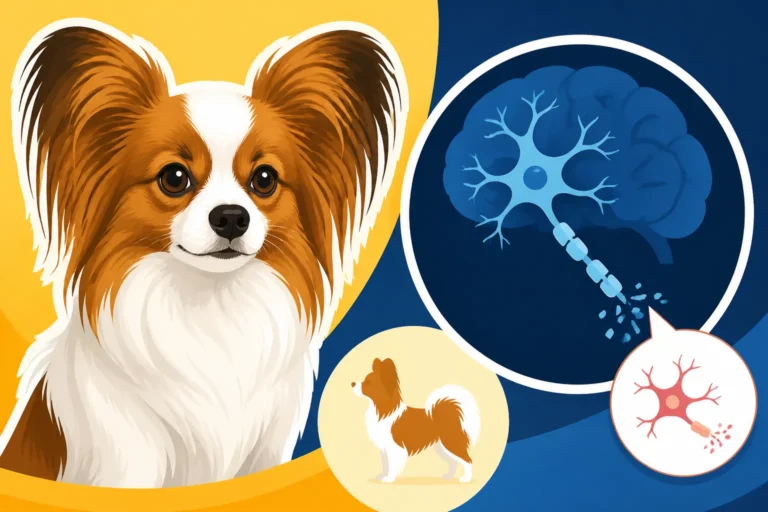
The protein produced by the CNGB1 gene is like a vital gatekeeper for these ion channels. It helps to regulate the flow of ions, which is essential for the rod cell to 'reset' itself after detecting light and be ready to detect the next photon. If this protein isn't formed correctly, or isn't there at all, this complex cascade breaks down. The rod cells can't respond to light properly, they become overstimulated, and eventually, they start to degenerate and die. This is what sets the stage for the progressive loss of vision that we see in affected Papillons. The integrity of these rod cells, maintained by genes like CNGB1, is fundamental to a Papillon's overall visual health.
The CNGB1 Frameshift Mutation Explained
The term "frameshift" might sound intimidating, but it refers to a specific type of genetic mutation that has a profound ripple effect on how a protein is built. Understanding this specific defect is key to grasping why some Papillons develop Progressive Retinal Atrophy (PRA). When we discuss genetic conditions like this, it's crucial to remember that it's not anyone's fault; it's a natural, albeit unfortunate, part of the genetic lottery. This specific issue is known as The Papillon Type of Progressive Retinal Atrophy and the CNGB1 Gene.
Genetic Mutations and Their Impact
Our dogs, like us, have DNA, which is essentially a detailed instruction manual for building and operating their bodies. Genes are segments of this DNA, each carrying the blueprint for a particular protein. Proteins, in turn, do most of the work in cells and are required for the structure, function, and regulation of the body's tissues and organs. A "mutation" is simply a change in the DNA sequence.
There are many types of mutations, from a single letter change (a "point mutation") to large deletions or insertions of genetic material. Some mutations are harmless, others can be beneficial, but many, unfortunately, can be detrimental, leading to genetic diseases. A frameshift mutation is particularly nasty because it disrupts the "reading frame" of the gene. Think of it like reading a sentence: "THE CAT ATE THE RAT." If you suddenly delete a letter, say the first 'E' in 'THE', and don't adjust the spacing, the sentence becomes "TH CAT ATE THE RAT," which is still somewhat readable. But if you shift all the subsequent letters by one position, the meaning completely changes, or becomes gibberish: "THC ATA TET HER AT."
This is precisely what happens with a frameshift. Because DNA is read in groups of three "letters" (codons), inserting or deleting a number of nucleotides that is not a multiple of three causes the entire sequence after the mutation to be read incorrectly. This means that all the amino acids (the building blocks of proteins) encoded downstream from the mutation will be different, almost always leading to a non-functional or truncated protein. It's like building a car from a blueprint where one crucial step was entirely misinterpreted from that point forward – the final product simply won't work.
The Specifics of the CNGB1 Frameshift in Papillons
In Papillons, the CNGB1 frameshift mutation is a specific deletion of a single nucleotide (a single "letter" in the genetic code) within the CNGB1 gene. Because it's a single deletion, it throws off the entire reading frame from that point onward. This means the protein that should be produced by the CNGB1 gene – that vital gatekeeper for rod cell function – is either severely truncated (cut short) or completely malformed. It simply cannot perform its job correctly.
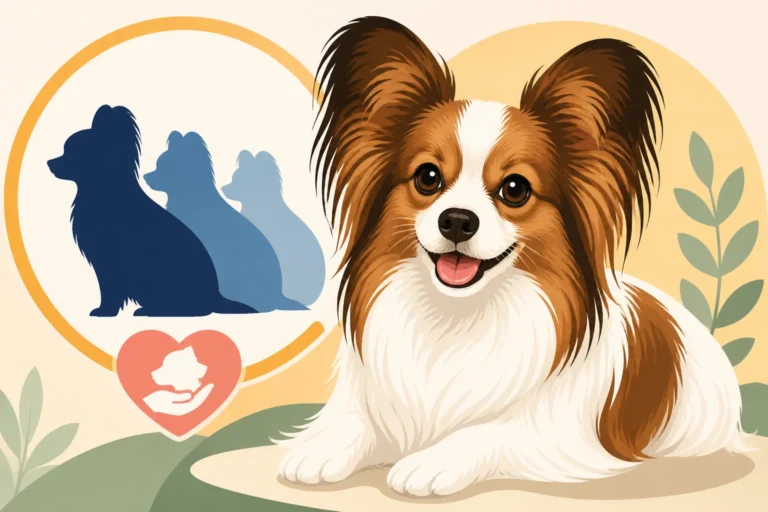
This particular mutation is inherited in an autosomal recessive pattern. This means a Papillon must inherit two copies of the defective gene – one from each parent – to be affected by the disease. Dogs with only one copy of the defective gene are considered "carriers." They don't typically show symptoms of PRA themselves, but they can pass the gene on to their offspring. This is why genetic testing is so important for breeders, allowing them to identify carriers and make informed breeding decisions to avoid producing affected puppies. You can learn more about this inheritance pattern in How PRA1 Is Inherited in Papillons. The fact that a single base pair deletion can have such a catastrophic effect on vision highlights the intricate precision required for proper genetic function.
Impact on Papillon Vision: Progressive Rod-Cone Degeneration
The CNGB1 frameshift directly leads to a condition called Progressive Retinal Atrophy (PRA), specifically the early-onset form often referred to as PRA1 in Papillons. This isn't just a vague "vision problem"; it's a specific, predictable pattern of deterioration that begins in the most sensitive visual cells. For a detailed overview of what happens to the retina, you can check out What PRA1 Does to a Papillon's Retina. Understanding this progression can help you recognize early signs and prepare for future changes in your Papillon's life.
Why Rods Are Affected First: The Onset of Night Blindness
Because the CNGB1 gene's primary role is in the proper functioning of the rod cells, these are the first to be significantly impacted by the frameshift mutation. As we discussed, rods are responsible for vision in dim light and detecting motion. When the protein essential for their function is missing or malformed due to the CNGB1 defect, these rod cells begin to degenerate and die off.
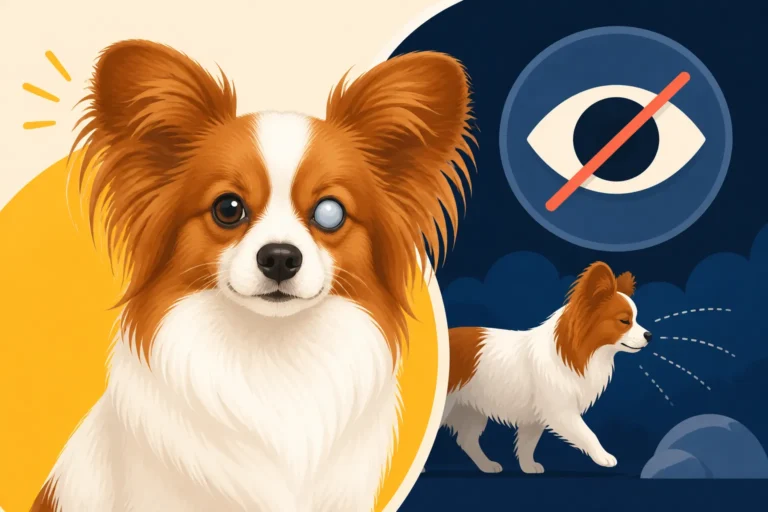
The consequence? Your Papillon will start to experience progressive night blindness, also known as nyctalopia. This is often one of the earliest and most noticeable signs for owners. You might start to notice your Papillon hesitating more in dimly lit hallways, bumping into furniture in the evening, or becoming unusually reluctant to go outside after sunset. They might become more startled by sudden movements or noises in low light, relying more on their hearing and sense of smell to navigate. This isn't just a little clumsiness; it's a genuine struggle to see in conditions they once navigated with ease.
This initial phase can be particularly frustrating for both dog and owner. Your Papillon might seem fine during the day, leading to confusion. It's important to remember that this isn't behavioral; it's a direct result of their deteriorating rod function. The age PRA1 appears in a Papillon can vary, but these early signs often manifest in young dogs. Owners might initially dismiss these subtle changes as an increase in caution or even stubbornness, but recognizing the signs of vision loss, especially night blindness, is crucial. You can find more information on Signs a Papillon Is Losing Night Vision.
Progression to Cone Degeneration and Total Blindness
While the rod cells are the first casualties, the disease doesn't stop there. Progressive Retinal Atrophy, by its very name, indicates a progression. Over time, the damage in the retina extends beyond just the rods to affect the cone photoreceptor cells as well. While the CNGB1 frameshift directly impacts rods, the overall degeneration of the retinal tissue and the complex interconnectedness of these cells eventually leads to the cones also losing their function.
This means that as the condition advances, your Papillon's daytime vision will also begin to decline. What started as difficulty seeing in the dark will gradually evolve into more generalized vision impairment, even in brighter conditions. The ability to distinguish objects, recognize faces, and navigate familiar environments will diminish. This secondary cone degeneration marks a significant stage in the disease, leading toward complete blindness. The rate of progression can vary between individual dogs, but eventually, many affected Papillons will lose all functional vision.
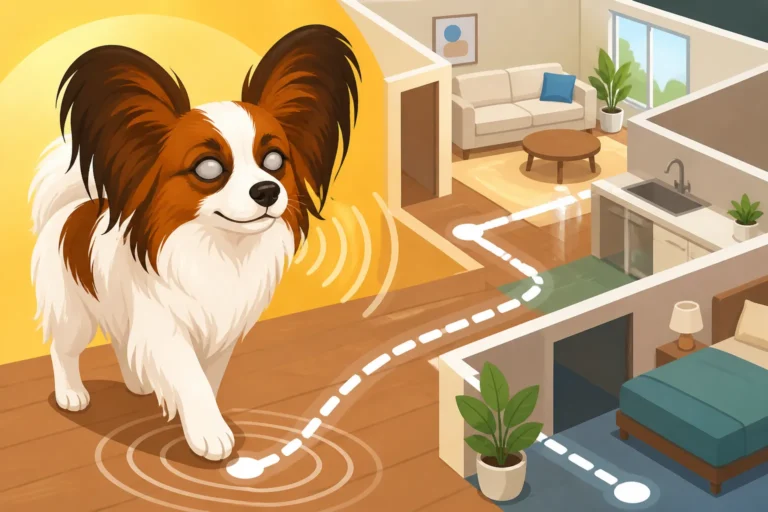
It’s a tough reality to face, knowing that your vibrant little companion will slowly lose their sight. However, dogs are incredibly resilient and adaptable. Many Papillons with PRA learn to navigate their world quite effectively using their other heightened senses. Creating a safe, predictable environment and maintaining routines becomes paramount. For owners wondering about the ultimate outcome, this article on Whether a Papillon With PRA Goes Fully Blind offers more context.
| Stage of PRA Progression | Affected Vision | Common Owner Observations |
|---|---|---|
| Early Stage (Rod Degeneration) | Night/Low-Light Vision (Rods) | Hesitation in dim lighting, bumping into furniture at night, reluctance to go out in the dark, increased startle reflex. |
| Mid Stage (Initial Cone Involvement) | Low-Light and Some Daytime Vision (Rods & Cones) | Increased daytime clumsiness, difficulty tracking moving objects, hesitation in unfamiliar bright areas, dilated pupils. |
| Late Stage (Severe Rod & Cone Degeneration) | Significant to Total Vision Loss (Rods & Cones) | Bumping into objects constantly, complete disorientation in new environments, difficulty finding food/water without assistance. |
Living with and Managing PRA Caused by CNGB1
Discovering your Papillon has PRA due to the CNGB1 frameshift is undeniably heartbreaking. It's okay to feel a wave of emotions – fear, sadness, even frustration. But it's crucial to remember that a diagnosis is not an end, but a new beginning in how you care for your furry family member. Many Papillons live full, joyful lives even with significant vision impairment. Your role shifts from preventing the inevitable to providing the best possible support and environment for them.
Early Signs and Diagnosis
Being proactive is key. If you've started noticing any of the subtle changes we discussed – like your Papillon seeming more tentative in dim lighting, or perhaps a little more clumsy after dusk – it's time to talk to your veterinarian. These early signs are often the only clues before the disease progresses further.
Your vet will likely recommend a comprehensive eye exam, which may include ophthalmoscopy to look at the retina, and potentially electroretinography (ERG), which measures the electrical responses of the retina to light. An ERG can detect rod and cone dysfunction even before visible changes appear on examination. The definitive diagnosis for PRA1 in Papillons, however, comes from a DNA test. A simple cheek swab can confirm the presence of the CNGB1 frameshift mutation. This test identifies whether your Papillon is affected (two copies of the gene), a carrier (one copy), or clear (no copies). This diagnostic step is incredibly important, not only for confirming your dog's condition but also for informing breeders. You can learn more about this test in The DNA Test for Papillon Retinal Atrophy. If your dog needs these specialized tests or ongoing care, considering pet insurance like Healthy Paws can provide peace of mind regarding the financial aspects of managing a chronic condition. It’s definitely something to consider if you want to be prepared for potential future veterinary expenses.
Early diagnosis allows you to plan and adapt your home environment before their vision significantly declines, making the transition much smoother for your Papillon.
Supporting a Papillon with Vision Loss
Once you know your Papillon is on this journey, there's so much you can do to help them maintain a high quality of life. The biggest challenge for a blind or vision-impaired dog is often navigating their environment safely and confidently.
- Maintain Consistency: Keep furniture and belongings in the same place. Your Papillon will create a mental map of your home, and moving things around will only cause confusion and potential injury. Ramps and steps, while always a good idea for a Papillon's knees, become even more vital when they can't see to jump.
- Safety First: Block off stairs with gates, pad sharp furniture corners, and keep hazardous items out of reach. Supervise outdoor time closely, ideally in a securely fenced yard, as their recall might become less reliable without visual cues. A Papillon that's losing its vision will also benefit from wearing a harness rather than a collar on walks to prevent neck strain and provide better control.
- Sensory Enrichment: Because their vision is compromised, their other senses will heighten. Engage them with scent games, puzzle toys that dispense treats, and plenty of auditory cues. Talk to them often, letting them know where you are. Teach verbal commands for obstacles, like "step up," "step down," "stop," or "watch out." This can be incredibly empowering for them.
- Tactile Cues: Placing different textured rugs or mats near doorways or around water bowls can help them orient themselves. A bowl specifically designed for blind dogs, with a textured rim, can also be helpful.
- Emotional Support: Your Papillon will look to you for reassurance. Be patient, calm, and provide plenty of physical affection. A blind dog isn't a broken dog; they are still the loving companion you adore, just experiencing the world a little differently. Many Papillons adapt remarkably well, as highlighted in this article about How a Blind Papillon Learns a House. Don't underestimate their resilience, or your own capacity to care for them.
Breeding Considerations and Genetic Testing
For breeders, understanding the CNGB1 frameshift is paramount to responsible breeding practices. Since it's an autosomal recessive condition, it means that even carriers, who show no signs of the disease themselves, can pass the gene on.
Responsible Papillon breeders should absolutely be conducting genetic testing for PRA1 (CNGB1 frameshift) on all their breeding stock. This ensures they know the genetic status of their dogs – whether they are clear, carriers, or affected.
- Clear dogs (N/N): Do not carry the mutation and will not pass it on.
- Carrier dogs (N/PRA1): Carry one copy of the mutation and will not develop PRA, but can pass it to 50% of their offspring.
- Affected dogs (PRA1/PRA1): Carry two copies of the mutation and will develop PRA.
By only breeding clear dogs, or carefully pairing a carrier with a clear dog (which will produce a percentage of carriers but no affected puppies), breeders can effectively eliminate the risk of producing puppies that will develop this form of PRA. This proactive approach is a cornerstone of preserving the health and well-being of the breed. If you are considering getting a Papillon puppy, always ask the breeder about their health testing protocols, especially for PRA1. A reputable breeder will be transparent and provide documentation of genetic test results. Such preventive measures can save future owners the heartache and expense of managing this condition, expenses that pet insurance providers like Healthy Paws help with for unexpected illnesses. It's a testament to good stewardship and ethical breeding practices.
Disclaimer
The information provided in this article is for general informational purposes only and is not a substitute for professional veterinary advice. Always consult with a qualified veterinarian or veterinary specialist for any health concerns or before making any decisions related to your pet's health and treatment.