Whether a Papillon Breeder Runs the PRA1 Test
It's heartbreaking to imagine your beloved Papillon puppy losing their sight, especially when it might have been preventable. Many prospective Papillon owners worry about inherited health conditions, and one that often comes up is Progressive Retinal Atrophy type 1 (PRA1). This comprehensive guide is here to shed light on exactly what PRA1 is, why responsible Papillon breeders prioritize testing for it, and how you, as a future owner, can confidently navigate the process of finding a puppy from tested lines.
Understanding Progressive Retinal Atrophy 1 (PRA1) in Papillons
Progressive Retinal Atrophy type 1, or PRA1, is a hereditary eye condition specific to the Papillon breed that can lead to gradual vision loss, eventually resulting in blindness. It's not a condition that springs up out of nowhere; it's passed down through generations. For anyone looking to welcome a Papillon into their home, understanding PRA1 is crucial, as it directly impacts the health and quality of life for your future companion. It's a progressive disease, meaning it gets worse over time, which can be particularly challenging for both the dog and their human family.
Initially, dogs affected by PRA1 might experience difficulty seeing in low light conditions or at night. Think about how disorienting it would be for your bright, active Papillon to suddenly struggle with navigating familiar spaces once the sun goes down. This "night blindness" is often the first noticeable sign, a subtle change that can easily be missed in the early stages. However, as the disease advances, their daylight vision also begins to deteriorate, leading to complete blindness in many cases. The timeframe for this progression can vary, but it's a journey no one wants their pet to undertake unnecessarily.
What PRA1 Does to a Papillon's Retina
At the heart of PRA1 is a genetic mutation that impacts the photoreceptor cells in a Papillon's retina. The retina, located at the back of the eye, is like the camera film that captures images and sends them to the brain. Photoreceptor cells, specifically rods and cones, are responsible for detecting light. Rods handle vision in dim light, while cones are for bright light and color perception. In Papillons with PRA1, it's the rods that typically degenerate first, leading to the initial night blindness. You can read more about What PRA1 Does to a Papillon's Retina.
As the condition progresses, the cone cells also begin to waste away. This gradual breakdown means that over time, the retina's ability to process light diminishes across the board. The dog's world slowly shrinks into darkness. It's not a painful condition in itself, but the loss of sight can be incredibly stressful and disorienting for a dog who relies so much on their vision to navigate their environment, play, and interact with their family. The thought of your vibrant, curious Papillon bumping into furniture or struggling to find their toys can be heartbreaking, which is why prevention through responsible breeding practices is so vital.
The Age PRA1 Appears in a Papillon
One of the frustrating aspects of PRA1 is that its onset isn't always immediate or obvious in young puppies. While the genetic mutation is present from birth, the physical symptoms, like vision loss, usually don't manifest until a dog reaches adulthood. Typically, Papillons affected by PRA1 begin to show signs of vision impairment between 2 and 6 years of age. This makes it particularly insidious because a puppy might seem perfectly healthy, live with a family for several years, and then begin to lose their sight.
Imagine bringing home a lively, inquisitive Papillon puppy, watching them grow, form deep bonds, and then, in the prime of their life, seeing their world dim. This delayed onset is precisely why genetic testing is so invaluable. Without it, breeders might unknowingly pass on the gene, and new owners would be caught off guard. Knowing a dog's genetic status allows breeders to make informed decisions and helps future owners understand potential health challenges, even if they're years down the line. It offers a level of foresight that wasn't possible before the advent of DNA testing.
Why Responsible Papillon Breeders Prioritize PRA1 Testing
For any breeder who truly cares about the health and longevity of the Papillon breed, genetic testing for PRA1 isn't just an option—it's a non-negotiable part of their breeding program. Responsible breeders understand that they are the custodians of the breed's future, and that means doing everything in their power to minimize inherited health issues. They don't just breed for pretty faces or conformation titles; they breed for health, temperament, and genetic soundness.
Ignoring PRA1 testing is, frankly, irresponsible. A breeder who doesn't test is essentially gambling with the eyesight of future generations of Papillons. It's like building a house without checking the foundation. The house might look sturdy from the outside, but without a strong base, problems are inevitable. Reputable breeders invest time, money, and effort into understanding the genetic health of their breeding stock, and PRA1 testing is a cornerstone of that commitment. They want to ensure that every puppy they produce has the best possible start in life, free from preventable genetic diseases.
How PRA1 Is Inherited in Papillons
Understanding the inheritance pattern of PRA1 is key to grasping why testing is so effective. PRA1 in Papillons is inherited in an autosomal recessive manner. What does that mean for you and your future puppy? It means that a dog must inherit two copies of the defective gene—one from each parent—to actually develop the disease and go blind.
- Clear dogs have two normal copies of the gene. They won't develop PRA1 and won't pass the defective gene to their offspring.
- Carrier dogs have one normal copy and one defective copy. They will not develop PRA1 themselves because the normal gene is dominant, protecting them from the disease. However, they can pass the defective gene on to their puppies.
- Affected dogs have two defective copies of the gene. They will develop PRA1 and eventually go blind, and they will pass one defective gene to all of their offspring.
This recessive pattern highlights why carrier testing is so important. A carrier dog looks and acts perfectly healthy, but if bred with another carrier, there's a 25% chance of producing affected puppies. This is why a breeder needs to know the status of both parents. You can learn more about How PRA1 Is Inherited in Papillons.
Preventing Affected Puppies Through Strategic Breeding
Knowing the genetic status of potential breeding dogs allows responsible breeders to make intelligent, ethical pairing decisions. The goal is always to avoid producing affected puppies. Here’s how they manage it:
| Parent 1 Status | Parent 2 Status | Possible Puppy Outcomes (Approx.) | Risks for Breeders |
|---|---|---|---|
| Clear | Clear | 100% Clear | No risk |
| Clear | Carrier | 50% Clear, 50% Carrier | No affected puppies, but carriers are produced |
| Carrier | Carrier | 25% Clear, 50% Carrier, 25% Affected | HIGH risk of affected puppies (should be avoided) |
| Clear | Affected | 100% Carrier | No affected puppies, but all puppies are carriers |
| Carrier | Affected | 50% Carrier, 50% Affected | HIGH risk of affected puppies (should be avoided) |
| Affected | Affected | 100% Affected | GUARANTEED affected puppies (unethical) |
As you can see, the critical pairing to avoid is two carriers, or any pairing involving an affected dog (unless it's with a clear dog specifically to produce carriers for future careful breeding, which is rare and highly controversial). Most reputable breeders aim to breed only clear x clear, or clear x carrier, ensuring no affected puppies are ever produced. This strategy safeguards the health of the puppies and the reputation of the breeder.
How to Verify a Breeder's PRA1 Testing Records
If you're serious about bringing a Papillon into your life, finding a responsible breeder who performs genetic health testing is paramount. This isn't just a suggestion; it's a necessity. Don't be shy about asking questions and requesting proof. A truly reputable breeder will be proud to share their health testing protocols and results. It's a hallmark of their commitment to the breed. Remember, you're not just buying a puppy; you're investing in a family member's health and future.
When you're speaking with a prospective breeder, make sure PRA1 testing is one of the first things you ask about. Be direct and clear. A good breeder will expect these questions and have answers readily available. They understand that educated buyers are doing their due diligence, and they respect that. If a breeder seems evasive, uncomfortable, or dismissive when you ask about health testing, consider that a significant red flag and think about looking elsewhere. Your instincts are usually right.
What to Ask and What to Look For
When you're engaging with a breeder, here's a checklist of what to ask and what kind of documentation to expect regarding PRA1 testing:
- Ask if the parents of the litter have been DNA tested for PRA1. This is the fundamental question. You want to know if both the dam (mother) and sire (father) have had the test.
- Request to see the actual test results. Don't just take their word for it. Reputable genetic testing laboratories provide official certificates or online databases with verifiable results. These documents will clearly state whether each parent is "Clear," "Carrier," or "Affected." Make sure the names and registration numbers on the certificates match the parents you are being shown or discussed. What a Papillon Breeder Should Have Tested provides a broader overview of tests to ask about.
- Inquire about the testing laboratory. There are several reputable veterinary genetic testing labs that offer breed-specific DNA tests. Knowing which lab performed the test adds another layer of verification. For example, some common labs include Optigen, Paw Print Genetics, or Animal Health Trust (AHT) in certain regions.
- Understand the implications of the results. As discussed, a "Clear" x "Clear" breeding is ideal. A "Clear" x "Carrier" breeding is acceptable as it produces no affected puppies, though it will produce some carriers. A breeder should be transparent about these outcomes. If they are breeding a carrier, they should explain why (e.g., exceptional qualities the carrier brings to the gene pool, and diligent selection of a clear mate).
The DNA Test for Papillon Retinal Atrophy
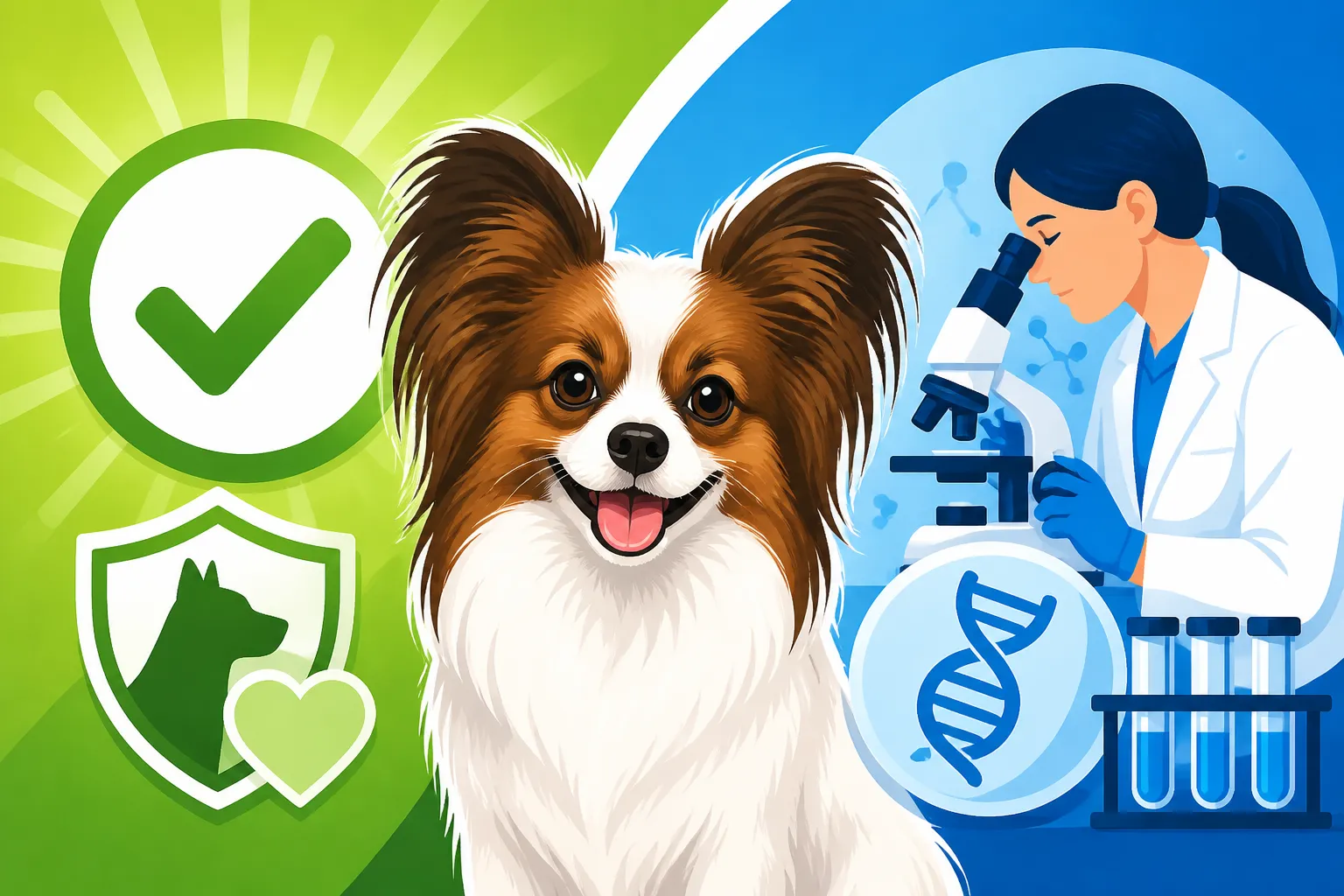
The DNA test for Papillon PRA1 is a simple, non-invasive cheek swab test. It's not a blood test that requires a vet visit and needle; it can often be done by the breeder themselves and sent to a specialized lab. The simplicity of the test means there's really no good excuse for a breeder not to perform it. The DNA Test for Papillon Retinal Atrophy offers more specific details about this process.
The results are definitive: they tell you a dog's genetic status for PRA1 for life. This isn't a "pass" or "fail" for the dog's overall health, but rather a crucial piece of information for responsible breeding. Once a dog is tested, their status remains the same; they don't change from clear to carrier or vice versa. This permanent record is what allows breeders to confidently plan litters and avoid producing affected puppies. These tests are not overly expensive, especially when considering the potential heartbreak and veterinary costs associated with caring for a blind dog.
Living with a Papillon's PRA1 Status: From Clear to Affected
Understanding PRA1 status goes beyond just buying a puppy; it’s about preparing for the lifetime of care your Papillon might need. While the goal is always to get a puppy from clear lines, life can be unpredictable, and sometimes, even with the best intentions, things don't go as planned. Or perhaps you're considering adopting an older Papillon whose history isn't fully known. Knowing what "clear," "carrier," and "affected" truly mean for daily life and long-term care is important for every Papillon owner.
A dog's genetic status doesn't just dictate breeding choices; it informs potential health outcomes for that individual dog. Even if you're not planning to breed, being aware of a dog's PRA1 status can help you understand their future health trajectory and plan accordingly. It's about being a prepared and proactive pet parent, ready for whatever life throws your way.
What a Carrier Papillon Ever Goes Blind
One common misconception is that a "carrier" Papillon will eventually go blind. This is not true for PRA1 in Papillons. Because PRA1 is a recessive condition, a carrier dog, having one normal gene and one defective gene, will not develop the disease itself. They carry the gene and can pass it on, but their own vision will remain unaffected by PRA1. This is a huge relief for owners of carrier dogs!
So, if you end up with a Papillon who is a PRA1 carrier (perhaps from a carefully planned clear x carrier breeding), you don't need to worry about them losing their sight due to this specific condition. They will live a full life with normal vision. However, it's still good information to have for your vet records and should be disclosed if, for any reason, the dog were ever considered for breeding (though carriers should only be bred to clear dogs, and preferably neutered as pets). Learning more about Whether a Carrier Papillon Ever Goes Blind can offer further reassurance.
Caring for a Papillon Who Develops PRA1
Even with the best breeding practices, rare cases or rescues might lead to owning a Papillon who eventually develops PRA1 and loses their sight. While heartbreaking, it's important to remember that blind dogs can still live incredibly full, happy lives. They rely more heavily on their other senses – hearing, smell, and touch – which become remarkably acute.
- Maintain Consistency: Keep furniture and belongings in the same place. A blind dog learns the layout of their home through memory and scent. Moving things around constantly can be very disorienting and stressful.
- Establish Verbal Cues: Use clear verbal cues for stairs, turns, and obstacles. "Step up," "watch out," or "this way" can guide them safely.
- Safety First: Block off stairs or dangerous areas with gates. Pad sharp corners on furniture. Outside, always keep them on a leash in unfamiliar environments, and consider a fenced yard for safe off-leash play.
- Scent and Sound: Use scent markers on favorite toys or beds. Soft bells on other pets can help your Papillon locate them.
- Enrichment: Don't stop playing! Scent games, puzzle toys (like those from Chewy that can be filled with treats), and walks in familiar, safe environments are still wonderful for mental and physical stimulation.
- Emotional Support: Your Papillon will look to you for comfort and confidence. Be patient, reassuring, and celebrate their small victories as they adapt. Many Papillons with PRA will eventually bump into things, especially when their vision first starts to go, but they adapt with amazing resilience. Whether a Papillon With PRA Bumps Into Things delves into this more.
It can be a challenging journey, but the bond you share with your Papillon will only strengthen as you help them navigate their world. With love, patience, and thoughtful adjustments, a blind Papillon can continue to bring immense joy and companionship into your home. Additionally, considering pet insurance options like Healthy Paws early in your Papillon's life can help cover unexpected veterinary costs, not just for PRA1 but for any other health concerns that might arise over their long lifespan. For those who prioritize high-quality nutrition to support overall health, especially for a dog with special needs, brands like Ollie offer customized meal plans that can be a great option.
Disclaimer
This article is for general informational purposes only and does not constitute professional advice. Laws, prices and regulations vary by location and change over time. Consult a qualified professional for guidance on your specific situation.