Whether Insurance Waits Out a Papillon’s Knee Claim
It's a common worry for Papillon parents: you sign up for pet insurance, feeling proactive and responsible, only for your little butterfly dog to suddenly show a skip in their step or a subtle lameness. Then the sinking feeling hits – will this knee issue, especially something like patellar luxation that's so common in our small breeds, actually be covered, or will the insurance company find a loophole? This guide is going to walk you through the often-confusing world of pet insurance waiting periods and pre-existing conditions, specifically when it comes to those delicate Papillon knees.
Understanding Pet Insurance Waiting Periods
Signing up for pet insurance can feel like a big step towards peace of mind, but it's not like human health insurance that often kicks in almost immediately. With pet policies, there's typically a period of time, known as a waiting period, after you enroll and before certain conditions become eligible for coverage. It’s a crucial detail that many new policyholders overlook until they're suddenly faced with a vet bill they thought would be covered.
What is a Waiting Period?
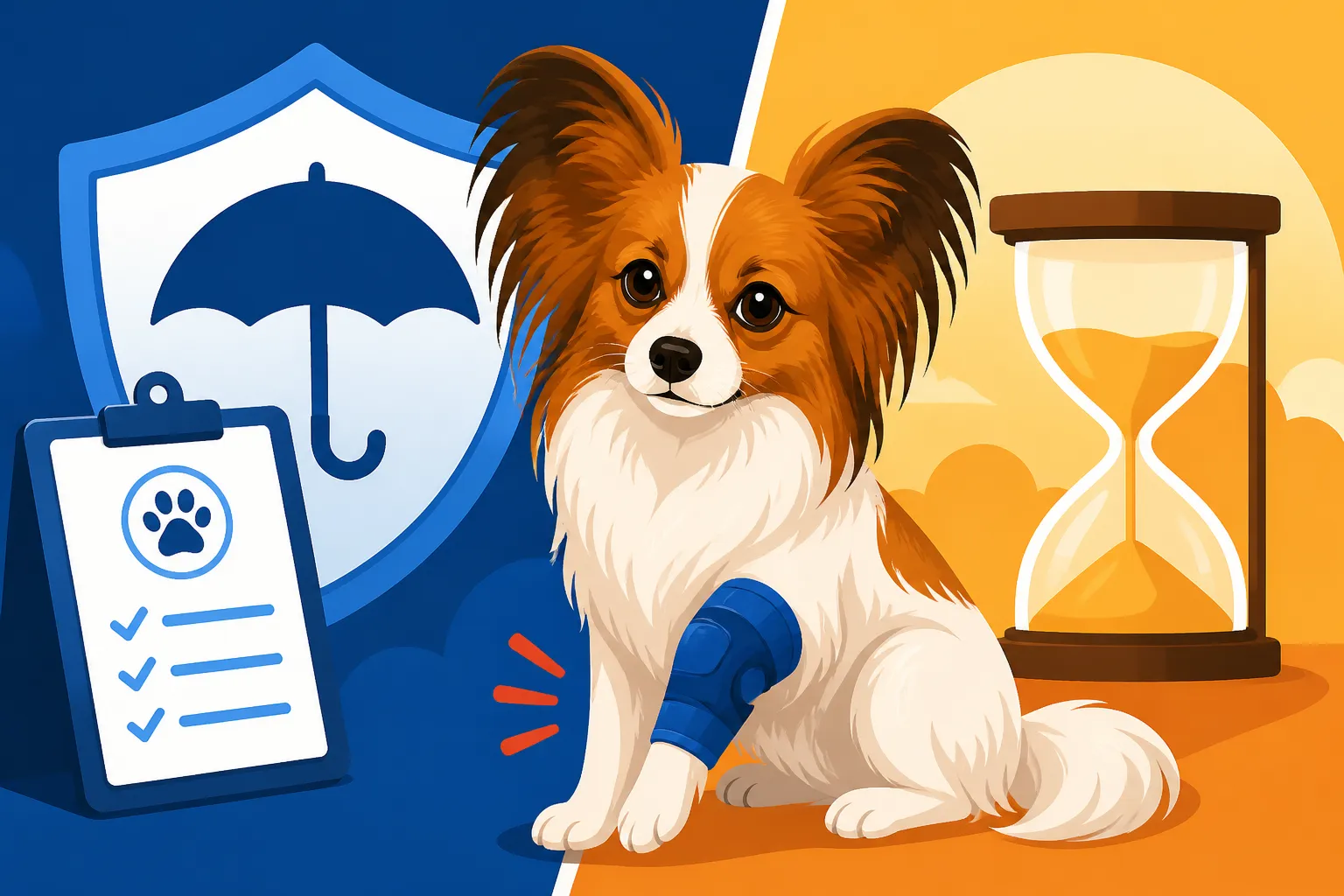
At its heart, a waiting period is a specified length of time that must pass after your pet insurance policy's enrollment date (and usually after your first premium payment clears) before coverage for illnesses or accidents actually begins. Insurance companies implement these periods to protect themselves from people buying insurance only after their pet is already sick or injured. Think of it this way: if your house was already on fire, you wouldn't be able to buy fire insurance that day and expect it to cover the existing damage, right? It's a similar principle for pet health. These periods vary quite a bit from one provider to another, and even between different types of conditions within the same policy. Some policies, like those from providers often compared on platforms like Chewy's insurance marketplace, might have different waiting periods for accidents versus illnesses.
Common Waiting Periods for Accidents and Illnesses
Generally, you'll find two main types of waiting periods for standard coverage:
- Accident Waiting Periods: These are usually the shortest, often just 24 to 48 hours. If your Papillon suddenly twists an ankle chasing a squirrel (they're surprisingly fast!) or gets into a minor mishap, accident coverage might kick in very quickly.
- Illness Waiting Periods: These are typically longer, ranging from 14 to 30 days. This means that if your Papillon develops an ear infection, a skin allergy, or a gastrointestinal issue within this timeframe after enrollment, the cost of diagnosing and treating it might not be covered. It's designed to prevent enrollment just as symptoms of a brewing illness become apparent.
For conditions like a Papillon's allergies or something more serious, knowing these timelines is essential. You want to ensure your beloved companion is covered for new health concerns that arise, but you need to understand when that coverage truly starts.
Specific Waiting Periods for Orthopedic Conditions
Now, this is where it gets particularly relevant for our Papillons and their knees. Many pet insurance providers have extended waiting periods specifically for orthopedic conditions. This category includes common issues like cruciate ligament tears (which, while less common in Papillons than larger breeds, can still happen) and, most notably for our breed, patellar luxation. While Patellar Luxation Is the Papillon Problem You Will Actually Meet, these extended waiting periods can be anywhere from six months to a full year.
This means that even if your Papillon seems perfectly sound when you enroll them, if a kneecap issue develops or is diagnosed during that extended orthopedic waiting period, it could be considered a pre-existing condition and thus excluded from coverage. This is a huge consideration, especially since How Common Patellar Luxation Is in Papillons means it's a genuine risk. Always check the fine print for these specific waiting periods when comparing policies.
The Elephant in the Room: Pre-Existing Conditions and Papillon Knees
The term "pre-existing condition" can feel like a dirty word in the insurance world, and it's certainly one that causes a lot of anxiety for pet owners. When it comes to something like patellar luxation in a Papillon, understanding this concept is absolutely vital, because it’s the number one reason a knee claim might be denied.
Defining a Pre-Existing Condition
A pre-existing condition, in pet insurance terms, is any illness or injury that your pet showed signs of, or was diagnosed with, before your insurance policy became active or before the applicable waiting period for that condition ended. It doesn't matter if it was formally diagnosed by a vet or not. If symptoms were noted in your pet's medical records prior to the effective date, even if it was just a casual observation, the insurance company can classify it as pre-existing. This is why thorough veterinary records are so important – they can work both for and against you. For example, if your vet noted "occasional skip in gait" during a routine check-up months before you enrolled in a plan like Healthy Paws, and then your Papillon later needs surgery for luxating patella, that prior note could lead to a denial.
How Patellar Luxation is Classified
Patellar luxation is a unique beast in the world of pre-existing conditions for small dogs. It's often congenital, meaning your Papillon might be born with the anatomical predisposition for it, even if symptoms don't appear until later in life. So, how does insurance handle this?
Most policies will classify patellar luxation as pre-existing if:
- It was diagnosed by a veterinarian before your policy's effective date or before the orthopedic waiting period ended. This is straightforward.
- Your vet records show signs or symptoms of patellar luxation before your policy's effective date or before the orthopedic waiting period ended, even if there wasn't a formal diagnosis. This is the tricky part. Even if your Papillon was never officially diagnosed with "luxating patella," if your vet notes indicate things like "slight lameness," "intermittent skipping," or "abnormal movement in knee," these can be used to deny coverage for a later diagnosis.
It’s a tough pill to swallow, but if there's any mention of a knee issue in their history before coverage fully kicks in, you might be out of luck for that specific knee. For information on What Patellar Luxation Does to a Papillon, it's clear why owners want to be covered for treatment.
The Impact of Waiting Periods on Diagnosed Patellar Luxation
Let's imagine a scenario: You get a new Papillon puppy, enroll them in pet insurance, and they sail through the initial accident and illness waiting periods. However, the orthopedic waiting period is still active. During this time, your puppy starts exhibiting that tell-tale "skip" or hop that indicates a luxating patella. You take them to the vet, and it's diagnosed as a Grade 2 luxation. Even though this happened after you bought the insurance, because it occurred during the orthopedic waiting period, the insurance company will almost certainly consider it a pre-existing condition. They will "wait out" the issue, but not in a way that benefits you; they will wait it out as in, it needs to manifest after their waiting period, not during it.
This is why timing is so crucial. If symptoms arise, say, two months into a six-month orthopedic waiting period, that knee issue will likely be excluded from coverage for the life of the policy. If your Papillon eventually needs Whether a Papillon Needs Knee Surgery for a condition that was deemed pre-existing, you would be responsible for the full cost. This can be devastating, given the costs associated with orthopedic procedures.
Navigating the Waiting Period with a Papillon
The key to successfully navigating pet insurance and avoiding unwelcome surprises with knee claims for your Papillon is foresight and diligent record-keeping. It really comes down to doing your homework and being proactive about your pet's health and insurance plan.
When to Enroll Your Papillon for Coverage
The golden rule for pet insurance, especially for breeds prone to certain conditions, is to enroll as early as possible. For a Papillon puppy, this means getting them covered as soon as they come home, ideally even before you pick them up if the policy allows. Young puppies have very little, if any, medical history, meaning the chances of a pre-existing condition claim are minimal.
By enrolling your Papillon puppy at 8-10 weeks old, you're giving them the best chance to have all future health issues covered, assuming they develop after all waiting periods have passed. This is particularly important for conditions like patellar luxation, which might not show symptoms until they're a bit older but are still considered congenital. If you wait until your Papillon is a year old, and they've had even minor limping episodes noted in their records, those could come back to haunt you. For more on this, you might find When a Papillon Should Be Insured helpful.
Documenting Your Papillon's Health Before Insurance
Before you finalize any pet insurance policy, and definitely before any waiting periods conclude, make sure your Papillon has a comprehensive veterinary examination. This "baseline" check-up is critical. The vet should thoroughly examine their joints, specifically palpating their kneecaps, and document everything in their medical records.
If your Papillon is declared perfectly healthy with no signs of orthopedic issues (or any other ailments), this clean bill of health at enrollment can be your best friend down the line. It creates an undeniable record that your pet was sound before the policy was active. Conversely, if there are any notes about a "loose patella" or a "skip in gait," even without a formal diagnosis of luxation, these will likely be used by the insurance company to deny future claims for that condition. It's truly a double-edged sword, so honesty and thoroughness with your vet are paramount.
What Happens if Symptoms Appear During the Waiting Period?
This is a common and incredibly frustrating scenario. Let's say you've enrolled your Papillon, and the 14-day illness waiting period has passed, but you're still in the midst of a longer, six-month orthopedic waiting period. Then, one day, your Papillon suddenly starts holding up a back leg, or you notice a definite skip that wasn't there before. You rush them to the vet, and the diagnosis is patellar luxation.
Unfortunately, because the symptoms (and thus the diagnosis) occurred during the orthopedic waiting period, most pet insurance policies will consider this a pre-existing condition. This means that any treatment for that specific knee, including potential surgery for Which Grade of Luxation Needs Fixing in a Papillon, would not be covered by your policy. The company isn't "waiting it out" in the sense that they'll cover it later; they're deeming it an issue that arose before their coverage for that specific condition was active. It's a hard lesson for many to learn, and it underscores the importance of choosing a policy with transparent waiting periods and enrolling early.
Choosing the Right Policy for Papillon Knee Concerns
Selecting pet insurance isn't just about picking the cheapest option; it's about finding a policy that genuinely offers protection for your Papillon's specific needs, especially given their genetic predispositions. Understanding the nuances of different plans can save you a lot of heartache (and money) later on.
Looking for Policies with Shorter Orthopedic Waiting Periods
While extended orthopedic waiting periods are common, they aren't universal, and some companies might offer shorter periods, or even waive them under certain conditions. When you're comparing providers, such as those you might find through a quick search for "best pet insurance for Papillons," make sure to explicitly ask about their waiting periods for patellar luxation and other orthopedic conditions.
Some companies might have a standard 6-month orthopedic waiting period but offer to reduce it to 14-30 days if your vet performs a specific orthopedic examination after you enroll and certifies that your Papillon is free of any knee issues. This is a fantastic option to look for, as it significantly reduces your risk window. However, the key here is that this exam must happen after your policy is active, and your vet must find no evidence of the condition. If you're considering a provider like Healthy Paws, make sure to read their terms carefully regarding these specific waiting periods.
Understanding Bilateral Conditions
Patellar luxation is often considered a bilateral condition, meaning that if it affects one knee, it's highly likely to affect the other knee eventually, or at least there's a predisposition for it. This is a critical detail in pet insurance.
Here's why: if your Papillon is diagnosed with patellar luxation in one knee (say, the left) after all waiting periods are met, your insurance will likely cover treatment for that knee. However, if that policy has a "bilateral exclusion" clause, and your Papillon later develops luxation in the other knee (the right one), the insurance company might deny coverage for the second knee, arguing that because the first knee was affected, the second one is a related, and thus pre-existing, condition.
Not all policies have these bilateral exclusions, but it's essential to confirm this detail before enrolling. You want a policy that understands and covers the potential for both knees to be affected. Otherwise, you might face the costs of surgery on one knee, only to be hit with another hefty bill down the line for the other. For more on this specific issue, reading Whether Luxating Patella Is Excluded on a Papillon can give you deeper insights.
Considering Accident-Only vs. Comprehensive Plans
When looking at pet insurance, you'll generally find two main categories:
- Accident-Only Plans: These are usually less expensive and, as the name suggests, only cover injuries resulting from accidents (e.g., broken bones, cuts, being hit by a car). They typically have very short waiting periods. These plans will not cover patellar luxation unless it's the direct result of a sudden, verifiable accident, which is rare for this condition.
- Comprehensive Plans: These cover both accidents and illnesses. This is the type of plan you'll need to consider for conditions like patellar luxation, various diseases, infections, and ongoing health issues. While more expensive, they offer far broader protection.
Given the prevalence of patellar luxation in Papillons, a comprehensive plan is almost always the wiser choice. While food subscriptions from companies like Ollie can contribute to overall health, they won't cover unexpected knee surgery costs. Ensuring you have robust insurance coverage in place is a crucial part of responsible Papillon ownership.
Pet Insurance Waiting Periods & Orthopedic Concerns
| Condition Type | Typical Accident Waiting Period | Typical Illness Waiting Period | Typical Orthopedic Waiting Period | Key Considerations for Papillons |
|---|---|---|---|---|
| Accidents | 1-3 days | N/A | N/A | Covers sudden injuries (e.g., fractured leg). Generally shortest waiting periods. |
| Illnesses | N/A | 14-30 days | N/A | Covers conditions like infections, allergies. Patellar luxation is not considered an illness. |
| Orthopedic Conditions | N/A | N/A | 6-12 months | Crucial for patellar luxation. If signs/diagnosis occur during this period, it's pre-existing. |
| Bilateral Conditions | Varies | Varies | Check policy for specific clauses | If one knee is affected, will the other be covered if it develops later? Often excluded if related. |
Remember, this table provides typical scenarios. Always, always review the specific policy details and waiting periods of any pet insurance provider you are considering for your Papillon.
Disclaimer
This article is for general informational purposes only and does not constitute professional advice. Laws, prices and regulations vary by location and change over time. Consult a qualified professional for guidance on your specific situation.