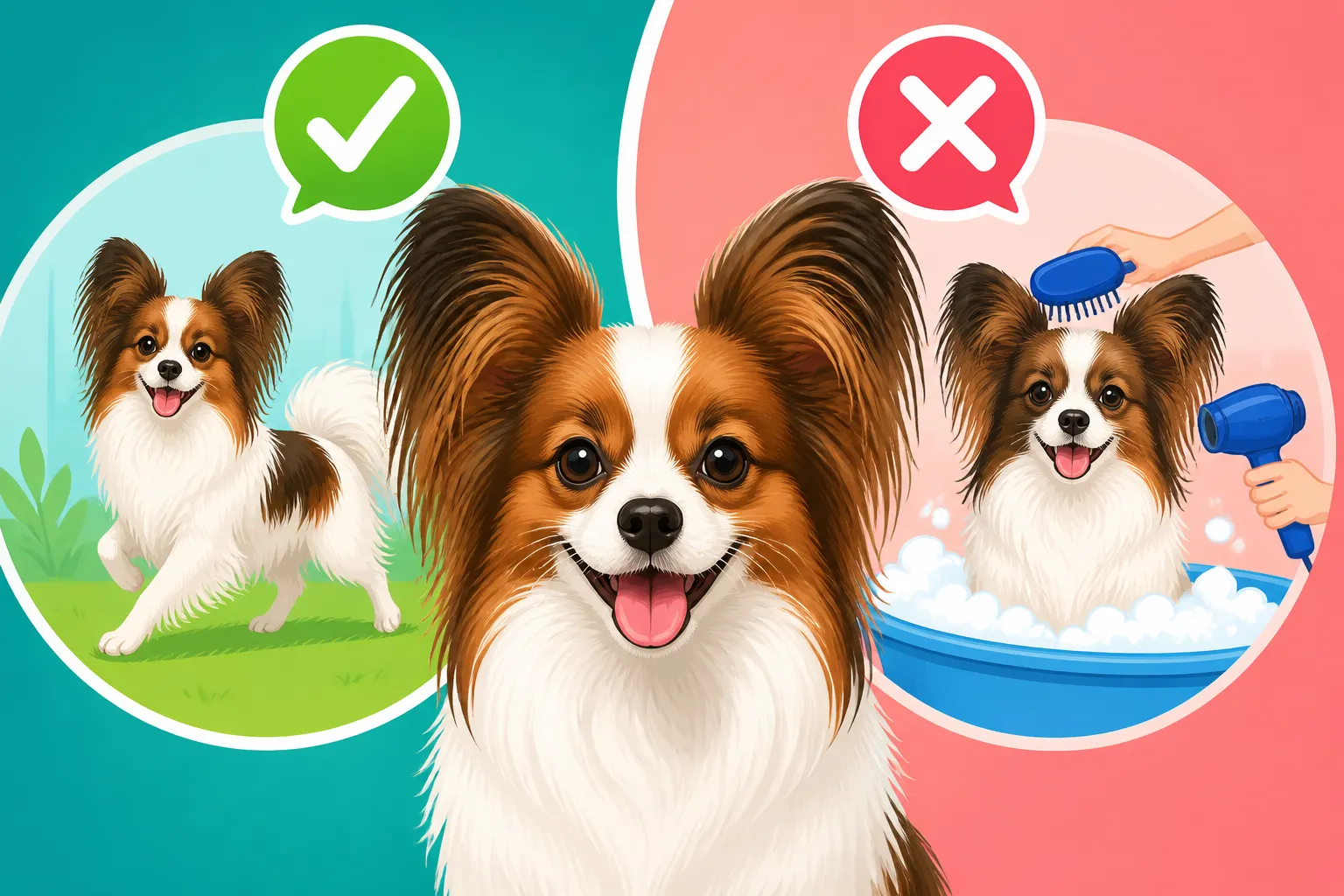
Whether a Papillon Needs a Groomer at All
One of the most common questions Papillon owners and prospective owners ask is whether these little butterflies of the dog world actually need a professional groomer. You see their flowing coats, their magnificent ear fringes, and think, "Oh my goodness, that must be a full-time job!" But then you also hear that Papillons are relatively low-maintenance in the grooming department. This article is going to cut through the confusion and help you understand exactly what your Papillon's coat needs, and when calling in a pro might just save your sanity (and your pup's comfort!).
Understanding the Papillon Coat
Let's start by demystifying the Papillon's beautiful coat, because understanding its unique characteristics is key to knowing its grooming needs. Unlike many double-coated breeds with a dense, woolly undercoat, Papillons boast a single layer of hair. This single coat is typically fine, silky, and quite long, particularly on their ears, chest, tail, and hind legs. This is what gives them that elegant, flowing appearance.
The Myth of Low Maintenance
It's true that a Papillon's single coat means less shedding than a Husky or a Golden Retriever, and they don't develop the thick, mat-prone undercoat that requires rigorous dematting. This often leads people to believe they are truly "low maintenance" in the grooming department. However, "low shedding" does not equate to "no grooming." Their silky, long hair, especially in areas of friction or where they brush against things, can still knot and mat if neglected. Think of it like long human hair – if you don't brush it, it will tangle, even if you don't shed much. The finer the hair, the more prone it can be to snagging and knotting.
For example, a Papillon's beautiful ear fringes, while stunning, are often the first place to develop mats, especially if they are frequently running through tall grass or getting wet. Their delicate hair can quickly intertwine, forming tight knots that become painful to brush out. Ignoring these can lead to skin irritation underneath, and in severe cases, even necessitate shaving. It's not about huge clumps of hair falling out; it's about the strands staying put and getting intertwined. This is why regular care is so important, even with a single coat. A Papillon's Coat Is All Fringe and No Undercoat goes into more detail about this unique coat structure.
What the Feathering Really Means
The term "feathering" perfectly describes the long, silky hair that adorns specific parts of a Papillon's body, and these areas require particular attention.
-
The Ears: The iconic "butterfly" ears are perhaps the most recognizable feature of the breed, owing to their long, flowing fringes. These fringes are a magnet for debris – tiny bits of leaves, burrs, food particles, or even just dust can cling to them. If not brushed regularly, these fringes can quickly become a tangled mess. Imagine trying to comb through a knotted silk scarf; it's delicate work. Regular, gentle brushing with the right tools is essential to keep them beautiful and mat-free. This isn't just about aesthetics; mats behind the ears or on the ear leather can pull, causing discomfort and potentially leading to ear infections if the skin underneath gets irritated. The Ear Fringe That Gives the Papillon Its Name explains the origin of this lovely feature.
-
The Chest Frill (Ruff): The hair around a Papillon's chest and neck creates a lovely "frill" or "ruff." This area can also be prone to tangles, especially where a harness or collar rubs. Food and water can also get caught in the hair, contributing to knots and sometimes even skin irritation if left damp. It requires a daily quick comb-through, particularly after meals, to prevent sticky or matted areas.
-
Culottes (Pantaloons): The long hair on the back of their hind legs forms what are called "culottes" or "pantaloons." These magnificent trousers swish as they move, but they also pick up dirt, debris, and can get wet and muddy easily. Mats can form here from friction, sitting, or just general play. Keeping them clean and brushed helps prevent uncomfortable pulling on the skin.
-
The Tail Plume: The Papillon's tail is carried high over its back, adorned with a magnificent "plume" of long, flowing hair. While generally less prone to severe matting than the ears, it still benefits from regular brushing to keep it silky and free of tangles. It's a gorgeous feature that deserves proper care to maintain its grandeur.
These areas, while stunning, are the primary reason why a Papillon, despite its single coat, still requires a consistent grooming routine. It's not about preventing massive shedding, but about preserving the integrity and comfort of their flowing, delicate hair.
Home Grooming vs. Professional Grooming
The question isn't usually if a Papillon needs grooming, but who should do it. Many owners successfully manage most of their Papillon's grooming needs at home, but there are definite advantages to having a professional step in, whether regularly or occasionally.
The Essentials of At-Home Papillon Care
Taking care of your Papillon's basic grooming needs at home is absolutely doable and highly recommended. In fact, it's a wonderful bonding experience and gives you a chance to regularly check your dog's skin for any abnormalities. You'd be surprised how much you can accomplish in just a few minutes each day.
-
Daily or Weekly Brushing: This is the cornerstone of Papillon coat care. Aim for a quick brush-through daily, or at least every other day, with a thorough session once or twice a week. A good pin brush and a metal comb are your best friends. Start from the ends and work your way up to the roots, being extra gentle on those delicate fringes. This helps remove any loose hair, prevent tangles from forming, and distribute natural oils for a healthy sheen. If you're wondering how much time this really takes, Why a Papillon's Long Coat Takes Twenty Minutes a Week offers a great perspective. For specific tools, Which Brush a Papillon Needs can guide your choices. It's amazing what regular effort can do; I've found that consistent, short sessions prevent the big, time-consuming battles with mats.
-
Nail Trims: Small dogs often have rapidly growing nails that can cause discomfort and even affect their gait if not kept short. You'll want good quality clippers or a dremel. Aim to trim every 2-4 weeks, depending on how quickly your Papillon's nails grow and how much they wear them down naturally. If you're nervous about trimming too short, having a vet tech show you the ropes can be incredibly helpful. Long nails can cause issues with their delicate structure, potentially affecting their knees. How Short a Papillon's Nails Must Stay for Agility highlights this importance.
-
Ear Cleaning: Beyond brushing the ear fringes, it's important to keep the inner ear clean. With their drop-eared Phalene cousins and even Papillons themselves, the ears can trap moisture and debris. Gently wipe the visible part of the ear canal with a vet-approved ear cleaner on a cotton ball. Avoid going deep into the ear canal, as this can cause damage. Regular checks can help you spot signs of irritation or infection early.
-
Dental Care: This is crucial for Papillons, as they are prone to dental issues due to their small mouths. Daily brushing with dog-specific toothpaste is ideal. Many owners find this daunting, but consistency from puppyhood makes it easier. If you want to know more about this, Brushing a Papillon's Teeth in a Very Small Mouth is an excellent resource. You can often find dental care kits or specialized brushes on sites like Chewy that make this process a little smoother. Remember, good dental hygiene at home can significantly reduce the frequency and cost of professional dental cleanings at the vet.
When Professional Help Becomes a Lifesaver
While home grooming is essential, there are times when a professional groomer is not just a luxury, but a true necessity. Don't feel guilty about seeking help; groomers are skilled professionals who can make a huge difference in your Papillon's comfort and health.
-
Battling Stubborn Mats: Despite your best efforts, mats can happen. Perhaps your Papillon rolled in something sticky, or you missed a spot for a few days. A small, tight mat can be incredibly painful to brush out and, if not handled carefully, can cause skin irritation or even tears. Professional groomers have the right tools, techniques, and experience to safely and gently remove mats, often saving your dog from a painful ordeal and saving you from a wrestling match. Sometimes, a mat is too close to the skin to brush out safely at home and needs to be carefully clipped. Where a Papillon Mats can help you identify common trouble spots.
-
Specialized Trims: While Papillons typically aren't "clipped" like Poodles, some owners prefer a light trim of their feet, sanitary areas, or even a very subtle shaping around the ears to keep them tidy. A professional groomer can perform these trims skillfully, maintaining the breed's elegant appearance without compromising the coat's natural flow. They know how to achieve a neat look while preserving the characteristic feathering. Whether a Papillon's Feet Need Trimming is a good article if you're considering this.
-
Nervous or Uncooperative Dogs: Some dogs, no matter how much positive reinforcement you use, simply dislike grooming. They might be anxious about nail trims, or perhaps they're sensitive about their feet or ears being handled. A professional groomer has techniques and patience to work with nervous dogs, often making the experience less stressful for everyone involved. They can sometimes accomplish in one session what might take an owner weeks of gradual desensitization. If your Papillon tends to hide discomfort, it can be hard to tell how stressed they are; How a Papillon Hides Pain can give you insights.
-
Time Constraints: Let's be real, life gets busy. If you find yourself consistently short on time for thorough grooming, a professional groomer can step in to ensure your Papillon stays comfortable and healthy. It's far better to rely on a pro than to let your dog's coat become matted or their nails grow too long.
-
Deep Cleaning and Conditioning: Every now and then, a professional bath and condition can do wonders for your Papillon's coat. Groomers use specialized shampoos and conditioners designed for delicate coats, ensuring a thorough clean without stripping natural oils. They also have professional drying equipment that can get the coat beautifully fluffy and tangle-free. This can be especially helpful if your Papillon has sensitive skin or seasonal allergies.
Beyond the Brush: Other Grooming Considerations
Grooming isn't just about the main coat; there are smaller, but equally important, areas that need attention to ensure your Papillon's overall well-being.
The Importance of Paw and Sanitary Trims
These often-overlooked areas are crucial for both hygiene and comfort.
-
Paw Pad Trims: The hair between a Papillon's paw pads can grow quite long, especially if you have a particularly fluffy one! This can become a problem because it collects dirt, debris, and moisture, which can lead to skin irritation or infections. Long hair on the paw pads also reduces traction, making your Papillon more prone to slipping on smooth surfaces like hardwood floors, potentially leading to injuries. A professional groomer can carefully trim this hair flush with the paw pads, making your dog more comfortable and sure-footed.
-
Sanitary Trims: The hair around a Papillon's rear end, known as the sanitary area, can also grow long and collect fecal matter. This is not only unhygienic but can also lead to skin irritation and infections. A quick, neat trim in this area by a groomer ensures cleanliness and prevents unpleasant messes. It's a small detail that makes a big difference in daily hygiene, especially for dogs with long, flowing culottes.
Adapting Grooming for Health and Age
Grooming isn't a one-size-fits-all routine that stays the same for your Papillon's entire life. Their health status and age can significantly impact their grooming needs and how you approach them.
-
Health Conditions: If your Papillon develops a skin condition, allergies, or an injury, their grooming routine will likely need to be adjusted. A groomer can be invaluable in these situations. For example, if your Papillon has a hot spot, a groomer can carefully clip the hair around it to allow air circulation and facilitate treatment, without exacerbating the irritation. For dogs with sensitive skin, groomers can use hypoallergenic shampoos. If your dog is prone to recurring issues, discussing it with your vet and a professional groomer can help create a tailored plan. While pet insurance providers like Healthy Paws can help with unexpected vet bills for skin issues, preventing them through proper grooming is always the first line of defense.
-
Aging Papillons: As Papillons age, their skin can become more delicate, their joints might ache, and their patience for long grooming sessions can wane. What Changes in an Aging Papillon's Care dives into the broader context of senior dog care, and grooming is a big part of it. What might have been a simple brushing session for a young, spry Papillon can become a stressful ordeal for a senior dog with arthritis. Professional groomers are often skilled at handling older dogs, using gentler techniques, taking more breaks, and ensuring a calm, comfortable environment. They can use specialized tables with ramps to reduce jumping, and be extra careful with sensitive areas. Sometimes, an aging Papillon might also need shorter trims in certain areas if they can no longer tolerate extensive brushing, or if their coat texture changes and becomes more prone to matting. Getting high-quality, joint-supporting food from a company like Ollie might even help them be more comfortable during grooming sessions.
Here's a quick comparison to help you weigh your options:
| Aspect | Home Grooming | Professional Grooming |
|---|---|---|
| Cost | Low initial cost for supplies, then ongoing for consumables (shampoo, etc.) | Higher per session, but saves on time and specialized tools |
| Convenience | Schedule around your availability, no travel | Requires appointments, travel time |
| Skill/Expertise | Basic skills easily learned; advanced tasks can be tricky | Professional expertise for all tasks, especially complex or sensitive ones |
| Time Commitment | Daily/weekly investment of your time | Less frequent, freeing up your time |
| Equipment | Basic brush, comb, clippers, ear cleaner, toothbrush | Wide array of professional tools, dryers, specialty products |
| Mat Removal | Difficult and potentially painful for severe mats | Safe, efficient, and pain-free removal of even stubborn mats |
| Specialized Trims | Risky without experience | Precise and aesthetic trimming of feet, sanitary areas, etc. |
| Handling Difficult Dogs | Can be stressful for both dog and owner | Experienced in handling anxious or uncooperative dogs calmly |
| Health Checks | Daily opportunity for owner to inspect skin/body | Groomer may spot issues you missed |
| Bonding | Strong bonding opportunity for owner and dog | Less direct bonding, but builds trust with a professional |
Ultimately, whether your Papillon needs a groomer at all is less about an absolute requirement and more about the realistic capabilities and commitment of the owner. You can do most of it yourself with the right tools and knowledge, and many Papillon owners do! But recognizing when to call in a professional is a sign of a responsible and loving owner. Sometimes, that extra help ensures your cherished companion stays happy, healthy, and comfortable in their beautiful coat.
Disclaimer
This article is for general informational purposes only and does not constitute professional advice. Laws, prices and regulations vary by location and change over time. Consult a qualified professional for guidance on your specific situation.