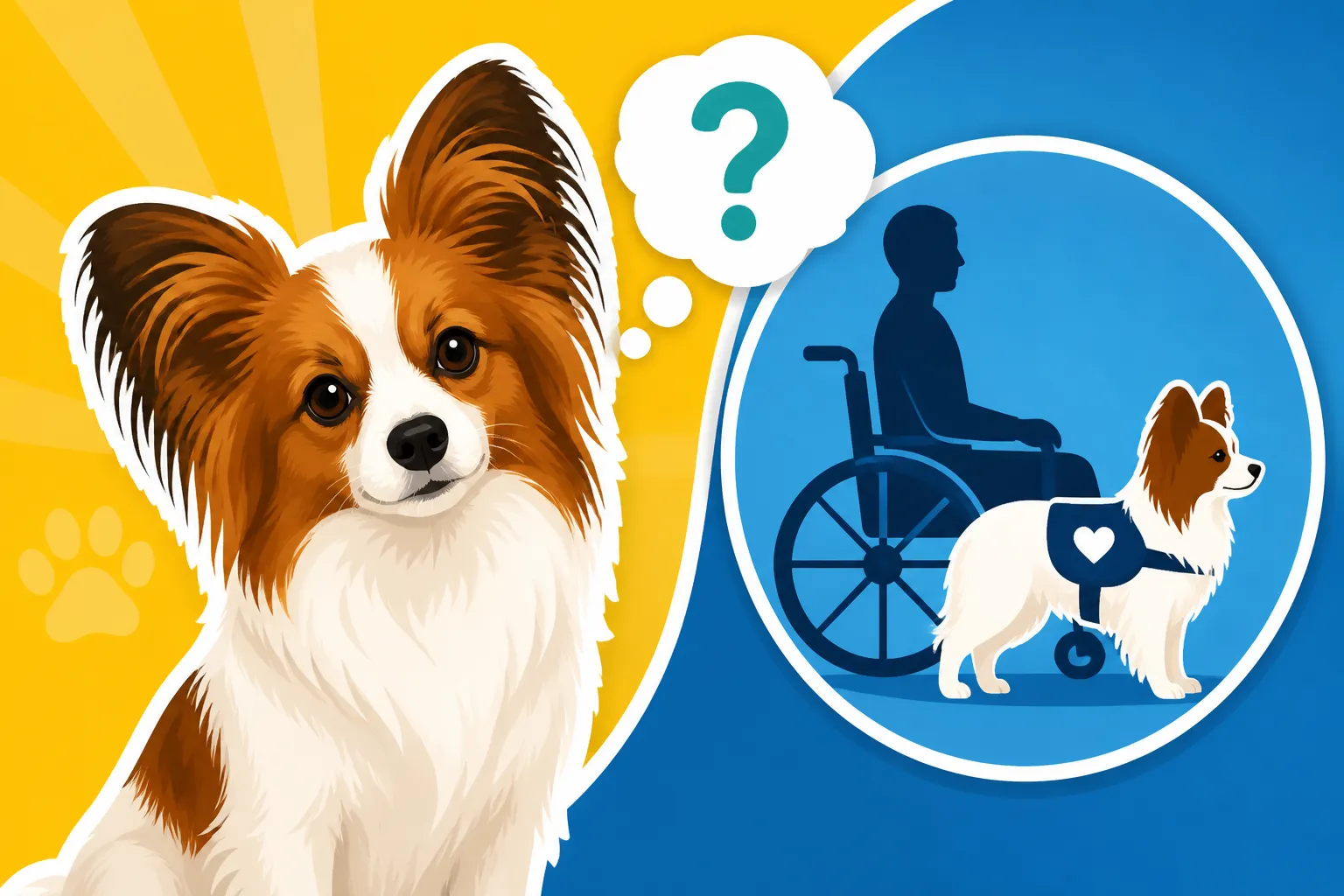
Whether a Papillon Can Be a Service Dog
The idea of a small, elegant Papillon as a service dog might seem surprising to some, but for many owners, it's a completely valid and incredibly helpful partnership. While their size does present certain limitations, the core attributes of a Papillon often make them exceptional candidates for specific types of assistance work, helping individuals navigate daily challenges with greater independence. This guide will delve into what it truly means for a dog to be a service animal and explore the unique ways a Papillon can rise to that important role.
Understanding What a Service Dog Truly Is
Before we even begin to talk about whether a Papillon fits the bill, it's vital to clarify what constitutes a "service dog." There's a lot of misunderstanding out there, and it's easy to confuse service dogs with emotional support animals or even just highly-trained pets. The distinctions aren't just semantic; they carry legal weight and define what public access rights a dog has.
Defining "Service Dog" in Practice
A service dog is not just a beloved companion that makes you feel better. Legally, under frameworks like the Americans with Disabilities Act (ADA) in the United States, a service animal is specifically a dog that has been individually trained to do work or perform tasks for a person with a disability. This work or task must be directly related to the person's disability. Think of it this way: the dog isn't just present for comfort; it's actively doing something that mitigates a challenge caused by the disability. This could be anything from guiding a visually impaired person to alerting a diabetic owner to low blood sugar. The key is the specific, trained action.
For example, if you have severe anxiety and your dog senses an impending panic attack, then nudges your hand to alert you to take medication, that's a task. If your dog just makes you feel calm by being there, that's comfort, not a task under the service dog definition. It's a subtle but crucial difference. This means that a Papillon, or any dog, must undergo rigorous and specific training to perform these tasks, making them indispensable aids to their handlers.
Not Just Any Trained Pet
This distinction is super important because it directly impacts public access. A pet, no matter how well-behaved or loved, doesn't have the same legal rights to accompany its owner into places where animals are generally prohibited, such as restaurants, stores, or public transportation. An emotional support animal (ESA), while providing therapeutic benefits through companionship and often requiring a letter from a mental health professional, also does not have the same public access rights as a service dog. They might have housing or travel accommodations, but generally not universal public access.
A service dog, by contrast, is essentially a piece of medical equipment, and its handler has a right to have that equipment with them. This is why the training is so stringent. The dog must not only perform its tasks flawlessly but also be impeccably behaved in public settings, not causing any disruptions or being a nuisance. A service dog represents its handler and the entire service dog community, and their conduct is under constant scrutiny. This means starting with a solid foundation in obedience and public manners, often building upon early puppy training similar to what you might find in programs like those offered by BAXTER & Bella, which focus on well-rounded canine citizens.
Papillon Strengths That Lend Themselves to Service Work
Now that we understand the gravity of the "service dog" title, let's explore why a Papillon, despite its small stature, possesses many traits that make it a surprisingly strong candidate for certain types of service work.
Intelligence and Trainability
Papillons consistently rank among the most intelligent dog breeds, often appearing in the top ten for obedience intelligence. They are quick learners, eager to please, and highly motivated by positive reinforcement. This combination makes them incredibly trainable, capable of mastering a wide array of complex commands and tasks. The Papillon Is the Smartest Toy Breed There Is is not just a boast; it's a fundamental truth about the breed.
Their intelligence means they can pick up new cues with remarkably few repetitions. While some breeds might need dozens of tries to understand a new command, a Papillon might grasp it in a handful. This isn't to say training is effortless, but their sharp minds make the process efficient and often enjoyable for both dog and handler. They thrive on mental stimulation, so learning intricate service tasks can actually be highly fulfilling for them. Their desire to work alongside their human companions is profound, making them dedicated partners in any endeavor, including sophisticated service work. How Fast a Papillon Learns a New Cue is truly impressive.
Alertness and Bond with Owner
Papillons are naturally alert and observant dogs. They are keenly attuned to their surroundings and, more importantly, to their human partners. This attentiveness is a huge asset for many service dog roles, particularly those involving alerts. They often develop incredibly strong, almost intuitive, bonds with their owners, making them highly sensitive to changes in their handler's physical or emotional state.
This deep connection means they can often anticipate needs or detect subtle shifts that might precede a medical event. For someone with a chronic illness or a disability that involves sudden episodes, this early warning system can be life-saving. Their loyalty is unwavering, and their focus on their handler is a defining trait. Furthermore, their sensitivity, which sometimes leads people to believe they are fragile, actually makes them excellent communicators of subtle changes in their environment or their handler's condition. What Motivates a Papillon often comes down to this bond and a desire to interact and please their beloved human.
Realistic Roles for a Papillon Service Dog
Given their size and inherent traits, Papillons are ideally suited for specific types of service dog roles that don't require heavy lifting or physical bracing. They excel in tasks where their intelligence, alertness, and close proximity to their handler are paramount.
Hearing and Medical Alert Tasks
This is where Papillons truly shine. Their keen hearing and observant nature make them perfect candidates for hearing alert dogs. They can be trained to alert their deaf or hard-of-hearing handlers to crucial sounds: a smoke alarm, a doorbell, an alarm clock, or even a name being called. The dog would typically nudge or paw its handler and then lead them to the source of the sound. This provides an invaluable layer of safety and independence.
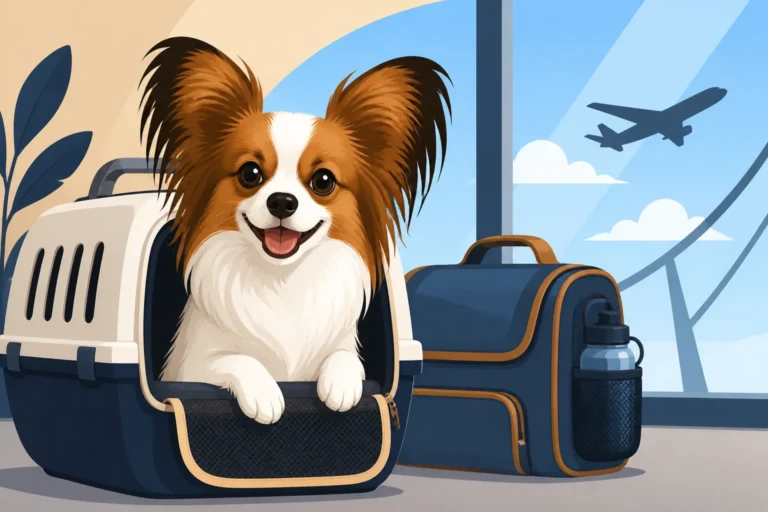
Similarly, Papillons are excellent medical alert dogs. They can be trained to detect subtle physiological changes in their handler that precede events like diabetic hypoglycemia (low blood sugar), impending seizures, or panic attacks. For instance, a Papillon could be trained to paw at its handler when their blood sugar drops, prompting them to check it and take necessary action. Their smaller size means they can often be on their handler's lap or very close, making these alerts more immediate and discreet. The ability to travel easily with their handler, often fitting into airline carriers under seats (check airline-specific rules for service animals), further enhances their utility in these roles. Whether a Papillon Should Be Tested Before Surgery reminds us of the importance of full health screening for any dog, especially one destined for such a vital role.
Psychiatric and Emotional Support Roles (with caveats)
While emotional support animals provide comfort simply by being present, a psychiatric service dog (PSD) performs specific, trained tasks to mitigate a mental health disability. A Papillon can absolutely fill this role by performing tasks like:
- Interrupting harmful behaviors: Nudging their handler to stop repetitive self-harm, scratching, or picking.
- Deep pressure therapy (limited): While too small for full DPT, they can be trained to lie across a small part of the body (e.g., chest or lap) to provide calming pressure during anxiety attacks.
- Grounding: Bringing their handler back to the present moment during a dissociative episode by nudging or licking.
- Medication reminders: Pawing or nudging at a specific time to remind their handler to take medication.
- Alerting to environmental triggers: Warning their handler of approaching people or sounds that trigger anxiety or PTSD.
It's crucial to reiterate that for a Papillon to be a psychiatric service dog, it must be trained for these specific tasks, not just provide comfort. The line can be blurry in public perception, but the legal definition is clear: task-trained work. Their small size makes them unobtrusive in public, which can be a huge benefit for handlers who prefer less attention drawn to their service animal.
Limited Mobility Assistance
When it comes to mobility assistance, a Papillon's size naturally limits their capabilities. They cannot provide brace or counterbalance support, pull a wheelchair, or pick up heavy dropped items. However, they can still perform valuable tasks that enhance a person's mobility and independence:
- Retrieving light items: Picking up keys, a dropped phone, or a television remote. This can be incredibly helpful for someone who uses a wheelchair or has difficulty bending.
- Opening/Closing cabinets or doors (lightweight): With a special pull strap, a Papillon can be taught to gently tug open a lightweight cabinet door or even a soft-close interior door.
- Finding exits/people: Guiding a handler to an exit in a crowded place or finding another person in an emergency.
- Turning lights on/off: Using a touch-sensitive button or a light switch adapted for a dog.
These tasks might seem small, but for someone facing daily challenges, they can make a monumental difference in quality of life. The Papillon's agility and cleverness come into play here, allowing them to navigate tight spaces and manipulate small objects. This kind of nuanced work really showcases The Papillon Is the Smartest Toy Breed There Is.
| Service Dog Role | Papillon Suitability | Key Papillon Strengths Utilized | Limitations |
|---|---|---|---|
| Hearing Alert | Excellent | Acute hearing, alertness, proximity to handler, quick to learn | None significant. |
| Medical Alert (e.g., Diabetic, Seizure) | Excellent | Acute senses (smell, observation), bond with owner, discreet alerts | None significant. |
| Psychiatric Service Dog (PSD) | Good | Intelligence, deep bond, ability to interrupt/ground, discreet presence | Cannot provide deep pressure therapy for large body areas. |
| Mobility Assistance | Limited but useful | Retrieves small, light items, opens light doors, finds objects | Cannot provide bracing, counterbalance, or pull significant weight. |
| Guide Dog | Unsuitable | Too small to guide a visually impaired person effectively or safely. | Size. |
| Search & Rescue | Unsuitable | Lack of endurance and size for extensive terrain coverage. | Size, physical stamina. |
The Commitment and Challenges of Training a Papillon Service Dog
While Papillons possess many ideal qualities for service work, becoming a service dog is a massive undertaking that requires immense dedication, time, and financial investment. It's not a path to be entered into lightly.
Extensive Training Requirements
The training journey for a service dog is rigorous and prolonged. It starts with foundational obedience, building a solid understanding of basic cues like sit, stay, come, and leash manners. This initial phase often begins when the dog is a puppy, emphasizing positive reinforcement and socialization. Programs like BAXTER & Bella offer excellent starting points for puppies and young dogs, helping lay the groundwork for a well-adjusted and responsive companion. A dog must be reliably house-trained, which for a Papillon, can sometimes take a bit longer than larger breeds, but is absolutely achievable with consistency. How Long House Training a Papillon Takes varies for every dog, but it's a non-negotiable step.
Beyond basic obedience, the dog must learn specialized tasks directly related to the handler's disability. This task training is often highly customized and requires consistent practice in various environments. A service dog also needs advanced public access training, which means maintaining perfect behavior in distracting public settings: ignoring strangers, other animals, loud noises, and tempting food smells. They must be calm, quiet, and unobtrusive at all times. This can be a challenging endeavor, even for intelligent breeds.
The Importance of Public Access Training
Public access training is arguably the most critical and often the most demanding part of a service dog's education. It's not enough for a Papillon to perform its tasks at home; it must do so reliably in a grocery store, on a bus, in a doctor's office, or at an airport. This involves exposure to countless scenarios and distractions, teaching the dog to remain focused on its handler above all else. A Papillon With Children and Larger Dogs in public settings requires extensive desensitization and proofing of skills.
A service dog must never be aggressive, bark excessively, jump on people, eliminate inappropriately, or be out of control. Any lapse in behavior can not only jeopardize the handler's access rights but also contribute to negative perceptions of service animals. This level of polished behavior requires ongoing training and reinforcement throughout the dog's life. Consider that a service dog is "on duty" much of the time it is out in public, which means it needs mental resilience and superb self-control.
Finding the Right Professional Support
Training a service dog, especially for specific medical or psychiatric tasks, is usually not a DIY project. While owners can certainly participate in and contribute to the training, it's highly recommended to work with experienced professional service dog trainers or organizations. These professionals have the expertise to:
- Assess suitability: Determine if a particular Papillon has the temperament, health, and aptitude for service work. Not every dog, even a well-bred one, is cut out for the demands of being a service dog.
- Develop a customized training plan: Design a program tailored to the individual handler's disability and specific task needs.
- Guide public access training: Provide strategies and environments for proofing public behavior.
- Ensure legal compliance: Help navigate the legal landscape surrounding service dogs to ensure both dog and handler meet all requirements.
The costs associated with professional service dog training can be substantial, often ranging into the tens of thousands of dollars for a fully trained animal or extensive professional guidance. Many reputable organizations, however, may offer payment plans or subsidies. Resources like Amazon can be invaluable for finding high-quality training books, specialized vests, harnesses, and other equipment necessary for public access training. Remember, investing in professional guidance ensures that both you and your Papillon are set up for success in this incredibly important partnership. The lifetime cost of owning a Papillon, especially one with a job, will certainly include these training expenses. What a Papillon Costs Over Its Lifetime definitely increases when considering service dog training.
Ultimately, a Papillon absolutely can be a service dog. Their intelligence, eagerness, and deep bond with their humans make them outstanding candidates for roles requiring alerts, companionship in navigation, and retrieval of light objects. It's a journey of significant commitment, but for those who embark on it, the partnership with a Papillon service dog can be profoundly rewarding, bringing independence, safety, and joy.
Disclaimer
This article is for general informational purposes only and does not constitute professional advice. Laws, prices and regulations vary by location and change over time. Consult a qualified professional for guidance on your specific situation.