Building a Papillon’s Confidence on Contacts
It's incredibly frustrating when you know your Papillon has boundless energy and intelligence, but then they hit an agility course and suddenly hesitate at the contacts. Those A-frames, dog walks, and teeter-totters can look like insurmountable mountains to our little butterfly-eared friends, causing them to lose confidence or even skip the crucial contact zones, leading to faults. This guide is here to walk you through building that rock-solid confidence your Papillon needs to tackle every contact obstacle like the tiny champion they are, making agility a joyous experience for both of you.
Understanding Contact Obstacles and Why Papillons Hesitate
Before we can build confidence, it’s important to understand exactly what these obstacles are, what they demand from our dogs, and why a Papillon might naturally find them a bit more intimidating than a larger, heavier breed. It's not just about size; it's about perception and the physical mechanics involved.
What Are Contact Obstacles in Agility?
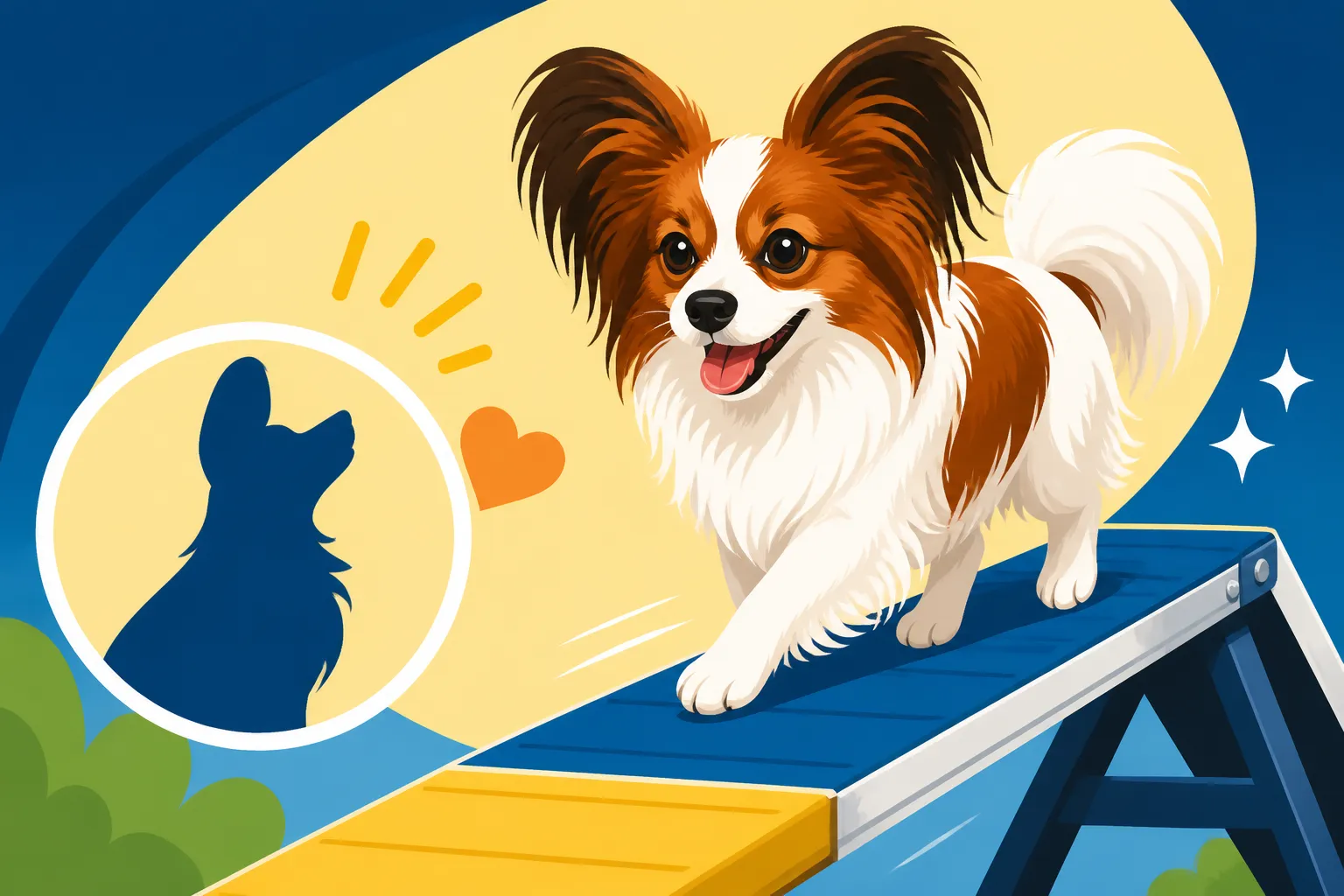
In the world of dog agility, "contact obstacles" are distinct from simple jumps or tunnels. They include the A-frame, the dog walk, and the teeter-totter (often just called a "teeter"). What makes them "contact" obstacles is that dogs are required to touch a specific colored portion at both the ascent and descent ends of the equipment. These areas, known as "contact zones," are typically painted a bright yellow or orange. Failing to touch these zones with at least one paw results in a fault.
The A-frame is essentially two ramps joined at the top, forming an "A" shape, requiring a dog to run up one side and down the other. The dog walk consists of three planks: one ramp up, a flat center section, and another ramp down, all raised significantly off the ground. Lastly, the teeter-totter is a seesaw-like plank that pivots when the dog reaches a certain point, creating a sudden movement and often a loud bang. All of these require a combination of climbing, balance, speed, and precise foot placement. For a Papillon, these structures can seem incredibly high, and the movement of the teeter can be especially startling.
Why a Papillon Might Find Contacts Challenging
Our Papillons, though undeniably intelligent and athletic, are built differently from a Border Collie or a German Shepherd. Their small stature and lightweight build can make contact obstacles feel disproportionately large and unstable. Imagine standing at the bottom of a slide that's ten times your height; that's probably how an A-frame feels to a Papillon! The sheer height of the dog walk can trigger an innate sense of caution, and a slippery surface can exacerbate this fear.
The teeter-totter, in particular, is a common sticking point. The abrupt shift in weight that causes the plank to tip, coupled with the often loud thud as it hits the ground, can be genuinely frightening. Many Papillons are sensitive souls, and this sudden noise and movement can lead to hesitation, refusal, or a frantic scramble off the equipment to avoid the unpleasant sensation. Their delicate joints, while generally sturdy for their size, can also be a concern, making some owners (and consequently, their dogs picking up on that anxiety) wary of impact. If you've ever wondered Whether a Papillon's Knees Limit Agility, you know that protecting their joints is always a top priority, making gradual, careful training even more important.
Foundation Building: Getting Your Papillon Ready for Contacts
You wouldn't ask a toddler to climb a mountain before they've mastered walking, and the same principle applies to our Papillons and agility contacts. Building confidence starts long before they ever step paw on the actual equipment. It's about developing body awareness, comfort with different surfaces, and a strong positive association with learning new physical tasks.
Starting with Groundwork: Confidence and Body Awareness
Before introducing any actual contact equipment, even miniature versions, we need to build a solid foundation of physical confidence and body awareness. This means helping your Papillon understand where their paws are in space and how to use their body effectively. Simple exercises can make a huge difference. Start with walking over cavaletti poles laid flat on the ground, then slightly raised. This teaches them to lift their feet deliberately. Walking on different textures – a fluffy rug, a slick kitchen floor, a patch of gravel, even stepping on and off a cushion – helps them generalize comfort with varied surfaces.
Wobble boards or balance discs are fantastic tools for building core strength and stability, crucial for navigating the dog walk and teeter. Begin with just getting them to stand on the unstable surface for a second, heavily rewarding any attempt, and gradually increase the duration. Even something as simple as a sturdy shoebox lid can be used as a "target" for their front or hind paws, teaching them to place their feet precisely. Remember, positive reinforcement is key here – lots of praise, high-value treats, and keeping sessions short and fun. Think of this as their kindergarten for physical education. And if you're just starting out with a puppy, remember that When to Start Training a Papillon Puppy is crucial for building good habits early.
Introducing Mini-Contacts and Low-Impact Training
Once your Papillon is comfortable with basic body awareness and varied surfaces, you can start introducing scaled-down, low-impact versions of the contact obstacles. This is where you can begin to teach the specific behaviors needed for contacts in a less intimidating environment. Instead of a full-height A-frame, use a low A-frame that's barely off the ground, or even just a plank propped up slightly. The goal is to teach them to run confidently over the entire surface, including the "contact zones," without any fear of height or falling.
For the dog walk, start with a single plank laid flat on the ground, then gradually raise it a few inches using low risers. Focus on teaching a consistent "two-on-two-off" contact behavior, where your dog places their two front paws in the contact zone and their two hind paws on the ground beyond it, then waits for a release cue. This can be taught with a target stick or a treat lure, marking and rewarding the exact moment they hit the position. For those looking for structured online guidance, programs like those offered by BAXTER & Bella often provide excellent step-by-step tutorials and virtual coaching that can be invaluable for navigating these initial stages of agility training at home. The less intimidating you make it, the faster your Papillon will learn that these "new" surfaces are fun and rewarding.
Specific Contact Obstacle Drills for Papillons
Each contact obstacle presents its own unique challenges, and therefore requires tailored training approaches. For our Papillons, breaking down each step into tiny, achievable successes is paramount. Patience and positive reinforcement will be your greatest allies here.
Conquering the A-Frame and Dog Walk
The A-frame and dog walk are primarily about confidence in climbing and descending, as well as executing the contact zone behavior. For the A-frame, start by luring your Papillon over a very low angle, praising them enthusiastically as they go up and down. Gradually increase the angle of the A-frame. Focus on smooth, steady movement. Once they are confident going over, start working on the "two-on-two-off" behavior at the bottom contact zone. Place a treat or toy just past the contact zone to encourage them to run all the way down and pause with their front paws in the contact area. Repeat this many times, making it a habit.
For the dog walk, begin with the planks very low to the ground. Lure your Papillon along the length, rewarding them for staying on the plank. Once they are comfortable, gradually raise the height. The "two-on-two-off" contact is critical here, especially on the descent. Many Papillons will try to leap off the side or jump off early to avoid the height. Prevent this by guarding the sides and consistently rewarding them for hitting the contact zone. You can place a tempting, high-value treat right at the edge of the contact zone to encourage them to reach it before stepping off. Remember, consistency is key, and every successful completion, no matter how small, deserves a big celebration. Knowing Which Rewards a Papillon Works For will make these sessions much more effective and enjoyable for your little dog.
Mastering the Teeter-Totter
The teeter-totter is often the most challenging contact obstacle for Papillons due to its unpredictable movement and noise. The key here is extreme patience and gradual desensitization. Start with the teeter board secured so it cannot tip, essentially making it a flat plank. Lure your Papillon across it, rewarding them for every step. Once they are completely comfortable walking the flat board, you can introduce a very slight tip. Have a helper gently hold the high end, slowly lowering it as your Papillon walks across. Reward them before and during the tip, making sure the treat delivery coincides with the movement.
The noise of the teeter hitting the ground is often a major deterrent. You can desensitize your Papillon by practicing in an area with background noise or by dropping objects near the teeter (but not on it) to get them used to sudden sounds. When you do allow the teeter to tip naturally, make sure your Papillon is well over the fulcrum point and has started their descent before it tips. If they are too far back, the tip will be violent and scary. Again, reward immediately as the teeter tips and they continue to the contact zone. Many trainers even place a mat or soft material under the teeter to cushion the sound initially. It's a long process, but with persistence, your Papillon can learn to love the teeter. You'll find that overcoming their natural aversion to the sudden movement and noise is crucial, especially if you’ve observed that Whether the Teeter Frightens a Papillon has been a persistent issue.
Common Pitfalls and Troubleshooting for Contact Confidence
Even with the best intentions and training methods, you might hit a snag. It's easy to get discouraged when your Papillon, who was doing so well yesterday, suddenly refuses an obstacle today. Understanding common pitfalls and having a plan for troubleshooting can save a lot of frustration and keep your progress on track.
When Your Papillon Still Hesitates
It’s completely normal for a Papillon to have off days or periods of hesitation, even after seemingly mastering an obstacle. The worst thing you can do is get frustrated or try to force them. If your Papillon suddenly hesitates or refuses a contact, take a deep breath and go back a step or two in your training. Did they nail it when it was lower? Go back to that height. Are they unsure about the "two-on-two-off"? Practice it on a flat board again. Re-establish their confidence on the easier version before attempting the harder one.
Sometimes, hesitation can be a sign of a physical issue. A tiny twinge in a paw, a sore muscle, or even an early sign of a joint problem like patellar luxation can make a dog reluctant to engage with equipment that requires precise foot placement or puts strain on their body. If hesitation is new or persistent, a vet check is always a good idea to rule out any underlying pain or discomfort. Additionally, re-evaluate your rewards. Is your Papillon still highly motivated by the treats or toys you're using? Sometimes, just switching to an even higher-value reward can rekindle their enthusiasm. Remember, your Papillon is sensitive; your calm, encouraging demeanor is just as important as the treats.
Maintaining and Generalizing Contact Performance
Once your Papillon is confidently tackling contacts, the work isn't over! You need to maintain that performance and ensure they can execute it reliably in different environments and under varying conditions. Agility trials are busy, distracting places, and your Papillon needs to be able to focus despite the excitement. Practice on different types of contact equipment if possible – some facilities have wooden contacts, others rubber. This helps generalize the behavior.
Consistency in your home practice is also vital. Short, daily sessions of 5-10 minutes, focusing on one or two contacts, can keep the skills sharp without fatiguing your Papillon. If you're building a home agility setup, consider looking on Amazon for smaller, foldable contact equipment that you can easily set up in your backyard or a large living area. This allows for frequent, low-pressure practice. Furthermore, varying the approach to the contacts and practicing them within short sequences of other obstacles will help them integrate these skills into a fluid course run. Asking yourself How Many Times a Week a Papillon Should Train for agility will give you an idea of how to structure your practice schedule for optimal results without overworking your dog. The goal is to make contacts so ingrained and rewarding that your Papillon performs them confidently, every single time, no matter what.
Here's a quick overview of approaches for different contact obstacles:
| Obstacle | Primary Challenge for Papillons | Key Training Focus | Progression Strategy |
|---|---|---|---|
| A-Frame | Height, running up and down steep incline | Building speed and confidence, hitting descent contact | Start low, gradually increase height/angle |
| Dog Walk | Height, balance, narrow surface, consistent contact behavior | Steadiness on plank, "two-on-two-off" at descent contact | Begin flat, gradually raise, practice walking the length |
| Teeter-Totter | Sudden movement, loud noise, tipping point hesitation | Desensitization to noise/movement, smooth tipping | Secure flat, gentle manual tips, cushion impact, full tip |
Disclaimer
This article is for general informational purposes only and does not constitute professional advice. Laws, prices and regulations vary by location and change over time. Consult a qualified professional for guidance on your specific situation.