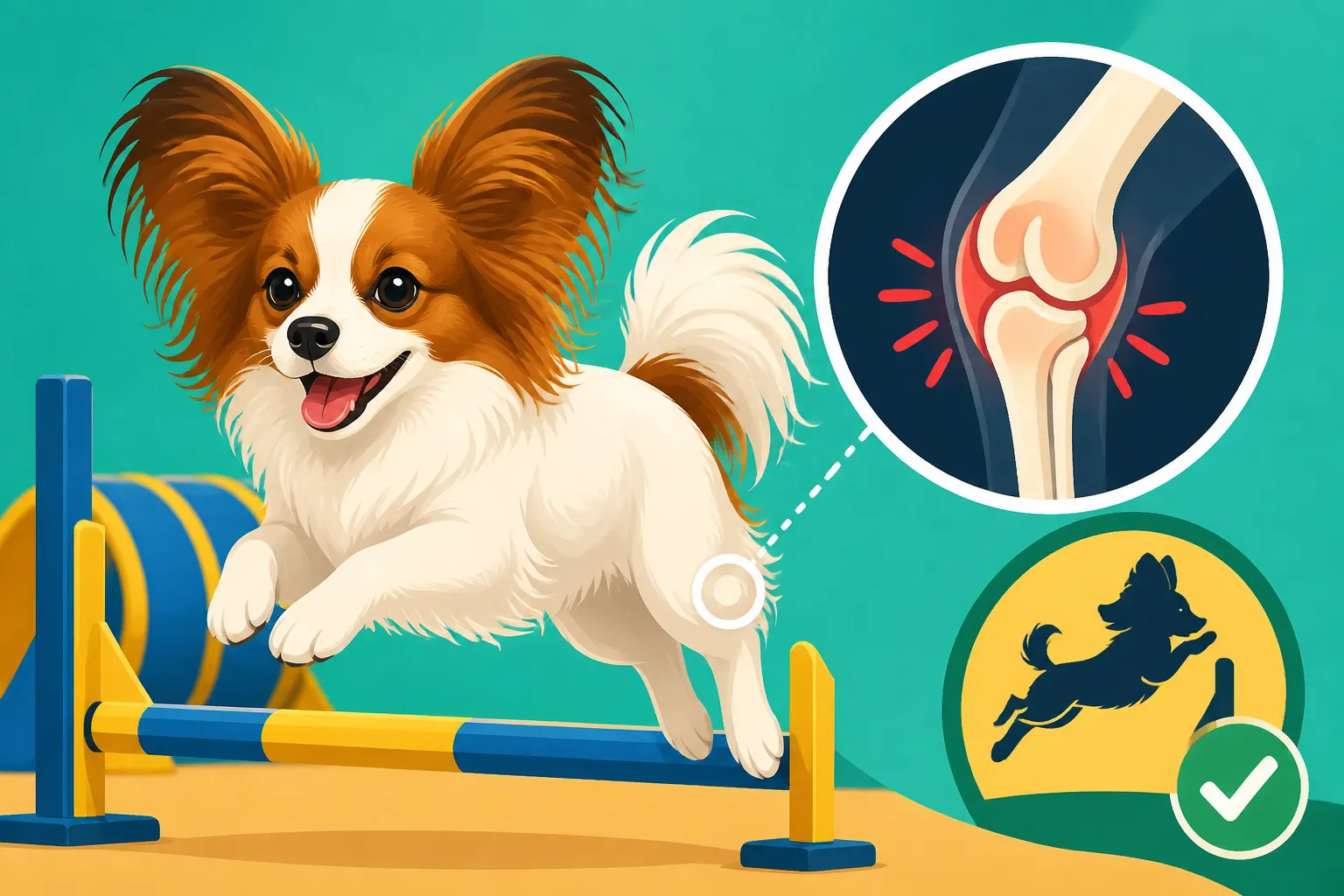
Whether Agility Wears Out a Papillon’s Knees
It's a genuine worry for many Papillon owners, that question of whether the sheer joy and athleticism of agility training might inadvertently put too much strain on those notoriously delicate little knees. We love seeing our intelligent, spirited butterflies fly over jumps and weave through poles, but deep down, there's always that nagging concern about patellar luxation, a condition many small breeds, including our beloved Papillons, can be prone to. This guide is here to walk you through the realities of agility and your Papillon's joint health, offering practical advice and setting realistic expectations so you can enjoy this wonderful sport safely.
Understanding Papillon Knees and Luxating Patella
The truth is, Papillons are generally a robust breed for their size, but they aren't entirely free from genetic predispositions. One of the most common orthopedic concerns, and certainly the one that comes to mind most often when thinking about active Papillons, is patellar luxation. This simply means the kneecap (patella) slips out of its normal groove in the thigh bone (femur). It sounds dramatic, and sometimes it can be, but often it’s a subtle issue.
What Patellar Luxation Means for Your Papillon
Imagine your knee joint. Now imagine a tiny, frisky Papillon's knee joint. Patellar luxation can range from a mild, occasional slip (Grade 1), where the kneecap pops out but goes right back in on its own, to a severe, constant dislocation (Grade 4) that can be incredibly debilitating. For some Papillons, it’s a genetic lottery, something they are born with due to the shallow groove or slightly misaligned bones. For others, it can be exacerbated by trauma or repetitive stress. Patellar Luxation Is the Papillon Problem You Will Actually Meet goes into more detail about this common issue.
When your Papillon's kneecap slips, it can cause discomfort, a momentary skip in their step, or even lead to lameness. Over time, chronic luxation can lead to arthritis and other degenerative joint diseases because the cartilage wears down faster. This is why knowing your dog's joint health status before engaging in high-impact activities like agility is paramount. It’s not just about pain in the moment, but about their long-term comfort and mobility.
The Importance of Health Testing Before Agility
Before you even consider signing up for that first agility class, a thorough veterinary examination, including palpation of the knees, is an absolute must. Reputable Papillon breeders will have already performed these checks on the parents and often the puppies themselves, providing OFA (Orthopedic Foundation for Animals) or similar certifications. This isn't just a formality; it's a vital step in understanding your dog's inherent soundness. What a Papillon Breeder Should Have Tested delves into the full scope of health screenings you should look for.
If your Papillon has even a mild grade of luxation, your vet can advise you on whether agility is a suitable sport, or if modifications are needed. Sometimes, even with a Grade 1, controlled exercise and careful conditioning can make it safe. However, pushing a dog with an undiagnosed or moderate luxation into demanding agility can certainly hasten wear and tear, leading to more severe problems down the line. It's about proactive care, not reactive treatment.
The Demands of Agility on Small Dogs
Agility isn't just about running fast; it's a symphony of quick turns, explosive launches, sudden stops, and precise landings. For a small dog like a Papillon, these movements, while scaled down, still place considerable demands on their musculoskeletal system.
Jumps, Weaves, and Contact Obstacles
Consider the jumps. While Papillons compete at lower heights, they are still propelling their entire body weight upwards and then absorbing the impact. The Age a Papillon Can Start Jumping highlights that younger dogs should avoid high impact. A perfectly executed jump looks effortless, but it requires strong hindquarters, stable knees, and good core strength. Incorrect form or fatigued muscles can lead to awkward landings, increasing the risk of injury.
Weave poles require intense lateral movement and twisting of the spine and hips, demanding significant flexibility and coordination. The contact obstacles – A-frame, dog walk, and teeter-totter – involve climbing, balancing, and sometimes jumping off (though ideally, they learn to run off). These activities are fantastic for building muscle and confidence, but they also highlight any underlying structural weaknesses. A sudden slip on a wet contact or a misstep in the weaves could easily tweak a knee or strain a joint.
The Risk of Repetitive Strain
Agility is a sport of repetition. Dogs practice the same movements over and over to achieve speed and accuracy. While practice makes perfect, too much repetition without adequate rest, warm-ups, and cool-downs can lead to overuse injuries. Just like human athletes, dogs can suffer from repetitive strain, especially in areas already predisposed to issues, such as the Papillon's knees.
This isn't to say agility is inherently dangerous. Far from it! A well-structured training program, mindful of the dog's physical limits, is crucial. The intensity of training sessions, the surface on which they train (grass is generally kinder than hard pavement), and the dog's overall physical condition all play a role. It’s a balance between building strength and avoiding excessive wear.
Mitigating Risk and Promoting Longevity in Agility
If your Papillon has healthy knees, or a very mild, non-symptomatic Grade 1 luxation cleared by your vet, there's absolutely no reason they can't enjoy a long and successful agility career. The key is in smart training, preventative care, and understanding their individual needs.
Smart Training Protocols
One of the best things you can do is to start with a foundation of strength and body awareness, long before you introduce full-height obstacles. Puppy classes, like those offered by BAXTER & Bella, focus on building confidence, basic obedience, and good manners, which are excellent precursors to agility. For physical conditioning, think about exercises that build core strength and hindquarter muscle, without high impact. Cavaletti poles, controlled climbs on stable surfaces, and even simple 'puppy push-ups' (sit-down-stand sequences) can be incredibly beneficial. When to Start a Papillon in Agility offers specific guidance on age-appropriate training.
When you do start agility, work with a knowledgeable instructor who emphasizes proper form over speed, especially in the beginning. They should understand the unique needs of small breeds and prioritize safety. Avoid overtraining; short, fun sessions are more effective and safer than long, exhausting ones. Always include a good warm-up (a brisk walk, some stretching) and a cool-down.
| Preventative Measure | Description | Benefit for Agility Papillons |
|---|---|---|
| Veterinary Check-ups | Regular orthopedic exams, especially before starting or increasing agility intensity. | Early detection of joint issues; ensures current physical suitability for sport. |
| Controlled Conditioning | Focus on strength, balance, and body awareness exercises (e.g., cavaletti, wobble boards, targeted walks) instead of high-impact jumps, particularly in younger dogs. | Builds crucial muscle support around joints, improves coordination, reducing injury risk. |
| Warm-up and Cool-down | Pre-exercise gentle stretching and short walks to prepare muscles; post-exercise slow walking and gentle massage to aid recovery. | Increases blood flow to muscles, improves flexibility, reduces stiffness, and helps prevent strains and soreness. |
| Appropriate Equipment | Use well-maintained, stable agility equipment. Ensure jump bars are easily dislodged. Consider non-slip surfaces for home practice. | Minimizes risk of accidental slips, falls, and impact injuries. |
| Balanced Diet & Supplements | High-quality dog food for active dogs. Discuss joint supplements (e.g., glucosamine, chondroitin, omega-3s) with your vet, especially for older or predisposed dogs. Many options are available on Amazon. | Supports joint health, reduces inflammation, and provides building blocks for cartilage repair. |
| Rest and Recovery | Allow adequate rest days between intense training sessions or trials. Avoid pushing a fatigued dog. | Allows muscles and joints to repair and strengthen, preventing overuse injuries. |
| Home Environment Adjustments | Provide ramps or steps for furniture, use non-slip mats on hard floors. Whether a Papillon Should Be Stopped From Jumping Off Furniture is a must-read. | Reduces daily impact on joints, minimizing cumulative stress from jumping and slipping indoors. |
| Maintain Healthy Weight | Keep your Papillon at an ideal weight to minimize stress on their joints. | Less weight means less strain on knees and other joints during high-impact movements. |
Supportive Care and Environment
Beyond training, your Papillon's daily life and diet play a huge role in joint health. A high-quality diet provides the building blocks for healthy tissues. Some owners also opt for joint supplements, often containing glucosamine, chondroitin, or omega-3 fatty acids, which can support cartilage health and reduce inflammation. Always consult your vet before adding any supplements. There are many reputable brands available on platforms like Amazon that offer joint support products specifically formulated for small dogs.
Your home environment is equally important. Those quick leaps off the sofa or bed, while seemingly minor, accumulate over time. Providing ramps or steps to furniture can significantly reduce the daily impact on your Papillon's knees. Ensure you have non-slip runners or rugs on hard floors, especially in high-traffic areas where they might get zoomies. Think about Ramps and Steps Cost for a Papillon when setting up your home for joint protection. Even the way you handle them matters.
Making Informed Decisions for Your Papillon's Agility Journey
Ultimately, the decision to pursue agility with your Papillon is a personal one, but it should always be an informed one. You are your dog's best advocate, and understanding the risks and how to mitigate them is key to a happy, healthy athletic life.
Listening to Your Dog and Your Vet
Your Papillon will give you signs if something is wrong. A reluctance to jump, a change in gait, a subtle lameness, or even just being a little slower or less enthusiastic than usual can all be indicators of discomfort. Never push through pain. If you suspect an issue, stop training immediately and consult your veterinarian. They can provide an accurate diagnosis and a plan for treatment or management. Whether a Papillon With a Slipping Knee Is in Pain helps identify signs of discomfort.
Regular vet check-ups are essential, not just when there's a problem. Your vet can monitor your Papillon's joint health over time, assess muscle condition, and recommend any preventative measures or modifications to their activity level as they age. This partnership with your vet is invaluable for ensuring your dog's long-term well-being in agility and beyond.
Considering a Papillon's Agility Career Span
Many Papillons enjoy long and illustrious agility careers, often competing well into their senior years. Their compact size and natural athleticism can be a real advantage. However, as with any athlete, there comes a time when modification or retirement might be necessary. This might mean lowering jump heights, reducing the number of runs, or focusing on less physically demanding aspects of training. How Long a Papillon's Agility Career Lasts examines this in detail.
The goal isn't just to win ribbons, but to provide a stimulating, enriching, and joyful experience for your dog for as long as possible. A Papillon that loves agility will thrive on the mental and physical challenge, and by being proactive and attentive to their health, you can help ensure those flying butterfly ears continue to grace the agility course for many years.
Disclaimer
This article is for general informational purposes only and does not constitute professional advice. Laws, prices and regulations vary by location and change over time. Consult a qualified professional for guidance on your specific situation.