The Age a Papillon Is Reliably House Trained
It's one of the biggest questions that keeps new Papillon parents up at night (or at least frantically mopping up small puddles): "When will my little butterfly dog finally 'get' house training?" The journey can feel long and sometimes frustrating, especially with a tiny breed like a Papillon who might have a bladder the size of a thimble. This guide is here to walk you through what "reliably house trained" truly means for a Papillon, what age you can realistically expect to reach that milestone, and practical strategies to help your clever little companion get there.
Understanding the Papillon's House Training Journey
Let's be honest, house training a tiny dog can sometimes feel like a monumental task. You might hear stories of larger breeds being fully reliable at four or five months, and then you look at your little Papillon puppy, who seems to forget everything the moment they step off the training pad. This isn't a reflection of your Papillon's intelligence – they are incredibly smart, in fact – but rather a combination of physical and behavioral factors unique to toy breeds.
Why Papillons Can Be Tricky to House Train
There are a few key reasons why Papillons sometimes take a little longer or require more diligent effort than their larger canine cousins. Understanding these can help you approach training with more patience and empathy.
First and foremost, it's their size. A Papillon puppy, even a few months old, has a very small bladder. This means they physically can't "hold it" for long periods. What feels like a reasonable interval between potty breaks for a Golden Retriever puppy is an eternity for a Papillon. Expecting them to hold it for hours is simply unfair and sets them up for failure. When you're dealing with such a small creature, every minute counts, and frequent outings are absolutely essential.
Secondly, Papillons are often quite sensitive to temperature and weather. Many owners find their Papillon will eye a drizzle or a patch of snow with disdain, often opting to hold it (or, more commonly, find an indoor alternative) rather than brave the elements. This isn't laziness; it's just their comfort preference. A tiny dog with a fine coat can get chilled very quickly. This aversion to unpleasant weather can definitely slow down outdoor house training, making consistency a real challenge if you live in an area with harsh winters or frequent rain. You might find some good advice on dealing with this in Why a Papillon Refuses to Go Out in Rain.
Finally, while Papillons are incredibly intelligent, their intelligence can sometimes work against you in house training. They are adept at learning patterns and observing your reactions. If they learn that a quick pee behind the sofa goes unnoticed, or that you prefer them to use a pad when it's raining, they'll happily incorporate that into their routine. This isn't malicious, just pragmatic! They learn quickly, so you need to be quicker and more consistent in teaching them the right patterns.
Realistic Expectations for Reliable House Training
So, what's a realistic timeline? While some individual Papillons might surprise you, it's generally safe to assume that a Papillon won't be "reliably" house trained until they are closer to 6-9 months old, and for some, it might even stretch to their first birthday. What does "reliably" mean here? It means they can generally go several hours without an accident, will actively signal you when they need to go out, and will choose to eliminate outside even when given an indoor option.
It's crucial to understand that this isn't a linear process. You'll have amazing weeks where you think you've cracked it, followed by a sudden regression (hello, teething!). Don't despair; this is completely normal. The key is to celebrate the successes, clean up the accidents without fuss, and stick to your routine like glue. Thinking about the broader picture of their first year can be helpful, and you might find insights in The First Year With a Papillon Puppy.
Key Milestones in a Papillon's House Training
The path to a fully house-trained Papillon isn't a straight line; it's more like a winding country road with a few detours. Recognizing the milestones along the way can help you track progress and stay motivated.
Puppy Pads vs. Outdoors: The Transition
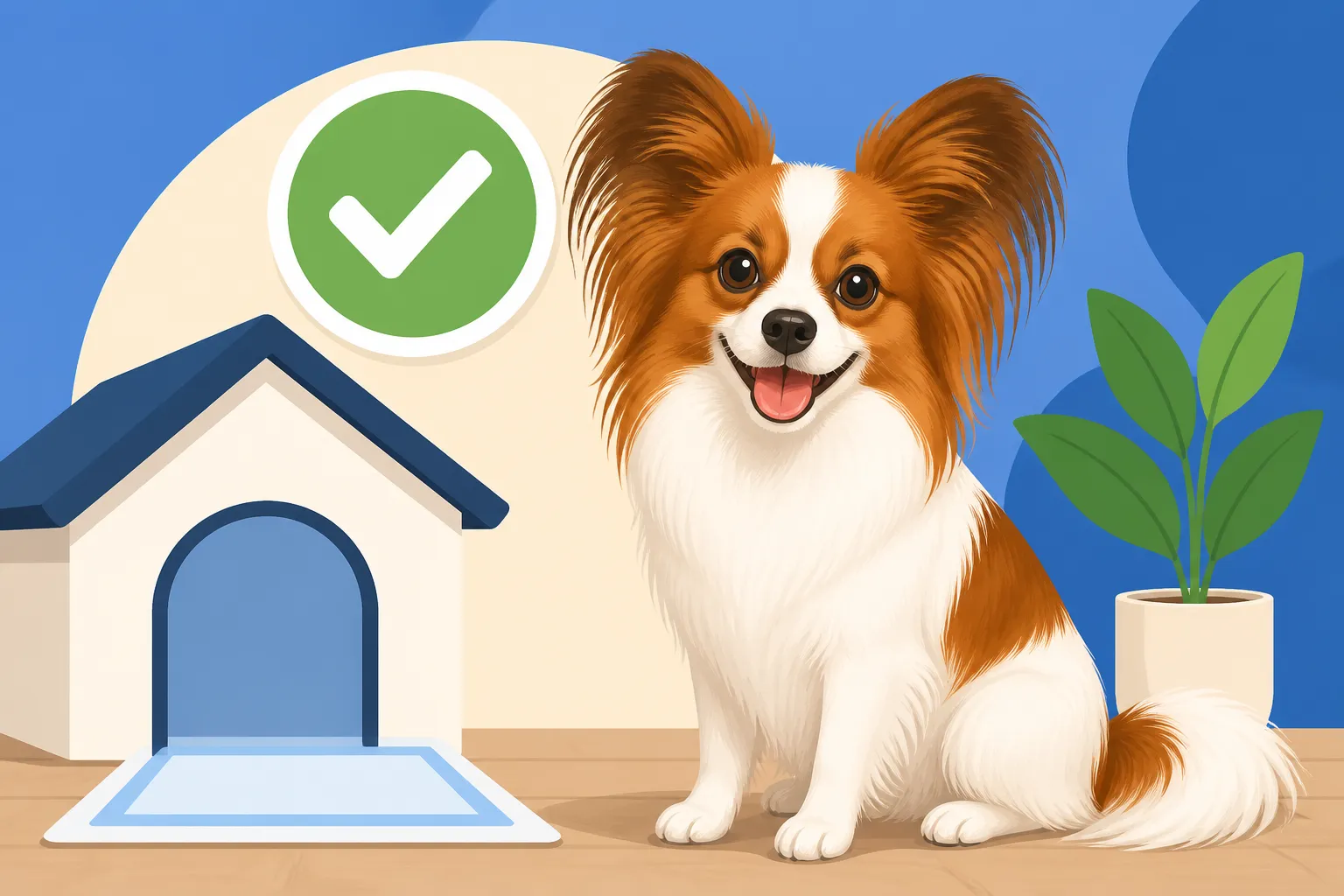
Many Papillon owners, myself included, often start with puppy pads, especially if they live in an apartment or have busy schedules. For a tiny puppy, especially during the critical early weeks, it's a practical way to manage their frequent bathroom needs. The challenge, however, is transitioning from pads to strictly outdoor elimination.
If you introduce pads, your Papillon learns that "potty inside on this soft square" is acceptable. To transition them, you'll need to make the outdoor experience overwhelmingly positive and convenient, while gradually making the pads less accessible or less appealing. Start by moving the pad closer and closer to the door, then eventually outside. When they go outside, throw a party! High-value treats, lots of praise, and maybe even a quick game. Make it the best thing ever.
It's a common dilemma: Whether Indoor Pads Suit a Papillon. While convenient for puppies or elderly dogs, they can definitely prolong the full outdoor training process. If you decide to use them, just know that the transition will require dedicated effort.
The "Aha!" Moment: When Things Click
There often comes a point, usually between 5 and 8 months, where you'll notice a significant shift. This is the "aha!" moment when your Papillon truly understands the concept. Instead of just going because you took them out, they will start to ask to go out. This might be a subtle whimper at the door, a quick dash to the exit, or even a direct stare at you followed by a dash.
This change often correlates with their bladder muscles maturing, allowing them to hold it for longer. It's also a testament to their intelligence; they've finally put all the pieces together: "I feel the urge, I signal my human, I go outside, I get rewarded." When this starts happening, you know you're on the home stretch. Keep those high-value treats handy to reinforce this crucial behavior!
Regression: Why It Happens and What to Do
Just when you think you've won, your perfectly house-trained six-month-old Papillon might suddenly have an accident indoors. It's frustrating, right? But take a deep breath; regression is incredibly common. It can be triggered by several factors:
- Changes in routine: A new work schedule, a vacation, or even just rearranging the furniture can throw them off.
- Stress or anxiety: New pets, visitors, loud noises, or separation anxiety can lead to accidents.
- Medical issues: A urinary tract infection (UTI) or other health concerns can cause a sudden loss of bladder control. Always consult your vet if regressions are sudden or frequent, as a quick check-up can rule out underlying problems. This is especially true if you notice changes in thirst or urination frequency.
- Testing boundaries: As they gain confidence and explore their independence, they might try to see what they can get away with.
When regression happens, don't punish. Go back to basics: increase potty breaks, reinforce successful outdoor elimination with enthusiasm, and temporarily limit access to unsupervised areas. It's like taking a step back in training to solidify their understanding again.
Strategies for House Training Success
Consistent application of a few key strategies is what ultimately leads to a reliably house-trained Papillon. This breed thrives on routine and positive reinforcement, so leverage those traits!
The Role of Crate Training
Crate training is one of the most effective tools for house training any dog, and it's particularly useful for small breeds like Papillons. Dogs are naturally clean animals and generally won't soil their sleeping area. A properly sized crate, just big enough for them to stand up, turn around, and lie down comfortably, helps leverage this instinct.
By confining your Papillon to their crate when you can't actively supervise them, you prevent accidents from happening in the house. The crate becomes their den, a safe space they want to keep clean. The moment they come out of the crate, the very first thing you do is take them straight outside to their designated potty spot. If they go, massive praise and a treat! If not, back to the crate for a short period, then try again. For more on this, check out Crating a Papillon Overnight.
Make sure the crate is a positive place. Never use it for punishment. Associate it with good things like yummy chews, comfortable bedding, and quiet time. You can find excellent, appropriately sized crates on platforms like Amazon.
Consistent Schedule and Frequent Outings
This cannot be stressed enough: consistency is paramount. Papillons, with their small bladders, need very frequent potty breaks, especially as puppies.
A typical schedule for a young Papillon puppy might look like this:
- First thing in the morning
- After every nap
- After every play session
- After eating or drinking (usually 10-15 minutes after)
- Before bedtime
- Every 1-2 hours in between these times
As they get older, you can gradually extend the intervals, but always err on the side of too frequent rather than too long. Even an adult Papillon typically needs to go out every 4-6 hours during the day, sometimes more depending on their hydration and activity level. Stick to a routine, even on weekends. Their little internal clocks are very precise!
Potty Break Schedule Example (Puppy):
| Time | Activity |
|---|---|
| 7:00 AM | Wake up, immediate potty break outdoors |
| 7:15 AM | Breakfast |
| 7:30 AM | Immediate potty break outdoors after eating |
| 7:30 – 8:30 AM | Playtime/Supervised free time |
| 8:30 AM | Potty break outdoors |
| 8:30 – 10:00 AM | Nap in crate |
| 10:00 AM | Wake up, immediate potty break outdoors |
| …and so on, every 1-2 hours… | |
| 10:00 PM | Last potty break before bed |
Positive Reinforcement is Your Best Friend
Papillons are eager to please and highly food-motivated, making positive reinforcement incredibly effective. Every single time your Papillon eliminates in the correct spot outdoors, you need to make it abundantly clear they've done something wonderful.
- Praise: Use an enthusiastic, happy tone of voice. "Good potty! Yes! What a good dog!"
- Treats: Immediately give a high-value treat – something they don't get at other times, like a tiny piece of cheese or cooked chicken. The immediacy is key; they need to associate the treat with the act of going potty outside.
- Play: A quick game of tug or a toss of their favorite toy can also be a great reward.
Never punish for accidents. Scolding or rubbing their nose in it only teaches them to fear you or to hide their elimination. It doesn't teach them where to go. Simply clean up thoroughly with an enzymatic cleaner (like those you can find on Amazon or at your local pet store) to remove all traces of odor, preventing them from returning to the same spot.
Training programs like BAXTER & Bella often emphasize positive reinforcement and structured learning, which aligns perfectly with a Papillon's nature. This breed thrives on clear communication and rewards.
When "Reliable" Really Means Reliable
Reaching that truly reliable stage with a Papillon isn't just about going outside; it's about consistency, maturity, and being able to handle various situations.
Beyond Basic House Training: Proofing
Even when your Papillon has the basic idea down, there's a next level: "proofing." This means ensuring they understand the rules in different environments and under varying circumstances.
- Different locations: Can they reliably go potty when visiting a friend's house or a new park?
- Weather changes: Will they still go out in a light rain or cold weather, perhaps with a cute sweater for warmth?
- Distractions: Can they focus on the task at hand even with squirrels darting by or other dogs playing nearby?
Proofing takes time and continued practice. Always take them to their spot, give them time, and reward heavily when they succeed. Think of it as refining their education. It's also vital to ensure they get enough mental stimulation and physical activity daily, as a well-exercised Papillon is often a more compliant one. What a Papillon Needs Every Day delves into their daily requirements.
The Role of Maturity
As mentioned earlier, while you can start house training a Papillon puppy from the moment they come home, true reliability often aligns with their physical and mental maturity. For most Papillons, this happens sometime between 8 months and 1 year of age. By this point, their bladder control is fully developed, and their cognitive abilities are mature enough to generalize the house training rules to almost all situations.
Even after they hit this age, the occasional accident can still happen. A new medication, a sudden fright, or just holding it too long can lead to a slip-up. Don't view these as failures, but as reminders to reassess their needs or rule out a medical cause. The goal is consistent success, not perfection.
The patience you invest in those early months will absolutely pay off, transforming those little accidents into distant memories as your Papillon confidently signals their needs and keeps your home pristine.
Disclaimer
This article is for general informational purposes only and does not constitute professional advice. Laws, prices and regulations vary by location and change over time. Consult a qualified professional for guidance on your specific situation.