When a Papillon’s Ear Fringe Grows In
Papillon ear fringe development timeline explains how puppies transition from soft fluff to long, flowing butterfly feathering.
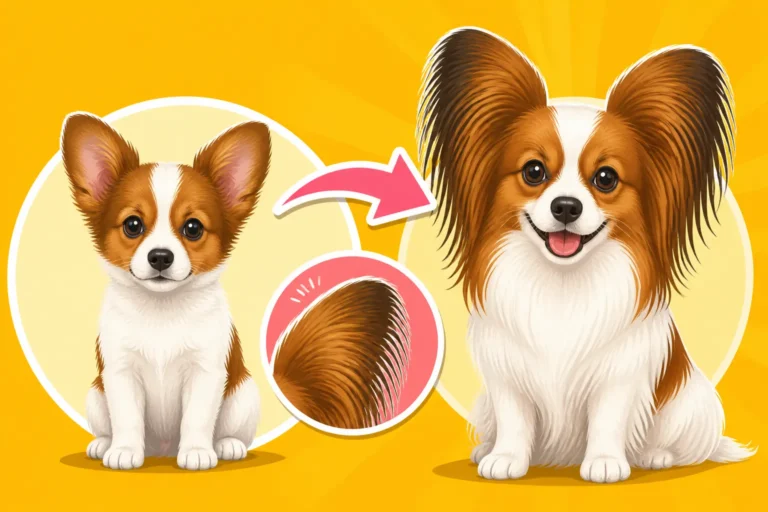
Papillon ear fringe development timeline explains how puppies transition from soft fluff to long, flowing butterfly feathering.

Papillon ear fringes grow and thicken until dogs reach two years of age, requiring gentle grooming and protection to stay full.
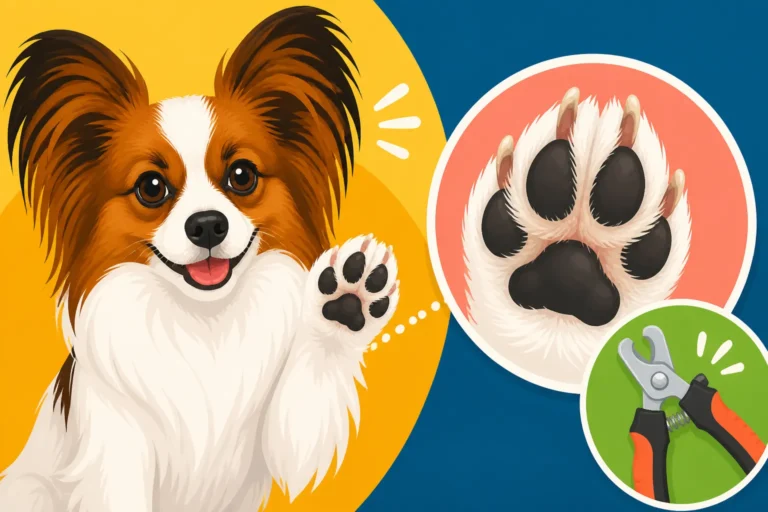
Papillon paw hair trimming prevents slipping on smooth floors, helping protect toy breed joints and keeping the dog safe and comfortable.

Papillon coat trimming effects, single layer structure, ear fringes, tail plume, and natural shedding patterns explained.
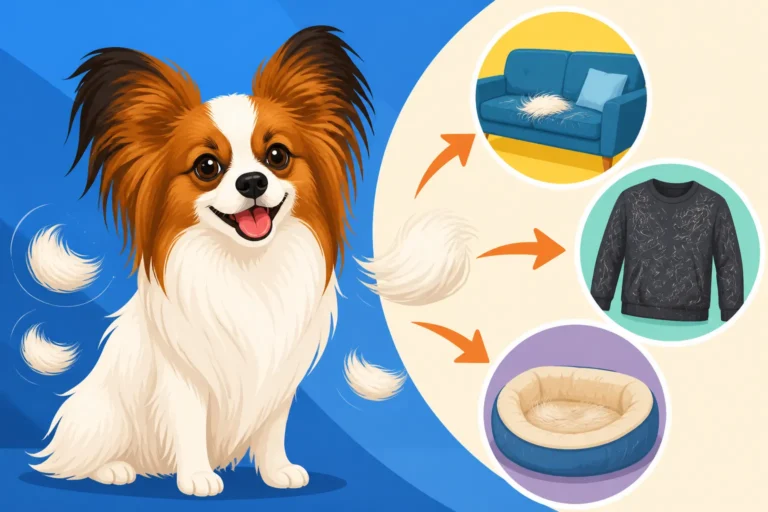
Papillon shedding patterns and single coat traits explain how fine silky hairs migrate through homes and gather into small tumbleweeds.

Papillon matting zones and coat friction causes are explained, identifying common tangling spots and grooming challenges.

Proper Papillon grooming tools and pin brushes explain how to maintain single layer coats, fine hair, and tangly ear fringes.

Papillon grooming frequency and single coats explained, detailing brushing routines for the ears, chest frill, and feathered tail.
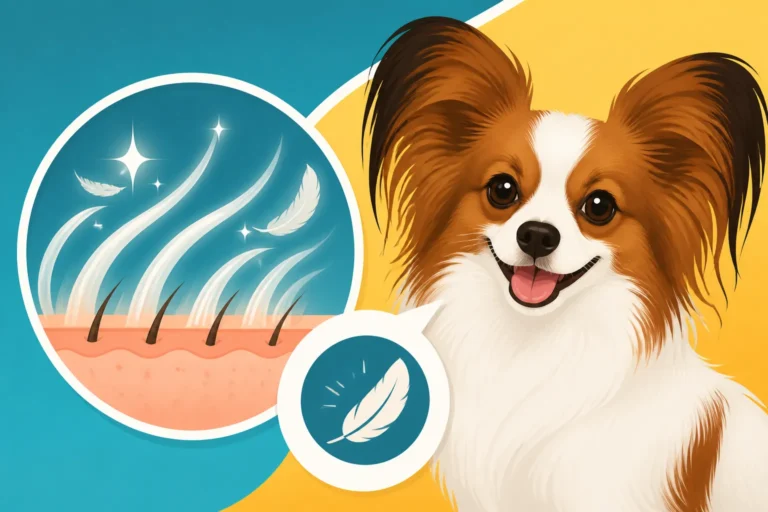
Papillon coat genetics and single layer structure explain why this dog breed lacks a thick undercoat and sheds less throughout the year.
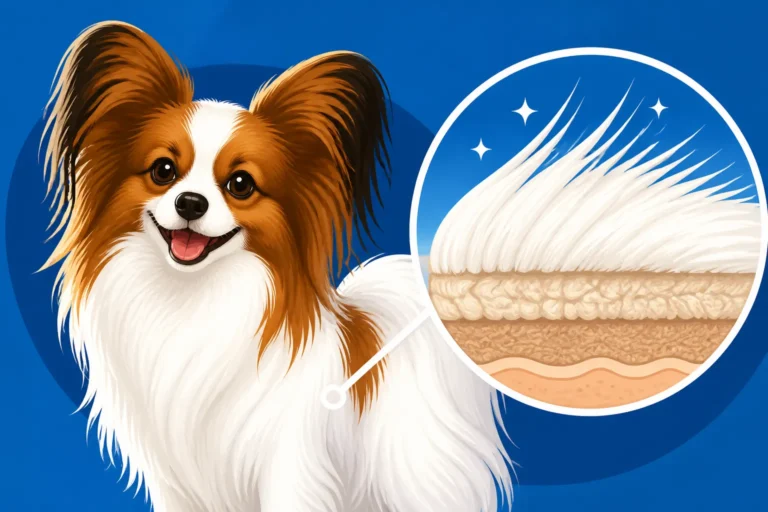
Papillon coat structure features a single layer, a silky fine texture, and no undercoat, explaining its unique shedding and grooming needs.