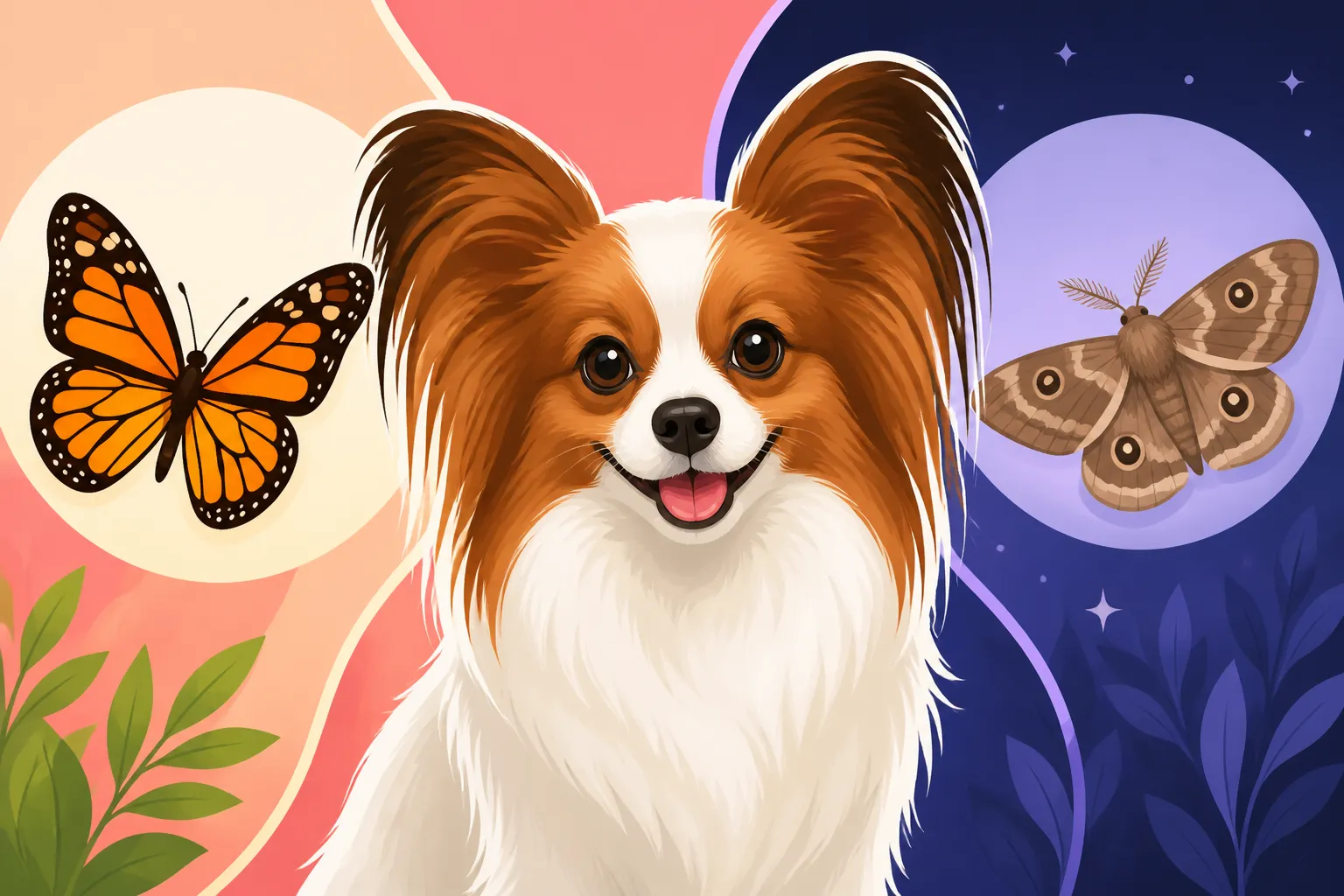
Papillon Means Butterfly and Phalene Means Moth
It's incredibly common for people new to the world of Papillons, or even those who've admired them from afar, to wonder about the terms "Papillon" and "Phalene." You see these stunning little dogs with their magnificent ears, and some have them standing up like butterfly wings, while others have them elegantly dropped. It can be genuinely confusing trying to figure out if these are two distinct breeds or if there's a deeper connection. This guide is here to clear up that mystery, exploring the shared history, the fascinating genetics, and the charming distinctions that define both the Papillon and the Phalene within the same beloved breed.
The Iconic Ears: Unpacking the Papillon and Phalene Names
When you first encounter a Papillon, the name immediately makes sense. "Papillon" is French for "butterfly," and one look at those large, erect ears, fringed with long hair, perfectly evokes the image of a butterfly with its wings spread wide. It's a descriptor that's both accurate and utterly charming, capturing the essence of this alert, elegant little dog. For centuries, these dogs have been cherished companions, and their distinctive ear set became their most recognizable trait, earning them their enduring name.
The "Papillon" – A Butterfly in Canine Form
Imagine a dog with ears so striking, so perfectly formed, that they literally become a living, breathing representation of a butterfly. That's the Papillon. The erect ears, set high on the head, are not just large; they are carried at an angle, spreading out and away from the head, creating that distinct wing-like appearance. The long, silky fringe of hair that cascades from the ears further enhances this illusion, framing their intelligent, dark eyes. This isn't just a random physical trait; it’s the defining characteristic that led to their most popular and widely recognized name. This erect ear type is what most people picture when they think of a Papillon.
The erect ear is a hallmark of the breed's modern form, having emerged and gained popularity over centuries. It speaks to their alert nature and keen intelligence, always seeming to be listening, always engaged with their surroundings. Owners often marvel at how expressive these ears are, twitching and turning to catch every sound, truly giving the impression of an active, observant little creature.
The "Phalene" – The Elegant Moth
But what about the Phalene? If "Papillon" means "butterfly," then "Phalene" means "moth," and this refers to the drop-eared variety of the breed. These dogs possess the same delicate build, the same silky coat, and the same bright, inquisitive eyes as their erect-eared counterparts, but their ears fall gracefully to the sides of their head, resembling the folded wings of a resting moth. It's a softer, perhaps more traditional look, harkening back to some of the earlier dwarf spaniels from which the breed evolved. Many people don't even realize that this drop-eared variety exists, or that it's the exact same breed.
The Phalene is not a separate breed; it is simply the drop-eared version of the Continental Toy Spaniel, which is the formal name encompassing both varieties. In many ways, the Phalene represents the original form of these charming little dogs before the erect-eared type became dominant. Its appearance is equally captivating, offering a more serene, almost wistful expression. The long feathering on the Phalene's ears drapes beautifully, adding to its refined appearance, and can still be quite impressive, even if not quite as dramatic as the Papillon's "wings."
More Than Just a Name: Cultural Significance
The naming convention of Papillon and Phalene isn't just a quirky linguistic detail; it reflects the deep connection these dogs have had with human culture, particularly in Europe. For centuries, these small spaniels were beloved companions of royalty and nobility, their delicate beauty and lively dispositions making them perfect symbols of refinement and luxury. The shift in naming from the more general "dwarf spaniel" to "butterfly" and "moth" highlights how distinct and appreciated their ear types became over time.
These names carry an echo of a bygone era when appearance and elegance were paramount. The visual metaphor of a butterfly or a moth isn't just about identification; it's about admiration, associating these dogs with nature's delicate beauty. This cultural appreciation has ensured that both varieties, despite their different ear sets, remain deeply cherished and understood as part of a single, rich lineage. The preference for one ear type over the other often varied regionally or with changing fashions, but the core admiration for these tiny companions remained constant.
Historical Roots: The Dwarf Spaniel Legacy
To truly understand the Papillon and Phalene, we need to step back in time, tracing their lineage through the intricate tapestry of European history. These aren't just modern breeds; they are living relics, with ancestors who graced the laps of kings and queens, and whose likenesses were immortalized by some of the greatest painters of all time. Their story is intertwined with nobility, art, and the evolving tastes of centuries past.
Tracing Back to the Continental Toy Spaniel
The journey begins with what was known as the "dwarf spaniel" or "Continental Toy Spaniel." These small, intelligent dogs were popular across Europe, particularly in Italy, France, and Belgium, long before the terms Papillon and Phalene came into common use. They were characterized by their small size, soft, flowing coats, and amiable dispositions. Unlike their larger hunting spaniel cousins, these dogs were bred purely for companionship, designed to be lap dogs and elegant accessories for the aristocracy. The original dwarf spaniels predominantly featured dropped ears, much like the modern Phalene. It's truly fascinating to consider how much history is packed into these little dogs.
These early toy spaniels were highly prized. They were small enough to be carried comfortably, fitting easily into the lavish lifestyles of the wealthy. Their gentle nature made them ideal confidantes, and their beauty was a testament to the status of their owners. The gradual refinement of these dogs, through selective breeding, led to the development of the distinct features we recognize today, culminating in the formal recognition of the Continental Toy Spaniel as a breed, encompassing both ear types.
The Royal Courts of Europe: Early Popularity
The Continental Toy Spaniel found its most enthusiastic patrons in the royal courts and noble houses of Europe. From the Medicis in Italy to the French monarchy, these dogs were ubiquitous symbols of wealth and privilege. They weren't just pets; they were integral parts of daily life, often depicted in portraits alongside their owners. This era saw their popularity soar, leading to more deliberate breeding and the emergence of distinct types within the overarching dwarf spaniel category.
Perhaps one of the most famous (or infamous) associations is with Marie Antoinette, the ill-fated Queen of France. Legend has it that she carried her beloved spaniel, thought to be a Phalene-type, with her even to the guillotine. While this story is likely apocryphal, it speaks volumes about how deeply these dogs were woven into the lives of historical figures. Whether it's the real story of Marie Antoinette and the Papillon She Is Said to Have Carried or just a charming anecdote, it illustrates the profound bond shared. The courts provided a protected environment where these delicate dogs could thrive, ensuring their survival and refinement through generations.
Artistic Legacy: Immortalized in Portraits
Beyond historical anecdotes, the strongest evidence of the Papillon's and Phalene's long and illustrious history lies in the art world. Numerous Renaissance and Baroque painters captured these charming little dogs in their masterpieces. Titian Painted the Dog the Papillon Came From, showing dogs with the characteristic drop ears that would later be known as Phalenes. These artistic renditions provide an invaluable visual timeline of the breed's evolution.
Painters like Titian, Rubens, and Fragonard frequently included these tiny spaniels in their portraits of noblewomen and children. These aren't just background details; the dogs are often cradled in laps, nestled at feet, or playfully interacting with their owners, highlighting their role as cherished companions. These artistic records show that the drop-eared variety was dominant for many centuries. The erect-eared "butterfly" type is thought to have emerged later, sometime in the 16th or 17th century, possibly through a spontaneous mutation or crossbreeding, eventually becoming the preferred look in many circles. This rich artistic history is a testament to the breed's enduring appeal and its embedded place in European aristocratic society.
The Genetics of Ear Type: Why Both Appear in the Same Litter
One of the most intriguing aspects of the Papillon and Phalene is that both ear types can, and often do, appear in the same litter of puppies. This isn't a random occurrence or a sign of mixed breeding; it's a fascinating example of Mendelian genetics at play within a purebred lineage. Understanding this genetic dance helps to appreciate the unified nature of these two seemingly different varieties.
Understanding the Inheritance Pattern
The difference between erect and drop ears in the Continental Toy Spaniel is determined by a single gene, with two alleles. The erect ear (Papillon) is dominant, and the drop ear (Phalene) is recessive. This means that if a puppy inherits even one copy of the dominant allele for erect ears, it will likely develop Papillon-type ears. For a puppy to have Phalene (drop) ears, it must inherit two copies of the recessive allele – one from each parent. This is a classic example of how traits are inherited.
Consider a simple scenario:
- Two Papillon parents (both homozygous dominant for erect ears): All puppies will be Papillons.
- Two Phalene parents (both homozygous recessive for drop ears): All puppies will be Phalenes.
- One Papillon parent (homozygous dominant) and one Phalene parent: All puppies will be Papillons, but they will all carry the recessive gene for drop ears.
- Two Papillon parents (both heterozygous, meaning they carry one dominant and one recessive allele): This is where it gets interesting! On average, 75% of the puppies will be Papillons (some homozygous dominant, some heterozygous), and 25% will be Phalenes (homozygous recessive).
- One Papillon parent (heterozygous) and one Phalene parent: On average, 50% Papillons and 50% Phalenes.
This genetic reality means that a breeder can have a litter of puppies where some pups have erect ears and others have dropped ears, all from the same parents and all purebred Continental Toy Spaniels. It’s a beautiful demonstration of genetic diversity within a single breed.
When Do a Papillon Puppy's Ears Go Up
For those anticipating the "butterfly" ears, one of the most common questions is, "When will my Papillon puppy's ears stand up?" It's a nail-biting waiting game for many new owners! Generally, a Papillon puppy's ears will begin to rise and stand erect sometime between 3 to 6 months of age, though it's not uncommon for them to go up even later. It’s important to remember that this process isn't always smooth; sometimes one ear will stand before the other, or they might go up and then briefly drop again during teething. This is usually nothing to worry about and is a normal part of their development.
The timing can vary greatly from puppy to puppy and can be influenced by several factors, including genetics (some lines simply take longer), nutrition, and even the stress of teething. During the teething phase, around 3-5 months, the calcium in a puppy's body is heavily directed towards growing teeth, which can temporarily impact cartilage strength, causing ears that were already up to flop down again. Most often, they will re-erect once teething is complete. Patience is key when watching those adorable ears develop! If you’re concerned about Whether a Papillon's Ears Can Change After a Year, most changes occur well before then.
Breeding for Ear Type: Choices and Consequences
Given the genetic principles, breeders of Continental Toy Spaniels often make conscious decisions regarding ear type. Some breeders specialize exclusively in Papillons, while others might prefer the Phalene, and many appreciate both. The goal is always to produce healthy, well-tempered puppies that adhere to the breed standard, regardless of ear set. Ethical breeders will understand the genetic background of their breeding dogs to predict litter outcomes and ensure genetic health.
For instance, a breeder might choose to breed two heterozygous Papillons, knowing they will likely get both erect and drop-eared puppies in the litter. This allows them to offer both types to prospective owners. Conversely, if a breeder wants only Papillons, they would need to ensure at least one parent is homozygous dominant for erect ears. However, this might limit genetic diversity if not managed carefully. The beauty is that both types are equally purebred and equally valuable as companions, and the standard allows for both. This means that a breeder doesn't need to choose between Papillons and Phalenes to maintain the integrity of their lines, a true blessing for preserving the full spectrum of this wonderful breed.
Beyond the Ears: Key Distinguishing Features of Papillons and Phalenes
While the ears are the most obvious differentiator, it's crucial to remember that Papillons and Phalenes are fundamentally the same breed: the Continental Toy Spaniel. This means they share a vast majority of their physical characteristics and temperament traits. However, discussing these shared features helps paint a complete picture of what makes these dogs so endearing, moving beyond just the "butterfly" or "moth" ears.
Size, Structure, and Overall Appearance
Both the Papillon and the Phalene are quintessential toy dogs, known for their delicate yet sturdy build. They are typically small, fine-boned, and elegant. A correct Papillon should convey an impression of grace and agility, not fragility, despite its small stature. They usually stand between 8 to 11 inches at the shoulder and generally weigh between 5 to 10 pounds, though slightly larger or smaller individuals are not uncommon. What a Papillon Weighs and How Tall It Stands is a good indicator of their delicate proportions. Their gait is light, free, and effortless, reflecting their lively nature.
Their coats are single-layered, long, silky, and flowing, without an undercoat. This gives them that magnificent plumed tail, flowing culottes on their hind legs, and a beautiful chest frill. The coat comes in a variety of colors, all with white, such as white and black, white and sable, white and red, or tricolor (white, black, and tan). The markings should be symmetrical, particularly on the face, creating a balanced and attractive appearance. Their eyes are dark, round, and alert, full of intelligent expression, and their delicate muzzles taper to a small, black nose.
Temperament: Are There Differences?
In terms of personality, there are virtually no discernible differences between Papillons and Phalenes. Both varieties share the same vivacious, intelligent, and affectionate temperament that the Continental Toy Spaniel breed is renowned for. They are often described as being "big dogs in a small package" due to their confident and fearless demeanor. They are incredibly bright, eager to please, and possess an almost boundless curiosity, making them highly trainable and engaging companions. The Papillon Is the Smartest Toy Breed There Is, and this applies equally to both ear types.
They thrive on human companionship and are known for forming strong bonds with their families. While they can be playful and energetic, they also adore cuddling up on a lap. Some people mistakenly believe that Phalenes might be calmer due to their dropped ears, but this is a purely aesthetic observation and not supported by breed experience. Both types exhibit the same lively spirit, the same alertness, and the same delightful propensity for mischief and affection.
Grooming: Maintaining Those Magnificent Ears
Regardless of ear type, both Papillons and Phalenes require similar grooming routines, though the specifics of ear care will naturally differ slightly. Their single, flowing coat needs regular brushing to prevent mats and keep it looking its best. Despite its length, Why a Papillon's Long Coat Takes Twenty Minutes a Week is due to the lack of an undercoat, which means less shedding and fewer tangles than many other long-haired breeds.
For Papillons, the erect ears require careful brushing to maintain their beautiful fringe, ensuring it remains tangle-free and enhances the butterfly effect. For Phalenes, the drop ears need extra attention to prevent moisture buildup and to keep the underside of the ear leather clean, which can be prone to yeast or bacterial infections if neglected. Both benefit from regular nail trims, dental care (those small mouths are prone to dental issues!), and occasional baths. Products like a gentle detangling spray from Chewy can be invaluable for maintaining their luxurious fringes without breakage. Regardless of ear set, the goal is always to keep their magnificent coats healthy and beautiful, reflecting the breed's inherent elegance.
Life with Both: Living with Papillon and Phalene Varieties
Bringing a Papillon or Phalene into your home is an absolute joy, regardless of their ear set. Their shared breed characteristics mean that the experience of living with either variety is largely identical. These tiny dynamos pack a lot of personality into their small frames, and understanding their needs for daily care, mental stimulation, and social interaction is key to a happy, healthy life together.
Daily Care and Exercise Needs
Despite their delicate appearance, both Papillons and Phalenes are active little dogs that require regular exercise to stay happy and healthy. A common misconception is that toy breeds are content to be lap decorations, but this couldn't be further from the truth for a Papillon. They love their walks, enjoying exploring the world on a leash, and benefit greatly from playtime in a secure yard. A couple of moderate walks a day, combined with indoor play, usually suffices for their physical needs. They are surprisingly robust and enjoy activities like fetching toys or chasing bubbles.
Beyond physical exercise, mental stimulation is paramount for these intelligent dogs. Puzzle toys, short training sessions, and interactive games keep their bright minds engaged. They also thrive on routine and consistent care, including proper nutrition. Choosing a high-quality kibble designed for small breeds, like those found on Chewy, is important to meet their dietary needs and support their energy levels. Monitoring their weight is also crucial, as even a couple of extra ounces can put strain on their delicate joints. How Many Cups a Day an Adult Papillon Eats is usually very little, so it's easy to overfeed them.
Training and Intelligence: A Shared Heritage
This breed truly shines in the realm of intelligence and trainability, and this applies equally to both Papillons and Phalenes. They are often ranked among the most intelligent dog breeds overall, not just within the toy group. Their eagerness to please, combined with their sharp minds, means they pick up new commands and tricks with remarkable speed. Positive reinforcement methods work best with these sensitive souls; harsh corrections can easily dampen their spirit.
They excel in various dog sports, demonstrating their agility, focus, and drive. Many Papillons, both erect and drop-eared, participate in agility, obedience, rally, and even scent work. Their small size is no hindrance; in fact, it often becomes an advantage in sports like agility where speed and tight turns are rewarded. Starting training early with a Papillon puppy is highly beneficial. When to Start Training a Papillon Puppy is crucial for laying a strong foundation for good behavior and harnessing their intellectual capabilities. Consistent, fun training sessions will forge a strong bond between you and your intelligent companion.
Compatibility with Families and Other Pets
Both Papillons and Phalenes generally make wonderful family pets, thriving in homes where they receive plenty of attention and engagement. They are typically affectionate and good-natured, enjoying the company of people of all ages. However, due to their small size and delicate bone structure, they are often better suited to homes with older, more considerate children who understand how to interact gently with a small dog. A dropped Papillon puppy can sustain serious injury. Supervision is always key to ensure safe interactions.
When it comes to other pets, Papillons and Phalenes can often coexist peacefully with cats and other dogs, especially if properly socialized from a young age. Their confident demeanor means they are rarely intimidated by larger dogs, though owners must always ensure that interactions are safe and monitored to prevent accidental injury to the smaller Papillon. They often enjoy the company of another Papillon, frequently leading owners to Why Papillon Owners End Up With Two! Their adaptability makes them suitable for various living situations, from apartments to houses with yards, as long as their exercise and mental stimulation needs are met.
Show Ring Standards: How Ear Type Impacts Competition
For those interested in showing their Continental Toy Spaniels, understanding the breed standard and how both Papillon and Phalene ear types are judged is essential. While the ear set is visually distinct, the breed standard is carefully written to ensure that both varieties are equally represented and valued in the conformation ring. This unified approach reinforces the idea that they are indeed one breed, not two.
Conformation Guidelines for Papillons and Phalenes
The breed standard for the Continental Toy Spaniel (Papillon and Phalene) meticulously describes the ideal characteristics for both varieties, covering everything from head shape and body proportions to coat texture and movement. While the ears are a point of divergence, every other aspect of the dog's anatomy and overall presentation is judged on the same criteria. This means that a Phalene is expected to have the same elegant bone structure, level topline, and well-plumed tail as a Papillon. The focus is on overall balance, health, and breed type.
The standard emphasizes that the dog should appear graceful but not delicate, reflecting its spaniel heritage with a lively and alert expression. Judges are looking for a dog that embodies the essence of the breed, a cheerful and intelligent companion with excellent conformation. Any faults, such as poor movement, incorrect coat texture, or atypical temperament, would be penalized regardless of ear type. The key takeaway is that beyond the ears, a Papillon and a Phalene are judged as identical dogs according to the very specific guidelines established by breed clubs internationally.
Judging the Erect Versus Drop Ear
When it comes to the ears themselves, the breed standard clearly outlines the acceptable characteristics for both the erect (Papillon) and dropped (Phalene) varieties. For the Papillon, the ears should be large, set high on the head, carried obliquely to give the butterfly effect, and well-fringed. The cartilage must be strong enough to support the ear firmly. For the Phalene, the ears are also set high but carried dropped, lying close to the head without flapping, and likewise heavily fringed. The important aspect is that both ear types are explicitly accepted and described in the same breed standard.
In the show ring, judges do not favor one ear type over the other. A well-presented, correctly built Phalene with beautiful drop ears should be able to compete on equal footing with an equally well-presented Papillon with perfect butterfly ears. The goal is to find the best overall example of the Continental Toy Spaniel, regardless of whether its ears are up or down. Breeders often focus on ensuring the quality of the ear set for whichever variety they are presenting, whether it's ensuring strong cartilage for erect ears or a graceful, clean drop for the Phalene. Whether Half Up Ears Are Faulted on a Papillon confirms that ear carriage is a specific point of evaluation.
The Single Breed Standard: A Unified Approach
The fact that Papillons and Phalenes share a single breed standard, rather than having separate standards or being recognized as distinct breeds, is a powerful statement about their unity. This unified approach ensures that both varieties are seen as integral parts of the same breed's heritage and future. It prevents any divergence in type beyond the ear set and encourages breeders to maintain the overall health, structure, and temperament that define the Continental Toy Spaniel.
This means that whether you are looking at a Papillon competing at a prestigious show like Westminster or seeing a Phalene excel in an obedience trial, you are witnessing the same breed, demonstrating the versatility and charm that has characterized them for centuries. The commitment to a single standard by kennel clubs around the world, like the American Kennel Club (AKC), truly solidifies their shared identity. It's a system designed to preserve the entire spectrum of this wonderful breed, ensuring that future generations can appreciate both the elegant moth and the vibrant butterfly.
The Enduring Appeal: Why Both Varieties Capture Hearts
The Papillon and Phalene, with their distinct ear types but unified spirit, have captured the hearts of dog lovers for centuries. Their enduring popularity isn't just about their charming looks; it's a testament to their delightful personalities, their remarkable intelligence, and their capacity to bring immense joy and companionship into our lives. Whether you prefer the dramatic "butterfly" ears or the gentle "moth" ears, the core experience of owning one of these exquisite dogs is truly special.
A Legacy of Companionship
From the royal courts of Europe to modern-day homes, the primary role of the Continental Toy Spaniel has always been that of a beloved companion. These dogs thrive on human interaction, forming deep and loyal bonds with their families. Their affectionate nature, combined with their lively spirit, makes them incredibly engaging housemates. They are never content to be merely observers; they want to be part of everything you do, whether it's curling up on the sofa for a movie night or accompanying you on a walk through the park. This desire for connection is a hallmark of the breed, a trait that has been carefully nurtured through centuries of selective breeding.
They possess an uncanny ability to intuit their owners' moods, offering comfort with a soft nudge or initiating play to lift spirits. This emotional intelligence, coupled with their unwavering devotion, solidifies their position as more than just pets – they become true family members. This legacy of companionship is perhaps the most significant reason for their continued presence and adoration.
Health and Longevity: Shared Breed Traits
Both Papillons and Phalenes are generally considered a healthy breed, known for their impressive longevity. It's not uncommon for these dogs to live well into their teens, with many reaching 15, 16, or even 17 years of age. How Long a Papillon Lives is often a pleasant surprise for new owners. Their robust health is a credit to responsible breeding practices and the relatively low incidence of widespread breed-specific genetic issues compared to some other breeds.
However, like all breeds, they do have some predispositions that owners should be aware of, regardless of ear type. Patellar luxation, a condition where the kneecap slips out of place, is one such concern. Patellar Luxation Is the Papillon Problem You Will Actually Meet, so choosing a reputable breeder who screens their dogs is vital. Dental disease is also common due to their small jaws crowding their teeth, making regular brushing and professional cleanings a necessity. Other potential issues include Progressive Retinal Atrophy (PRA1), a genetic eye condition, and occasional heart murmurs. By maintaining a healthy weight, providing regular veterinary care, and being proactive about potential health concerns, owners can help their Papillons and Phalenes enjoy a long and vibrant life.
The Joy of Owning a Continental Toy Spaniel
Ultimately, the choice between a Papillon and a Phalene comes down to personal aesthetic preference for their ears. Beyond that, you are welcoming the same bright, affectionate, and spirited companion into your life. Whether you are drawn to the whimsical charm of the butterfly-eared Papillon or the classic elegance of the moth-eared Phalene, you are choosing a dog with a rich history, remarkable intelligence, and an unparalleled capacity for love.
They are dogs that continuously surprise and delight, proving that great things truly do come in small packages. Their adaptability, trainability, and deep loyalty make them suitable for a wide range of individuals and families who are prepared to offer them the attention and mental stimulation they crave. Owning a Continental Toy Spaniel, in either its Papillon or Phalene form, is an incredibly rewarding experience, filling your home with laughter, affection, and the unwavering companionship of a truly exceptional canine friend. The joy they bring is immeasurable, solidifying their status as one of the most cherished toy breeds in the world.
Disclaimer
This article is for general informational purposes only and does not constitute professional advice. Laws, prices and regulations vary by location and change over time. Consult a qualified professional for guidance on your specific situation.