Whether Half Up Ears Are Faulted on a Papillon
It can be incredibly disheartening when you bring home your adorable Papillon puppy, envisioning those beautiful, high-set butterfly ears, only to watch them develop into something… well, in-between. Many Papillon enthusiasts and owners find themselves scratching their heads, wondering if their beloved companion's half-up ears are considered a "fault" by the breed standard and what that might mean for their dog's future, especially if they had dreams of conformation shows. This guide aims to clear up the confusion surrounding half-up ears in Papillons, exploring what the breed standard truly says, why these ear types occur, and whether they truly impact anything beyond the show ring.
Decoding the Papillon Ear Standard: What's "Correct" Anyway?
The Papillon, named for its distinctive butterfly-like ears, has a very specific ideal for ear carriage in the show ring. However, it's easy for new owners to get lost in the nuances of breed standards and wonder if their dog perfectly fits the mold. Understanding what the standard actually describes can help clarify many anxieties about ear carriage.
The Iconic Butterfly Ears: Upright and Proud
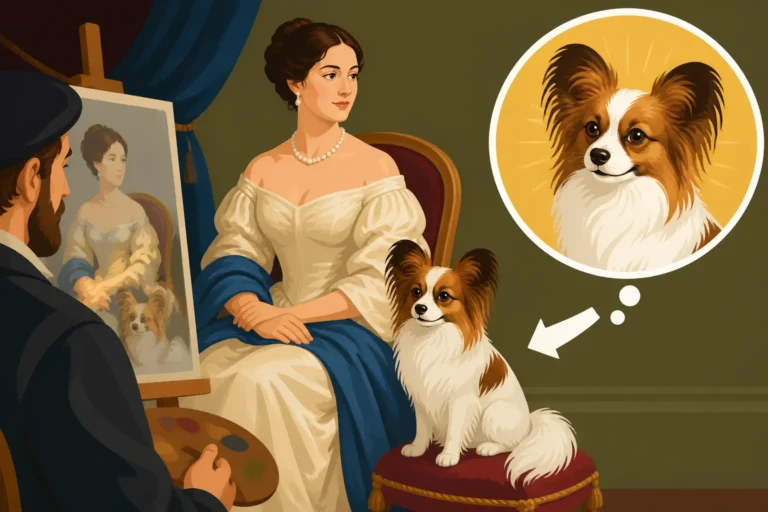
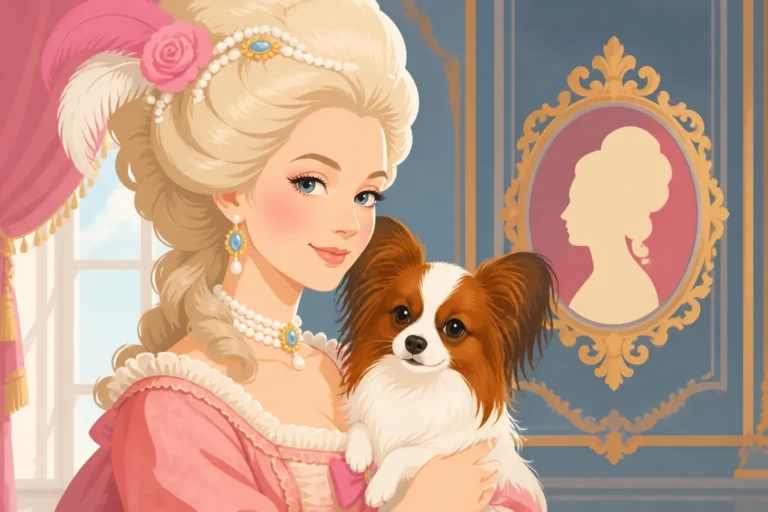
When most people think of a Papillon, they picture those magnificent, large ears, set high on the head, carried erect and obliquely (at an angle), resembling the spread wings of a butterfly. This is the characteristic that gives the breed its name – "Papillon" being French for butterfly. The standard typically describes these ears as finely feathered, well-opened, and pointing outwards from the sides of the head, never straight up like a Spitz. The cartilage needs to be strong enough to hold them proudly aloft, providing that elegant, alert expression we all adore. For many, this upright ear is the epitome of the breed's charm and intelligence, a hallmark of its sophisticated appearance. Breeders specifically work to produce puppies with this desired ear set, as it is a major component of the breed's identity and show success.
The Phalene's Charming Drop Ears: A Recognized Variation
What many don't realize is that the Papillon has a sister variety, the Phalene, where "phalene" means moth in French. The Phalene possesses beautiful drop ears, which are equally elegant and are not considered a fault. In fact, they are simply a recognized variation of the Continental Toy Spaniel, the overarching breed group that includes both Papillons and Phalenes. These ears are also set high, but instead of standing erect, they fall gracefully to the sides of the head. The feathering is just as rich, creating a soft, appealing frame for the face. It's perfectly normal for Why a Papillon and a Phalene Are Born in the Same Litter, and breeders will often have both ear types in a single litter. For those who love the Papillon's temperament but prefer a softer look, the Phalene offers an equally wonderful companion without compromising on breed authenticity or health. It’s important to remember that a Phalene is just as much a purebred Papillon as its upright-eared siblings; it simply expresses a different, equally valid ear carriage gene.
The Nuance of "Faulted" in the Show Ring
This is where the term "faulted" comes into play and causes a lot of confusion. In the context of dog shows, a "fault" is a deviation from the ideal breed standard. Some faults are minor, some are major, and some can even lead to disqualification. For Papillons, ears that are not fully erect (like a Papillon) or fully dropped (like a Phalene) fall into this grey area. An ear that is "half-up," "rose," or "broken" means that the cartilage isn't strong enough to hold the ear erect, or it doesn't drop cleanly. The top portion might flop over, or one ear might stand while the other doesn't quite make it. Such an ear carriage would certainly be penalized in the conformation ring for a Papillon attempting to be shown as the upright-eared variety. However, it wouldn't necessarily be a disqualification unless the ears were so severely misshapen or carried that they completely altered the characteristic butterfly expression. Judges look for the overall picture, and while half-up ears are a deviation, they typically result in a loss of points rather than an outright dismissal from the ring, depending on the severity and the individual judge's interpretation.
The Curious Case of Half-Up Ears: Why Do They Happen?
So, why do some Papillons end up with ears that are neither perfectly upright nor perfectly dropped? It's a question many owners ponder, sometimes with a touch of exasperation, as they watch their puppy's ears go through various stages of development.
The Role of Genetics in Ear Carriage
Ear carriage in dogs is largely a matter of genetics, though it’s not always as simple as a single dominant or recessive gene. It's believed that the erect ear of the Papillon is dominant over the dropped ear of the Phalene. This means that if a puppy inherits at least one gene for erect ears, it will likely have erect ears. However, incomplete dominance or modifier genes can play a role, leading to those intermediate "half-up" ears. Think of it like a spectrum, not just two distinct categories. If a puppy inherits a mix of genes that aren't quite strong enough to produce fully erect cartilage, or if there's a genetic predisposition for weaker cartilage, you might see those floppy tips or ears that simply can't quite commit to standing. Breeding two Papillons with a history of half-up ears in their lines, even if the parents themselves have perfect ears, could increase the likelihood of producing puppies with this trait. Whether Ear Type Runs in Papillon Lines is a common concern among breeders trying to maintain consistency in their lines. It's a complex dance of genes, and sometimes, nature throws a curveball.
Development Through Puppyhood: When Ears "Should" Go Up
The journey of a Papillon puppy's ears is a fascinating one, often fraught with suspense for their human companions. Typically, Papillon puppies are born with floppy ears. Their ears usually start to stand up around 3 to 6 months of age, coinciding with their teething period. This is because the calcium reserves in their body are being directed towards growing strong teeth, which can temporarily weaken the cartilage in their ears. It's not uncommon to see one ear go up, then the other, or for them to go up and then flop back down again repeatedly during this time. Owners often joke about their "doggie teen years" where nothing is quite settled. Adequate nutrition, including calcium and other minerals, is vital during this rapid growth phase, so ensuring your puppy is on a high-quality food, perhaps from a reputable brand like Chewy, is important for overall development, not just ears. However, even with the best nutrition, if the genetic predisposition for strong cartilage isn't there, the ears may never fully stand. Patience is key during this developmental window; what looks like a half-up ear at 4 months might still resolve itself by 8 months.
When a Papillon's Ears Can Change After a Year
While the most significant changes in ear carriage happen during puppyhood, it's not unheard of for a Papillon's ears to shift even after its first birthday. Stress, illness, or even significant changes in diet can sometimes impact cartilage strength, leading to an ear flopping that was previously erect. This is less common, but it can happen. For the most part, if a Papillon's ears haven't fully committed to standing by about 9-12 months, they are likely to remain half-up. Some owners might try various methods, like taping, to encourage the ears to stand, but Whether Taping a Papillon's Ears Is Allowed is a controversial topic and generally frowned upon in the show community, as it is considered altering the natural conformation. Plus, if the underlying genetic structure isn't there, taping is often a temporary fix, with ears flopping back down once the tape is removed. Ultimately, once a Papillon reaches maturity, its ear carriage is largely set, and while minor fluctuations can occur, a half-up ear is usually a permanent feature.
Navigating the Show Ring: Are Half-Up Ears a Dealbreaker?
For those with aspirations of showing their Papillon in conformation, the ear carriage is a significant factor. It’s not just about aesthetics; it’s about meeting the defined ideal that preserves the breed's historical look and function.
Understanding Minor vs. Major Faults
In the show ring, judges are tasked with evaluating each dog against the breed standard. Deviations from this standard are "faults." A minor fault might be something like a slightly incorrect head shape or a tail not quite carried high enough, while a major fault could be an incorrect bite or, indeed, a significantly incorrect ear carriage. For a Papillon, ears that are half-up would definitely fall under the category of a fault. The severity of the fault would depend on how "half-up" they are. If one ear is perfectly erect and the other flops, it's a more pronounced fault than if both ears are just slightly soft at the tips. The standard typically calls for "well-erected" ears for the Papillon variety, and anything less will be marked down. However, it's rarely a disqualifying fault unless it's so extreme that the dog no longer resembles the breed's characteristic look, or if there's evidence of human intervention like taping. So, while your Papillon might not win Best in Show with half-up ears, they can still be a cherished pet and a fantastic agility competitor. Whether a Papillon Can Do Agility With a Bad Knee is a more pressing health concern than ear carriage for performance.
The Judge's Perspective: More Than Just Ears
It's easy to fixate on one particular feature, especially something as striking as a Papillon's ears. However, a good conformation judge evaluates the entire dog, looking at its overall balance, movement, temperament, and adherence to the standard in all aspects – from muzzle length to tail set. While ear carriage is undeniably important for a Papillon, it's just one piece of a much larger puzzle. A dog with exquisite movement, a lovely head, and a confident demeanor might still place over a dog with perfect ears but other, more significant faults. Think of it like this: if your Papillon has beautiful structure, a solid topline, and moves like a dream, but one ear has a slight tip, a judge might view that as a less severe fault than, say, a dog with perfect ears but a sloping back or an unsound gait. Judges are looking for the best overall representation of the breed, not just a checklist of individual perfect parts. That said, in a highly competitive ring, ear carriage can certainly be the deciding factor between two otherwise exceptional dogs.
Whether a Phalene Can Be Shown Against a Papillon
This is a common question, and the answer is usually no, at least in major kennel club conformation shows. While the Phalene and Papillon are indeed the same breed (Continental Toy Spaniel) and can be born in the same litter, they are typically judged as two distinct varieties within that breed. This means that a Phalene, with its drop ears, would be shown against other Phalenes, and a Papillon, with its erect ears, would be shown against other Papillons. They do not compete directly against each other for Best of Breed or other major placements in the same class. This ensures fairness and allows judges to evaluate each variety according to its specific ear carriage standard. So, if you have a Phalene, you'd enter it in the Phalene variety class, not the Papillon class. This separation highlights the importance of the ear carriage as a defining characteristic for each variety.
Living with a Papillon Whose Ears Won't Cooperate
Beyond the show ring, the vast majority of Papillons are cherished family members. For these companions, whether their ears are perfectly erect or charmingly half-up makes absolutely no difference to their ability to bring joy and companionship into your home.
Does It Affect Their Health or Hearing?
This is a common, and very valid, concern for owners. The good news is that generally, half-up ears have absolutely no impact on a Papillon's health or its ability to hear. The slight flop or weakness in cartilage doesn't affect the ear canal, eardrum, or the delicate structures responsible for hearing. Your Papillon will still be able to hear that crinkling treat bag from three rooms away, and they'll definitely hear the doorbell before you do! Unlike some breeds with very heavy, pendulous drop ears that can be prone to ear infections due to poor air circulation, Papillons – even those with half-up ears – generally have open ear canals that allow for good airflow. Maintaining proper ear hygiene is still important for all dogs, regardless of ear carriage. Regularly checking and cleaning their ears with a veterinarian-approved solution, especially if you notice any redness, odor, or excessive scratching, is good practice. Products like ear wipes or cleaning solutions, readily available from retailers like Chewy, can help keep those ears healthy.
Embracing Individuality Beyond the Standard
It's easy to get caught up in breed standards, but for a pet owner, the most important "standard" is that your dog is a happy, healthy, and beloved member of your family. A Papillon with half-up ears is no less intelligent, no less affectionate, and no less a "Papillon" than one with perfectly erect ears. In fact, many owners find these unique ear sets add a special charm and character to their dogs. It becomes a distinguishing feature, making them even more memorable. When your Papillon gives you that sweet, tilted head with one ear up and one ear slightly flopped, it's just another endearing quirk that makes them uniquely them. Ultimately, the true value of your Papillon lies in its vibrant personality, its boundless energy, and the deep bond you share, not in the precise angle of its ear cartilage.
Practical Care for Any Ear Type
Regardless of whether your Papillon has upright, drop, or half-up ears, regular care is essential. Papillons are known for their beautiful, long ear fringe, which requires some attention.
Here’s a quick overview of ear care:
| Ear Type | Brushing Needs | Cleaning Needs | Common Concerns |
|---|---|---|---|
| Upright Ears | Daily or every-other-day brushing of fringe to prevent mats. | Weekly visual check, clean as needed with vet-approved solution. | Trapping burrs or debris in feathering, minor mats. |
| Drop Ears | Daily brushing of fringe, paying attention to the underside. | Weekly visual check, clean as needed, slight increase in moisture. | More prone to moisture buildup underneath, needing more frequent checks. |
| Half-Up Ears | Daily brushing of fringe, focus on the bend where mats can form. | Weekly visual check, clean as needed. | Similar to upright, but the bend can sometimes collect dirt or mat more easily. |
For all ear types, always be gentle, especially when brushing the delicate fringe. Using a soft-bristled brush or a comb with rounded teeth can prevent pulling. Whether a Papillon's Ears Should Be Brushed Separately is often recommended to ensure you get all the feathering. If you notice any redness, discharge, or a foul odor, it's always best to consult your veterinarian, as these could be signs of an infection that needs medical attention. Regular grooming supplies, including gentle ear cleaners and detangling sprays, can be easily found at pet supply stores or online through retailers like Chewy.
Breeding Considerations for Papillon Ear Carriage
For responsible breeders, ear carriage is one of many traits considered when planning a litter. The goal is always to produce healthy, well-tempered puppies that adhere to the breed standard as closely as possible, ensuring the future integrity of the Papillon breed.
Whether Ear Type Runs in Papillon Lines
Absolutely, ear type does run in Papillon lines. Responsible breeders meticulously study pedigrees and the ear carriage of their breeding stock, as well as their ancestors and offspring. While it's generally understood that erect ears are dominant over drop ears, the precise genetic modifiers that cause half-up ears are more complex. A breeder aiming for consistent upright ears will typically choose parents who both have strong, erect ear carriage and whose lines consistently produce the same. They will also consider Whether a Papillon Breeder Certifies Knees and other health tests, as health and temperament are paramount. If a breeder consistently produces puppies with half-up ears, even from parents with seemingly perfect ear sets, it suggests that there are recessive genes or modifiers at play in their lines that contribute to this trait. For pet owners, understanding that genetics plays a role can help alleviate concern that they somehow "caused" their dog's half-up ears through neglect or improper care.
Ethical Breeding Practices and Health First
Ethical breeding always prioritizes health, temperament, and genetic soundness above all else. While conformation to the breed standard is a goal, a healthy, happy dog is always the primary objective. A Papillon with half-up ears, assuming it's otherwise healthy, is not an unsound dog. Responsible breeders strive to eliminate serious genetic health issues like The Papillon Type of Progressive Retinal Atrophy and the CNGB1 Gene or Patellar Luxation Is the Papillon Problem You Will Actually Meet through careful testing and selection. They understand that while a fault in ear carriage might affect a dog's show career, it doesn't diminish its value as a companion or its overall quality of life. Some breeders might choose to breed a dog with a minor ear fault if that dog excels in other, more critical areas, such as temperament or health clearances, and if they can strategically breed to a partner who complements those traits and strengthens the desired ear carriage. The focus is always on producing the best possible puppies overall.
Understanding "Mismarked" vs. Healthy
It's important to differentiate between a "mismarked" dog and an unhealthy one. A mismarked dog is one that deviates from the breed standard in terms of color, markings, or physical traits like ear carriage, but is otherwise perfectly healthy. A Papillon with half-up ears would be considered mismarked for conformation purposes, but it doesn't mean the dog is "bad" or has underlying health problems directly related to its ear carriage. These dogs make wonderful pets and can still excel in performance sports like agility or obedience, where ear carriage is irrelevant. In contrast, a dog with a significant health issue, such as severe patellar luxation or a life-threatening genetic disease, is unhealthy, regardless of how perfectly its ears are set. A good breeder will always prioritize breeding healthy dogs, even if it means acknowledging that some puppies might not be conformation show stars. It's about honesty and transparency with prospective buyers, ensuring they understand what they're getting and celebrating every puppy for its individual merits.
Disclaimer
This article is for general informational purposes only and does not constitute professional advice. Laws, prices and regulations vary by location and change over time. Consult a qualified professional for guidance on your specific situation.