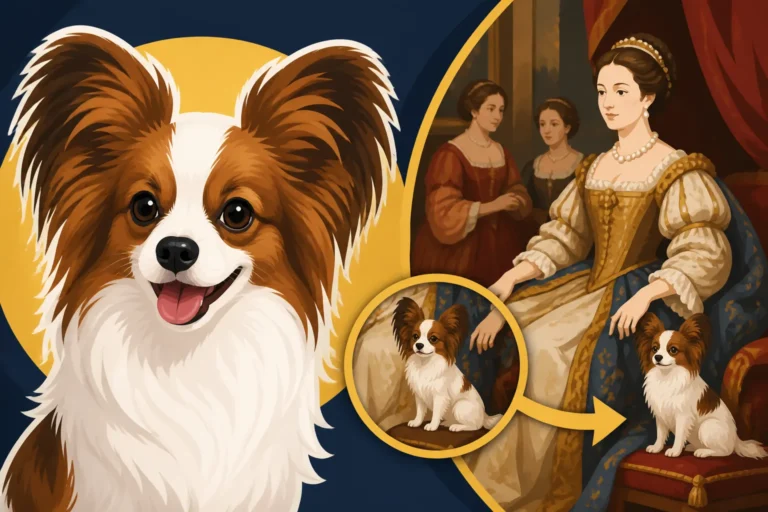
When the AKC Recognized the Papillon
Oh, the Papillon! These little dynamos with their magnificent butterfly ears often steal the show, whether they're prancing in a dog park or soaring over agility jumps. But have you ever wondered about the journey this charming breed took to become such a recognized and beloved fixture in the dog world, especially here in America? It's not just about a dog being cute; it's about a history of careful breeding and dedication that led to official recognition. This guide will walk you through the fascinating path of how the Papillon earned its place in the American Kennel Club, what that means for the breed, and why it matters to us today.
The Papillon's Long Journey: From European Courts to American Recognition
Before the Papillon ever graced an American show ring or curled up on a family sofa, it was a darling of European royalty and nobility. This breed didn't just pop up overnight; its history stretches back centuries, intertwined with the artistic and aristocratic movements across the continent. Understanding its origins helps us appreciate the careful steps taken to preserve and promote it, eventually leading to its formal acknowledgment.
Early Origins in Europe
Imagine the opulent courts of 16th-century Europe, where ladies in elaborate gowns and gentlemen in powdered wigs would often be accompanied by tiny, elegant dogs. These were the ancestors of our modern Papillons, known then as Dwarf Spaniels or Continental Toy Spaniels. They were particularly cherished in France, Italy, and Spain, often depicted in famous paintings by masters like Titian and Rubens. These early dogs, however, didn't always have the erect, butterfly ears we recognize today. Many of them were what we now call Phalenes, with charming drop ears, reminiscent of little moths. They were bred for companionship, treasured for their dainty size, affectionate nature, and keen intelligence. They offered comfort and a lively presence in an era when dogs were often companions for the wealthy. It's truly a rich history, showing just how deeply ingrained these little dogs were in the lives of European nobility. The Papillon Has Seven Hundred Years of Portraits Behind It
The Evolution of the "Butterfly"
The distinctive upright, fringed ears that give the Papillon its name (French for "butterfly") became more prevalent in the 17th and 18th centuries. This shift from the drop-eared Phalene to the erect-eared Papillon was likely due to selective breeding, though both varieties continued to exist and were even born in the same litters, a practice that still holds true today. The erect ears, with their delicate fringe, quickly captured hearts and solidified the breed's iconic look. This evolving appearance meant that breeders were constantly refining the dogs, striving for specific traits, both physical and temperamental. The transition wasn't just aesthetic; it marked a deliberate effort to create a distinct and recognizable type, separating it from its more generic "toy spaniel" ancestors. This dedication to specific characteristics is a cornerstone of breed development, laying the groundwork for future standardization. Why a Papillon and a Phalene Are Born in the Same Litter
The American Kennel Club: A Gateway to Breed Standards
For any dog breed to truly establish itself in the United States, recognition by the American Kennel Club (AKC) is a monumental step. It's not just a fancy badge; it's a formal acknowledgment that a breed has a stable genetic heritage, a consistent appearance, and a set of characteristics that distinguish it from others. This stamp of approval brings with it a whole new world of opportunities and responsibilities for breeders and owners alike.
What AKC Recognition Means for a Breed
When the AKC recognizes a breed, it means that breed is officially admitted into the AKC's studbook, and its purebred offspring can be registered. This isn't a casual process; it involves a meticulous review of the breed's history, its established breed standard (a detailed description of the ideal dog of that breed), and evidence of a sufficient population of purebred dogs in the U.S. that consistently meet that standard. For owners, AKC recognition means their dogs can compete in a vast array of AKC events, from conformation shows (where dogs are judged on how well they conform to the breed standard) to performance events like agility, obedience, and rally. It provides a framework for responsible breeding, helping to preserve the breed's health, temperament, and appearance for future generations.
It also gives enthusiasts a clear path for participation and a strong community. Without AKC recognition, a dog breed essentially exists in a more informal capacity, often as a "foundation stock" or a rare breed, unable to fully participate in the organized dog world. This formal recognition by the AKC opens doors for showcasing the breed's unique qualities and attracting new admirers, ensuring its longevity and proper care within established guidelines.
The Process of Becoming an AKC-Recognized Breed
The path to AKC recognition is a long and arduous one, often taking decades of dedicated effort by breed enthusiasts. It typically begins with a national breed club forming, committed to preserving and promoting the breed. This club must define and standardize the breed, creating a detailed written description known as the "breed standard." This document covers everything from physical appearance—size, coat, color, ear set—to temperament and gait. Next, the breed needs to demonstrate a sufficient population across the country, showing that it's being actively bred and maintained. This often involves maintaining detailed pedigrees and participating in events where judges can evaluate dogs against the proposed standard.
After meeting these initial criteria, the breed may enter the AKC's Foundation Stock Service (FSS), a stepping stone program designed for breeds working toward full recognition. During this phase, dogs can participate in certain AKC events, like companion and performance events, but not conformation shows. It's a probationary period, allowing the breed to gain exposure and demonstrate its consistency. Eventually, after years of meeting FSS requirements and demonstrating sustained interest and growth, the breed club can petition for full AKC recognition. This rigorous process ensures that only well-established and consistently bred dogs earn the coveted AKC stamp of approval, safeguarding the integrity of purebred dogs.
Papillon's Official Debut: The Year of AKC Recognition
After centuries of charming European royalty and evolving into the distinctive butterfly-eared companion we know, the Papillon officially landed its spot in American dog history. This recognition wasn't just a formality; it marked a significant moment for the breed's development and popularity in the United States, bringing it into the mainstream of purebred dogs.
The Specific Date and Significance
The American Kennel Club officially recognized the Papillon in 1915. This year marked the culmination of years of quiet dedication by early American fanciers who imported these delightful dogs and worked to establish their presence. Prior to this, Papillons were certainly in the country, but without official AKC status, they couldn't be registered, nor could they compete in most organized dog shows. This recognition instantly elevated the breed's status, providing a clear pathway for breeding, showing, and record-keeping.
The significance of 1915 cannot be overstated. It meant that a formalized breed standard was adopted, giving breeders a blueprint to strive for in terms of appearance and temperament. It also opened the doors for Papillons to compete in conformation events, which in turn spurred more interest in responsible breeding and ownership. For many breeds, AKC recognition is the turning point that moves them from a rare, niche presence to a more widely appreciated and understood part of the dog world. It provided a common goal for all Papillon enthusiasts and set the stage for the breed's growing popularity. When the AKC Recognized the Papillon
Initial Impact on the Breed's Popularity
Following its recognition in 1915, the Papillon gradually began to gain traction in the United States. While it didn't immediately become a household name, the ability to register dogs and compete in AKC events brought the breed to the attention of a broader audience. This initial period saw dedicated breeders working tirelessly to promote the Papillon, showcasing its intelligence, elegance, and vivacious personality. Magazines and dog show results would feature the breed, slowly but surely spreading the word about these unique little dogs.
The impact of this recognition wasn't just about numbers; it was about solidifying the breed's identity and ensuring its long-term future in America. It provided a platform for education, allowing potential owners to learn about the breed's specific needs and characteristics. Over the years, this steady growth in awareness led to a gradual increase in popularity, particularly among those seeking an intelligent, active, yet small companion. Organizations like the Papillon Club of America, formed even before official AKC recognition, played a crucial role in stewarding the breed through these formative years, fostering a community of responsible owners and breeders committed to its well-being. When the First Papillons Reached America
Life After Recognition: The Papillon in the Toy Group
Once officially recognized by the AKC, every breed is assigned to one of seven groups, based on its original purpose or shared characteristics. For the Papillon, with its history as a beloved companion dog for centuries, its placement was a natural fit within the Toy Group, where it shares company with other small breeds primarily bred for companionship. This grouping influences not only how the breed is shown but also how it's generally perceived.
Why the Papillon Is in the Toy Group
The AKC's Toy Group is specifically dedicated to small companion dogs. Think about breeds like the Chihuahua, Pomeranian, and Maltese – dogs bred to be cherished pets, often small enough to be carried or sit comfortably on a lap. The Papillon perfectly embodies this role. Historically, they were bred solely for companionship, never for hunting, herding, or guarding. Their delicate build, small stature, and affectionate, people-oriented nature made them ideal lapdogs and indoor companions for European aristocracy.
Even today, despite their surprising athleticism and intelligence that makes them excel in dog sports, their primary role for most families is that of a devoted companion. Their size makes them perfectly suited for apartment living and easy travel, while their charming demeanor ensures they are always close by, ready for a cuddle or a game. This historical context and their inherent traits clearly align with the criteria for the Toy Group, solidifying their classification and helping potential owners understand what kind of dog they are bringing into their lives. Why the Papillon Is in the Toy Group
The Breed Standard and Its Importance
With AKC recognition comes a definitive breed standard, a detailed written description of the ideal Papillon. This standard is not merely a suggestion; it's the blueprint that judges use in the conformation ring and a guide for responsible breeders aiming to produce dogs that best represent the breed. It covers every aspect: desired height (usually 8 to 11 inches at the shoulder), weight (typically 5 to 10 pounds), coat type (single, silky, flowing), ear set (large, rounded, butterfly-like for Papillons; dropped for Phalenes), tail carriage (arched over the back), and even temperament (alert, intelligent, lively).
The breed standard is crucial because it helps maintain consistency within the breed across generations. Without it, individual preferences could lead to significant variations, potentially compromising the breed's health or its unique characteristics. It ensures that a Papillon today, whether a show dog or a beloved pet, still embodies the qualities that have defined the breed for centuries. Responsible breeders adhere closely to this standard, using it as a tool to make informed decisions about breeding pairs, ensuring they are contributing positively to the breed's future. It's about preserving heritage and promoting healthy, type-correct dogs.
Distinguishing the Papillon: Phalene and Erect Ears
One of the most charming and sometimes confusing aspects of the Papillon breed is the existence of two distinct ear types within the same breed: the erect "butterfly" ear and the dropped "moth" ear. Both are recognized and cherished, reflecting the breed's long history and evolutionary path. Understanding this distinction is key to appreciating the full spectrum of the Papillon's beauty and heritage.
Understanding the Phalene Variety
The Phalene (pronounced fah-LAIN), meaning "moth" in French, is essentially the drop-eared variety of the Continental Toy Spaniel, which is the umbrella term for both Papillon and Phalene. Historically, these drop-eared dogs were the original form of the breed, popular in Europe long before the erect-eared version became fashionable. Today, Phalenes are born in Papillon litters and are considered part of the same breed, simply a different ear type. They share the same spirited personality, delicate build, and luxurious coat as their butterfly-eared siblings.
In some countries and kennel clubs, the Phalene is judged separately from the Papillon, but in the United States, under the AKC, both ear types compete together in the same conformation ring. This means a Phalene can, and often does, win alongside Papillons. Many owners find the Phalene's soft, soulful expression particularly endearing, and they often face less grooming hassle with their ears compared to the extensive feathering on an upright Papillon ear. These charming dogs remind us of the breed's deep historical roots and the continuity of its lineage.
The Importance of Ear Type in the Standard
While both erect and drop ears are accepted, the breed standard places a high degree of importance on the quality and carriage of those ears. For the Papillon, the ears should be large, set high on the head, with well-rounded tips and carried obliquely, resembling the wings of a butterfly. The inner edge of the ear should meet the skull at a forty-five-degree angle. The fringe on these ears is a defining characteristic, often long and flowing, adding to the "butterfly" effect. For the Phalene, the ears are also large and set high, but they are carried dropped, lying close to the head and heavily fringed.
The standard also specifies what constitutes a fault in ear carriage, such as ears that are too low-set, too small, or not properly carried for their type. Half-prick or partially erect ears on a Papillon are considered a fault, for instance. This strict adherence to ear type in the standard is vital because it's the most distinguishing feature of the breed, giving it its name and unique silhouette. It ensures that breeders continue to produce dogs that clearly represent the desired appearance and helps maintain the integrity of this iconic trait. Whether a Phalene Can Be Shown Against a Papillon
The Papillon's Enduring Appeal: What AKC Recognition Cemented
AKC recognition did more than just formalize the Papillon's status; it provided a framework for its enduring appeal and longevity in the dog world. It brought a focus to health, temperament, and responsible ownership that has allowed this delightful breed to thrive for over a century, captivating hearts with its intelligence and vibrant spirit.
Maintaining Breed Health and Integrity
One of the most crucial benefits of AKC recognition is the emphasis it places on maintaining breed health and integrity. Reputable breeders, often members of the national breed club, are strongly encouraged to conduct specific health screenings relevant to the Papillon. For example, What a Papillon Breeder Should Have Tested includes testing for Progressive Retinal Atrophy (PRA1), a genetic eye condition, and patellar luxation, a common knee issue in small breeds. By advocating for these tests, the AKC and breed clubs aim to reduce the incidence of hereditary diseases within the breed, ensuring that Papillons remain as healthy as possible.
This commitment to health screenings, along with maintaining accurate pedigrees, helps to preserve the genetic health and overall soundness of the breed. It allows potential puppy buyers to seek out breeders who prioritize the well-being of their dogs, rather than just focusing on appearance. When you visit a breeder, they should be transparent about their health testing results, readily sharing information about the parents of any litter. This dedication ensures that the Papillon's long lifespan and generally robust health continue for generations to come, creating happy, healthy companions.
The Papillon's Place in Modern Dog Sports
Despite their delicate appearance, Papillons are far from fragile couch potatoes. AKC recognition truly cemented their place in modern dog sports, highlighting their incredible athleticism, intelligence, and eagerness to please. These tiny dynamos frequently outshine larger breeds in activities like agility, obedience, and rally. Their small size makes them incredibly fast and agile, often navigating complex courses with breathtaking speed and precision. Starting a Papillon in Agility is a popular endeavor for many owners, who delight in watching their "butterfly" dogs soar.
This versatility has expanded the Papillon's appeal far beyond just being a pretty lapdog. They are keen learners and thrive on mental and physical challenges, making them fantastic partners for active individuals or families. Access to AKC-sanctioned events means that owners have numerous opportunities to bond with their dogs and showcase their talents. Whether it's weaving through poles or retrieving a dumbbell, the Papillon proves that big heart and intelligence can come in a very small package, making them one of the most exciting and rewarding breeds to work with in dog sports. You can find many Papillon owners at local trials, often purchasing quality training treats and equipment from pet supply retailers like Chewy to support their active dogs' needs.
Here’s a quick overview of some key Papillon facts:
| Characteristic | Description |
|---|---|
| AKC Recognition | 1915 |
| AKC Group | Toy Group |
| Origin | France/Belgium (Continental Toy Spaniel) |
| Ear Types | Papillon (erect, butterfly-like) and Phalene (dropped, moth-like) |
| Average Height | 8-11 inches at the shoulder |
| Average Weight | 5-10 pounds |
| Lifespan | 12-16 years typically |
| Temperament | Intelligent, lively, alert, friendly, graceful |
| Common Health Issues | Patellar Luxation, PRA1, dental disease |
As you can see, the Papillon's journey to AKC recognition is a story of enduring charm, careful breeding, and a commitment to preserving a truly special companion. Whether you're considering adding one to your family, or you already share your life with one of these magnificent dogs, understanding their history only deepens the appreciation for their unique place in the world of canines. From royal courts to the agility ring, the Papillon continues to flutter its way into our hearts, providing endless joy and companionship. You can always find excellent resources for their specific needs, from special tiny kibble to durable toys for their quick minds, on websites like Chewy.
Disclaimer
This article is for general informational purposes only and does not constitute professional advice. Laws, prices and regulations vary by location and change over time. Consult a qualified professional for guidance on your specific situation.