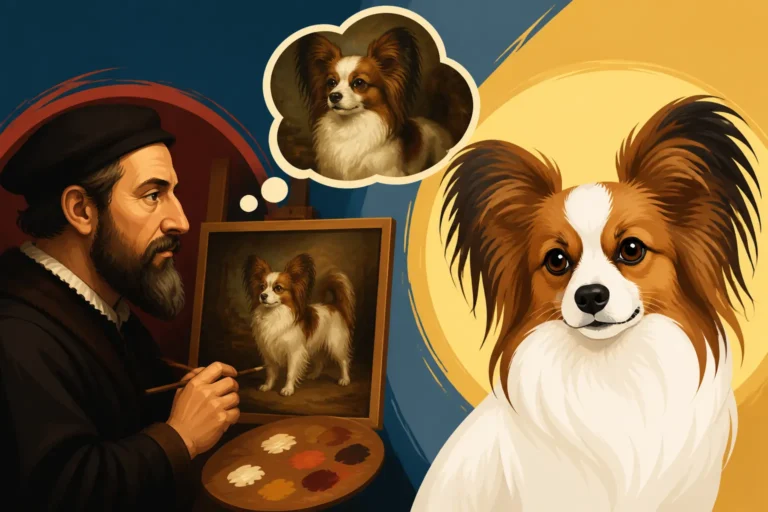
Which Century the Dwarf Spaniel First Appears In
It's always fascinating to look back into the origins of our beloved breeds, isn't it? When you gaze at your elegant Papillon with its distinctive butterfly ears, you might wonder just how far back that lineage goes. Trying to pinpoint the exact moment a breed like the Papillon "appeared" can feel like sifting through centuries of dust, especially when we're talking about dogs that predate formal breed registries. But if you're curious about which century the dwarf spaniel first appears in, you've come to the right place. We're going to dig deep into the historical records, primarily through the art and culture of Europe, to uncover the earliest documented presence of these charming little dogs that eventually evolved into the Papillon we adore today.
Tracing the Papillon's Ancestry Back Through Time
The journey to discover the Papillon's ancestors isn't like looking at a clear family tree; it's more like piecing together a beautiful, intricate tapestry woven through centuries of European history. These dogs weren't initially called "Papillons" or even "Phalenes," but were known broadly as "Dwarf Spaniels" or "Continental Toy Spaniels." Their story is intimately tied to royalty and nobility, making art a crucial historical document for us.
The Renaissance and the Rise of the Lap Dog
To understand when these tiny spaniels first emerged, we really need to set the scene: the European Renaissance, roughly from the 14th to the 17th century. This was a period of immense cultural, artistic, and social change, and it significantly impacted how people viewed and interacted with companion animals. Before this time, dogs were largely valued for their working abilities – hunting, guarding, or herding. But as societies became more refined and aristocratic wealth grew, there was a rising demand for small, affectionate companions that could be kept indoors. These "lap dogs" became symbols of status and luxury, cherished by ladies of the court and wealthy merchants alike.
It wasn't just about utility anymore; it was about companionship, a furry friend to adorn a noblewoman's lap or keep her warm in drafty castles. The gentle temperament of spaniel-type dogs made them ideal for this role, and selective breeding began to favor smaller sizes and more appealing features. This cultural shift laid the groundwork for the emergence and documentation of the dwarf spaniel. When you consider how dogs like the Papillon were valued then, it helps you understand why The Papillon Has Seven Hundred Years of Portraits Behind It.
Early Depictions: The 16th Century Breakthrough
When we look for concrete visual evidence, the 16th century truly stands out as the period when dwarf spaniels, clearly recognizable as ancestors of the Papillon, made their prominent debut in European art. It's in the masterpieces of this era that we start to see distinct, small, long-haired dogs with familiar features.
One of the most notable artists who frequently depicted these dogs was the Venetian painter Titian. His portraits, particularly of noblewomen, often feature a small, elegant companion dog nestled in their arms or at their feet. These dogs, sometimes referred to as "Titian Spaniels," show a striking resemblance to what would later become the Phalene variety of the Continental Toy Spaniel, characterized by their beautiful, flowing drop ears. These weren't just background props; they were active participants in the scene, reflecting the close bond between the dogs and their owners.
Imagine a grand portrait from the Venetian Republic, a lady in opulent silks, and there, almost stealing the show, a tiny dog with expressive eyes and long, silky fur. This isn't just a generic dog; it's the dog that would eventually evolve into our Papillon. These 16th-century paintings provide undeniable proof that small, spaniel-type companions were not only present but celebrated members of aristocratic households across Europe. This era truly marked their definitive appearance in the historical record.
The Spaniel Family Tree: A Broad Look
To fully appreciate the dwarf spaniel's place, it's helpful to understand the wider spaniel family. Spaniels, in general, are an ancient type of dog, believed to have originated in Spain (hence the name "Spaniel") and then spread across Europe. They were primarily bred for hunting, particularly for flushing game birds. Over centuries, these larger working spaniels diversified into various types, adapted to different terrains and hunting styles.
The dwarf spaniel, however, took a different evolutionary path. Instead of being bred for the field, it was selectively bred for size, temperament, and beauty to serve as a companion. This specialized breeding led to their smaller stature and delicate features, distinguishing them from their larger, more robust cousins. Think of it as a parallel development: while some spaniels were heading into the forests with hunters, others were heading into the luxurious salons of the nobility. This divergence, becoming more pronounced in the 16th century, is key to understanding the Papillon's unique history.
What Did These Early Dwarf Spaniels Look Like?
When we talk about the "dwarf spaniel" of the 16th and 17th centuries, it's important not to overlay our modern image of a Papillon directly onto them. While the genetic lineage is clear, their appearance had some distinct differences, primarily concerning their ears, which eventually led to the two varieties we know today: the erect-eared Papillon and the drop-eared Phalene.
Beyond the Butterfly: The "Squirrel Dog" Era
The early dwarf spaniels of the 16th and even 17th centuries were almost exclusively what we would now call Phalenes, meaning "moth" in French, due to their dropped, butterfly-like ears. Their ears were long, feathered, and lay flat against their heads, giving them a softer, more moth-like appearance rather than the distinctly upright, winged ears of the modern Papillon. In some historical texts, they were even referred to as "squirrel dogs" or "dogs with squirrel ears," likely referring to the shape and fluffiness of their tails, which curled over their backs much like a squirrel's.
These dogs possessed the same delicate bone structure, high-set tail carried over the back, and the luxurious, flowing single coat that is characteristic of the breed today. Their small size, alert expression, and obvious intelligence were already present, making them highly desirable companions. They were miniature versions of the larger spaniels, but refined for indoor living. Their coat was typically white with patches of color, much like today's Papillons, though the specific patterns might have varied. They were often depicted with long, elegant fringes on their ears, tails, and legs, which A Papillon's Coat Is All Fringe and No Undercoat continues to show today.
The Importance of Art History in Breed Tracing
Without formal breed clubs or written standards until much later, our primary window into the past appearance of these dogs is through the rich tapestry of European art. Painters like Titian, Paolo Veronese, Peter Paul Rubens, and Jean-Honoré Fragonard weren't just capturing human subjects; they were documenting the social fabric of their times, and small dogs were very much a part of that fabric.
These artists meticulously rendered the details of these dogs: their long silky coats, their large dark eyes, and their often elaborate ear feathering. Art historians and canine geneticists have worked together to study these paintings, identifying recurring physical traits that point to a distinct breed type. Imagine trying to understand dog breeds from 500 years ago without these visual records – it would be almost impossible! The continuity in depiction across different artists and regions confirms that these were not just random mutts but a recognized and valued type of dog. When you see a Papillon today, you're looking at a living link to those Renaissance masterpieces.
Life at Court: Their Role and Status
These early dwarf spaniels were very much the pets of royalty and the nobility. They weren't just cute companions; they held a significant place in the lavish lifestyles of European courts. They were often seen perched on the laps of queens, accompanying noblewomen on their daily rounds, or even included in family portraits to symbolize wealth and status.
Consider the court of King Louis XIV of France in the 17th century, where small dogs were very much in vogue. These dogs were pampered, often fed exquisite morsels, and adorned with ribbons and jewels. They were a constant presence, a warm body in a chilly castle, and a loyal confidante. Their role was purely companionate, offering comfort and affection in a world often governed by strict etiquette and political intrigue. This privileged existence ensured their careful breeding and continued refinement. They were certainly not expected to hunt or work the fields; their job was simply to be adored. Many of the dogs that eventually became Papillons found a loving home in French society, which makes sense, considering the name "Papillon" is French.
The Evolution Towards the Modern Papillon
The journey from the 16th-century dwarf spaniel to the modern Papillon is a story of gradual change, selective breeding, and the eventual rise of a distinct, iconic look. It wasn't an overnight transformation but a fascinating evolution spanning several centuries.
From Drop Ears to Erect Ears: The Phalene Connection
For a significant period, the drop-eared variety, the Phalene, was the dominant type of dwarf spaniel. This was the dog depicted in the Renaissance paintings and adored by European royalty. However, sometime in the late 17th or early 18th century, a new ear type began to emerge: the erect ear. This development is believed to have occurred through selective breeding, possibly with other small, erect-eared breeds like Spitz-type dogs, or perhaps as a natural mutation that breeders found appealing.
This erect ear, with its delicate fringes spreading out like a butterfly's wings, quickly captured the imagination of breeders and the public, particularly in France. The change was so striking that it eventually led to the distinction between the two types: the Phalene (moth-eared) and the Papillon (butterfly-eared). What’s truly remarkable is that these two varieties are still born in the same litters today, a testament to their shared ancestry. It's not uncommon to see a litter where some puppies have dropped ears and others have those iconic upright ears, illustrating that Why a Papillon and a Phalene Are Born in the Same Litter.
The "Papillon" Name: A Later Development
The name "Papillon," meaning "butterfly" in French, didn't become widely used until these erect-eared dogs gained significant popularity, likely in the 18th or 19th century. Before that, they were generically referred to as "Dwarf Spaniels," "Continental Toy Spaniels," or by regional names. The descriptor "Papillon" perfectly captured the visual appeal of their ears, which indeed resemble the outstretched wings of a butterfly. This shift in nomenclature signifies the point at which the erect-eared type became a distinct and recognizable entity, overshadowing its drop-eared cousin in popularity for a time.
Even today, the elegance of those butterfly ears is a defining characteristic, drawing people to the breed. The way the delicate cartilage holds the ear up, framed by silky fringe, is truly a marvel. You can find beautiful Papillon-themed items on sites like Chewy, from dog beds to toys, celebrating this distinctive feature.
European Influence and Breed Standardization
As the breed evolved, it continued to be cherished throughout various European courts. While it gained significant traction in France, it also had strong roots in Belgium, Italy, and Spain. Each region might have had slight variations or preferences in type, but the overall characteristics of a small, intelligent, long-haired companion dog remained consistent.
The process of breed standardization, where specific physical traits, temperament, and health guidelines are formally recognized, didn't really take hold until the late 19th and early 20th centuries. This is when formal kennel clubs began to establish breed standards, outlining the ideal appearance and characteristics of each dog. For the Papillon, this meant defining the correct size, coat type, ear set, and markings that we recognize today. This period of standardization cemented the Papillon's place as a distinct and beloved breed, ensuring its continuation for future generations.
Why Their Ancient Roots Matter Today
Understanding the Papillon's long and storied history isn't just a fun fact; it provides crucial insights into the breed's temperament, care needs, and even some of its enduring characteristics. Their ancient lineage has shaped the modern Papillon in profound ways.
Understanding Papillon Traits Through History
The Papillon's centuries-long role as a pampered companion dog in aristocratic households has fundamentally shaped its personality. These dogs were bred for close human interaction, for intelligence, and for a gentle but lively disposition. This explains why your Papillon is likely so attached to you, often following you from room to room. They are truly people-oriented dogs, thriving on companionship and interaction, a direct reflection of their historical purpose.
Their intelligence, which often surprises new owners, is also a product of their past. While they weren't herding sheep, they were expected to be attentive and responsive to their noble owners, making them quick learners. This is why The Papillon Is the Smartest Toy Breed There Is and excels in activities like agility and obedience. Their small size meant they had to be clever and engaging to hold their place in bustling, competitive court environments.
Moreover, their historical status as a lap dog meant they were protected from the harsh realities of working life, allowing their delicate features and luxurious coats to be preserved and refined. This explains their typically fine bone structure and single, silky coat, which, while beautiful, requires regular, gentle grooming. You'll find a wide array of grooming tools suitable for their delicate coats on Chewy, designed to keep them looking their best.
Preserving a Living Piece of History
For Papillon enthusiasts, owning one of these dogs isn't just about having a pet; it's about being a caretaker of a living piece of art history. Every time you look at your Papillon, you're seeing a direct descendant of the dogs painted by Titian, adored by European royalty, and cherished through centuries of change. This historical significance places a special responsibility on owners and breeders alike.
Ethical breeding practices are vital to ensure the breed's health and continued existence, just as they were for the noble families who initially cultivated these dogs. Understanding their genetic predispositions, such as The Papillon Type of Progressive Retinal Atrophy and the CNGB1 Gene or Patellar Luxation Is the Papillon Problem You Will Actually Meet, becomes even more important when you consider their precious lineage. Responsible breeders strive to maintain the health and temperament that have defined the breed for centuries.
By appreciating their ancient origins, we can better understand and care for our Papillons today. It helps us value not just their adorable faces and playful antics, but the deep historical thread that connects them to the grand courts of the past, making them truly special companions in the modern world.
| Feature | 16th Century Dwarf Spaniel (Phalene type) | Modern Papillon (18th Century onwards) |
|---|---|---|
| Ear Type | Drop ears, resembling a moth | Erect ears, resembling a butterfly |
| Primary Name | Dwarf Spaniel, Continental Toy Spaniel, | Papillon |
| Titian Spaniel, Squirrel Dog | ||
| Prominence in Art | Highly featured in Renaissance portraits | Featured in later Baroque/Rococo art |
| Key Characteristic | Elegant, long-haired drop ears | Striking, erect, fringed ears |
| Role | Status symbol, cherished lap companion | Loyal companion, excels in dog sports |
Disclaimer
This article is for general informational purposes only and does not constitute professional advice. Laws, prices and regulations vary by location and change over time. Consult a qualified professional for guidance on your specific situation.