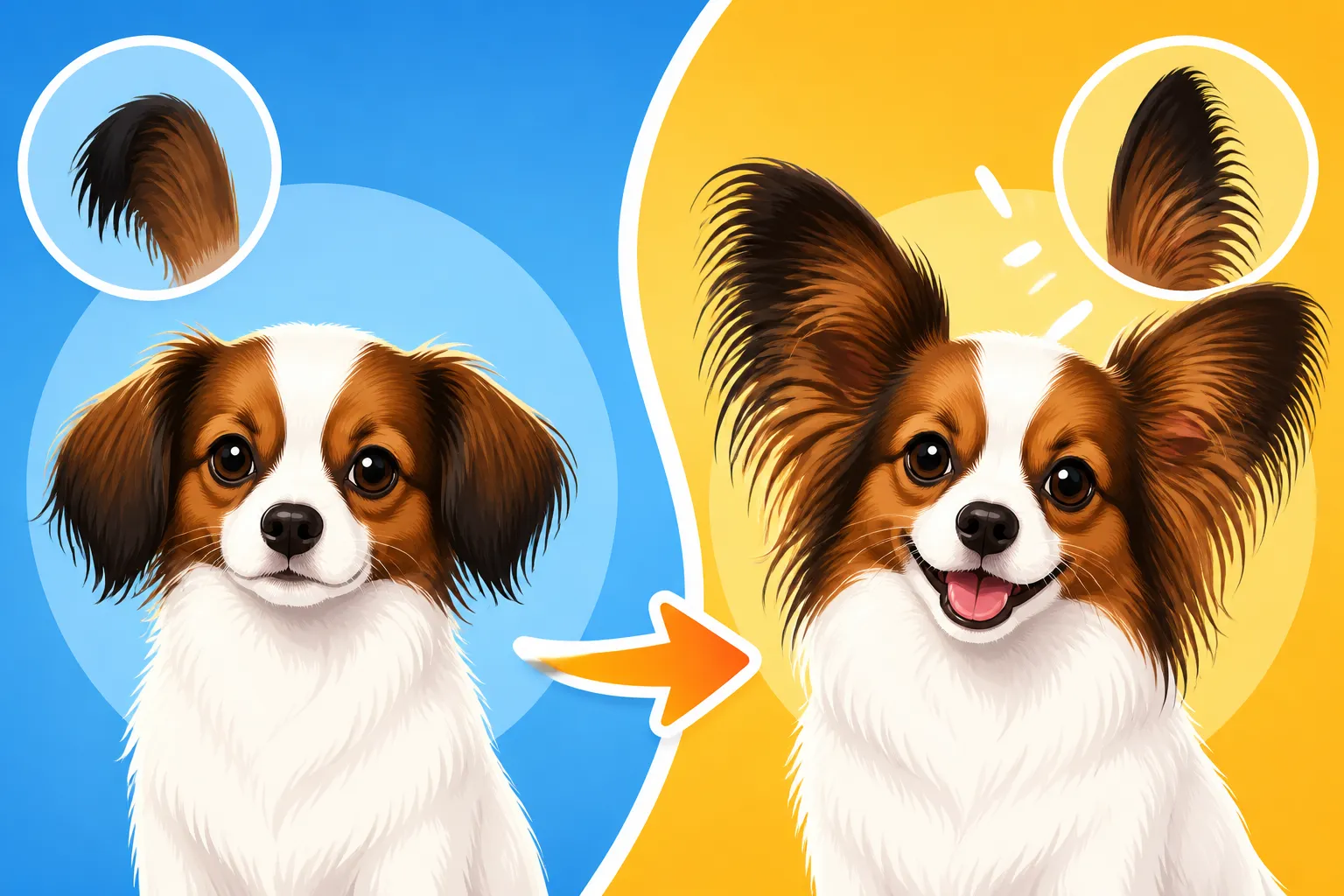
Whether a Papillon’s Ears Can Change After a Year
A Papillon’s ears may still look unsettled during puppyhood, and the long fringe can make their shape seem different from one day to the next. But if an adult Papillon’s ears noticeably change after its first birthday, it’s worth separating normal changes in appearance from a genuine change in ear position. This guide explains what can shift, what usually stays the same, and when to call your veterinarian.
What usually happens to Papillon ears as they mature
Ear shape is largely established by adulthood
Papillon puppies are not always born with the upright ears associated with the breed. The ears develop as the puppy grows, and the timing varies. Some stand up early; others take longer. During teething, it’s also common for ears to appear to tip, lift, or sit unevenly for a while. For more about that early stage, see When a Papillon Puppy's Ears Go Up.
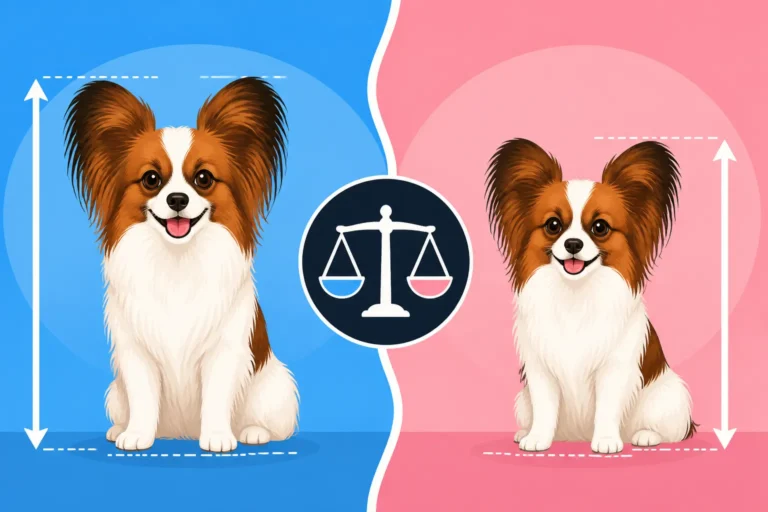
By around a year old, a Papillon’s ear cartilage and basic ear carriage are usually much more settled than they were in puppyhood. That doesn’t mean the ears look perfectly identical every day. A dog can hold one ear at a different angle while listening, greeting someone, or feeling uncertain. The important distinction is whether the ear’s resting position has actually changed, rather than simply moving with the dog’s expression.
There is natural variation within the breed, too. The drop-eared variety is known as the Phalene, and it is not simply a Papillon whose ears failed to finish developing. Learn more in Whether a Phalene Is a Separate Breed. Individual Papillons can also have ears that sit at different angles or look less dramatically upright than you might expect from a show photo.
Growth, fringe, and posture can change the way ears look
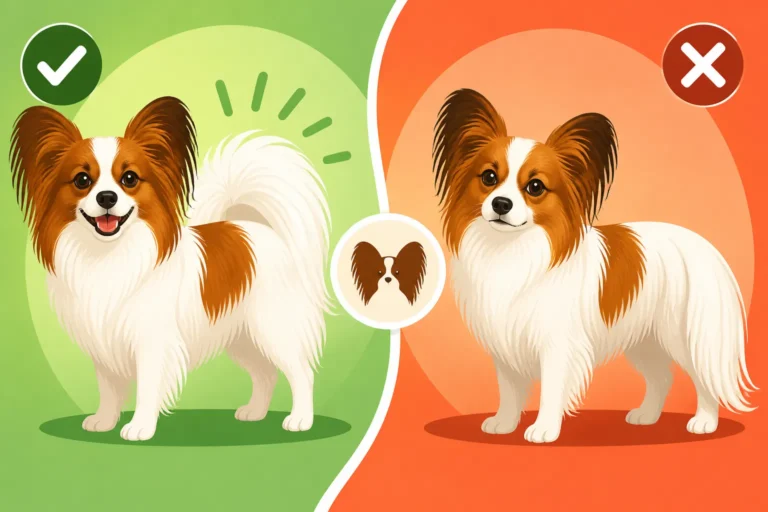
A Papillon’s ear fringe can make a real difference to its silhouette. As the feathering grows, it may hang differently, spread outward, or fall across the edge of the ear. When the hair is wet, freshly brushed, or tangled, the ear may seem lower or heavier even though the cartilage has not changed. Looking at the ear itself, rather than just the fringe, can help you judge what is going on.
The dog’s mood and attention also affect ear carriage. A Papillon that is alert to a sound may hold its ears forward, while a relaxed or worried dog may carry them differently. A photograph can exaggerate this effect: compare a picture taken during an excited greeting with one taken while the dog is resting, and the ears may look like they belong to different dogs.
To check for a lasting change, observe your Papillon when it is calm and standing naturally. Compare both ears over several days, and, if helpful, take photos from the same angle and at a similar time. A single unusual pose is much less informative than a persistent change in the ear’s resting position.
Why a Papillon’s ears might look different after a year
Hair and routine changes can alter the outline
Changes to the coat are among the least alarming explanations. A bath, grooming session, seasonal coat change, or a trim around the feet and body can make the ear fringe seem more prominent by comparison. The fringe itself can also tangle, flatten, or separate into strands, changing how much of the ear’s outline you can see.
Handle the fringe gently. Pulling at knots close to the ear can irritate the skin, so work slowly and avoid tugging. If your veterinarian recommends a particular ear-care product, a retailer such as Chewy may be one place to look for supplies; confirm that the specific product is appropriate for your dog before using it. Do not put cotton swabs or unapproved liquids down the ear canal.
A change in grooming habits does not usually alter the underlying ear cartilage. It can, however, reveal a shape that was previously hidden by hair, or make the ear appear to sit differently until the fringe settles again. For practical care tips, see Whether a Papillon's Ears Should Be Brushed Separately.
A persistent new droop can have a medical cause
If an ear that used to stand normally begins to droop and stays that way, consider whether anything else has changed. Ear discomfort, inflammation, swelling, or an injury can affect how a dog carries the ear. A dog may also hold its head differently when it is uncomfortable, making the ears appear uneven.
Watch for accompanying signs such as frequent head shaking, scratching, a strong odor, redness, discharge, tenderness, or a head tilt. These symptoms do not point to one specific cause on their own, but they are good reasons to contact your veterinarian. A sudden change is more concerning when it appears alongside pain, swelling, or a dog who seems unwell.
Avoid trying to straighten, tape, or manipulate an adult ear that has changed position. If a veterinarian recommends an ear-cleaning product, ask how and when to use it. A retailer such as Chewy may carry general ear-care supplies, but availability is not a substitute for choosing a product with veterinary guidance. The wrong cleaner can irritate an already sore ear or make it harder to assess.
| What you notice | What it may indicate | Sensible next step |
|---|---|---|
| Ears shift while the dog listens or changes mood | Normal movement and expression | Observe when your Papillon is relaxed |
| Fringe looks heavier, flatter, or more tangled | A change in coat appearance rather than cartilage | Gently check the ear’s outline and care for the fringe |
| One ear stays newly drooped | Possible discomfort, injury, or another change | Contact your veterinarian, especially if it persists |
| Drooping with odor, redness, discharge, or repeated scratching | Possible ear irritation or illness | Arrange veterinary advice rather than self-treating |
| A puppy’s ears change during teething | A developmental change can happen during puppyhood | Discuss concerns at routine puppy visits |
When to ask a veterinarian about an ear change
Look at the whole picture, not only the ear position
A slight difference in ear angle is not automatically a problem. Papillons use their ears expressively, and small asymmetries may be part of an individual dog’s normal appearance. What matters most is a clear change from your dog’s usual resting position, especially if it continues or seems to be getting more noticeable.
Check whether the ear feels swollen or warm, whether your Papillon pulls away when you touch near it, and whether the dog is shaking its head or scratching more than usual. Also notice changes in balance, appetite, energy, or willingness to be handled. You do not need to diagnose the cause; these observations can help your vet understand what changed and when.
If the ear is painful, markedly swollen, bleeding, or accompanied by a head tilt or balance problems, seek veterinary advice promptly. For a mild change without other signs, take a clear photo and keep an eye on it while arranging guidance if it persists. Don’t wait on home remedies to see whether a painful or inflamed ear clears by itself.
Make the appointment easier with a short observation record
Before calling the clinic, note when you first noticed the change and whether it happened suddenly or gradually. Write down whether one or both ears are affected, what the ear looks and smells like, and whether your dog is scratching, shaking its head, or reacting to touch. A short video of the behavior can be useful if the change comes and goes.
If the ear seems normal at the clinic, photos can help show how it sits at home. Take them in ordinary light, with your Papillon relaxed and facing the camera, rather than lifting or holding the ear in position. Avoid repeatedly checking a sore ear, since handling can increase discomfort.
Bring the names of any ear products you have used, including cleaners or drops. If you are shopping for a vet-recommended product through Chewy or another retailer, check with the clinic about the exact item and how to use it. Ear problems can look similar from the outside, while needing different care.
What not to do if an adult Papillon’s ears change
Don’t try to reshape mature ears at home
Taping is sometimes discussed in connection with puppy ears, but it is not a safe do-it-yourself fix for an adult dog with a new droop. Tape can irritate skin, pull on the fringe, or hide an underlying problem. The question of whether taping is appropriate in a puppy’s case is different from a sudden change in a mature dog; see Whether a Papillon's Ears Can Be Taped Up and Whether Taping a Papillon's Ears Is Allowed.
Do not use glue, tight wraps, or improvised supports. These methods can cause discomfort and may trap moisture or put pressure on delicate skin. If you are concerned about how your Papillon’s ears sit, a veterinarian can first check whether the ears are healthy. Appearance should not take priority over comfort.
Also avoid assuming that a change is simply “bad ear carriage” or a breed fault. Papillons vary, and a cosmetic judgment cannot explain a new physical change. For context on the range of ear positions, Whether Half Up Ears Are Faulted on a Papillon discusses variation in appearance, while Whether Ear Type Runs in Papillon Lines explores how ear type can relate to inherited traits.
Don’t clean or medicate an ear without a reason
Routine cleaning is not automatically necessary every time an ear looks different. Over-cleaning can irritate the skin, and using a medication intended for another dog—or leftover drops from an earlier problem—may be inappropriate. If the ear is painful, has discharge, or smells unusual, ask your veterinarian what to do before putting anything into it.
Keep grooming simple while you wait for advice. You can gently move the fringe aside to look at the outer ear, but stop if your dog flinches or resists. Keep the ear dry after bathing, and avoid pushing cotton swabs into the canal. If a vet-approved cleaner is recommended, follow the clinic’s directions rather than relying on a product label alone. Chewy may offer access to general grooming and ear-care supplies, but the right choice depends on the issue your veterinarian identifies.
A Papillon’s ears can look different after a year because of posture, coat, or a change in how the fringe falls. A lasting shift in the ear’s resting position—particularly one that appears suddenly or comes with discomfort—deserves a closer look. Focus on your individual dog’s normal, and ask your veterinarian about changes that persist.
Disclaimer
This article is for general informational purposes only and does not constitute professional advice. Laws, prices and regulations vary by location and change over time. Consult a qualified professional for guidance on your specific situation.