What a Correct Papillon’s Outline Looks Like
A Papillon’s outline is more than a pretty coat and butterfly-shaped ears. When you look at one standing naturally, the body should feel balanced, lightly built, and just a little longer than it is tall—not squat, fragile, or stretched out. This guide explains the proportions, features, and movement that create the breed’s characteristic silhouette, and how to tell structure from grooming or posing.
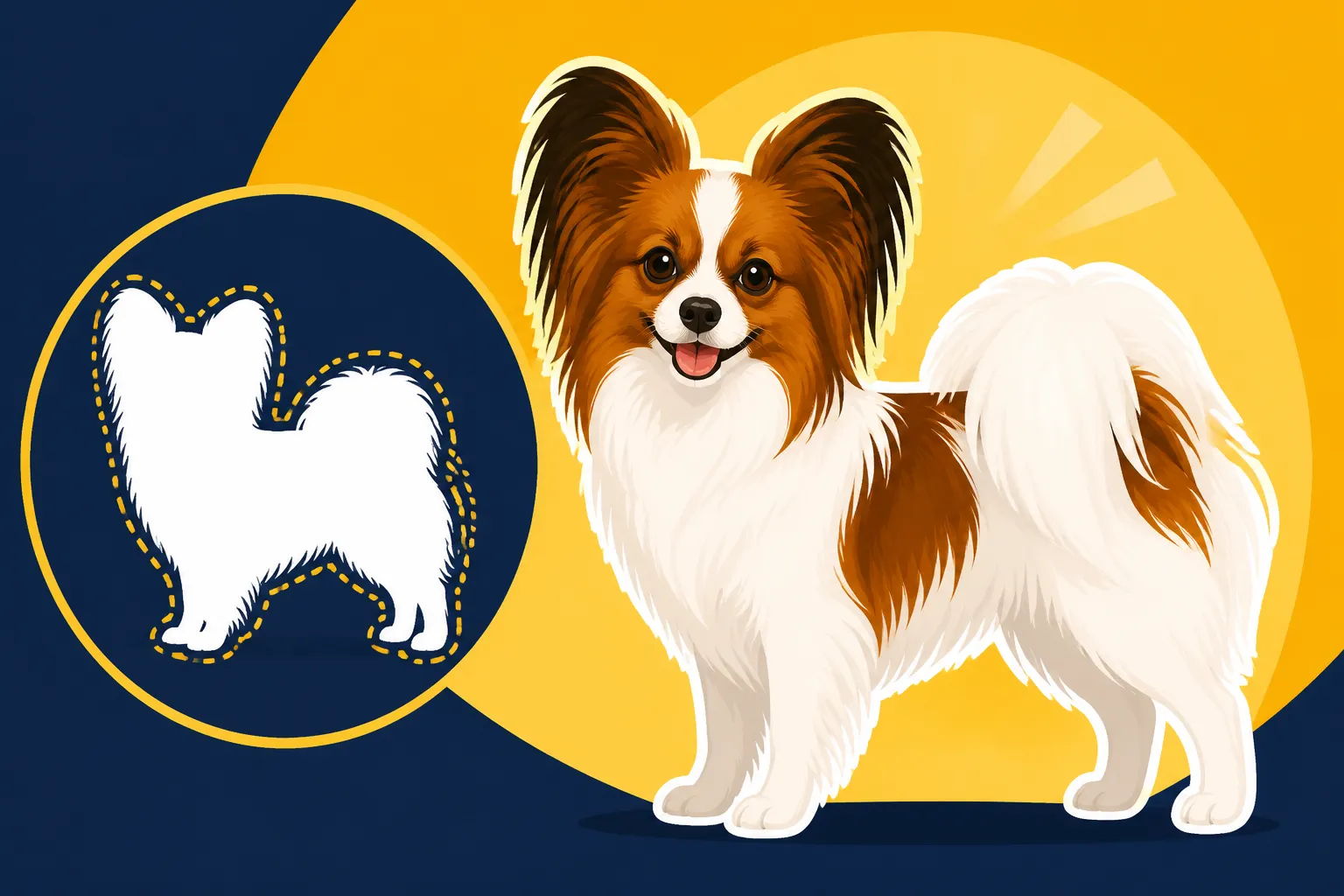
The overall shape of a correct Papillon
A lightly built body that is slightly longer than tall
The Papillon is a small, fine-boned dog, but “fine-boned” does not mean weak or delicate-looking. A correct outline combines refinement with enough substance to look athletic and capable. From the side, the body is generally a little longer from shoulder to rump than the dog is tall at the withers. It should not look extremely elongated, low to the ground, or boxy and square.
That slight length is easy to misjudge when a dog is standing at an angle, tucked under its coat, or posed with its feet unevenly placed. Try looking at the dog from the side on level ground, with all four feet supporting its weight. The outline should appear balanced through the shoulder, back, and hindquarters rather than as though the front and rear belong to different-sized dogs.
Height and weight provide useful context, but neither tells the whole story. A Papillon can be within the breed’s expected size and still have proportions that look unbalanced. For a closer look at those measurements, see What a Papillon Weighs and How Tall It Stands. The important visual question is whether the dog’s parts work together: enough leg for its body, a back that looks level, and an overall impression of lightness without frailty.
A level topline and a balanced chest
The topline is the line along the dog’s back from the withers toward the tail. In a correct standing outline, it should look level and firm rather than sharply sloping, roached, or sagging. A dog may shift its weight while standing, so one imperfect snapshot is not a reliable verdict. Watch the dog settle into a natural stance and observe whether the back remains balanced.
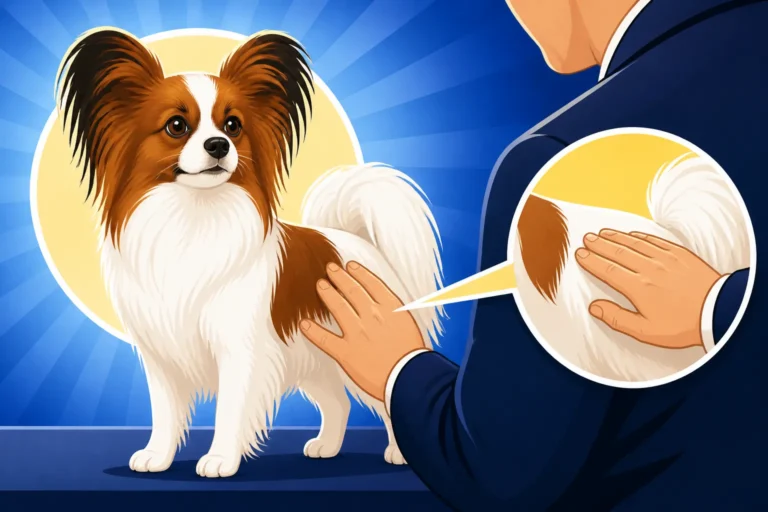
The chest and body should also contribute to a harmonious outline. Papillons are not deep, heavy-bodied dogs, but they should not look pinched or hollow. Their ribs and chest give the body shape beneath the coat, while the abdomen rises gently toward the rear. Long fringe can hide the body’s actual contours, so it helps to assess the dog both with the coat lying naturally and while it is moving.
A practical way to study the shape is to look at several views rather than trying to judge everything from the front. From the side, notice body length and topline. From the front, look for a balanced stance and legs that do not appear awkwardly narrow or bowed. From behind, see whether the hindquarters and legs look coordinated rather than twisted. Breed-specific details such as the feet can make a difference to the impression of balance; What Shape a Papillon's Feet Are explains what to look for there.
The features that complete the silhouette
Head, muzzle, and expression
A Papillon’s head should fit the body: refined and expressive, but not so small or exaggerated that it disrupts the dog’s balance. The skull and muzzle form a tapered, proportionate shape rather than a blunt face or a long, narrow snout. A clear but not extreme stop—the transition between forehead and muzzle—helps give the face its distinctive expression.
The ears are a major part of the breed’s outline, but they are not the only part. In a Papillon, the ears are carried erect and framed by long, silky fringe. The Phalene variety has dropped ears. Both ear types belong to the same breed, so a standing Papillon outline should not be treated as the only correct version of the breed’s overall appearance. For more on the head’s proportions, see What a Papillon's Head Should Look Like and How Long a Papillon's Muzzle Should Be.
Expression can be especially misleading when a dog is being groomed or photographed. Ear fringe may fan outward, and a carefully positioned head may make the muzzle appear shorter or longer than it is. Look for a natural, alert expression and proportions that remain harmonious when the dog turns or relaxes. The goal is not to find a face that matches one idealized photo, but to understand how the head fits the dog’s complete outline.
Tail, coat, and fringe
The Papillon’s plumed tail is carried high and arches over the back. Its feathering creates a striking part of the silhouette, but the shape of the tail itself matters too: it should contribute to a balanced outline rather than hang low or appear tightly tucked. A tail may move when the dog is excited, so watch how it is carried at rest and in motion instead of relying on a single moment.
Long hair can make the dog look broader or more heavily built than it is. The chest frill, ear fringe, culottes, and tail plume are characteristic furnishings, but they should not disguise the dog’s structure. A bath, blow-dry, or carefully arranged coat can change the outline in photographs. When you want to see the underlying proportions, observe the dog standing naturally before judging how much visual volume the coat adds.
Routine brushing helps keep the feathering clean and free of tangles, but grooming should not be confused with changing the dog’s shape. Owners may find combs and coat-care supplies through local pet shops or retailers such as Chewy. Whatever the source, the useful test is simple: the coat should be tidy enough to assess without making the dog appear artificially sculpted. For more about the tail’s carriage, read What a Papillon's Tail Should Be Carried and Whether a Papillon's Plume Should Fall Over Its Back.
How movement reveals whether the outline works
Look beyond the posed stack
A posed stance can help show a dog’s proportions, but it can also hide them. A handler may position the feet, lift the head, or adjust the tail, making the dog look more balanced than it does in ordinary movement. Conversely, a nervous dog that is fidgeting or standing on a slippery surface may look awkward in a still image even if its structure is sound.
For a more useful assessment, watch the Papillon walk at a comfortable pace on a level surface. The movement should appear light and free, with the legs coordinating naturally. Notice whether the back remains steady, whether the dog seems comfortable taking each step, and whether the front and rear work together. A correct outline is not just a shape the dog can hold for a photograph; it should make sense while the dog moves.
It can help to watch from the side, front, and rear. From the side, look for an easy stride and a body that stays balanced. From the front and rear, notice whether the legs track in a coordinated way rather than crossing or swinging noticeably outward. No single casual walk is a formal evaluation, but seeing the dog move can reveal proportions that a posed picture conceals. How a Papillon Should Move offers a closer look at the breed’s movement.
Compare outline with comfort and function
A breed outline should never be judged as if appearance were separate from comfort. A Papillon that moves freely and settles into a natural stance is giving you more useful information than one whose legs have been carefully arranged but whose movement looks tense. If a dog appears stiff, consistently avoids bearing weight, or moves differently from its usual pattern, that is a reason to ask a veterinarian about its comfort—not to make a quick conclusion about its conformation.
This distinction matters for owners as well as people interested in dog shows. A family may simply want to know whether their Papillon looks typical, while a prospective buyer may be comparing puppies, and a handler may be studying the dog’s ring presentation. In all three situations, repeated observations are more dependable than judging one angle or one photograph. If a puppy is still growing, its proportions may also change as it matures.
For a show dog, the written breed standard and an experienced judge’s assessment provide the relevant framework. Breed standards can differ in wording or emphasis between organizations, so avoid assuming every country uses identical language. How Papillon Standards Differ Between Countries provides context, while Which Faults Judges Penalize in a Papillon can help explain the difference between a minor departure from an ideal and a meaningful concern.
A simple way to assess a Papillon’s outline
Use the following checklist when looking at a Papillon in person or in a clear side-view photograph. It is a practical observation tool, not a substitute for a formal evaluation.
| Feature | What to look for | What can distort the impression |
|---|---|---|
| Body proportions | Slightly longer than tall, with a balanced appearance | Camera angle, uneven footing, or a heavily fluffed coat |
| Topline | Firm and generally level while standing naturally | A dog shifting its weight or being posed awkwardly |
| Bone and substance | Fine-boned but not weak or frail-looking | Comparing only by weight instead of overall proportions |
| Head and muzzle | Refined features that fit the size and shape of the body | A close-up photo or a head turned toward the camera |
| Tail | High carriage with a plume arching over the back | Excitement, a tucked tail, or a brief moment in motion |
| Movement | Light, coordinated movement with a steady, balanced body | Slippery floors, fatigue, stress, or an unfamiliar setting |
A step-by-step viewing routine
- Start with the whole dog. Stand back and notice the overall impression before focusing on individual features. Does the Papillon look balanced and lightly built, or does one part seem to dominate?
- Check the side view. Look at the relationship between body length and height, the topline, and the balance of the front and rear. Avoid relying on an image taken from above or below.
- Look at the head and tail separately. Ask whether they fit the body rather than drawing all attention away from it. Remember that ear type and coat furnishings influence the outline.
- Watch the dog move. A few natural steps can show whether the outline holds together beyond a posed stance.
- Consider the context. Age, coat condition, grooming, posture, and the surface underfoot all affect what you see. If evaluating a puppy or a dog with an unusual gait, seek knowledgeable guidance rather than making a diagnosis from appearance alone.
If you are comparing puppies, give yourself time to observe more than one stance and more than one moment. A puppy may be distracted, tired, or simply unsure about standing still. Ask the breeder to explain the parents’ structure and movement, and consider reviewing What a Papillon Breeder Should Have Tested for broader questions about responsible breeding and health information. For routine grooming, Chewy is one of the places owners may look for basic coat-care supplies, but grooming tools cannot change underlying proportions. A second look at the dog moving naturally is usually more informative than a perfectly arranged coat.
Ultimately, the correct Papillon outline is a complete picture: a body that is slightly longer than tall, a steady topline, refined but sturdy proportions, a characteristic head and tail, and movement that looks free and coordinated. The coat may make that picture more dramatic, and a posed stance may make it look polished, but balance is what ties the features together. If you are unsure about a dog’s structure, a breed-experienced judge or qualified professional can help you assess it in context. Chewy may be convenient for grooming supplies, but the best way to understand a Papillon’s outline is still to observe the dog from several angles and watch it move.
Disclaimer
This article is for general informational purposes only and does not constitute professional advice. Laws, prices and regulations vary by location and change over time. Consult a qualified professional for guidance on your specific situation.