How a Papillon Should Move
A Papillon can look light and springy as it moves, so a small hitch or odd hop may be easy to dismiss as a quirk. But changes in stride, repeated skipping, or reluctance to jump deserve a closer look. This guide explains what balanced Papillon movement looks like, what to watch at home, and when a gait change is worth discussing with your veterinarian.
What healthy Papillon movement looks like
A light, balanced gait rather than a bouncy one
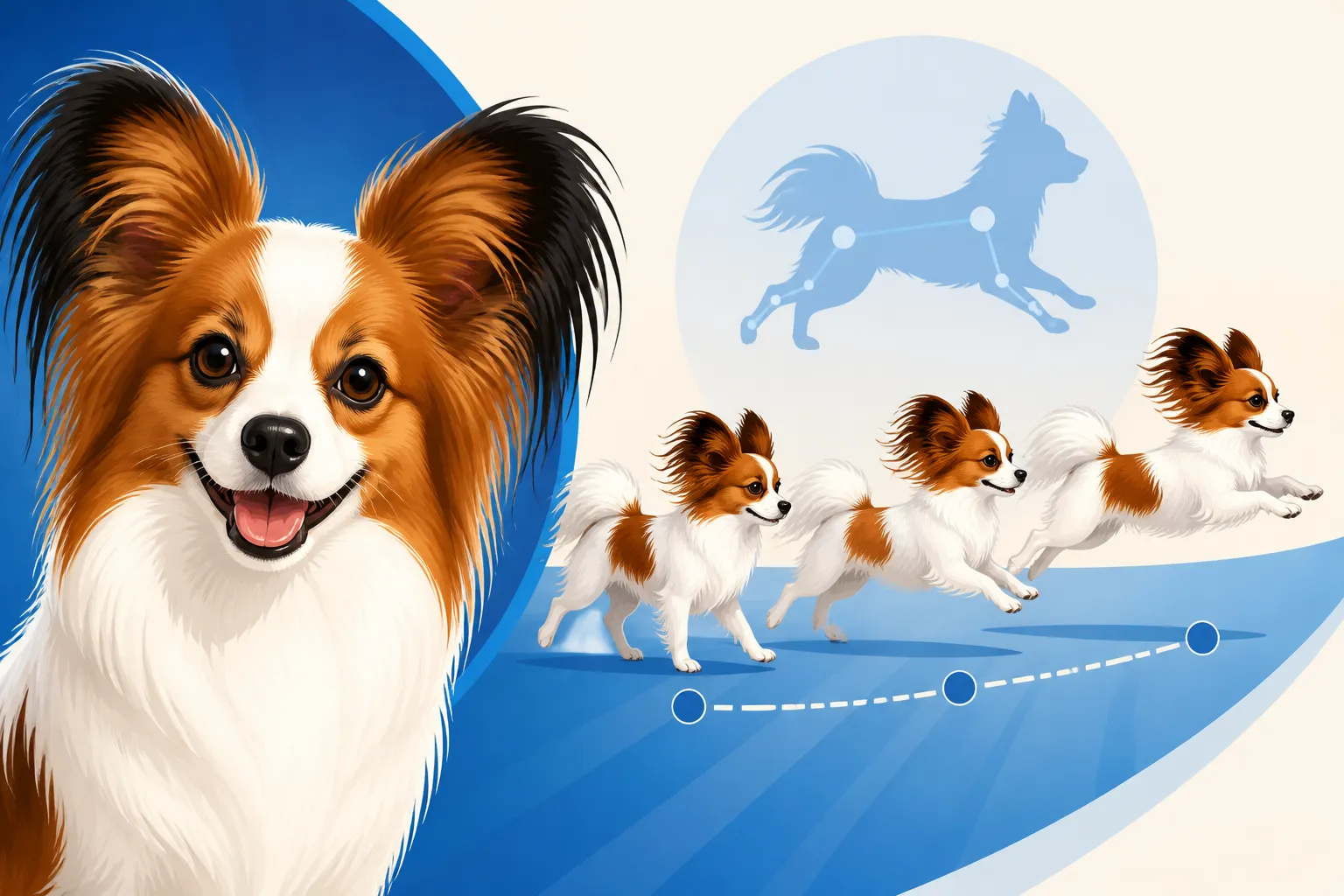
A sound Papillon should move freely and smoothly, with an impression of balance and ease. The breed is small, fine-boned, and active, but healthy movement should not look fragile or uncontrolled. From the side, you should see the legs reaching and pushing naturally, without an obvious hitch or repeated shortening of one stride. From the front and rear, the legs should track in a reasonably straight, coordinated way rather than swinging widely or crossing noticeably.
Papillons may look lively, especially when trotting toward a person or responding to something exciting. That energy can make their steps seem quick, but quick is not the same as choppy. A dog that is moving comfortably should be able to change pace, turn, and settle into a walk without favoring one leg. For a broader picture of the breed’s proportions, see What a Correct Papillon's Outline Looks Like and Why a Papillon Should Look Fine Boned but Not Frail.
A dog’s appearance can also affect how its movement reads. Long ear fringe, a flowing chest coat, or a tail plume can bounce and sway, making an otherwise ordinary stride look more dramatic. Try watching the legs themselves rather than judging the movement by the coat. A brief, slow-motion video can help you notice whether all four limbs are taking similar steps.
Looking from the side, front, and rear
A single view rarely tells the whole story. From the side, look for a steady rhythm and similar step length on both sides. The head and body should not lurch with every step, and the dog should not repeatedly lift or protect the same foot. A Papillon walking slowly may naturally take smaller steps than one trotting, so compare the dog with itself at the same pace rather than expecting every gait to look identical.
From the front, watch whether the forelegs move freely and whether one paw turns or lands differently each time. From behind, look for the hind legs pushing evenly and the pelvis staying fairly level. A little variation can happen when a dog turns, walks over uneven ground, or gets distracted. What matters more is a pattern that repeats during ordinary, straight-line walking.
For a useful home observation, let your Papillon walk at its normal pace across a level, nonslip surface. Watch a few passes from the side, then from the front and rear. Do not force a tired, nervous, or painful dog to keep walking for a better view. If the dog seems uncomfortable, stop and make a note of what you saw instead.
How to spot a gait change at home
Watch for repeated skipping, limping, or uneven steps
A Papillon that skips for one or two steps and then resumes a normal stride may have a kneecap that briefly shifts out of position, but that is not the only possible explanation. A paw irritation, strain, injury, or other joint problem can also change the way a dog walks. Repeated skipping is worth noting, especially if the same hind leg seems involved or the dog does it more often after exercise.
Other changes can be subtle: taking shorter steps on one side, holding a paw up, slowing down on walks, avoiding stairs, or hesitating before getting onto a familiar surface. Some dogs show discomfort mainly through behavior. Your Papillon might become less playful, ask to be carried more often, or stop jumping onto furniture it previously used without hesitation. Those changes do not identify a cause, but they help describe what is different.
A few questions can make your observations more useful:
- Does the movement change happen every time, or only occasionally?
- Does it involve a front leg or a hind leg?
- Does it appear after running, after resting, or at a particular pace?
- Does the dog return to a normal stride within a few steps?
- Is there pain, swelling, licking, or reluctance to put weight on the leg?
If you are seeing a recurring hop, Whether a Papillon Skips a Step When Running and Signs a Papillon's Kneecap Slips offer related information. They are useful starting points for understanding what to observe, not a substitute for an examination.
Record a short video and note the circumstances
A short video can be more useful than trying to recreate a limp in a clinic. Dogs sometimes move differently when excited, anxious, or in an unfamiliar room, and an intermittent issue may not appear during an appointment. If it is safe and your dog is comfortable, record a few seconds of walking in a straight line from the side and from behind. Keep the phone low enough to show the legs, and avoid chasing or startling the dog to make it move faster.
Write down when the change began and what was happening around that time. For example, did it start after a long play session, a slip on a smooth floor, or an ordinary walk? Note whether the stride improves after rest or worsens with activity. If your dog has a history of knee trouble, include that information when you contact the veterinary clinic.
A video is most helpful when it shows the dog’s natural movement, not a forced trot or repeated jumping. If your Papillon is clearly painful, cannot bear weight, or seems distressed, do not spend time trying to get perfect footage. Contact a veterinarian for guidance instead.
Common reasons a Papillon may move differently
Patellar luxation and the familiar hind-leg skip
Patellar luxation is a condition in which the kneecap moves out of its normal position. In some dogs, a brief skip or a moment of carrying a hind leg can occur, followed by a return to a more typical gait. The pattern may be intermittent, which can make it tempting to assume the dog has simply “worked it out.” Even so, recurring episodes should be discussed with a veterinarian, who can assess the knee and consider other possible causes.
How much the condition affects an individual dog varies. A dog that occasionally skips may still need an assessment, while a dog with persistent lameness or pain needs prompt attention. Avoid deciding from a video alone whether the problem is mild or whether treatment is necessary. The knee has to be examined, and the whole dog’s comfort and activity level matter. For more background, see What Patellar Luxation Does to a Papillon and Whether a Papillon With a Slipping Knee Is in Pain.
A veterinary examination can help distinguish patellar luxation from a paw injury, muscle strain, or another orthopedic issue. If a veterinarian identifies a knee problem, ask what signs to monitor, whether activity should be adjusted, and what follow-up is appropriate. Treatment decisions depend on the dog’s findings and daily function; surgery is not an automatic answer for every Papillon with an abnormal knee.
Paw, surface, nail, and fitness factors
Not every uneven step starts at the knee. A thorn, cracked nail, sore pad, or small cut can make a dog shorten its stride or lift a paw. Check the feet gently if your Papillon allows it, but do not pull at anything embedded or press on a painful area. A sudden limp after running or slipping may reflect an injury that needs veterinary attention, even if you cannot see an obvious mark.
The walking surface matters, too. Smooth hardwood, polished tile, or a slippery entryway can make a small dog cautious or unstable. Keep nails trimmed appropriately and clear loose rugs or clutter from the route your dog uses most. If you are shopping for a nonslip runner or paw-care supplies, Chewy is one place to compare options, but focus on a secure fit and a surface that stays in place rather than appearance alone. A runner that bunches up can create a new slipping hazard.
Body condition and conditioning also influence movement. Extra weight places more demand on joints, while a sudden jump in exercise can leave a dog sore or tired. Keep activity steady and suitable for your Papillon’s age and health, and ask your veterinarian before starting a demanding sport or returning to vigorous exercise after a gait change. For related guidance, see Whether Weight Affects a Papillon's Knees and Whether a Papillon Should Do Agility With a Bad Knee.
| What you notice | What it may suggest | A sensible next step |
|---|---|---|
| A brief, repeated skip on a hind leg | A knee issue such as patellar luxation is one possibility, but not the only one | Record when it happens and arrange veterinary advice if it recurs |
| A sudden limp after a slip or rough play | Injury, paw pain, or strain may be involved | Restrict strenuous activity and contact your veterinarian |
| A paw held up or persistent licking | A sore pad, nail problem, or other painful area may be present | Look gently for a visible issue and seek veterinary guidance |
| Hesitation with stairs or jumping | Discomfort, weakness, fear, or a change in confidence may be involved | Note what activities changed and discuss the pattern with your veterinarian |
| Wobbling on smooth floors | Slippery footing, weakness, or another issue may be contributing | Improve traction and seek advice if the problem continues |
When to contact a veterinarian and how to help
Know which changes need prompt attention
Contact a veterinarian if your Papillon has a limp that persists, a recurring skip, a clear change in activity, or signs of discomfort. Seek prompt advice if the dog suddenly cannot bear weight, has significant swelling, cries out, or appears distressed after an injury. Do not give human pain medication unless a veterinarian specifically instructs you to; some common medicines can be dangerous for dogs.
If the gait change is mild and intermittent, describe it clearly rather than waiting for it to become dramatic. Tell the clinic which leg seems affected, how often the change occurs, and whether it appears during walking, running, or after rest. Share a short video if you have one. The veterinarian may assess the dog’s gait, paws, joints, and range of motion, then recommend next steps based on the examination.
It is understandable to feel unsure when a dog seems fine again a few seconds after an odd hop. The return to normal does not prove that nothing is wrong. A simple record of dates, activity, and symptoms can help you make a grounded decision instead of replaying each moment in your head.
Make everyday movement safer without overrestricting
While you are arranging advice, keep your Papillon’s routine calm and predictable. Avoid intense chasing, repeated jumping, or slippery games if they seem to trigger the problem. Do not try to manipulate a kneecap or stretch a painful leg at home. If your dog is comfortable walking for bathroom breaks, keep those trips short and steady; if walking appears painful, contact your veterinarian for instructions.
Make the home easier to navigate. Secure rugs, block access to furniture that requires a high jump, and use a properly fitted harness for walks if it helps you guide your dog without pulling on the neck. Chewy may be one place to compare harness styles, but check that the harness does not rub, restrict shoulder movement, or allow the dog to back out of it. The right fit matters more than a particular style or brand.
For active Papillons, especially those doing agility or energetic play, return to normal activity gradually after a problem has been assessed. Ask the veterinarian what signs mean your dog should stop and rest. If the diagnosis involves the knee, Whether a Papillon Needs Knee Surgery may help you understand questions to bring to a veterinary discussion, while the dog’s individual examination should guide decisions. If you are gathering basic home-care supplies, Chewy can also be one shopping option for items such as nail-care tools; have a groomer or veterinary team show you safe handling if you are not confident trimming small nails.
A Papillon’s lively movement is part of its charm, but it should not require you to ignore a repeated skip or a new reluctance to move. Watching calmly, noting patterns, and getting veterinary guidance when a change persists are practical ways to protect comfort without assuming the worst.
Disclaimer
This article is for general informational purposes only and does not constitute professional advice. Laws, prices and regulations vary by location and change over time. Consult a qualified professional for guidance on your specific situation.