Signs a Papillon’s Kneecap Slips
It’s a heart-dropping moment when you see your lively Papillon suddenly pick up a hind leg, take a few awkward hops, and then put it down as if nothing ever happened. This common scenario often signals a condition called patellar luxation, more simply known as a slipping kneecap, a worryingly prevalent issue in many small breeds. This guide will walk you through the subtle and not-so-subtle signs that your beloved butterfly dog might be experiencing this discomfort, helping you understand what to look for and when to seek veterinary advice.
Understanding Patellar Luxation in Papillons
Patellar luxation is one of those frustrating conditions that seems to disproportionately affect our smaller canine companions, and Papillons are certainly no exception. It’s not just a minor inconvenience; it can cause significant discomfort and, if left unaddressed, lead to more serious orthopedic problems down the line.
What is Patellar Luxation?
To truly grasp what patellar luxation means, let's briefly picture the anatomy of your dog's knee. The kneecap, or patella, is a small bone embedded in the quadriceps tendon. It normally sits snugly in a groove at the end of the femur (thigh bone), called the trochlear groove. This groove acts like a track, guiding the kneecap smoothly up and down as your dog bends and straightens their knee. This smooth movement is crucial for the knee's proper function and for transmitting the force of the thigh muscles to the lower leg.
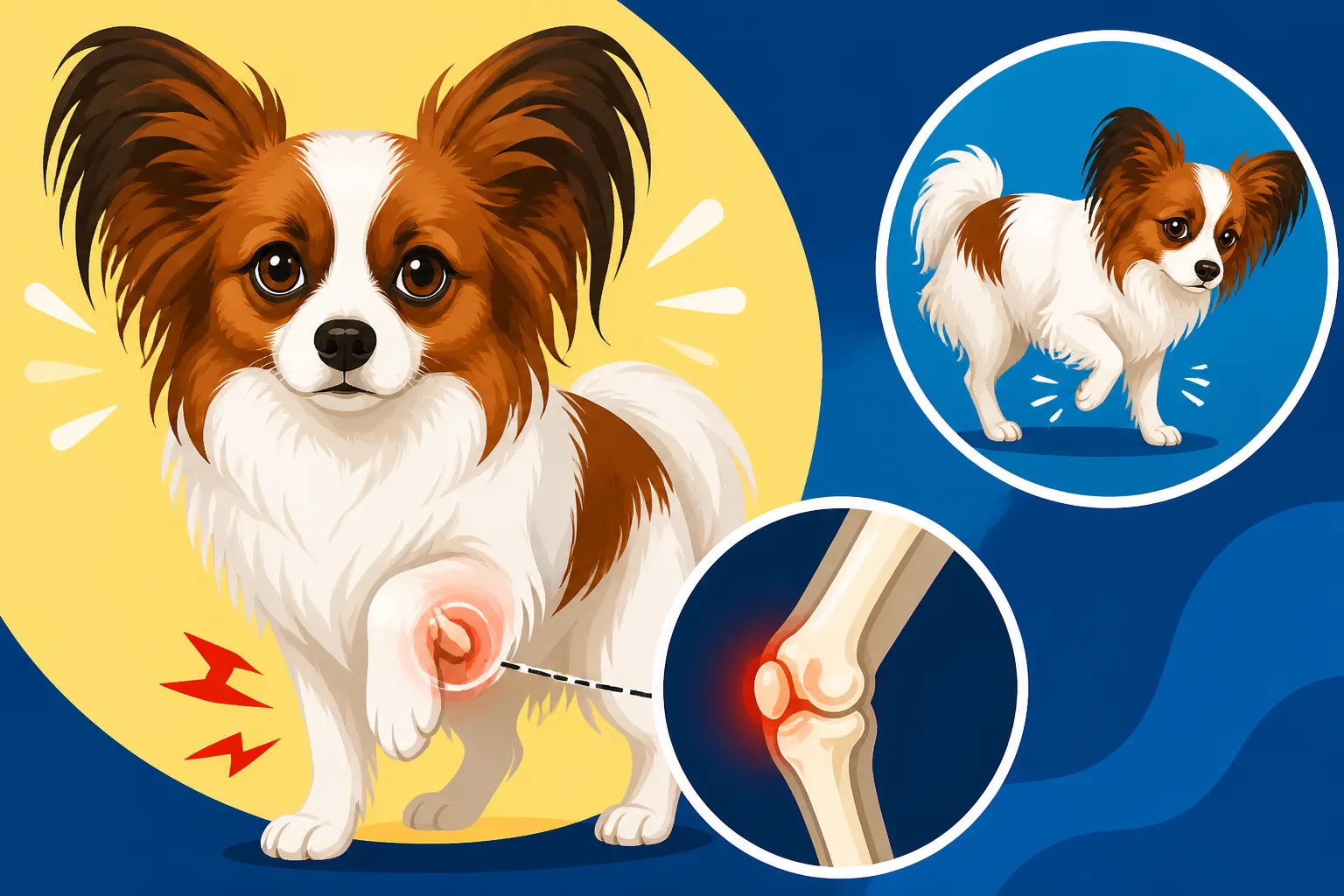
When a patella luxates, it means it has slipped out of this natural groove. This dislocation can occur either to the inside of the leg (medial luxation), which is most common in small breeds like Papillons, or to the outside (lateral luxation). Imagine a train wheel coming off its track; the knee joint simply can't function correctly with the patella out of place. This temporary or sometimes permanent displacement can range from a minor slip that quickly corrects itself to a severe dislocation that causes constant pain and lameness. It’s a mechanical issue that directly impacts your dog's ability to move comfortably and confidently.
Why Papillons are Prone to This Condition
Papillons, like many other toy breeds such as Chihuahuas, Pomeranians, and Maltese, unfortunately carry a predisposition to patellar luxation. This isn't usually due to an injury, but rather a combination of genetic and conformational factors that are inherent to their breed structure. One primary reason is often a shallow trochlear groove; if this groove isn't deep enough to hold the patella securely, it can easily pop out. Think of a shallow ditch for that train wheel – it’s much easier to derail.
Another contributing factor can be a misalignment of the quadriceps muscle group and its attachment points. If the tendon pulls at an angle instead of straight, it can constantly exert force that encourages the kneecap to slip sideways. Over time, this repeated luxation can also cause erosion of the cartilage and lead to early-onset arthritis, making the problem progressively worse and more painful for your Papillon. It’s why understanding that Patellar Luxation Is the Papillon Problem You Will Actually Meet is so important for owners, as early awareness can lead to better management. Responsible breeders are keenly aware of this genetic component and strive to breed dogs with sound knees, often performing specific health screenings to minimize the risk in their lines.
Early Warning Signs of a Slipping Kneecap
Catching patellar luxation early can make a huge difference in managing the condition and ensuring your Papillon remains as comfortable and active as possible. The initial signs can be subtle, almost fleeting, and easily missed if you’re not paying close attention to your dog's movement patterns.
The Intermittent Skip or Hop
This is perhaps the most classic and often the very first sign that a Papillon owner notices. You’re watching your energetic pup scamper across the living room, perhaps chasing a toy or heading to their food bowl, and suddenly, they pick up one hind leg and hop for a few steps on the other three. Then, just as quickly and mysteriously, the leg is back on the ground, and they're running as if nothing happened. This "skipping a step" is literally your Papillon's way of trying to reset their kneecap. When the patella slips out of its groove, the leg momentarily locks or becomes unstable. Your dog instinctively flexes the leg, shakes it, or skips to try and pop the kneecap back into place. Once it's back, they regain full use of the limb.
This intermittent nature is what makes it tricky. It might only happen once a day, or even once a week, and often during moments of high activity. You might wonder if you even saw it correctly, or if your dog just misstepped. But pay attention to that distinctive, almost graceful little hop – it’s a strong indicator. If you've ever seen a dog suddenly hold up a leg after a run, and then put it down again, you might have witnessed this very thing. For a more detailed look, consider reading Whether a Papillon Skips a Step When Running.
Reluctance to Use a Hind Leg
As patellar luxation progresses, or if the kneecap becomes more consistently displaced, that intermittent skip can evolve into a more noticeable and persistent reluctance to use the affected hind leg. You might observe a subtle limp that doesn't go away, or your Papillon might hold the leg up for longer periods after a luxation, rather than quickly putting it back down. This isn't just a brief interruption in movement; it's a genuine avoidance.
This reluctance can manifest in several ways: perhaps your Papillon hesitates before jumping onto the sofa, or they might struggle with going up or down stairs, showing obvious discomfort. They might sit with the affected leg held at an odd angle or avoid putting full weight on it when standing. It’s their way of telling you that something isn't quite right. It’s a clear signal that the knee joint is causing pain or instability. Understanding What Patellar Luxation Does to a Papillon can give you a deeper insight into the discomfort your dog might be feeling as these symptoms become more pronounced.
More Obvious Signs of Patellar Luxation
While the early signs of a slipping kneecap can be subtle, as the condition progresses or becomes more severe, the indications often become much more apparent and concerning. These are the signs that typically prompt immediate veterinary attention, as they point to a more significant problem within the joint.
Visible Deformity or Swelling
In more advanced cases of patellar luxation, particularly Grade 3 or 4, you might actually be able to see or feel that something is amiss with your Papillon's knee. If the kneecap is persistently out of its groove, the leg might appear visibly bowed or twisted. Instead of tracking straight, the limb might angle inward or outward from the knee. This visible deformity occurs because the bones and soft tissues around the knee adapt to the chronic displacement of the patella, leading to structural changes over time.
You might also notice swelling around the knee joint. This isn't always immediately obvious, especially with the Papillon's beautiful feathering, but a careful palpation might reveal warmth or puffiness compared to the other knee. Swelling indicates inflammation, which is the body's response to irritation and damage within the joint, often due to the constant rubbing of the luxating patella against the bone and cartilage. This persistent inflammation contributes to chronic pain and can accelerate the development of arthritis.
Crying Out or Signs of Pain
When the kneecap repeatedly slips out and grinds against the bone, or if it remains dislocated, it can be quite painful for your Papillon. You might notice them yelping or whimpering, especially when they move a certain way, when the kneecap is actively luxating, or if you gently touch or try to manipulate the affected leg. This vocalization is an undeniable sign of acute discomfort.
Beyond outright yelping, your Papillon might display other behavioral indicators of pain. They might become unusually withdrawn, less tolerant of handling, or even snap if you inadvertently touch their sore knee. They might lick at the area excessively, a common canine response to pain or irritation. A previously outgoing and playful Papillon might become reluctant to engage in activities they once loved, choosing to rest more or avoiding interaction. If you’re concerned about their comfort, it's wise to investigate further to understand Whether a Papillon With a Slipping Knee Is in Pain and how to alleviate it. Consulting your veterinarian promptly is crucial; early intervention can prevent further suffering and reduce long-term damage. Many pet insurance providers, like Healthy Paws, emphasize the importance of early diagnosis to ensure your pet gets the best care and to potentially cover treatments if the condition isn't pre-existing.
Behavioral Changes and Activity Limitations
A Papillon’s bright, energetic personality is one of their most endearing traits. They are typically bundles of joy, always ready for a game, a walk, or simply to follow you from room to room. When you notice a shift in these characteristic behaviors, especially those related to their activity levels, it's a significant red flag that something deeper might be affecting their well-being.
Decreased Activity and Playfulness
One of the most heartbreaking signs of a developing health issue in a Papillon is a noticeable decrease in their usual zest for life. If your dog, who once enthusiastically chased squirrels or zoomed around the house, suddenly starts turning down playtime, spending more time sleeping, or showing a general lack of interest in their favorite toys, it could be due to the discomfort of a luxating patella. They might still want to be near you, but their willingness to engage physically diminishes.
This change isn't necessarily a sign of them "getting old," especially if your Papillon is still relatively young. Owners sometimes misinterpret this lethargy as a natural slowing down, but for a breed known for its spirited nature and impressive lifespan (often reaching How Long a Papillon Lives), a significant drop in activity warrants investigation. The pain or instability in their knee makes running, jumping, and sudden movements uncomfortable, so they instinctively reduce these activities. It's their body telling them to take it easy, but this self-preservation comes at the cost of their joyful play. The prevalence of this condition in the breed is quite high, so knowing How Common Patellar Luxation Is in Papillons helps owners realize this isn't an isolated incident.
Difficulty with Normal Movements
Beyond just a general decrease in activity, you might start observing specific difficulties with movements that were once routine for your Papillon. This is where the mechanical impact of a slipping kneecap truly becomes evident in their daily life. Simple actions like getting up from a lying position might become a slow, arduous task, with visible stiffness or awkwardness as they try to put weight on the affected leg.
Stairs can become a major challenge. A Papillon who once bounded up and down steps might now hesitate, need encouragement, or even refuse them altogether. You might see them try to ascend or descend with an altered gait, perhaps taking one step at a time with the painful leg, or even bunny-hopping. Similarly, jumping onto or off furniture – a beloved pastime for many Papillons – might become a perilous endeavor. They might stand at the edge of the sofa, look longingly at you, but then be unable or unwilling to make the leap. This isn't stubbornness; it's a physical limitation caused by instability and pain in the knee joint. These difficulties indicate that the condition is no longer just intermittent but is impacting their quality of life. Healthy Paws can be a valuable partner in ensuring that when these signs appear, you have the financial support for diagnostic tests and treatment.
Diagnosing and Managing a Slipping Kneecap
Once you’ve noticed some of these concerning signs in your Papillon, the next crucial step is to get a professional diagnosis. A veterinarian is equipped to not only confirm the presence of patellar luxation but also to determine its severity and recommend the most appropriate course of action.
The Veterinary Examination
When you bring your Papillon to the vet with concerns about a slipping kneecap, the examination will typically begin with a thorough physical assessment. Your vet will observe your dog's gait, looking for any lameness, skipping, or abnormal leg carriage. They will then gently palpate (feel) and manipulate your Papillon's knees. During this process, they are looking for several key things:
- Crepitus: A gritty, crackling sound or feeling that indicates bone rubbing against bone, often due to cartilage damage.
- Pain Response: Your dog's reaction to the manipulation, such as yelping or pulling away.
- Degree of Luxation: The ease with which the kneecap can be manually moved out of its groove and, importantly, if it stays out or pops back in on its own.
Based on these findings, your vet will assign a grade to the patellar luxation, usually on a scale of 1 to 4:
- Grade 1: The patella can be manually luxated but pops back into place on its own. Clinical signs are usually minimal and intermittent.
- Grade 2: The patella luxates spontaneously or can be manually luxated. It remains luxated for a short period, causing the dog to skip, but can be manually repositioned or may return spontaneously.
- Grade 3: The patella is luxated most of the time but can be manually reduced (put back into place). When released, it re-luxates. Lameness is more consistent.
- Grade 4: The patella is permanently luxated and cannot be manually reduced. The limb often appears severely deformed, and the dog may walk with a crouched gait or be unable to extend the knee.
To further assess the extent of any joint changes and to rule out other orthopedic issues, your vet will likely recommend X-rays. While X-rays don't directly show the kneecap luxating, they provide crucial information about the alignment of the bones in the leg (femur, tibia, fibula), the depth of the trochlear groove, and any signs of arthritis or bone deformation that might have developed due to the chronic luxation. This comprehensive evaluation helps determine Which Grade of Luxation Needs Fixing in a Papillon and shapes the treatment plan.
Treatment Options and Long-Term Care
Once a diagnosis is made, your vet will discuss the various treatment options. These largely depend on the grade of luxation, your Papillon’s age, overall health, and the degree of pain and lameness they are experiencing.
For lower-grade luxations (Grade 1 and some Grade 2) where symptoms are mild or intermittent, conservative management might be recommended. This often includes:
- Pain and Anti-inflammatory Medications: To manage discomfort and reduce inflammation.
- Joint Supplements: Glucosamine, chondroitin, and omega-3 fatty acids can help support joint health and potentially slow the progression of arthritis.
- Weight Management: Keeping your Papillon at a healthy weight is paramount to reduce stress on the knee joints.
- Physical Therapy: Exercises to strengthen the quadriceps muscles and improve knee stability.
- Activity Restriction: Limiting jumping and high-impact activities.
For higher grades (Grade 3 and 4), or for Grade 2 cases that cause persistent pain and lameness, surgical intervention is often the most effective solution. The goal of surgery is to realign the patella and deepen the trochlear groove so the kneecap tracks correctly. Common surgical techniques include:
- Trochlear Wedge Recession/Block Recession: Deepening the groove where the patella sits.
- Tibial Tuberosity Transposition: Moving the bone attachment of the patellar ligament to realign the pull of the quadriceps.
- Fascial Overlap: Tightening the joint capsule to prevent the patella from slipping.
The decision Whether a Papillon Needs Knee Surgery is a significant one, and your vet will guide you through the pros and cons. Post-surgical recovery is a critical period, requiring strict rest, pain management, and often a comprehensive rehabilitation program, including physical therapy, to help your Papillon regain strength and mobility. Understanding How a Papillon Recovers From Knee Surgery is essential for owners, as commitment to the recovery protocol greatly influences the long-term success of the surgery. It’s also important to be aware that Whether a Papillon's Knees Get Worse With Age is a real concern, and even after surgery, ongoing management and monitoring are key. Having pet insurance like Healthy Paws can significantly ease the financial burden of both diagnostic tests and potential surgical costs, making it easier to afford the best long-term care for your furry friend.
| Patellar Luxation Grade | Common Signs | Recommended Action |
|---|---|---|
| Grade 1 | Intermittent skip/hop, mild or no pain | Monitor, conservative management (weight, supplements), vet check for baseline. |
| Grade 2 | Frequent skipping, mild lameness, occasional pain | Conservative management, consider surgery if pain/lameness persists or worsens, regular vet assessments. |
| Grade 3 | Consistent lameness, visible deformity, pain | Surgical correction usually recommended, pain management, rehabilitation. |
| Grade 4 | Severe lameness/inability to walk, significant deformity, chronic pain | Surgical correction strongly recommended, often complex, extensive post-op care. |
Preventing and Mitigating Patellar Luxation Risk
While patellar luxation can have a strong genetic component, there are proactive steps that both breeders and owners can take to minimize the risk and impact of this condition on a Papillon’s health and well-being.
Responsible Breeding Practices
The most effective way to combat genetic predispositions like patellar luxation is through responsible breeding. Ethical Papillon breeders prioritize the health of their lines and meticulously screen prospective parent dogs before breeding. This involves comprehensive orthopedic examinations by a qualified veterinarian, often including radiographs and a physical palpation of the patellas.
Reputable breeders will typically have their dogs certified through organizations like the Orthopedic Foundation for Animals (OFA). The OFA evaluates the knee joints and assigns a grade based on soundness, helping breeders make informed decisions. They should be transparent about these health clearances and be able to provide documentation for both the puppy’s parents. If a breeder avoids discussing health testing or cannot provide proof of OFA or equivalent certifications for patellar luxation, it should be a significant red flag. It’s absolutely vital to know What a Papillon Breeder Should Have Tested, and specifically Whether a Papillon Breeder Certifies Knees is a question every prospective owner should ask. By choosing a puppy from parents who have been screened and found to be free of significant patellar issues, you significantly reduce the likelihood of your Papillon developing the condition.
Environmental Modifications and Lifestyle Choices
Even with the best genetics, certain environmental factors and lifestyle choices can either exacerbate or mitigate the risk and severity of patellar luxation. As an owner, you have a crucial role in creating a safe and supportive environment for your Papillon, especially if they are predisposed to or have already been diagnosed with a mild form of the condition.
One of the simplest yet most impactful modifications is to manage your Papillon’s weight. Every extra ounce puts additional strain on delicate knee joints, increasing the likelihood of luxation and the progression of arthritis. Work with your vet to maintain an ideal body condition. Another key aspect is modifying their living space to prevent high-impact activities. Papillons love to jump, but repeated jumping off furniture or down stairs can put excessive stress on their knees. Consider providing ramps or steps for access to sofas and beds. For a small breed, even a seemingly small jump can be a significant impact. It’s wise to understand Whether a Papillon Should Be Stopped From Jumping Off Furniture and implement preventative measures like Whether Ramps Help a Papillon's Knees.
Furthermore, ensure your home has adequate traction. Slippery surfaces like hardwood floors can cause splaying and twisting of the legs, increasing the risk of luxation. Placing non-slip rugs or runners in high-traffic areas can make a big difference. Controlled exercise that builds muscle strength without excessive strain is also beneficial. Think gentle walks and structured play rather than uncontrolled, high-intensity sprinting or leaping. Regular nail trims are also important, as overgrown nails can alter a dog's gait and put abnormal stress on their joints. These seemingly small adjustments can collectively create a much safer and more comfortable life for your Papillon, potentially slowing the progression of patellar luxation and enhancing their overall quality of life. For unexpected vet visits and potential long-term care related to joint issues, having pet insurance like Healthy Paws can provide peace of mind and financial security.
Disclaimer
The information provided in this article is for general informational purposes only and is not a substitute for professional veterinary advice. Always consult with a qualified veterinarian for any health concerns or before making any decisions related to your pet's health and treatment.