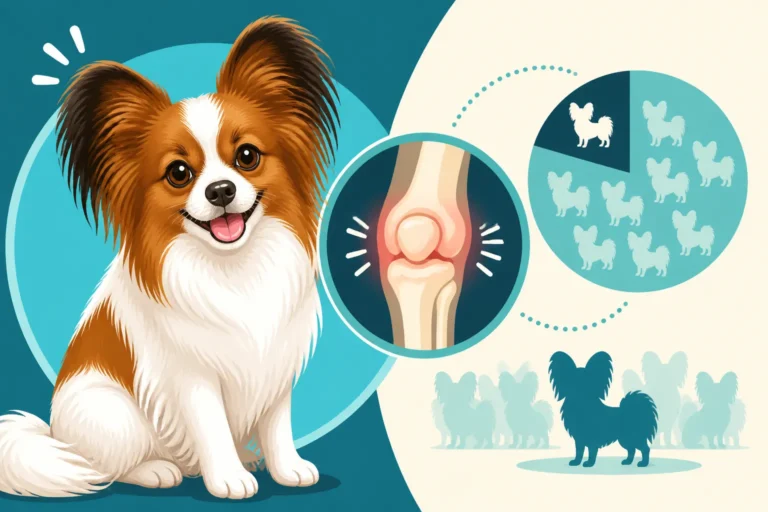
Whether a Papillon’s Fontanelle Stays Open
Bringing home a tiny, feather-light Papillon puppy brings immense joy, but gently cradling your new companion and feeling a small, soft, pulsing dip on the top of their skull can instantly trigger panic. An open fontanelle, often referred to in toy breeds as a molera, leaves many owners wondering if their dog is safe or living with a dangerous anatomical flaw. This comprehensive guide explains why a Papillon’s fontanelle stays open, how to distinguish normal skull development from underlying medical conditions like hydrocephalus, and how to protect your dog while enjoying a long, happy life together.
Understanding the Papillon Skull and the Open Fontanelle
The skull of a newborn puppy is not a solid bone sphere. Instead, it is made up of several individual cranial plates connected by fibrous joints called sutures. As a puppy grows, these bony plates expand and fuse together to enclose the brain safely. An open fontanelle occurs when the frontal and parietal bones fail to close completely, leaving a gap where membrane and scalp cover the brain instead of solid bone.
In toy breeds like the Papillon, incomplete cranial closure is surprisingly common during early puppyhood. Understanding how their delicate bone structure develops helps take the mystery and fear out of this unique physical trait.
What an Open Fontanelle Actually Is in a Toy Breed
In human babies, we commonly call this soft spot the fontanelle. In the dog world, particularly among toy breed enthusiasts and veterinarians, it is frequently called a molera. When you touch the top of a young Papillon’s head, right along the midline slightly behind the eyes, you may feel a smooth, shallow indentation. Depending on the individual puppy, this gap can range in size from a tiny pinhole to a spot the size of a dime.
Underneath this opening lies the protective dura mater membrane, subcutaneous tissue, and skin. While the brain is not floating completely exposed without shielding, it lacks the rigid shield of bone directly above the aperture. Touch it gently, and you might even feel a slight pulsation synced with the puppy’s heartbeat. While feeling this can be unsettling for a new owner, the soft spot itself is a natural structural variance resulting from miniature anatomy rather than an automatic sign of illness.
Why the Molera Forms in Papillons
The primary driver behind an open fontanelle in Papillons is selective breeding for small body size combined with the signature domed shape of the skull. Papillons possess a slightly rounded skull that gives them their expressive, refined look. When a breed is miniaturized down to a standard five to eight pounds, the skeletal system must adjust rapidly during embryonic and early postnatal development.
In many small dogs, brain growth outpaces the deposition of bone mineral in the cranial plates during the first few weeks of life. The cranial bones literally have to catch up to the expanding brain tissue underneath. In questions regarding body size and health, owners often ponder Whether a Smaller Papillon Lives Longer, but ultra-small structural proportions can mean bone ossification happens at a much slower pace. The soft spot remains open to allow the brain room to grow without increasing intracranial pressure during those vital early months.
Cranial Development Status in Toy Breeds
| Category | Skull Structure Characteristics | Primary Management & Health Focus |
|---|---|---|
| Normal Puppy Fontanelle | Small gap present at 8-12 weeks; | Gentle handling; monitor during routine |
| shrinks progressively over time | veterinary growth checks | |
| Persistent Open | Soft spot remains past 1 year; | Trauma prevention; avoid rough play, |
| Fontanelle | dog is otherwise neurologically | high jumps, or heavy pressure on head |
| completely healthy | ||
| Pathological Open | Large gap associated with domed | Immediate veterinary imaging (MRI/US); |
| Fontanelle (Hydrocephalus | head, wide eyes, and neurological | medical or surgical pressure reduction |
| Suspected) | deficits like ataxia or lethargy |
Timeline of Skull Closure and When to Be Concerned
A major source of stress for Papillon owners is wondering when—or if—that tiny soft spot on their puppy’s head is going to harden into solid bone. While many puppies close their fontanelles early on, others carry a persistent soft spot for their entire lives without experiencing a single health issue.
Knowing what is normal for skull closure allows you to track your puppy’s physical growth with confidence and know exactly when a veterinary evaluation is warranted.
Normal Soft Spot Closure in Papillon Puppies
When a Papillon puppy leaves the breeder at ten to twelve weeks of age, a small open fontanelle is frequently present. For the majority of puppies, bone deposition continues steadily as their diet supplies essential minerals and their overall skeleton matures.
In typical development, you can expect the soft spot to shrink significantly between three and six months of age. By six to nine months, as the dog approaches physical maturity, the bone plates usually fuse shut entirely or leave behind only a microscopic seam that cannot be felt through the skin.
However, in some perfectly healthy Papillons, the fontanelle remains open indefinitely. A persistent fontanelle means that bone fusion stops, leaving a small opening for the rest of the dog’s life. If the soft spot has not closed by their first birthday, it is likely to remain open permanently.
Persistent Open Fontanelle vs Hydrocephalus
It is vital to distinguish between a harmless, persistent open fontanelle and congenital hydrocephalus, often called “water on the brain.” Hydrocephalus occurs when cerebrospinal fluid (CSF) fails to drain properly, accumulating inside the brain’s ventricles and causing increased intracranial pressure. Because the pressure expands the brain, it forces the cranial bones apart, creating a large, prominent open fontanelle.
A persistent fontanelle on its own is simply an anatomical variation. Hydrocephalus, on the other hand, is a serious neurological condition. An owner monitoring a frail youngster should watch for overall developmental signs; review guidance on Signs a Papillon Puppy Is Not Thriving to understand general red flags.
When hydrocephalus is present alongside an open fontanelle, you will usually notice distinct physical and behavioral signs:
* A noticeably high, dome-shaped or “apple-headed” skull profile
* Eyes that appear to direct downward and outward, commonly known as the “setting sun” sign or strabismus
* Extreme difficulty with house training, learning basic tasks, or navigating open spaces
* Unsteadiness on their feet, falling over, or pressing their head against walls
* Seizures, unexplained vocalization, or sudden extreme lethargy
In very young puppies, severe hydrocephalus can co-occur with metabolic crashes. Owners of tiny puppies must also learn about Whether a Papillon Gets Hypoglycemia as a Puppy, as low blood sugar can compound neurological weakness in a fragile dog. If your Papillon has an open fontanelle but is bright, agile, quick to learn, and physically coordinated, the soft spot is overwhelmingly likely to be a simple, non-painful structural persistence.
Daily Life, Protection, and Care for a Papillon With an Open Fontanelle
Discovering that your adult Papillon has a persistent open fontanelle does not mean you need to wrap them in bubble wrap or keep them from enjoying life. Papillons are athletic, playful, and intelligent dogs that thrive on activity. However, living with an un-ossified area on top of the skull does require a few common-sense precautions to protect your tiny companion from accidental injury.
Protecting Your Papillon From Head Trauma
The main vulnerability associated with an open fontanelle is direct trauma to the exposed area of the brain. Solid skull bone normally absorbs and distributes physical impacts; without that shield, a direct blow to the soft spot can cause severe brain contusions, concussion, or internal bleeding.
To manage household safety effectively:
* Prevent high falls: Papillons love climbing on furniture, but an awkward landing or a tumble off a couch can lead to head injuries. Reading up on Whether a Papillon Should Be Stopped From Jumping Off Furniture will help you set up safe home routines using pet ramps and carpeted steps.
* Supervise play with larger animals: A sudden heavy paw stroke or rough play from a larger dog can land directly on top of a Papillon’s head. Keep play sessions strictly monitored or restricted to dogs of similar size and gentle temperaments.
* Educate children and visitors: Young children often pat dogs directly on top of the head with heavy hands or dropping toys. Teach children to stroke a Papillon gently under the chin or along the back, completely avoiding the top of the skull.
* Choose appropriate gear: Never use training tools or harnesses that could snap back or put pressure near the head. Always walk your Papillon on a well-fitted chest harness rather than a neck collar to protect both their delicate neck and head stability.
Veterinary Care, Monitoring, and Pet Insurance
Whenever you take your Papillon to the vet, remind the clinical team about the open fontanelle before any procedure, skull palpation, or grooming examination. When planning routine care or dental cleanings, toy dog owners often have questions like Whether a Papillon Is Sensitive to Anesthesia or wonder Why a Five Pound Papillon Is Harder to Anesthetize. Knowing your dog has an open fontanelle ensures the veterinary staff uses extra caution when securing head positioners or endotracheal tubes during procedures.
Because small dogs can be secretive when experiencing physical discomfort, understanding How a Papillon Hides Pain helps you spot subtle changes in posture, eye squinting, or reluctance to be touched on the head if an impact ever occurs.
When managing the financial aspects of owning a toy dog, enrolling in a comprehensive pet insurance plan early in your dog’s life is a smart strategy. Providers like Healthy Paws offer accident and illness policies that cover diagnostic imaging, emergency care, and specialty treatments. If your veterinarian ever needs to perform an ultrasound through the open fontanelle or schedule an MRI to rule out neurological conditions, having coverage through Healthy Paws ensures you can focus on your dog’s health rather than unexpected bills. Enrolling early with Healthy Paws before any potential neurological symptoms are documented prevents issues from being categorized as pre-existing conditions.
Breeding, Genetics, and Long-Term Outlook
Understanding how an open fontanelle affects the broader picture of Papillon health involves looking at genetics, breeding ethics, and what life looks like long-term for a dog with a soft spot.
Hereditary Patterns and Breeder Responsibilities
While an open fontanelle is not tied to a single clear-cut gene mutation, it is considered a polygenic trait linked directly to overall body size, bone density development, and cranial structure. Because it runs in specific bloodlines, responsible breeders pay close attention to skull development in their breeding stock.
A ethical breeder evaluates puppies as they grow and monitors cranial closure closely. When selecting future breeding pairs, responsible breeders prioritize structural soundness, healthy bone density, and standard anatomical proportions. Exploring What a Papillon Breeder Should Have Tested provides a fuller picture of the health certifications and structural evaluations top breeders use to safeguard the breed.
While a tiny, non-pathological persistent fontanelle in a pet Papillon is not a life-threatening defect, dogs with excessively large soft spots or any history of hydrocephalus should never be included in a breeding program.
Living a Full Life With a Persistent Soft Spot
It is easy for owners to focus on what could go wrong, but the practical reality is reassuring. Thousands of Papillons with persistent open fontanelles live vibrant, active lives that span fifteen years or more. They run, play, learn complex tricks, and bring endless joy to their families without ever suffering a complication from their unique skull structure.
By keeping an eye on household safety, using pet ramps, maintaining regular vet checkups, and holding coverage with a reliable provider like Healthy Paws for peace of mind against unexpected accidents, you can ensure your Papillon stays happy and safe. An open fontanelle is simply a small quirk in a very small dog—one that requires a touch of extra mindfulness, but never stands in the way of a wonderful life together.
Disclaimer
This article is for general informational purposes only and does not constitute professional advice. Laws, prices and regulations vary by location and change over time. Consult a qualified professional for guidance on your specific situation.