What a Papillon Barks At
One of the things many Papillon owners, or those considering bringing one of these charming little butterfly dogs into their lives, quickly realize is just how much they have to say. That adorable, intelligent face might hint at quiet contemplation, but often, it comes with a surprisingly loud vocal chord. It can be incredibly frustrating when your pint-sized companion seems to bark at every leaf blowing past the window or every distant siren, making you wonder if you’ll ever have a moment of peace. This guide aims to shed light on the myriad reasons why your Papillon barks and what specific triggers set them off, offering understanding and practical approaches to manage this vocal trait.
Understanding the Papillon's Vocal Nature
Before we dive into the specific things that make your Papillon vocalize, it's crucial to understand the breed's inherent tendencies. Papillons are not just pretty faces; they are intelligent, alert, and surprisingly bold dogs for their size. This combination often manifests as a strong inclination to communicate, and barking is a primary tool in their expressive arsenal. They were originally companions to royalty, yes, but their small size didn't mean they were just silent lap warmers. They were keen observers of their surroundings.
The Watchdog Instinct in a Small Package
Many people assume that because a Papillon weighs less than ten pounds, it won't be much of a watchdog. Oh, how wrong they are! Papillons possess an alert nature that rivals many larger breeds. They are acutely aware of their environment, constantly taking in sights, sounds, and even smells that might go unnoticed by us or other, less vigilant dogs. This keen awareness, coupled with their desire to protect their perceived territory and family (that's you!), makes them excellent, albeit sometimes overzealous, alert barkers. They genuinely believe it's their job to tell you when something is amiss, whether it's a genuine threat or just a plastic bag dancing in the wind.
This instinct isn't a flaw; it's a part of their heritage. They are highly intelligent, and their brains are always processing. When they detect something unusual, their first response is often to sound the alarm. This isn't aggression, typically, but rather a warning. If you’ve ever wondered How Much a Papillon Barks, you’ll quickly find out it’s often tied to this inherent alert system. They want you to know everything that's going on, even if it's just the mail carrier three blocks away.
Sensitivity to Their Environment
Papillons are often described as sensitive dogs, and this sensitivity extends to their physical and auditory environment. Loud noises, sudden movements, or even changes in routine can be more impactful for a Papillon than for a less sensitive breed. Their small stature means they can perceive the world from a different, often more vulnerable, perspective. A large truck rumbling past the house can sound like a monster approaching. A sudden gust of wind rattling the windows might be interpreted as an intruder.
Their delicate constitution also means they can be more affected by things like temperature changes or subtle shifts in light, though these are less direct barking triggers. This high level of awareness, while making them incredibly responsive to training and owners, also means they can be easily overstimulated, leading to vocal outbursts. If your Papillon seems to be barking at "nothing," it's usually because they've picked up on something subtle that you haven't.
Barking at the Door and Strangers
This is arguably the most common type of barking for many Papillons, and it's certainly one of the most frustrating for owners who want a peaceful home. The arrival of a visitor or even just the sound of someone approaching can trigger an immediate and intense vocal response.
The Arrival of Guests or Delivery People
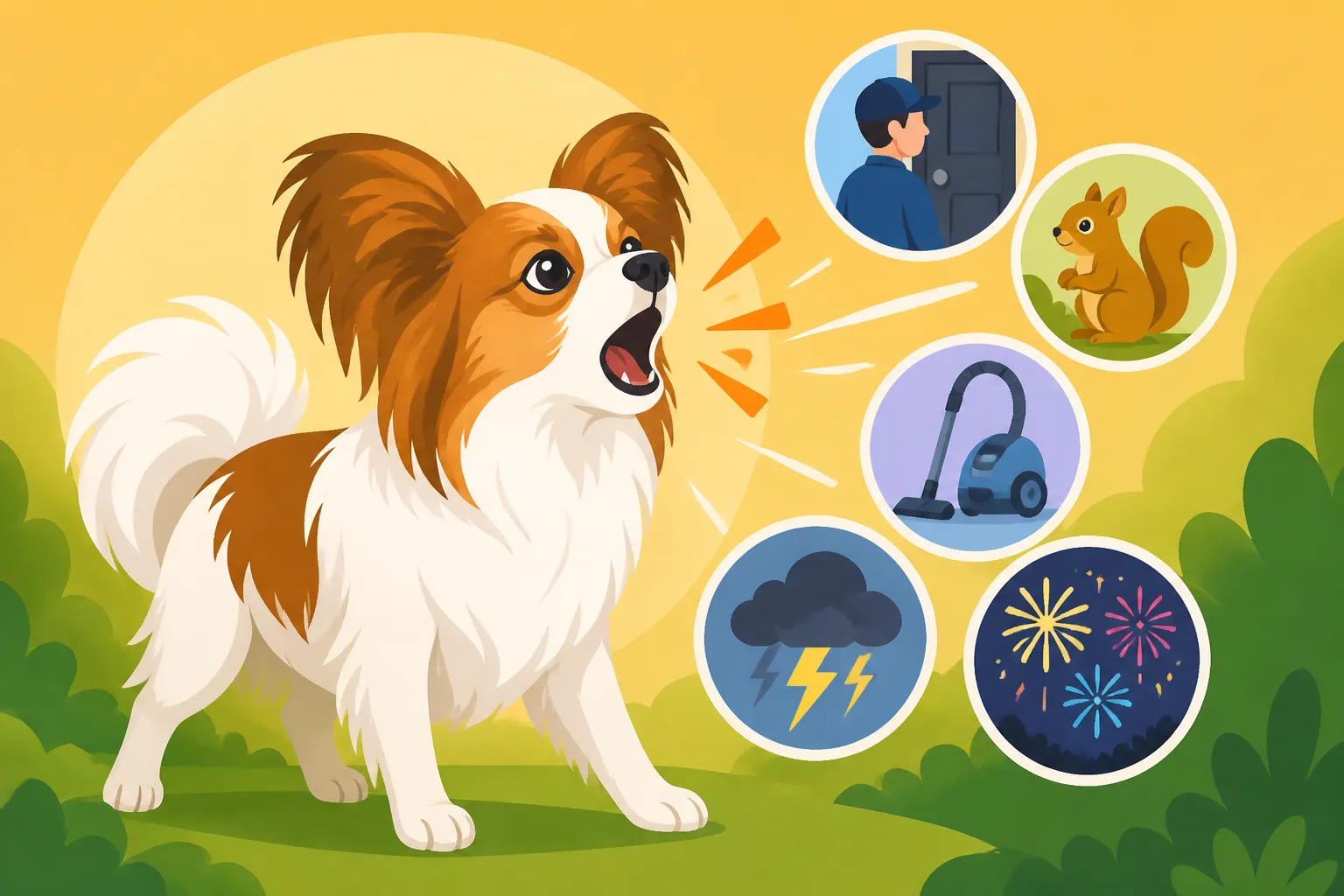
Picture this: you're enjoying a quiet evening, perhaps curled up on the sofa with your Papillon nestled beside you, when suddenly, there's a knock at the door. Before you can even register who it might be, your Papillon launches into a frenzied, high-pitched barking fit, rushing to the door as if to personally confront the intruder. This isn't just excitement; it's often a combination of territorial protection and alarm. They view your home as their den, and anyone approaching without an invitation (in their eyes) is a potential threat.
This behavior is reinforced if the barking successfully makes the "intruder" (like the delivery person) leave, or if you rush to the door and create a commotion, inadvertently rewarding their alarm. They’re thinking, "See? My barking worked! I alerted them, and they went away!" It becomes a self-fulfilling prophecy in their little doggie brains. For owners living in apartments or close-knit communities, this can quickly become a problem, leading to complaints from neighbors. You might find yourself wondering Whether a Papillon Suits Close Neighbors because of this very issue.
Sounds from Beyond the Door
It's not always a visible person that sets them off. Papillons are exceptionally good at hearing things we might miss. The distant jingle of keys, footsteps on the sidewalk, a car door slamming shut, or even the faint murmur of conversation from a neighboring apartment can be enough to trigger a barking spree. They hear the subtle cues that indicate someone might be approaching, and they're not going to wait to see if it's actually for them. They'll start alerting you the moment they detect a potential shift in their territory's security.
This kind of barking can be particularly challenging because the trigger isn't always obvious to you. You might just hear barking and think, "What on earth is he barking at now?" when in reality, he's just heard Mrs. Henderson bringing in her recycling from down the street. It takes a lot of patience and consistency to teach a Papillon that not every sound outside the door warrants a full-blown canine alarm. Sometimes, providing them with a "job" to do instead, like going to their bed when the doorbell rings, can help redirect this instinct.
Reacting to Other Dogs and Animals
Papillons, despite their small size, often carry themselves with the confidence of a much larger dog. This can sometimes lead to interesting, and occasionally problematic, interactions with other animals, especially when it comes to vocal displays.
Barking at Dogs on Walks
You’re out for a lovely stroll, enjoying the sunshine, when suddenly another dog appears down the street. Your Papillon, who moments ago was trotting happily beside you, transforms into a barking, lunging dynamo. This behavior, often called "leash reactivity," is common in many breeds, and Papillons are no exception. It can stem from fear, frustration, or even an overabundance of excitement. They might be trying to say, "Stay away!" or "Come here and play with me!" but the message often gets lost in translation.
The high-pitched, incessant barking can be embarrassing and makes walks far less enjoyable. It’s particularly frustrating when your Papillon seems to ignore your commands in that moment of high arousal. They're so focused on the other dog that everything else fades into the background. While not a typical trait for the breed, some Papillons can develop reactivity, making it important to understand Whether a Papillon Is Reactive on Leash and how to address it.
Alerting to Backyard Critters and Neighbors' Pets
For Papillons with access to a yard, or even those just looking out a window, the sight of a squirrel, bird, or the neighbor's cat can be a major barking trigger. Again, this ties into their alert and prey drive instincts. They might see a squirrel scampering up a tree and feel compelled to inform you that there's an "intruder" in their airspace, or they might simply be expressing their excitement at the sight of a potential chase.
Similarly, if you have neighbors with dogs, your Papillon might bark back and forth with them through the fence or even just when they hear them outside. It's a form of canine communication, but when it becomes constant, it can become a nuisance. They're essentially having a very loud, drawn-out conversation with their furry neighbors, and sometimes, that conversation happens at the most inconvenient times.
Barking at Environmental Sounds and Objects
It’s not just living things that trigger a Papillon's vocalizations. Their keen senses and sometimes dramatic flair mean they can react to a surprisingly wide range of inanimate objects and sounds in their environment.
Loud or Unexpected Household Noises
Ever had your Papillon bark ferociously at the vacuum cleaner? Or perhaps the blender? Many Papillons are startled by loud or sudden household noises. The whirring of the coffee grinder, the clang of pots and pans, or even the sound of the washing machine can be enough to set off a barking fit. They don’t understand these machines in the same way we do; to them, it might be a strange, noisy monster invading their space.
This type of barking often stems from a lack of early desensitization or a general sensitivity to noise. A Papillon puppy needs to be exposed gently and positively to common household sounds so they learn these noises are nothing to fear. If they haven't had that exposure, or if they're particularly timid, these everyday sounds can become significant stressors. It’s another reason why their early experiences are so important for shaping their adult behavior.
Shadows, Reflections, or Moving Objects
This might sound a little silly, but some Papillons will genuinely bark at shadows dancing on the wall, reflections in a window, or even a leaf blowing past outside. Their sharp eyesight and quick minds can sometimes interpret these subtle movements as something more significant, something that warrants an alert. A Papillon can be very observant, and a sudden glint of light or a fleeting shadow can momentarily register as an unusual presence.
While it might seem amusing at first, persistent barking at these visual stimuli can indicate a dog that is easily overstimulated or perhaps not getting enough mental enrichment. Their minds are constantly working, and sometimes, that overactive brain can lead them to react to things that aren't actually there or are entirely harmless. Providing appropriate mental challenges, perhaps with puzzle toys found on Amazon, can sometimes help redirect this energy. You might also consider What Mental Work a Papillon Needs to keep their clever minds engaged.
When Barking Signals Needs or Discomfort
Not all barking is about alerting to external threats or environmental stimuli. Sometimes, your Papillon is simply trying to communicate a personal need, a desire for attention, or even discomfort or pain. This type of barking is often directed specifically at you.
Attention-Seeking Barking
Papillons are incredibly social dogs, and they thrive on interaction with their people. If they learn that barking gets them what they want – whether it's a pet, a treat, playtime, or even just a glance in their direction – they will absolutely use it. This is classic attention-seeking behavior, and it's incredibly effective because, let's be honest, it's hard to ignore a persistent Papillon bark! They'll bark when you're on the phone, when you're eating dinner, or when you're just trying to relax.
This behavior is often accidentally reinforced by owners. A quick "Shhh!" or even making eye contact to tell them to stop can be interpreted as a reward. They got your attention, even if it was negative attention. Breaking this cycle requires consistency in ignoring the barking until there’s a moment of quiet, then rewarding that silence. For a breed that often follows you Why a Papillon Follows You Room to Room, they're always trying to be part of the action, and barking is their way of saying, "Hey, don't forget about me!"
Boredom or Lack of Mental Stimulation
An under-stimulated Papillon is often a vocal Papillon. These dogs are highly intelligent and require regular mental exercise in addition to physical activity. If they're bored, they'll find ways to entertain themselves, and barking can be one of those ways. They might bark at passersby from the window, bark at their toys, or just bark into the void, hoping something interesting will happen. This isn't just about walks; it's about engaging their sharp minds.
If your Papillon is left alone for long periods without adequate mental or physical enrichment, barking can also be a sign of separation anxiety or loneliness. While not all barking when alone is separation anxiety, it's a symptom to watch for. Signs a Papillon Has Separation Anxiety can include destructive behavior, inappropriate urination, and excessive vocalization when you're not home. Providing interactive toys, training sessions, and plenty of quality time can help mitigate boredom barking. Services like BAXTER & Bella offer online resources that can provide guidance for owners to enrich their Papillon’s environment and daily routine, thus reducing boredom-related barking.
Discomfort or Pain
While less common than other forms of barking, sometimes a Papillon will bark to signal that they are in pain or discomfort. This might be a sudden, sharp yelp if they've injured themselves, or a more subdued, persistent vocalization if they are experiencing chronic pain or illness. Because Papillons are quite stoic and can often hide pain, this type of barking should always be taken seriously.
If your Papillon suddenly starts barking more than usual, or exhibits a new type of vocalization that seems out of character, it's always wise to rule out any underlying medical issues. A quick check-up with your vet can provide peace of mind. They might be trying to tell you that something just isn't right, and it's our job as responsible owners to listen. Remember that a change in behavior, including increased barking, is sometimes How a Papillon Hides Pain.
Strategies for Managing Excessive Barking
Addressing excessive barking in your Papillon requires a multi-faceted approach, combining management, training, and understanding. There’s no magic bullet, but consistency is key.
Identifying the Root Cause and Triggers
The very first step is to become a detective. What exactly is your Papillon barking at? Is it a specific sound, person, time of day, or situation? Keep a barking journal for a few days to track patterns. Note down:
- When: What time does the barking usually start?
- Where: Is it in the living room, by the window, in the yard?
- What: What triggered it? (e.g., mail truck, neighbor's dog, doorbell, you leaving the room).
- Your reaction: How did you respond? (e.g., yelled, gave attention, ignored).
Understanding the "why" behind the bark is crucial for effectively addressing it. Is it fear, boredom, territoriality, or just plain old attention-seeking? Once you know the trigger and the motivation, you can start to implement targeted strategies.
| Barking Type | Common Triggers | Underlying Motivation | Initial Management Strategy |
|---|---|---|---|
| Alert/Territorial | Doorbell, knocks, sounds outside, strangers | Protection, alarm | Block view, distract, teach "quiet" cue |
| Reactivity | Other dogs, people on walks | Fear, frustration, excitement | Increase distance, positive reinforcement, focus training |
| Attention-Seeking | Owner busy, ignored | Desire for interaction | Ignore barking, reward quiet behavior, structured attention |
| Boredom/Anxiety | Left alone, lack of stimulation, routine change | Loneliness, frustration | Increase exercise, mental games, interactive toys |
| Discomfort | Sudden pain, chronic illness | Illness, injury | Vet check-up, comfort |
Training a "Quiet" Command
Teaching your Papillon a "quiet" cue is one of the most powerful tools you can have. This isn't about scolding them into silence; it's about teaching them an alternative behavior and giving them a command to disengage from barking.
- Trigger the Bark: Have someone knock on the door, or use a sound effect. Let your Papillon bark 2-3 times.
- Say "Quiet": As soon as they start barking, firmly say "Quiet" once.
- Interrupt and Reward: Immediately get their attention with a high-value treat in front of their nose. The moment they stop barking to sniff the treat (even for a second), mark the behavior with a "Yes!" or a click, and give them the treat.
- Increase Duration: Gradually increase the amount of time they need to be quiet before they get the reward.
- Practice: Repeat this multiple times a day in various scenarios.
Remember, the goal is to reward the absence of barking, not to punish the barking itself. You can find excellent resources for this kind of positive reinforcement training online, with platforms like BAXTER & Bella offering step-by-step guides. For more detailed insights, consider our article on How to Teach a Papillon a Quiet Cue.
Environmental Management and Enrichment
Sometimes, the best solution isn't training the bark away, but managing the environment to reduce triggers.
- Block Visual Triggers: If your Papillon barks at everything outside the window, use frosted window film, blinds, or even strategically placed furniture to block their view. A cozy crate can also offer a safe, quiet den.
- Sound Masking: For sounds beyond the door or outdoor noises, a white noise machine, radio, or TV can help mask ambient sounds that trigger barking. Amazon offers a wide variety of sound machines that can be helpful here.
- Increase Exercise and Mental Stimulation: A tired Papillon is often a quiet Papillon. Ensure your dog gets adequate physical exercise for their size, but don't forget about mental stimulation. Puzzle toys, scent work games, and short training sessions throughout the day can engage their intelligent minds. This can significantly reduce boredom-induced barking. Consider exploring ideas like What a Papillon Does All Day to ensure they have enough engagement.
- Positive Associations: For triggers like the doorbell, try to create a positive association. Every time the doorbell rings, immediately give your Papillon a high-value treat, before they even have a chance to bark. This can change their emotional response from alert to excited for a treat.
Consistent management combined with positive training methods will give you the best chance at a more peaceful home with your delightful, but sometimes incredibly vocal, Papillon.
Disclaimer
This article is for general informational purposes only and does not constitute professional advice. Laws, prices and regulations vary by location and change over time. Consult a qualified professional for guidance on your specific situation.