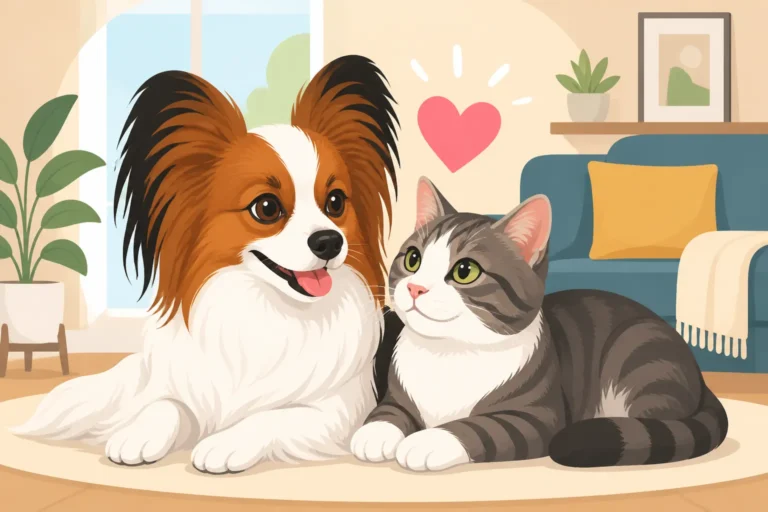
Why a Papillon Beats Bigger Dogs at Its Own Size
It's easy to look at a Papillon, with their delicate frame and flowing butterfly ears, and assume they're just a pretty face, content to be carried in a designer bag. But any Papillon owner, or anyone who has witnessed these pint-sized powerhouses in action, knows that this couldn't be further from the truth. These aren't just lapdogs; they're intelligent, athletic, and fiercely determined competitors who regularly punch far above their weight class, often leaving much larger dogs in their dust, especially in the electrifying world of dog sports. This guide is all about peeling back that delicate exterior to reveal the true spirit of the Papillon and understand exactly why they beat bigger dogs at their own game.
The Brain Behind the Butterfly Ears: Papillon Intelligence
One of the biggest secrets to the Papillon's success against larger breeds isn't brute strength, but sheer brainpower. These little dogs are shockingly smart, with a cognitive ability that frequently surprises those unfamiliar with the breed. It's a key factor in their ability to excel in complex tasks and high-pressure situations.
Ranking Among the Smartest
When people first hear about the Papillon's intelligence, there's often an audible gasp of surprise. Many assume that small size correlates with less brainpower, but the Papillon shatters that myth entirely. In famous rankings of canine intelligence, such as Dr. Stanley Coren's "The Intelligence of Dogs," the Papillon consistently places among the top 10 most intelligent breeds. This isn't just a fluke; it's a testament to their exceptional cognitive abilities. They're often right up there with breeds like Border Collies and Poodles, which are typically seen as the titans of canine intellect.
What does a top-tier intelligence ranking mean for a Papillon in everyday life? It means they don't just pick up basic commands; they grasp complex sequences, understand nuanced cues, and can often anticipate what you're going to ask next. This makes them incredibly quick studies, and you'll find they often pick up new tricks and concepts in remarkably few repetitions. It's truly a marvel to witness How Fast a Papillon Learns a New Cue. Their minds are constantly whirring, observing, and processing, making them highly engaged companions who thrive on mental stimulation.
This rapid understanding and ability to process information on the fly translate directly into their competitive edge. In sports where quick decisions and intricate patterns are required, a Papillon isn't just performing rote memorization; they're actively thinking, problem-solving, and adapting. This mental agility allows them to recover from a handler's mistake, adjust to unexpected changes on a course, or find the most efficient path through an obstacle sequence, giving them a significant advantage over dogs that might be faster but less mentally flexible.
The Drive to Learn and Please
Beyond raw intelligence, Papillons possess an incredible intrinsic motivation to engage with and please their human partners. This "work ethic," combined with their sharp minds, makes them extraordinarily trainable, often more so than many larger, more independent breeds that might be intelligent but lack the fervent desire for collaborative work. They genuinely thrive on interaction, praise, and the mental challenge of learning something new, viewing training as a shared activity rather than a chore.
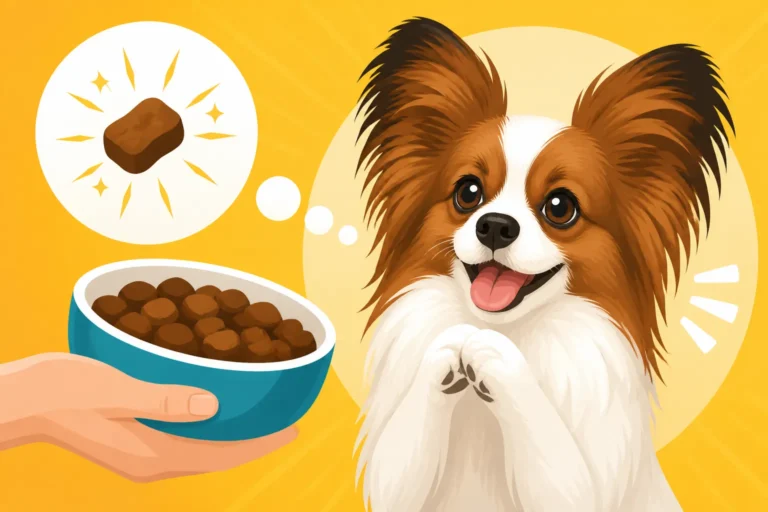
This intense drive to learn and please manifests in their enthusiastic approach to training. They don't just grudgingly perform a command; they often execute it with an eagerness and expressive flair that makes every session a joy. This willingness to participate, to offer behaviors, and to seek validation from their owners is a powerful tool in advanced training and mastering complex tasks. They are also notoriously How Food Motivated a Papillon Is, which, when paired with positive reinforcement, makes them incredibly responsive pupils.
When you contrast this with other dog breeds that might possess high intelligence but are less inclined to work cooperatively or require more external motivation, the Papillon's advantage becomes clear. Their combined cognitive power and their inherent joy in collaborating with their handler create a highly effective learning dynamic. This means they are not only capable of understanding sophisticated instructions but are also excited to execute them flawlessly, turning good training into outstanding performance.
Quick Retention and Adaptability
One of the hallmarks of Papillon intelligence is not just their speed in learning, but their exceptional retention of information. You might teach a new agility sequence or a complex obedience routine one day, and weeks or even months later, your Papillon will likely recall the core elements with minimal refresher training. This long-term memory means less time spent re-teaching and more time spent refining and advancing their skills.
This strong retention is coupled with remarkable adaptability. In the unpredictable environment of dog sports, where course designs change, distractions abound, and handlers might occasionally miscue, a Papillon's ability to adjust on the fly is invaluable. They are adept at reading their handler's body language and the subtle nuances of the environment, allowing them to modify their approach or recover gracefully from a momentary lapse. This makes them incredibly resilient competitors, rarely flustered by unforeseen circumstances.
Consider a hypothetical scenario in an agility trial: the handler takes a slightly wrong step, indicating an incorrect obstacle. A less adaptable dog might plow ahead, earning faults, but a Papillon, tuned into its handler and the overall flow of the course, often perceives the error and shifts focus, looking for the correct path. This quick thinking and ability to generalize learned concepts from one scenario to another—or even one venue to another—gives them a distinct competitive edge, allowing them to maintain speed and accuracy even when conditions are less than perfect.
Unleashing the Inner Lion: Papillon Confidence and Spirit
Beneath those elegant fringes and delicate appearance lies a spirit as robust and confident as any large working dog. Papillons are not easily intimidated, and this unshakeable self-belief is a huge part of why they can stand shoulder-to-shoulder with (or often, literally jump over) much bigger competition.
A Big Dog in a Small Body
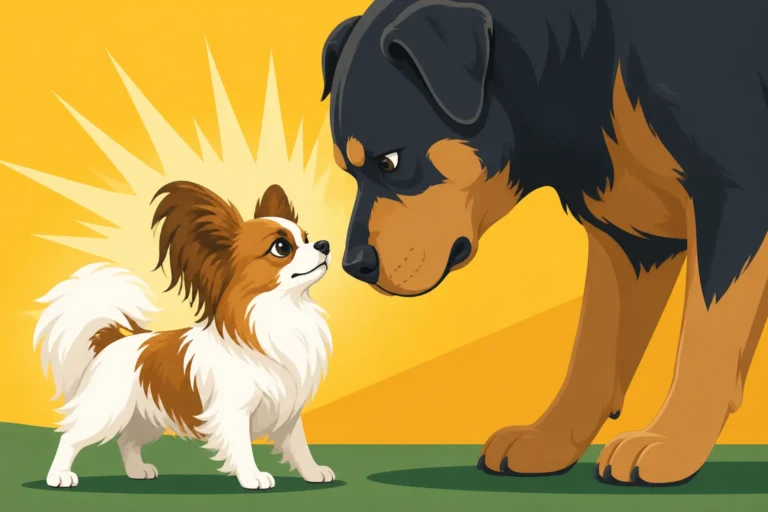
It's a common refrain among Papillon owners, often stated with a mix of affection and exasperation: "My Papillon thinks it's a Rottweiler!" And honestly, it's true. These dogs genuinely seem to operate with no internal concept of their own diminutive size. They approach the world, other dogs, and new challenges with an audacity and self-assuredness that is truly remarkable. They don't pick fights or act aggressive, but they certainly don't back down from a challenge, greeting life with a joyful, fearless enthusiasm. This characteristic makes them endearing but also sometimes nerve-wracking for owners, especially when they square up to a much larger breed. As we often say, A Papillon Has No Idea It Is Small.
This confidence isn't just a cute quirk; it translates directly into superior performance. A dog that approaches a towering agility obstacle, a boisterous training class, or a complex obedience sequence with unwavering self-belief is already at a significant advantage. They don't hesitate, they don't second-guess, and they don't get easily flustered by the sheer scale of the task or the presence of larger, more imposing dogs around them. Instead, they walk in with an innate certainty that they are capable, ready to tackle whatever comes their way.
In a competitive environment, this bold attitude means a Papillon is less likely to be intimidated by strange equipment, unfamiliar venues, or the loud noises and excited energy of other dogs and spectators. While a larger dog might show trepidation at the sight of a swaying teeter-totter or a narrow tunnel, the Papillon often charges forward with unbridled enthusiasm, as if to say, "Bring it on!" This fearless approach allows them to commit fully to each obstacle and movement, maximizing their speed and precision without any mental hang-ups.
Fearless in the Face of Challenge
Papillons are surprisingly fearless when properly introduced to new experiences. They will tackle a formidable A-frame, conquer a wobbly dog walk, or navigate a series of weave poles with an enviable gusto that often belies their size. This isn't recklessness born of ignorance, but rather a calculated bravery that, when coupled with excellent training and a strong bond with their handler, makes them formidable competitors. They relish the challenge and the opportunity to show off their skills, approaching each new obstacle as an exciting puzzle to solve.
While this fearlessness is a strong breed trait, it's important to remember that it's also something that needs to be nurtured through positive experiences. Providing opportunities for When to Start Training a Papillon Puppy is crucial for reinforcing this natural tendency. Exposure to various surfaces, heights, and types of equipment from a young age, always ensuring positive associations, builds a solid foundation of confidence that will serve them well in any dog sport. It’s about building trust in themselves and in their handler.
This fearless attribute allows Papillons to beat bigger dogs in crucial moments. Imagine an agility course where a larger, faster breed might hesitate at the contact obstacles, slowing down to ensure a safe descent. A confident Papillon, having been thoroughly trained and accustomed to these challenges, will often fly over them with minimal hesitation, maintaining their momentum and shaving off crucial fractions of a second. This bold commitment to the course can be the difference between a clean run and a fault, or between first and second place.
The Importance of Early Socialization
While Papillons are naturally bold, channeling that confidence productively requires careful and consistent early socialization. This isn't just about preventing fear or aggression; it's about building a well-rounded, resilient dog who can confidently navigate the myriad sights, sounds, people, and other animals they will encounter throughout their lives, particularly in busy competitive environments. Early, positive exposure helps shape their innate boldness into a curious, adaptable, and self-assured temperament.
Without proper socialization, that bold spirit can, unfortunately, be misdirected, potentially leading to reactivity, excessive barking, or a guarded nature borne out of insecurity. The goal for a Papillon, especially one destined for an active lifestyle or competitive sports, is to develop a dog that is confidently curious and friendly, rather than one that feels the need to be defensive or anxious in new situations. This means carefully controlled introductions to different types of dogs (both small and large), various environments, and a wide array of human interactions.
A well-socialized Papillon is a dog that can enter a bustling dog show or a noisy training facility and focus on its job, rather than being overwhelmed or distracted by the environment. They learn to take new experiences in stride, which significantly reduces stress and allows their natural intelligence and athleticism to shine. This foundational work in socialization is an investment that pays huge dividends, ensuring that their confidence becomes an asset in all aspects of their lives, especially when facing off against bigger dogs in competitive rings.
Built for Speed and Agility: Papillon Physical Attributes
Beyond their intelligence and spirit, Papillons possess a physical structure that is exquisitely adapted for speed, agility, and endurance. Their size, far from being a limitation, is actually a distinct advantage in the dynamic world of dog sports.
Lightweight and Agile Frame
The Papillon's small, fine-boned, and lightweight frame is not a weakness; it's a masterpiece of athletic design, particularly when it comes to quick bursts of speed and incredible maneuverability. Their compact build allows for rapid acceleration and deceleration, and their low center of gravity contributes to their uncanny balance. They are built for quick changes in direction, which is absolutely crucial in sports like agility where courses demand tight turns and immediate responses.
This specific physical advantage allows them to navigate complex agility courses with unmatched precision. While larger dogs might need to take wider arcs around obstacles or require more space to brake and turn, a Papillon can pivot on a dime, weave through poles with lightning speed, and take the shortest, most efficient line through a challenging sequence. This inherent agility means they can execute intricate patterns with a fluidity and grace that often leaves larger, more powerful breeds looking somewhat cumbersome by comparison.
Furthermore, their light weight means less impact stress on their joints, which can contribute to a longer athletic career, provided they are structurally sound and properly conditioned. While patellar luxation is a known concern for the breed, it’s worth noting that Whether a Papillon's Knees Get Worse With Age is less likely to be exacerbated by their body weight compared to heavier breeds, assuming their knees are healthy to begin with. This allows them to perform high-impact movements repeatedly with relative ease, giving them a physical advantage in terms of stamina and injury resilience.
Endurance and Stamina
Don't let their delicate appearance fool you into thinking Papillons are fragile or lack staying power. These aren't just decorative lap ornaments; they are surprisingly hardy and possess remarkable endurance for their size. They are perfectly capable of sustained bursts of intense activity and often seem to have an inexhaustible supply of energy, eagerly asking for "more" even after a demanding agility course or a spirited play session.
This inherent stamina is a significant asset in competitive environments. A Papillon can often perform multiple runs in a single trial day without showing signs of fatigue, maintaining their speed and enthusiasm from the first run to the last. This is a challenge that many larger breeds face, where their sheer size and power can lead to quicker exhaustion. Papillons, on the other hand, manage their energy efficiently, making them consistent performers throughout a long competition day. This is why How Much Exercise a Papillon Needs is often underestimated; they're not content with a short potter around the block.
Their efficient movement and relatively low body mass contribute directly to this impressive endurance. They aren't expending excessive energy to move a large frame, making every stride and every jump more economical. This allows them to conserve vital resources, enabling them to maintain peak performance longer than many of their bigger counterparts, especially in sports that require sustained effort and multiple heats.
Natural Grace and Coordination
Watching a Papillon move is an education in effortless athleticism. They possess an inherent grace and exquisite coordination that makes their movements fluid, precise, and a sheer joy to observe. Whether they are leaping over hurdles, dancing through weave poles, or balancing confidently on a narrow dog walk, their natural aptitude for physical tasks is undeniable. This intrinsic athleticism means they don't have to "learn" coordination in the same way some less naturally gifted breeds might; they simply are coordinated.
This natural physical intelligence allows them to pick up the complex physical demands of various dog sports with surprising ease. They seem to understand their body's capabilities and limitations instinctively, demonstrating excellent body awareness. This is vital for avoiding faults in agility, executing precise footwork in obedience, and maintaining balance in any dynamic activity. Their ability to place their feet exactly where they need to be, even at high speeds, is a testament to their innate physical prowess.
Their fine bone structure, combined with strong, well-proportioned musculature, gives them a springy, almost floating gait. This translates directly into explosive speed and agile precision. They don't just run; they dart, bound, and glide. This efficient and elegant movement enables them to navigate obstacles smoothly and rapidly, often making highly technical maneuvers look utterly effortless. This natural grace is a beauty to behold and a powerful tool in their competitive arsenal.
Beyond the Lapdog Stereotype: Papillons in Dog Sports
The Papillon might have originated as a companion for royalty, gracing the laps of European aristocrats, but modern Papillons are proving their worth far beyond the parlor. These are serious athletes, and their track record in various dog sports is a testament to their incredible versatility and drive.
Agility: A Papillon's Playground
Agility is arguably the sport where Papillons most vividly demonstrate their capacity to outshine larger breeds, and it's certainly where they've cemented their reputation as formidable competitors. Courses are designed to test a dog's speed, accuracy, and handler-dog communication, all areas where the Papillon excels. They are not just participants; they are frequent champions, regularly topping leaderboards in their height categories and often posting times that would make much larger dogs blush.
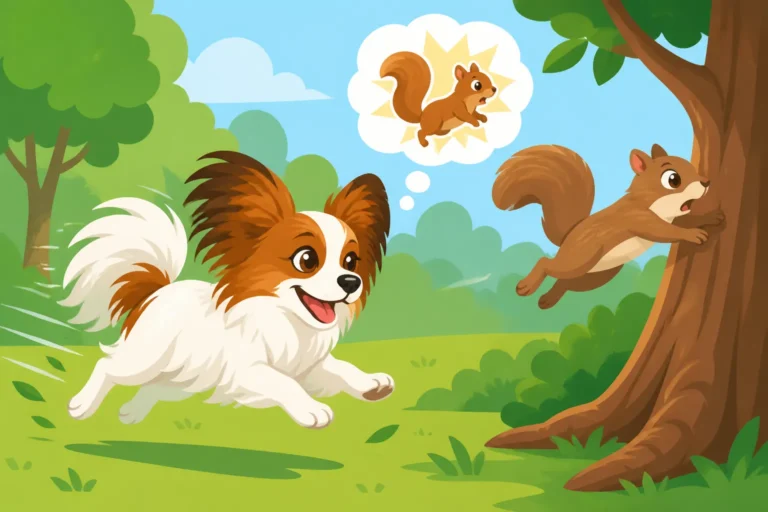
Their size becomes a distinct advantage in agility. Their incredibly tight turning radius allows them to take obstacles closer and shave precious fractions of a second off their run times. While a Border Collie might have a longer stride, a Papillon's ability to navigate tight turns and intricate weave pole entries with minimal loss of momentum is often superior. Their fearless nature ensures they rarely hesitate at intimidating obstacles like the A-frame or the teeter-totter, instead attacking them with confident enthusiasm. Why a Papillon Dominates Small Dog Agility explains this dynamic perfectly.
It's common to see Papillons consistently earning top placements and championship titles in agility. In the smaller height divisions, they are often the dogs to beat, demonstrating a level of speed, precision, and drive that puts them at the pinnacle of the sport. Their consistent success isn't just a testament to individual dogs but to the breed's inherent aptitude for the demanding physical and mental challenges of agility.
Rally and Obedience: Precision and Focus
While agility showcases their physical prowess, Rally and traditional Obedience trials highlight the Papillon's intelligence, biddability, and exceptional focus. These sports demand precise execution of a series of commands, sustained concentration, and an almost telepathic partnership between dog and handler. The elegance with which a Papillon performs these intricate routines often captures the hearts of judges and spectators alike.
Their eagerness to please, combined with their rapid learning ability, makes them incredibly adept at mastering the complex routines found in obedience. They can perform intricate heeling patterns, precise retrieves, and sustained stays with a level of accuracy and enthusiasm that truly stands out. Their desire to work with their handler means they are highly attentive and responsive, crucial for success in these detail-oriented sports. This is why Whether a Papillon Can Do Obedience Trials is often met with resounding success for the breed.
Imagine a Papillon executing a flawless scent discrimination exercise, carefully selecting the handler's scented glove from a pile of identical gloves, or performing a lengthy out-of-sight stay without a single twitch. These aren't easy tasks for any dog, but the Papillon's unwavering focus and dedication allow them to excel, showcasing their mental fortitude and the depth of their bond with their human counterpart.
Scent Work and Tracking: Sharpening Their Senses
Many people tend to overlook the olfactory prowess of small breeds, assuming their smaller noses are less effective. However, Papillons possess surprisingly keen noses and an active mind that makes them fantastic candidates for scent work and tracking sports. These activities tap into their primal instincts and provide a deeply enriching outlet for their energy and intelligence.
Engaging in scent work offers a different kind of mental stimulation compared to the high-octane physical demands of agility. It requires intense concentration, problem-solving, and methodical searching, all of which a Papillon's sharp mind thrives on. This builds confidence, enhances focus, and provides a wonderful alternative or complement to physical exercise, particularly on days when weather or physical limitations might restrict outdoor activities.
The rising popularity of sports like K9 Nose Work or tracking trials provides the perfect stage for a Papillon to shine. Their small stature doesn't hinder their ability to follow a scent trail or locate a hidden "source"; in some instances, their close-to-the-ground perspective can even give them an advantage in picking up subtle scent particles. They approach these tasks with a delightful blend of earnestness and joy, proving that a powerful nose and an intelligent brain are not exclusive to larger, more traditional working breeds.
The Human-Papillon Partnership: Training for Success
The undeniable success of Papillons in competitive dog sports isn't solely a tribute to their innate qualities; it's also a testament to the powerful, collaborative partnership they form with their human handlers. Effective training is the bridge that connects their potential to their performance.
Motivating Your Mighty Mite
Every dog, regardless of breed, needs motivation to learn and perform, and Papillons are no exception. Fortunately, they are generally highly food-motivated and eager to please, responding incredibly well to positive reinforcement techniques. High-value treats, enthusiastic verbal praise, and joyful play are typically all it takes to ignite their desire to work and excel. They thrive on the interaction and the sheer joy of working alongside their person, making them exceptionally rewarding to train. As an owner, discovering Which Rewards a Papillon Works For is often an exciting journey.
Finding the perfect motivator is a key step in unlocking your Papillon's full potential. For some, it might be a specific squeaky toy that brings out their inner hunter; for others, it's a tiny piece of freeze-dried liver or cheese that they simply can't resist. Experiment to see what truly makes your Papillon's eyes light up. Once you tap into that deep-seated drive, their capacity for learning becomes almost limitless. Platforms like Amazon offer a vast array of high-value training treats and engaging puzzle toys that can be instrumental in keeping your Papillon motivated and mentally stimulated during training sessions.
It's crucial to remember that while they are incredibly smart and driven, Papillons are not robots. Training sessions need to be fun, varied, and engaging to keep their keen minds interested and prevent boredom. Short, frequent sessions are often more effective than long, drawn-out ones, ensuring that training remains a positive and exciting experience for both dog and handler. This approach maintains their enthusiasm and solidifies their bond with you.
Consistent, Positive Reinforcement
Despite their bold exterior and spirited nature, Papillons are quite sensitive dogs. This means that harsh corrections, punitive training methods, or a heavy-handed approach can be counterproductive, quickly shutting them down and potentially damaging the vital bond of trust between dog and handler. The most effective and humane approach for Papillons, as for most dogs, is consistent, positive reinforcement. Rewarding desired behaviors not only makes them more likely to be repeated but also builds confidence and fosters a deeper, more trusting relationship. This is precisely Why Harsh Correction Fails on a Papillon.
Positive reinforcement creates a learning environment where the dog associates training with good things – treats, praise, play – rather than fear of punishment. This positive association makes them eager participants, turning them into willing partners rather than reluctant pupils. When a Papillon feels safe and rewarded, their intelligence and desire to please truly shine, leading to quicker learning and more joyful performances. This method establishes a strong foundation for long-term success in any discipline.
Consistency is also paramount. Every member of the household needs to be on the same page regarding commands, expectations, and reinforcement strategies. This clarity helps the highly intelligent Papillon understand exactly what is being asked of them, reducing confusion and frustration. When the rules are clear and the rewards are predictable, a Papillon can fully commit to learning and performing, allowing them to excel in any challenge presented to them.
Early Exposure to Training and Challenges
Starting early with training and exposure to various experiences is perhaps one of the most impactful things an owner can do to foster a Papillon's potential. A Papillon puppy's brain is like a sponge, soaking up every new lesson and experience. Introducing basic obedience, gentle handling, and novel environments from a young age lays a solid groundwork for confidence, resilience, and a lifelong love of learning. This initial phase isn't about preparing for formal trials just yet, but about building essential life skills and a positive outlook.
Puppy classes are an excellent way to provide crucial socialization and teach foundation behaviors in a structured, positive environment. These classes not only help your Papillon learn good manners but also expose them to other puppies and people, reinforcing good social skills. For those who prefer a flexible learning schedule, online resources and structured programs, like those offered by BAXTER & Bella, can be incredibly valuable. They guide new owners through the process of safely and effectively introducing their Papillon to new concepts, sights, and sounds from the comfort of their home.
At this early stage, "challenges" should be interpreted as age-appropriate and safe introductions to different surfaces, such as grass, pavement, or even gentle inclines. They also involve exposure to various household sounds, car rides, and simple problem-solving games that build their cognitive abilities and physical confidence. These carefully curated experiences are designed to cultivate a well-adjusted, confident, and curious Papillon who views new situations not with apprehension, but with eager anticipation, setting them up for a lifetime of adventure and success.
Overcoming the Odds: Dispelling Misconceptions
The Papillon's extraordinary success in competitive venues is a powerful antidote to many of the long-standing misconceptions about toy breeds. Every ribbon won, every course mastered, and every barrier cleared by a Papillon helps to redefine what people expect from a small dog.
Not Just a Purse Dog
The most pervasive and frustrating misconception about Papillons is that they are simply "purse dogs" – pretty accessories meant to be carried, pampered, and perhaps occasionally paraded. This stereotype, while rooted in their small size and undeniable elegance, does a profound disservice to their true nature. It completely ignores their robust character, keen intelligence, and surprising athleticism. While they certainly fit comfortably into a purse, reducing them to this limited role is akin to judging a book by its gilded cover, completely missing the captivating story within.
This idea of them being purely ornamental overlooks their rich history as active companions to European royalty. These dogs weren't just decorative; they were cherished pets who accompanied their owners on various excursions, often living quite active lives within aristocratic households, not simply sitting idly by. They were valued for their engaging personalities and lively presence, not just their delicate appearance. To truly understand a Papillon is to understand that beneath the fluffy facade lies a sturdy, energetic dog that craves purpose, engagement, and activity.
It's essential for current and prospective Papillon owners to actively challenge this stereotype. These dogs are not fragile, timid pets; they are intelligent, capable athletes and devoted partners who thrive when given mental and physical outlets. They are "real dogs" in every sense of the word, deserving of respect for their abilities and character, rather than being relegated to a role that diminishes their inherent capabilities.
Proving Their Prowess
Every time a Papillon steps onto an agility course, into an obedience ring, or even performs an impressive array of tricks for an audience, they are actively engaging in myth-busting. Their successes are concrete, undeniable proof that intelligence, athleticism, and a strong work ethic are not limited by size. They demonstrate that the heart and drive of a champion can reside in a very small package, often leaving onlookers astonished by their speed, precision, and enthusiasm.
For Papillon owners, witnessing these triumphs is incredibly rewarding. There's a special kind of pride that comes from watching your small dog, often initially underestimated by judges or fellow competitors, perform with such skill, heart, and joyous determination. To see them outmaneuver and outperform larger, more conventionally "athletic" breeds is not just a personal victory; it's a quiet revolution against outdated perceptions, showcasing the true potential of the breed.
This consistent prowess encourages owners to not only celebrate their Papillon's achievements but also to continuously explore and cultivate their talents. Whether it's pursuing advanced titles in dog sports or simply teaching them an impressive repertoire of tricks, providing avenues for them to prove their capabilities strengthens the bond and reinforces the understanding that these dogs are truly extraordinary. It's a joyful experience that enriches both the dog's life and the owner's.
The Unexpected Competitor
There's a unique charm in being the unexpected challenger, the "underdog" – or in the Papillon's case, the "undersized dog" – that consistently surprises everyone. Papillons often fit this role perfectly, catching judges, fellow competitors, and spectators off guard with their explosive speed, uncanny precision, and unwavering focus. They don't have the imposing presence of a German Shepherd or the stereotypical agility of a Border Collie, yet they often leave both in their dust, literally and figuratively.
This unexpected prowess makes watching a Papillon compete incredibly exciting. Spectators are often drawn to the little butterfly dog that flies around the course with such intensity and pure joy, defying expectations with every jump and weave. There's an undeniable thrill in seeing the smallest dog on the field demonstrate such powerful capability, often inspiring cheers that are perhaps a little louder than for their larger counterparts.
Ultimately, the Papillon's role as the "unexpected competitor" does more than just win ribbons. It fundamentally helps to change perceptions, not just about the Papillon itself, but about toy breeds in general. Their consistent success broadens the understanding of canine potential, proving that heart, intelligence, and athleticism truly have no size constraints. They are living, breathing examples that a dog's spirit and capability are far more important than its stature, leaving a lasting impression on everyone who witnesses their remarkable performances.
Real-World Triumphs: Stories of Papillon Victories
The best way to understand the Papillon's ability to beat bigger dogs is to look at their actual achievements. While I can't cite live examples, we can certainly paint a picture of the kind of victories that are commonplace for this incredible breed in the competitive world.
Beating the Clock in Agility
Imagine "Pixie," a petite four-pound Papillon, standing at the start line of an advanced agility course. The judge has just announced the Standard Course Time, perhaps 45 seconds. The crowd murmurs, some watching with curiosity, others having seen Pixie before, waiting for the show. On cue, Pixie explodes from the start, a blur of white and sable, ears streaming like tiny flags. She zips through the weave poles with fluid precision, takes the dog walk with confident strides, and soars over the A-frame, touching the contact zones perfectly. Her tiny body becomes a whirlwind of motion, her turns so tight they seem to defy physics.
As she clears the final jump, the timer blares. The result? 38 seconds. A clean run, well under course time, earning her a well-deserved first place. This isn't an uncommon sight. These victories often come down to their phenomenal turning radius and explosive acceleration, which allow them to gain precious fractions of a second over longer-striding, larger dogs. While a bigger dog might be fast in a straight line, the Papillon excels where agility truly matters: in the rapid changes of direction and tight maneuvers that make up the bulk of an agility course. How Fast a Papillon Runs a Course is often astonishing.
The crowd erupts in cheers, a mix of disbelief and delight, as the little butterfly dog prances off, tail held high, having once again proved that heart, skill, and sheer speed can easily trump size. It's a testament to the meticulous training, the deep bond between handler and dog, and the Papillon's innate ability to embrace the challenge and deliver a performance that truly shines. These moments are what makes Papillon agility so captivating.
Masterful Obedience Performances
Consider "Chester," a Papillon known not just for his playful nature but for his impeccable focus in the Rally Obedience ring. While some larger breeds might fidget, bark, or glance around, Chester remains perfectly still during a long down-stay exercise, his eyes locked on his handler, executing the command with unwavering concentration amidst the usual chaos and distractions of a trial. His heeling is precise, his retrieves are enthusiastic, and every command is executed with a level of engagement that speaks volumes about his intelligence and desire to please.
This level of sustained focus and precision is not accidental; it is the product of consistent training, immense patience, and a truly deep bond built on mutual trust and respect. Chester's handler uses a combination of gentle vocal cues and subtle hand signals, and Chester responds with a remarkable understanding, demonstrating the intellectual depth and biddability of the breed. He doesn't just perform the commands; he performs them with an innate understanding and an eagerness that radiates joy.
Judges frequently commend Papillons for their engagement and expressive performances in obedience and rally. They don't just go through the motions; they perform with a joyful partnership, making every exercise look effortless and graceful. These masterful performances often outshine larger dogs who might have the strength for a retrieve but lack the finesse or unwavering attention that a well-trained Papillon so readily offers, proving that intelligence and partnership are paramount.
The Unexpected Hero
Papillon triumphs extend far beyond the formal competition rings. These little dogs often become unexpected heroes in other capacities, showcasing their versatility and deep character. Think of "Misty," a tiny Papillon with a heart as big as her ears, who became a certified therapy dog. She regularly visited nursing homes and hospitals, bringing immense comfort and smiles to patients, demonstrating her gentle nature, stable temperament, and remarkable adaptability in potentially stressful environments. Her small size made her less intimidating to fragile patients, allowing her to connect on a deeply empathetic level.
Then there's "Rusty," a spirited Papillon who, despite his small stature, developed an uncanny talent for urban scent detection. Through dedicated training, he learned to find dropped keys, lost phones, and even forgotten wallets for his grateful family, showcasing his keen nose, natural problem-solving skills, and persistent drive. He wasn't trained for formal scent work competitions, but his natural abilities made him an invaluable "detector dog" in his own household.
These stories highlight that a Papillon's "victories" aren't solely defined by ribbons and titles. They are about reaching their full potential, contributing meaningfully to their human families and communities, and consistently exceeding expectations in all walks of life. Whether it's bringing comfort, finding lost items, or simply being the most cheerful companion imaginable, the Papillon proves time and again that true heroism and capability come in all sizes.
Nurturing the Champion Within: What Owners Can Do
Recognizing a Papillon's incredible potential is one thing; actively nurturing it is another. For these intelligent, athletic, and spirited dogs to truly shine and beat bigger dogs at their own game, owners play a critical role in providing the right environment, training, and care.
Providing Outlets for Their Energy
A common mistake new Papillon owners make is underestimating their energy levels. A bored Papillon is a recipe for trouble – one prone to channeling its formidable intelligence and energy into undesirable behaviors such as excessive barking, destructive chewing, or mischievous antics around the house. Providing ample physical exercise is absolutely crucial. This doesn't necessarily mean miles of running, but it does mean daily walks, spirited games of fetch in a secure yard, or enthusiastic indoor play sessions that get their little bodies moving. A Papillon truly needs to use its mind and body every day; What a Papillon Does All Day is often more active than you'd expect.
Beyond physical exertion, mental stimulation is equally vital for these smart cookies. Their brains are constantly seeking puzzles to solve and new things to learn. Puzzle toys that dispense treats, engaging training sessions, and interactive games like "find the hidden toy" can keep their keen minds occupied and prevent boredom. Rotating their toys and varying their activities keeps things fresh and exciting, ensuring their intelligence is channeled constructively.
Remember, the small size of a Papillon does not equate to small energy needs. They are active, bright dogs who thrive when they have a purpose, even if that purpose is as simple as mastering a new trick or excelling at a daily game of "hide and seek" with their favorite toy. Ignoring these needs will lead to a frustrated dog and a frustrated owner.
Investing in Training and Enrichment
The initial investment in training, whether through local puppy classes or comprehensive online programs, yields significant dividends throughout your Papillon's long life. Early training builds a strong foundation of good manners, establishes clear communication, and critically, strengthens the invaluable bond between you and your Papillon. Programs like BAXTER & Bella, for example, offer structured online guidance that can be incredibly helpful for new owners, teaching them how to introduce their Papillon to new concepts and environments safely and effectively, right from puppyhood.
Don't stop at basic obedience! Papillons are capable of so much more and genuinely enjoy learning. Explore advanced tricks, introduce them to dog sports like agility or rally, or engage in complex brain games. This continuous enrichment prevents mental complacency and keeps their sharp minds engaged, happy, and well-exercised. You'll be amazed at Teaching a Papillon Tricks Faster Than You Think of Them. Their eagerness to learn makes them perfect candidates for lifelong education.
Remember that training is not merely about teaching commands; it's fundamentally about establishing clear, consistent communication. The more you "speak dog" through positive training methods, the deeper your understanding and relationship with your Papillon will become. This deep bond is what allows them to confidently follow your cues, even in distracting environments, enabling them to excel and truly embrace their champion spirit.
Health Considerations for Active Papillons
For any dog involved in sports or an active lifestyle, proactive health management is absolutely paramount. Papillons are generally a healthy breed, but careful attention to their specific needs is essential to ensure they can maintain their peak performance and live a long, comfortable life. Regular veterinary check-ups are non-negotiable, along with feeding a high-quality diet that is carefully portioned to their small size and specific energy levels.
One particular health concern to be mindful of in Papillons is patellar luxation, a condition where the kneecap slips out of place. This is a common orthopedic issue in many small breeds, and while their light weight helps, it doesn't eliminate the risk. If your Papillon is active, discussing preventative measures and early detection with your veterinarian is crucial. Patellar Luxation Is the Papillon Problem You Will Actually Meet is an excellent resource for understanding this condition. Appropriate exercise that builds muscle tone without undue stress can be beneficial, and in some cases, joint supplements might be recommended.
Another often-overlooked aspect of care for active Papillons is nail maintenance. Keeping their nails trimmed short is vital for proper foot mechanics, which directly impacts their gait, balance, and ability to perform in agility. Long nails can cause discomfort, alter their stride, and even contribute to joint issues. How Short a Papillon's Nails Must Stay for Agility is not just for aesthetics; it's a functional necessity. Additionally, maintaining a healthy weight is critical, as even a few extra ounces can place unnecessary strain on their delicate frames and joints. Regular grooming also helps you spot any skin or coat issues early, ensuring they are always comfortable and ready for their next adventure.
Disclaimer
This article is for general informational purposes only and does not constitute professional advice. Laws, prices and regulations vary by location and change over time. Consult a qualified professional for guidance on your specific situation.