Which Tricks a Papillon Picks Up First
It’s a common misconception that tiny dogs are just pretty accessories, not really capable of learning much beyond 'sit' and 'stay'. But if you've ever shared your life with a Papillon, you know that couldn't be further from the truth. These little dynamos are whip-smart and eager to please, often picking up new concepts with astonishing speed. This guide will delve into just how intelligent Papillons are and highlight the tricks they typically master first, giving you a roadmap to unlock their full potential.
The Brilliant Mind of a Papillon: Why They Learn So Fast
Before we dive into specific tricks, it’s important to understand why Papillons excel at learning. They aren't just cute faces; they possess a truly remarkable intelligence that sets them apart, even among other toy breeds. Many people are genuinely surprised by how quickly a Papillon grasps new concepts, often outpacing much larger, traditionally "working" breeds.
Innate Intelligence and Keen Observation
Papillons consistently rank high on lists of canine intelligence, often making it into the top ten breeds overall for obedience and working intelligence. This isn't just about rote memorization; it's about their ability to understand commands, problem-solve, and even anticipate your next move. They have a sharp, observant nature, constantly watching their human companions. This keen observation allows them to pick up on subtle cues, gestures, and even changes in your tone of voice, which gives them a huge advantage in training. They’re like little sponges, soaking up information from their environment and from you. You’ll often find your Papillon watching you intently, processing every flicker of your eyes and every movement of your hands. They truly thrive on mental engagement. The Papillon Is the Smartest Toy Breed There Is explores this fascinating aspect of their breed more deeply.
A Strong Desire to Please and Collaborate
Unlike some breeds that might be more independent or stubborn, Papillons typically have a strong desire to please their owners. They genuinely enjoy working with you and earning your praise and affection. This willingness to collaborate makes them highly trainable. When you’re teaching a new trick, their motivation isn't just about the treat in your hand, though high-value rewards certainly help! It’s also about the joy they get from succeeding and the positive interaction with you. This mutual enjoyment creates a powerful bond and makes training feel less like a chore and more like a fun game you play together. They live for that moment when you light up and tell them what a "good dog" they are.
High Energy and Focus in Small Packages
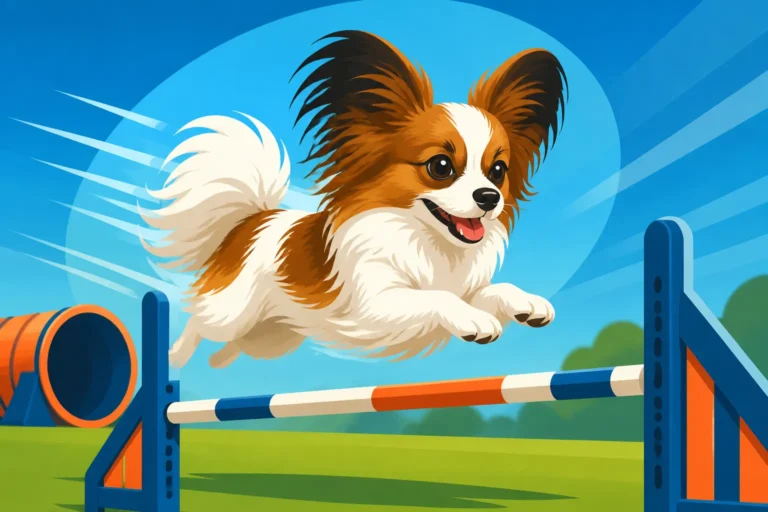
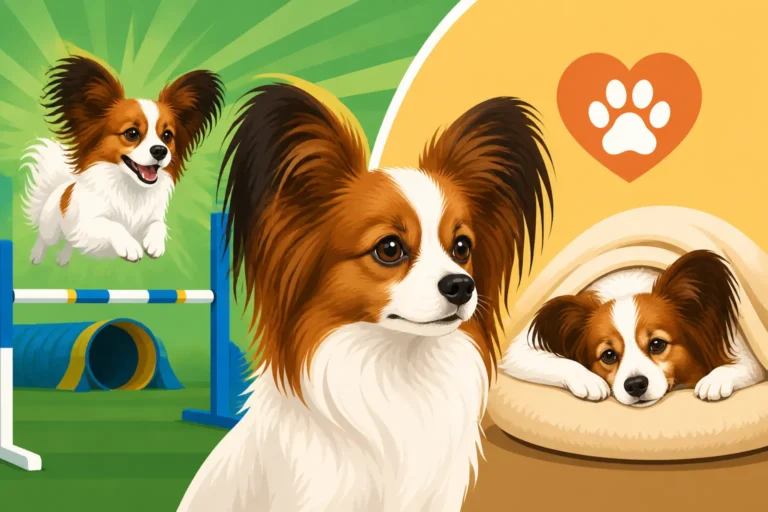
Despite their delicate appearance, Papillons are energetic and surprisingly athletic. This isn't just physical energy; it's mental energy too. They love having a job to do, and learning tricks provides an excellent outlet for this mental drive. While their sessions need to be short to keep their attention, during those short bursts, they can be incredibly focused. Their compact size also makes them nimble and agile, which helps when they're learning physical tricks like weaves or spins. Don't let their small stature fool you; these dogs are ready to tackle challenges and love showing off what they can do. Think of them as miniature athletes with brilliant minds, always ready for the next challenge.
Foundation Tricks: The Easy Wins Your Papillon Will Master First
Every great dog trainer will tell you that solid foundation behaviors are the bedrock of all future learning. For Papillons, these basic cues are often picked up with astonishing speed, laying the groundwork for more complex tricks. Starting with these easy wins builds your Papillon's confidence and establishes a clear communication channel between you.
Sit, Stay, and Come: The Essential Building Blocks
These aren't just "tricks"; they are vital commands for safety and everyday living. The good news is that most Papillons will pick these up incredibly quickly.
- Sit: This is usually the first command most puppies learn. Hold a small, high-value treat just above their nose and move it slowly back over their head. Their nose will follow the treat, and their rear end will naturally dip to the floor. The moment their bottom touches, say "Sit!" and immediately reward them. Repeat this a few times, and you’ll be amazed at how fast they connect the word to the action.
- Stay: Once your Papillon understands "Sit," "Stay" is the next logical step. Ask them to sit, then hold up an open palm towards them and say "Stay." Take a single step back, then immediately step forward and reward them. Gradually increase the distance and duration before rewarding. This command requires a bit more self-control but, with consistency, your Papillon will grasp it.
- Come: This is perhaps the most crucial safety command. Start in a quiet, distraction-free environment. Have someone hold your Papillon, walk a short distance away, then enthusiastically call their name followed by "Come!" or "Here!" When they reach you, make a huge fuss and give them a jackpot of treats. Make coming to you the most rewarding thing in the world. As they get better, practice in different environments and with more distractions. A reliable recall can literally save your dog's life.
Down: Teaching Relaxation and Control
"Down" is often a bit harder than "Sit" for many dogs because it requires them to be in a more vulnerable position, and it’s not as natural a default pose. However, a Papillon's intelligence means they'll likely figure it out quickly. To teach "Down," start with your dog in a sit. Hold a treat at their nose and slowly lower it straight down to the floor, then slide it away from them along the floor. Their head will follow, and their body will likely follow suit. As soon as their elbows touch the ground, say "Down!" and reward them. If they try to stand up, simply pull the treat back up and start over. Make sure the reward is delivered while they are still in the down position. This command is fantastic for encouraging calm behavior and can be really useful for managing excitement in different situations.
Leave It and Drop It: Life Skills with Quick Payoffs
These two commands are indispensable for preventing your Papillon from ingesting something dangerous or guarding a prized (but inappropriate) item.
- Leave It: Place a low-value treat on the floor and cover it with your hand. When your Papillon shows interest, say "Leave It." The moment they look away from your hand, even for a split second, praise them and reward them with a different, high-value treat from your other hand. Never let them have the covered treat. Gradually make it harder by leaving the treat uncovered for longer periods or by walking past it. This teaches impulse control.
- Drop It: This trick is about willingly releasing an item they already have. Offer your Papillon a toy. While they're holding it, present a very high-value treat right to their nose. As they open their mouth to take the treat, say "Drop It!" and let them have the treat. Immediately pick up the toy. The key is to make releasing the item a positive experience, not a punishment. With repetition, your Papillon will learn that "Drop It" means something even better is coming. You can find excellent training tools, including various high-value treats and clickers, on platforms like Amazon to aid in teaching these crucial commands. How a Clicker Lands With a Papillon delves into how effective this tool can be with your smart dog.
Beyond the Basics: Engaging and Fun Tricks Your Papillon Will Love
Once your Papillon has the fundamental commands down pat, their eager minds will be ready for more exciting challenges. These tricks are not just fun party pieces; they continue to build your dog's confidence, strengthen your bond, and provide valuable mental stimulation.
Spin and Twirl: Quick and Engaging Movements
These are often among the first "fun" tricks a Papillon learns because they tap into their natural agility and desire to follow a lure.
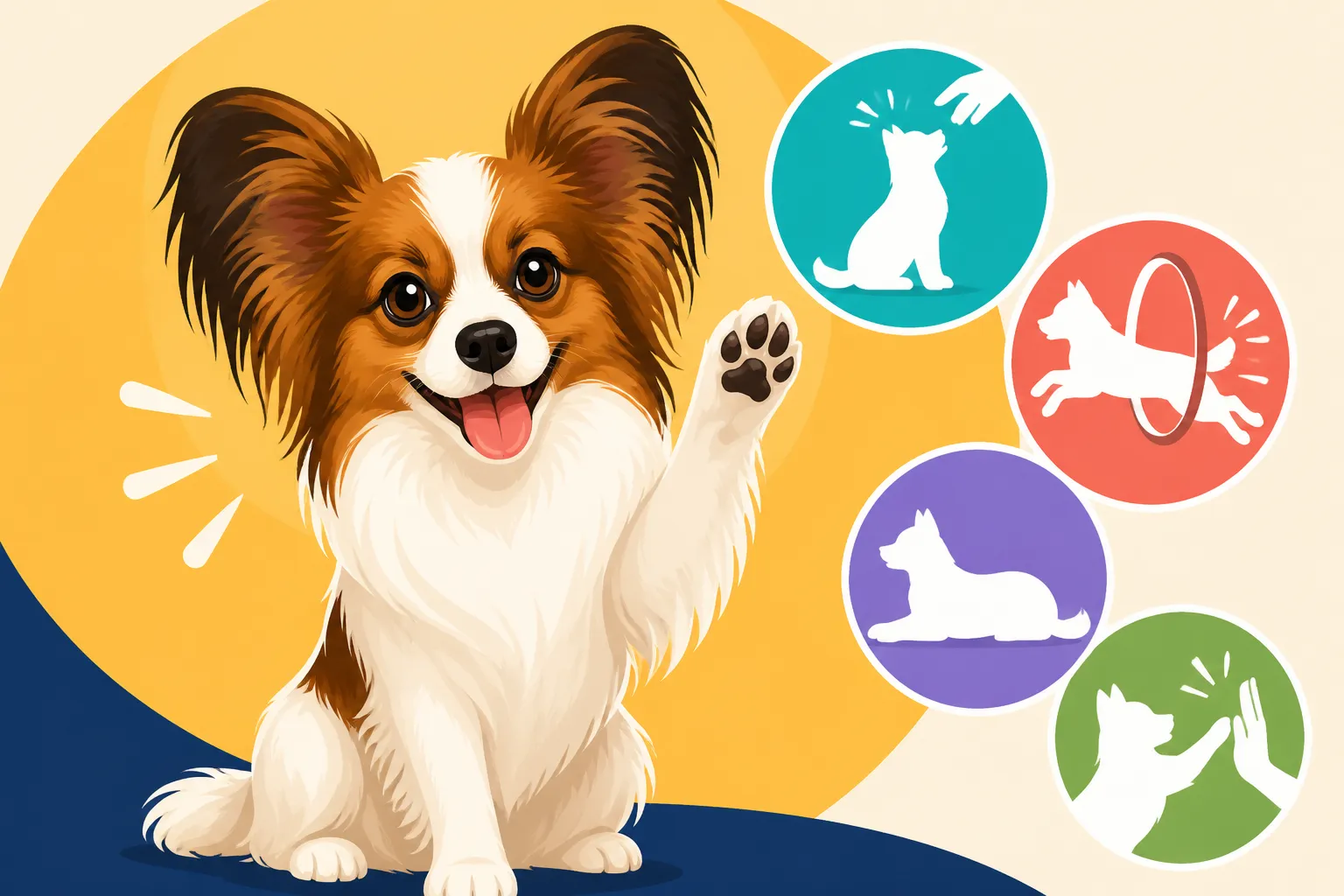
- Spin (or Circle): Hold a treat at your Papillon's nose and move it in a complete circle, luring them to follow their nose and spin around. As they complete the circle, say "Spin!" and reward them. Start with a smaller circle if needed, gradually making it larger. They will quickly associate the movement with the command.
- Twirl: This is similar but in the opposite direction. Teach them one direction first, then introduce the other with a new word. The key is clear luring and consistent verbal cues. These tricks are great for quick bursts of mental and physical activity and can be used as a fun way to release energy.
Shake a Paw and High Five: Impressive Hand-Based Tricks
These are delightful tricks that showcase your Papillon's ability to use their paws in a controlled manner, and they're surprisingly easy for them to grasp.
- Shake a Paw: Ask your Papillon to "Sit." Hold a treat in a closed fist. They will naturally try to paw at your hand to get the treat. The moment their paw touches your hand, open your hand, say "Shake!" and give them the treat. Repeat this, gradually adding the verbal cue before they even paw.
- High Five: Once "Shake" is solid, "High Five" is a simple progression. Instead of your palm facing up, hold it vertically. Lure them to touch your hand with their paw. Say "High Five!" and reward. The trick here is patience and repetition, letting them offer the paw rather than forcing it. These tricks make for fantastic photo opportunities and are a hit with guests.
Fetch and Retrieve: Tapping into Their Playful Side
While not a traditional "retrieving" breed, many Papillons adore playing fetch and can be taught to retrieve specific items. This is a trick that provides both mental and physical exercise.
- Fetch: Start in a small space. Toss a favorite small toy a very short distance. When your Papillon investigates or picks it up, excitedly call them back to you. The moment they come close, offer a high-value treat and take the toy (or encourage them to drop it with "Drop It!"). Gradually increase the distance. The trick is making the return to you, and dropping the toy, the most rewarding part.
- Retrieve (Specific Item): This is more advanced. Start with a single, easily identifiable toy. Say its name ("Get your ball!"). When they pick it up, reward them. Gradually introduce other toys, only rewarding when they pick up the correct one. This is a longer process but incredibly impressive and stimulating for a smart Papillon. Training programs, like those offered by BAXTER & Bella, can provide structured lessons for advanced tricks like this, walking you through the steps in a clear, consistent manner.
Effective Training Techniques for Your Quick-Learning Papillon
Papillons are eager students, but even the brightest dogs benefit from consistent, positive, and well-structured training. Avoiding common pitfalls and embracing effective methods will ensure a happy, successful learning journey for both you and your furry friend.
Keep Sessions Short, Positive, and Fun
This is perhaps the most critical rule for training any dog, especially a small, intelligent breed like the Papillon. Their attention spans, while sharp, aren't endless.
- Short Bursts: Aim for training sessions of 5-10 minutes, two to three times a day. This keeps them engaged and prevents them from getting bored or frustrated. You want to end each session on a high note, with a success. How Short a Papillon's Training Session Should Be offers more insights into optimal session lengths.
- Positive Reinforcement is Key: Papillons are sensitive souls; harsh corrections or scolding will shut them down. Focus entirely on positive reinforcement. Lavish praise, enthusiastic "Good dog!" exclamations, and high-value treats are far more effective. When they make a mistake, simply redirect them or make the task easier, rather than punishing them. You want them to associate learning with joy, not fear.
- Make it a Game: Papillons view training as a fun interaction with their favorite person. Keep your energy up, use an encouraging tone, and celebrate their successes. The more fun it is, the more they will want to participate.
Consistency, Patience, and High-Value Rewards
Even though Papillons learn quickly, consistency is paramount. Everyone in the household needs to use the same commands and hand signals.
- Consistent Cues: Stick to one word for each command ("Sit," not sometimes "Sit" and sometimes "Sitty"). Use consistent hand signals too. This clarity helps your Papillon understand exactly what you're asking.
- Patience is a Virtue: There will be days when your Papillon seems to have forgotten everything they learned yesterday. Don't get discouraged! Revert to an easier version of the trick, end on a success, and try again later. Patience builds trust, and trust builds a stronger training relationship.
- High-Value Rewards: While some Papillons will work for a piece of their regular kibble, for new or challenging tricks, "high-value" treats are best. Think tiny pieces of cooked chicken, cheese, or specialized training treats. Experiment to find what truly motivates your particular Papillon. Using varied treats helps keep their interest piqued. Which Rewards a Papillon Works For dives deeper into motivating your smart dog.
Consider Professional Guidance or Online Resources
Sometimes, you hit a plateau, or you simply want to ensure you're using the most effective techniques. Don't hesitate to seek help!
- Puppy Classes and Beyond: A good puppy class not only teaches your Papillon basic manners but also exposes them to new environments and other dogs in a controlled setting. Beyond puppyhood, agility or obedience classes can take their trick training to the next level. Whether Puppy Class Is Enough for a Papillon explores the benefits of structured training for your little learner.
- Online Training Programs: For those with busy schedules or limited access to in-person classes, online platforms can be a lifesaver. Companies like BAXTER & Bella offer comprehensive online puppy and dog training programs that guide you step-by-step through various behaviors and tricks. These resources can be especially valuable for learning proper technique and troubleshooting common issues from the comfort of your own home. You can also find a vast array of training books and videos on Amazon that cater to positive reinforcement methods.
- Socialization and Exposure: While not a trick in itself, ensuring your Papillon is well-socialized from a young age will make them more confident and adaptable in various training situations. A well-adjusted Papillon is a more focused and happy learner. Remember, When to Start Training a Papillon Puppy is earlier than you might think!
Comparing Easy to Intermediate Tricks for Your Papillon
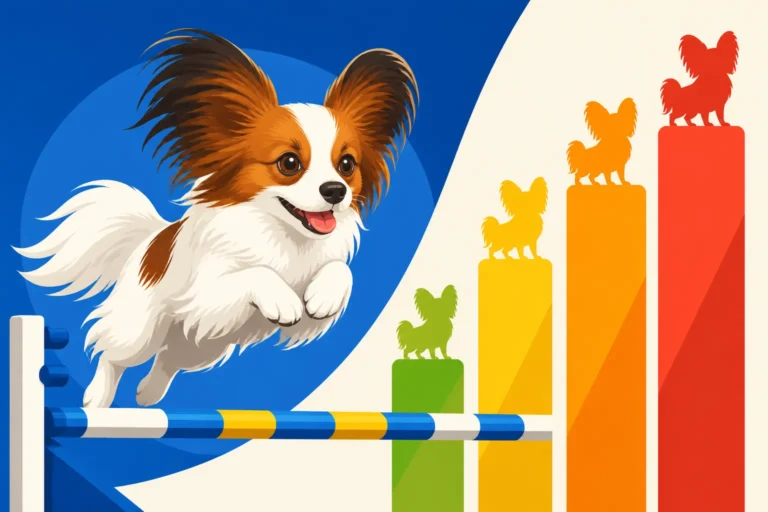
To give you a clearer idea of what to expect, here's a table comparing some of the tricks your Papillon can learn, categorized by their typical difficulty and what they entail.
| Trick Category | Example Tricks | Typical Learning Time (Papillon) | Key Motivators | Benefits |
|---|---|---|---|---|
| Foundation | Sit, Come, Down, Stay | Very fast (days to a week) | Treats, praise, safety | Crucial for safety and daily manners |
| Simple Fun | Spin, Twirl, Touch, Shake | Fast (few days to 2 weeks) | Treats, playful interaction | Builds confidence, quick mental exercise |
| Intermediate | Fetch, Leave It, High Five | Moderate (1-4 weeks) | High-value treats, favorite toys | Teaches impulse control, impressive |
| Advanced | Play Dead, Weave, Retrieve Named Object | Longer (weeks to months) | Very high-value treats, consistent practice | High mental stimulation, showcases intelligence |
Remember, these are general guidelines. Your individual Papillon's personality, your consistency, and the value of your rewards will all influence how quickly they pick up each new trick. But one thing is for sure: with a Papillon, you're starting with a highly capable and enthusiastic learner!
Disclaimer
This article is for general informational purposes only and does not constitute professional advice. Laws, prices and regulations vary by location and change over time. Consult a qualified professional for guidance on your specific situation.