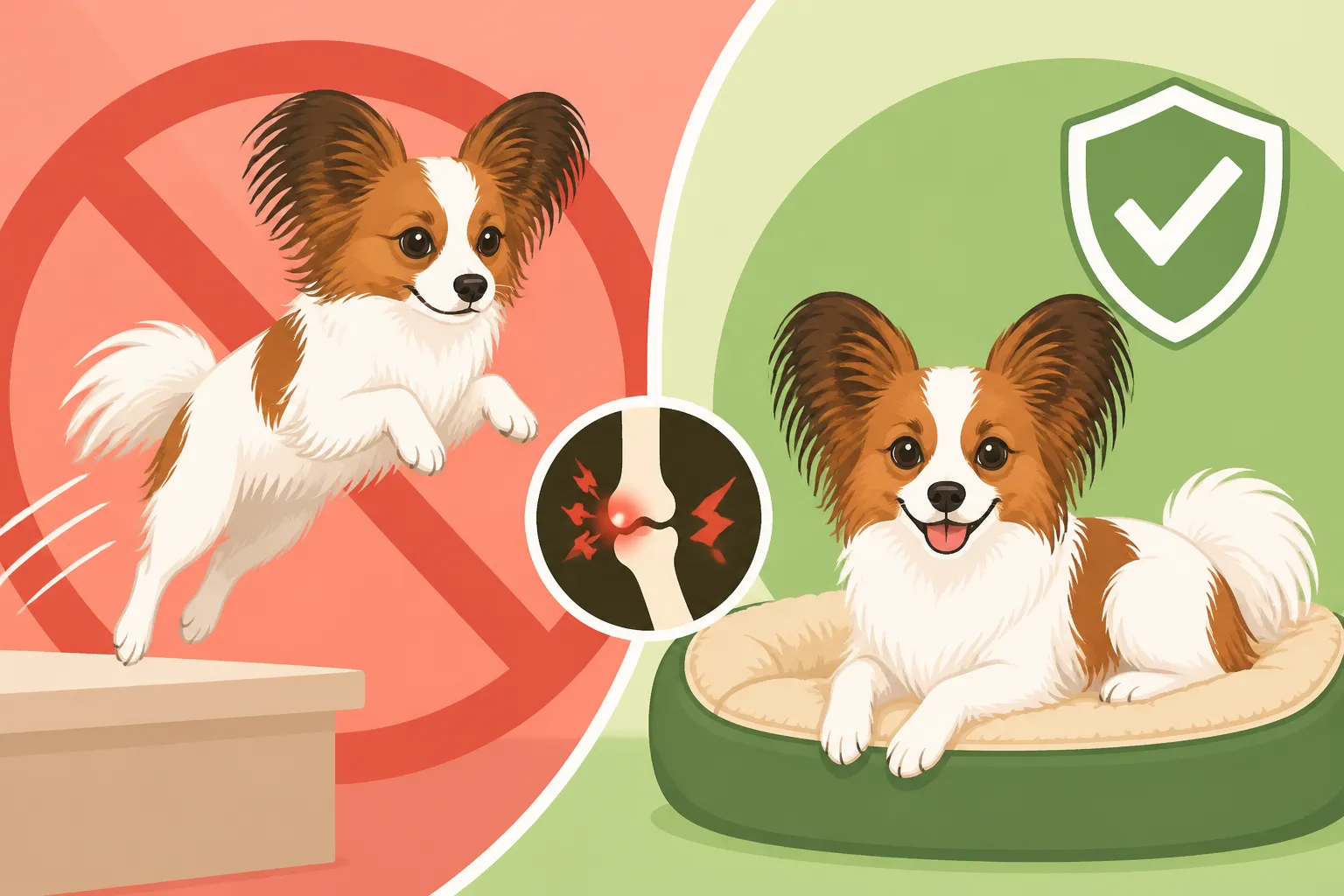
Why a Papillon Should Not Jump Before a Year
It's incredibly frustrating, isn't it? You bring home this tiny, adorable Papillon puppy, and within weeks, they're leaping off furniture, scaling stairs, and generally acting like they're invincible. You know in your gut that all this exuberant jumping can't be good for their little bodies, but trying to stop a determined, intelligent Papillon can feel like trying to herd butterflies. This guide is here to walk you through exactly why those early jumps are so risky for your Papillon and how you can safely manage their boundless energy until they're physically mature enough to truly take flight.
The Fragile Framework: Why Early Jumping Is a Real Risk for Papillons
When you look at a Papillon, you see a delicate, graceful creature. What you might not immediately realize is that underneath all that beautiful coat and charm, their skeletal system is still very much a work in progress, especially during their first year of life. Those tiny bones, growing plates, and developing ligaments are simply not built to withstand the impact and torsion that comes with enthusiastic jumping from heights. It's not about being a "wimp"; it's about safeguarding their long-term health and preventing painful, expensive problems down the road.
Understanding Growth Plates and Joint Development
Puppies, including our Papillons, have what are called "growth plates" at the ends of their long bones. These are areas of cartilage where bone growth occurs. Think of them as the construction zones of your puppy's skeleton. They remain open and soft until the puppy reaches skeletal maturity, which, for a Papillon, is usually around 10-12 months of age, sometimes even a bit later for larger individuals or specific growth areas. Until these plates close and harden into solid bone, they are extremely vulnerable.
A sudden, jarring impact from a jump, or repetitive stress over time, can damage these growth plates. A growth plate injury can be much more serious than a simple sprain in an adult dog because it can affect how the bone grows. It might lead to a limb that's shorter than the other, or one that grows at an odd angle, leading to lifelong lameness, pain, and the need for corrective surgeries. It's a silent threat because you might not see the damage immediately, but the consequences can manifest months or even years later. Their joints, particularly the knees, are also still developing their full stability and ligament strength. The First Year With a Papillon Puppy is a critical period for proper development.
The Ever-Present Threat of Patellar Luxation
One of the most common and concerning orthopedic issues for Papillons is patellar luxation, often referred to as a "slipping kneecap." Imagine your kneecap, or patella, as a small bone that slides in a groove at the end of your thigh bone (femur). In patellar luxation, this kneecap slips out of its groove, usually to the inside (medial luxation). Patellar Luxation Is the Papillon Problem You Will Actually Meet far too often.
While patellar luxation can have a genetic component, trauma, especially from jumping or landing awkwardly, can certainly exacerbate a predisposition or even cause the kneecap to slip repeatedly in a dog that might otherwise have managed. The force from jumping, particularly from heights like a sofa, bed, or even a low chair, puts immense strain on these tiny knee joints. When a Papillon lands, the impact can push the kneecap out of place. Repeated luxation can damage the cartilage, cause pain, and lead to arthritis. Over time, it can deform the leg structure. What Patellar Luxation Does to a Papillon is truly heartbreaking to witness in a dog you love so much.
Recognizing the Risks: Where Papillons Get Into Trouble
Our Papillons are often fearless and unaware of their small stature. They see the world from our height and believe they can conquer any obstacle. This audacious spirit, while charming, can lead them straight into situations that are detrimental to their still-developing bodies. Understanding the common culprits for injury is the first step in prevention.
The Couch, the Bed, and Other Household Hazards
It might seem innocuous, but a jump off a standard sofa, or worse, a bed, is equivalent to a human jumping off a wall twice their height. For a little Papillon, the impact on their delicate joints is significant. Their legs, particularly those vulnerable growth plates and developing knee ligaments, absorb the full force of that landing. Even if they don't cry out in pain immediately, micro-traumas can accumulate. This is especially true if they land awkwardly, perhaps misjudging the distance or slipping on a hard floor.
Many Papillon owners unknowingly contribute to this risk by allowing their puppies free access to high furniture. They might not realize the long-term implications, or they might feel guilty about restricting their puppy's freedom. But trust me, a few months of careful management is a small price to pay for a lifetime of healthier joints. Remember, Why a Papillon's Kneecap Slips Out often involves repeated stress or awkward movements. This is why many owners swear by steps or ramps. Even a simple set of pet stairs or a ramp, easily found on places like Amazon, can make a huge difference in protecting your pup from repeated impacts.
The Allure of Agility and Intense Play
Papillons excel at agility; they're incredibly intelligent, agile, and eager to please. It's one of the reasons many people fall in love with the breed! However, the very activities that make them shine in sports can be dangerous if introduced too early. Agility involves jumping, weaving, and quick turns – all movements that put significant stress on joints and growing bones.
While it's exciting to imagine your little butterfly dog soaring over jumps, patience is key. Most agility instructors, especially those experienced with small breeds, will tell you not to introduce full-height jumping or repetitive, high-impact activities until your Papillon is at least a year old, and ideally closer to 18 months, especially for serious competition. Before that, focus on foundation work: building body awareness, impulse control, and short, low-impact exercises. Think tunnels and flatwork, not scaling the A-frame or flying over hurdles. When to Start a Papillon in Agility is a common question, and the answer is always "later than you think."
Consider this table comparing safe and unsafe activities for your growing Papillon:
| Activity Type | Safe for Papillons Under 1 Year | Unsafe for Papillons Under 1 Year |
|---|---|---|
| Jumping | Low-height steps (2-3 inches), walking up gentle ramps | Jumping off/on furniture, leaping over obstacles, agility jumps |
| Running/Play | Short, controlled walks; soft-surface play; fetch on grass | Long, strenuous runs; intense, uncontrolled play with large dogs |
| Stairs | Carried up/down; very slow, supervised ascent of a few steps | Running up/down stairs; repetitive stair climbing |
| Mental Stimulation | Puzzle toys, training sessions, scent games, trick training | N/A |
| Surfaces | Carpet, rubber mats, grass | Slippery hardwood, tile, concrete (for landing) |
Creating a Safe Environment for Your Spirited Papillon Puppy
So, you know the risks. Now, what do you do when your Papillon puppy is a bouncy ball of energy, determined to reach every high surface? It's not about stifling their spirit, but about channeling it safely and setting them up for a healthy future. Proactive measures and smart training are your best friends here.
Puppy-Proofing Your Home for Joint Health
The first step is to get down on their level and assess your home from a Papillon's perspective. What looks like a small step to you is a mountain to them.
- Ramps and Steps: This is arguably the most crucial investment. Place pet ramps or low steps next to sofas, beds, and any other furniture your Papillon might want to access. There are many options available, from sturdy wooden ramps to carpeted steps. Even if your Papillon can jump, train them to use the ramp. Praise and treats work wonders! I’ve seen some great, compact options on Amazon that fit well in smaller living spaces without being an eyesore. Whether Ramps Help a Papillon's Knees is a resounding yes!
- Restrict Access: When you can't supervise directly, use pet gates to block off areas with stairs or high furniture. This isn't just about preventing jumps; it also keeps them safe from other household hazards.
- Floor Surfaces: If you have hard, slippery floors, consider placing runners or rugs in high-traffic areas, especially where your Papillon might jump down onto them. Slipping during a landing can twist joints and cause injury.
- Carrying Protocol: For young puppies, get into the habit of gently lifting them on and off furniture. Make it a positive experience, so they don't learn to resent being handled. This simple act can prevent countless injuries.
Channeling Energy with Safe, Engaging Activities
A bored Papillon is a creative Papillon, and their creativity might involve finding new and exciting ways to launch themselves into the air. Mental and physical exercise are vital, but they must be age-appropriate.
- Training, Training, Training! Papillons are incredibly smart and thrive on learning. Focus on foundation obedience, trick training on the floor, and building a strong bond. Think "sit," "stay," "down," "come," and fun little tricks like "spin" or "bow" that keep all four paws on the ground. This not only tires their minds but also strengthens their muscles in a controlled way. Online training platforms, like those offered by BAXTER & Bella, often have excellent puppy curricula that emphasize safe development and positive reinforcement. How Much Exercise a Papillon Needs isn't just about physical exertion, it's about mental engagement too.
- Scent Work and Puzzle Toys: These activities engage their powerful sense of smell and their keen intellect without any jumping. Hide treats around the house, use snuffle mats, or invest in interactive puzzle toys. These can be incredibly tiring and satisfying for a Papillon.
- Short, Supervised Play Sessions: Engage in short bursts of play on soft surfaces like carpet or grass. Use soft toys for fetch, but keep throws low and avoid encouraging high jumps for the toy. Teach them to bring the toy back for a treat or another toss, focusing on controlled movement.
- Controlled Walks: While walks are good, avoid over-exercising a young puppy. Short, frequent walks are better than one long, exhausting trek. Keep them on a leash to prevent them from bolting or attempting risky jumps in unfamiliar terrain.
When Can a Papillon Safely Start Jumping?
The question everyone wants to know: when can I finally let my Papillon be the agile, airborne marvel I know they can be? There's no single, universally agreed-upon "magic date," but there are very clear guidelines you should follow to protect your beloved companion.
The One-Year Benchmark and Beyond
Generally speaking, the absolute minimum age to introduce any significant jumping for a Papillon is around 12 months (one year) old. This is when most small breeds have had their growth plates close, and their skeletal system is considered more mature. However, even at a year, it's crucial to approach jumping activities, especially those involving height and repetition, with caution and gradual progression.
- Consult Your Vet: Before starting any agility training or allowing regular jumping from heights, have a conversation with your veterinarian. They can assess your Papillon's individual development, check their patellas for any signs of instability, and give you personalized advice. They might even recommend an orthopedic exam if there are any concerns.
- Start Low and Slow: Once cleared, begin with very low obstacles – think a small broomstick laid on the floor, then gradually raise it an inch or two at a time. Focus on proper form and technique. Don't rush into full-height jumps or complex sequences.
- Listen to Your Dog: Pay close attention to any signs of discomfort, lameness, or reluctance to jump. If you notice anything, stop immediately and consult your vet. Signs a Papillon's Kneecap Slips can be subtle, like a little hop or skip in their gait.
The Long-Term Health Perspective
Remember, this isn't just about preventing acute injury; it's about ensuring the long-term health and mobility of your Papillon. Every responsible Papillon breeder will emphasize the importance of protecting a puppy's joints during their formative months. By being diligent now, you are greatly reducing the risk of conditions like early onset arthritis or the need for costly patellar luxation surgery in the future.
While your Papillon puppy might not understand why you're constantly lifting them off the sofa or redirecting their playful leaps, they will thank you for it with a lifetime of active, pain-free enjoyment. The patience and care you invest during their first year will pay dividends for many years to come, allowing them to truly thrive in activities like agility, or simply enjoy a comfortable life of chasing squirrels and snuggling on your lap. Whether a Papillon's Knees Get Worse With Age is a concern for many owners, and proper early care is a huge factor in mitigating that risk.
Disclaimer
This article is for general informational purposes only and does not constitute professional advice. Laws, prices and regulations vary by location and change over time. Consult a qualified professional for guidance on your specific situation.