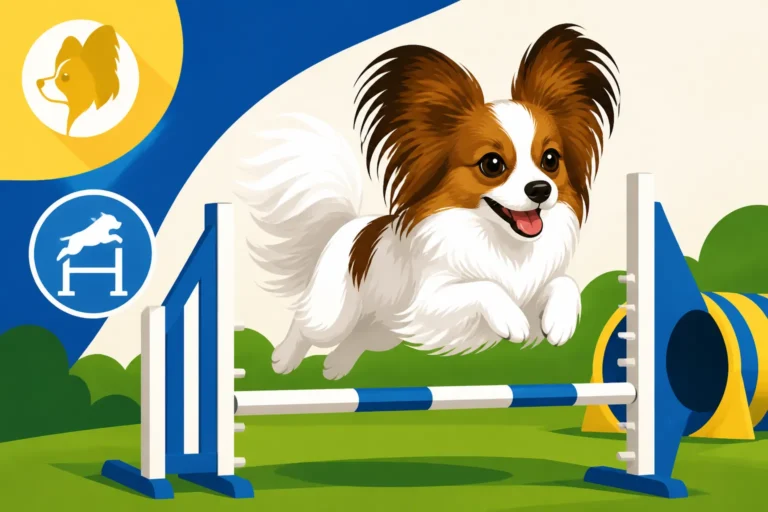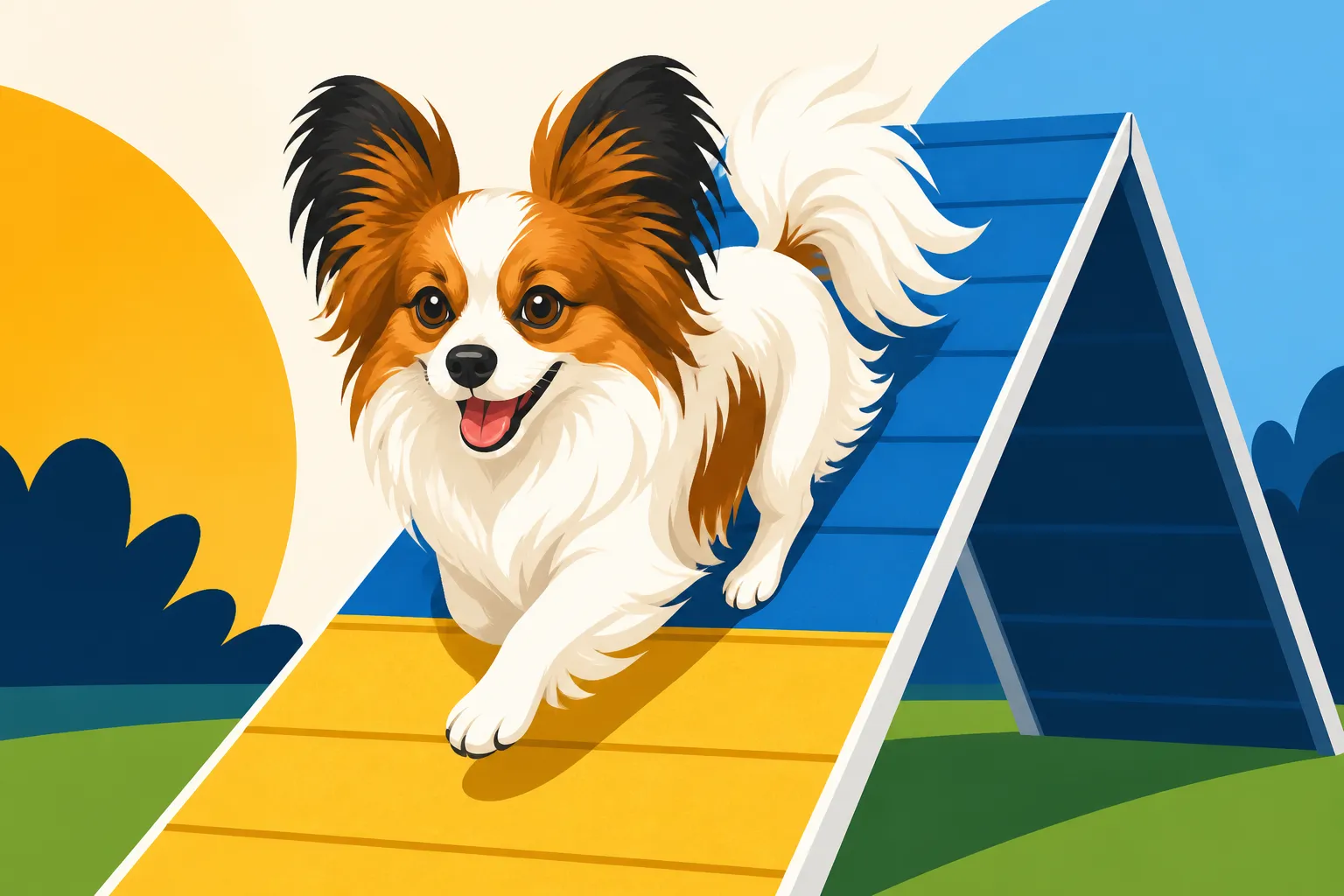
How a Papillon Handles the A Frame
Oh, the A-frame! It looks so imposing, doesn't it? For us Papillon owners, watching our tiny butterflies scale what appears to be a mountain can feel both thrilling and a little terrifying. You might worry about their delicate joints, their little legs making it up and down, or whether they'll even want to climb such a big obstacle. It's a completely valid concern, especially when you see those towering A-frames at trials. But don't you fret! Your clever little Papillon absolutely can conquer the A-frame with the right approach, building confidence and ensuring their safety every step of the way. This guide is all about demystifying the A-frame for Papillons, breaking down the training process, and helping you navigate any wobbles along the path to A-frame mastery.
Understanding the A-Frame Challenge for a Papillon
Let's be real: when you look at an A-frame, especially one at its full height in a competition ring, it's a considerable structure. For a dog that might weigh less than ten pounds, it can seem monumental. Understanding why it poses a unique challenge for our petite pals is the first step to training them successfully and safely.
The Physical Demands on a Small Dog
Imagine a giant climbing frame, but you're only a few inches tall. That's essentially what an A-frame can feel like for a Papillon. The steep angle of both the ascent and descent panels demands a lot from their small bodies. They need to generate enough power to climb up, maintain balance at the peak, and then carefully control their descent without simply plummeting down the other side.
Their size also means that the "contact zones" – the brightly colored areas at the bottom of each panel that dogs must touch to avoid faults in competition – are a significant portion of their stride. This means precise footwork is crucial. When a Papillon lands from the peak of an A-frame, even though the jump height they compete at is much lower than larger breeds, there's still an impact on their joints. Their tiny bones and ligaments need to be conditioned and strong. This is why it's so important to consider factors like Whether Agility Wears Out a Papillon's Knees and ensure they are physically mature and fit before engaging in high-impact activities. We want to build strength, not stress.
The Mental Game: Confidence and Drive
Beyond the physical, there's a huge mental component to A-frame work. Some Papillons are naturally bold and will launch themselves at anything. Others might be more cautious, especially with heights or unstable surfaces. For the hesitant Papillon, the sheer size of the A-frame can be intimidating. They might hesitate at the bottom, refuse to climb, or try to jump off before reaching the contact zone.
Our job as owners and trainers is to build their confidence, turning any apprehension into eager anticipation. This often comes down to tapping into what truly motivates your individual Papillon. Is it a favorite squeaky toy? A high-value training treat? Or simply the sheer joy of working with you? Understanding What Motivates a Papillon is absolutely key here. If your Papillon views the A-frame as a fun game where they earn awesome rewards, they'll approach it with gusto. If it feels like a chore or a scary experience, they'll shut down. The goal is always to make it a positive, exciting experience, building that self-assurance piece by piece.
Training Foundations for the A-Frame
Training the A-frame is less about brute force and more about methodical, positive, and incremental steps. You wouldn't expect a toddler to climb a rock wall without assistance, and the same principle applies to our Papillons and the A-frame. We start small, celebrate every success, and gradually build towards the full obstacle.
Starting Low and Slow: Building a Positive Association
The absolute golden rule for A-frame training is to start low. Many agility clubs have an A-frame that can be lowered significantly, sometimes even to a flat "walk-over" plank. If not, you can simulate this at home with sturdy, non-slip planks that are slightly raised. The goal is to make the experience completely non-threatening.
Begin by simply luring your Papillon over the low A-frame with a treat or their favorite toy. You want them to walk over it, sniffing and exploring, associating it with positive reinforcement. Toss the treat ahead, guide them with your hand, or dangle their toy enticingly on the other side. Praise them lavishly for simply walking across it. Keep these initial sessions incredibly short – just a few repetitions – and end on a high note. Think of it as introducing a new, fun piece of playground equipment. Some trainers find using a clicker incredibly effective here. If you're curious about this method, consider how How a Clicker Lands With a Papillon can enhance your training. The distinct sound followed immediately by a reward helps them understand exactly what behavior earned them that tasty treat.
The next step is to introduce the concept of the contact zones. These are typically painted yellow on official equipment. Even on a low A-frame, you can teach your Papillon to pause or target the yellow section. Many trainers use a "two-on, two-off" method, where the dog places its front two paws on the ground and its back two paws on the contact zone. Reward heavily when they get this right! This foundational behavior is paramount for safety and success in competition. You can find excellent training tools, like contact trainers or small platforms, on platforms like Amazon to help practice this specific behavior in a controlled environment.
Elevating Gradually and Mastering the Contacts
Once your Papillon is confidently trotting over the low A-frame and understanding the contact zones, it's time to incrementally raise the height. And I mean incrementally. Think inches, not feet, at a time. The goal is to make each increase so small that your dog barely notices the difference.
As the A-frame gets higher, the importance of solid contact training becomes even more apparent. You want your Papillon to understand that they must run all the way down the panel and hit that yellow zone before being released or getting their reward. This prevents "fly-offs," where a dog jumps prematurely from the A-frame to get to the next obstacle or handler, often missing the contact and risking injury or a fault.
There are different approaches to teaching contacts:
- Running Contacts: The dog maintains speed and hits the contact zone as they run off. This requires a lot of repetition and precise timing.
- Two-on, Two-off (2o2o): The dog stops with their back paws in the contact zone and their front paws on the ground, holding that position until released. This is often easier for smaller dogs to learn initially and provides excellent safety.
Regardless of which method you choose, consistency is key. Always reward generously for correct contact performance. If your Papillon is food-motivated, tiny, high-value treats work wonders. If they prefer toys, a quick game of tug or a toss of their favorite ball can be a powerful reinforcer. Knowing Which Rewards a Papillon Works For will make your training sessions far more effective and enjoyable for both of you. Many online training programs, such as those offered by BAXTER & Bella, provide structured, step-by-step video lessons that can guide you through teaching contact behaviors for agility obstacles, perfect for reinforcing these foundations at home.
| Training Element | Purpose for Papillon | Key Considerations |
|---|---|---|
| Low Height Introduction | Builds confidence, reduces intimidation | Non-slip surface, positive association, short sessions |
| Luring & Motivation | Encourages forward movement, creates positive drive | High-value treats/toys, enthusiastic praise |
| Contact Zone Focus | Ensures safety, prevents premature jumping, scores points | Consistent marking (e.g., "touch"), reward for correct paw placement |
| Gradual Elevation | Prevents fear, builds muscle memory gradually | Small increments, maintain confidence at each stage |
| Repetition & Consistency | Solidifies learned behavior, makes it habitual | Keep sessions fun, avoid over-drilling |
Common Papillon A-Frame Hurdles and Solutions
Even with the best intentions and careful progression, you might hit a few bumps in the road when training the A-frame with your Papillon. It’s completely normal! These little dogs are smart and sensitive, and sometimes their quick minds can lead to unique challenges.
Hesitation at the Top or Bottom
One common issue is hesitation. Your Papillon might climb beautifully but then freeze at the apex, looking down as if questioning their life choices. Or, they might scramble down the descent side, but refuse to fully place their paws in the contact zone. This often stems from a lack of confidence, or perhaps an earlier negative experience (even if it was very subtle).
Solutions:
- Go back to basics: If hesitation occurs, lower the A-frame back to a height where your Papillon was previously confident. Rebuild that positive association at the easier level before attempting to increase the challenge again.
- Stronger motivation: Bring out the absolute highest-value treat or their most coveted toy. Sometimes, a super enticing reward is all it takes to override momentary apprehension.
- Lure with purpose: Use your body language and the lure (treat/toy) to guide them smoothly. Don't just hold the treat; actively move it to encourage their feet to follow the desired path down the contact.
- Celebrate every tiny step: If they even start to move down, mark that moment and reward. Break the descent into micro-steps if needed.
- Check footing: Ensure the A-frame surface is non-slip and comfortable for their paws. Sometimes a dog hesitates because they've slipped before or feel insecure on the surface.
- Remember, Papillons are incredibly sensitive creatures. Why Harsh Correction Fails on a Papillon is something every owner knows. A sharp voice or impatient tug can set back confidence building significantly. Always maintain a cheerful, encouraging demeanor.
"Fly-Offs" and Skipping Contact Zones
This is a classic Papillon issue! Our little speed demons are often so fast and eager to get to the next obstacle (or their handler) that they’ll launch themselves off the A-frame before hitting the yellow contact zone. It's not malicious; it's just pure enthusiasm and speed. While it might look impressive, it’s a fault in competition and, more importantly, can put undue stress on their joints, particularly their knees, over time.
Solutions:
- Prioritize contacts over speed: In training, slow everything down. Your Papillon needs to learn that the correct way to do the A-frame is to hit the contact, not just to get over it quickly. You might even have to put a "stopper" (like a small mat or another board) at the very end of the contact zone to physically prevent them from jumping off too early.
- Reinforce the target behavior: Go back to practicing the "two-on, two-off" or running contact target on a flat board. Build huge value for holding that position or running through the entire contact.
- Reward at the contact: Don't throw the treat forward until they have successfully engaged with the contact zone. The reward should happen right where their paws are supposed to be. This reinforces the correct location.
- Use a release cue: Once they are reliably hitting the contact, teach a release cue (e.g., "OK!" or "Go!") that signals they are free to leave the obstacle. They learn to wait for that cue while on the contact.
- Leash work: Sometimes, practicing on a light leash can help guide them through the full motion without allowing them to fly off, giving them a chance to understand the full path. Just be careful not to make it feel like a drag.
Mastering A-Frame Performance and Safety
Once your Papillon is tackling the A-frame with confidence and consistency, it's time to refine their performance and ensure their long-term well-being. Agility is a fantastic sport, but it requires mindful practice and care, especially for a small, agile breed like the Papillon.
Integrating into Sequences and Courses
Doing a single A-frame perfectly is one thing; integrating it smoothly into a complex course is another. The real challenge in agility comes from connecting obstacles fluidly, and the A-frame needs to become a natural part of that flow.
Start by adding one or two other obstacles before or after the A-frame. For example, a tunnel leading into the A-frame, or the A-frame followed by a simple jump. Vary the approach angles: sometimes your Papillon will come to the A-frame straight on, other times from the side. Practicing different entry and exit points helps them generalize the behavior, so they aren't thrown off when the course designer gets creative.
Pay close attention to your handling cues. Are you clearly indicating where you want them to go next? Is your body language helping them understand the path? Remember, these little dogs are incredibly observant and responsive to their handlers. The smoother your handling, the smoother their run will be. As you work on sequences, you'll start to see just How Fast a Papillon Runs a Course when they're truly in their element and confident about each obstacle.
Maintaining Enthusiasm and Preventing Injury
Agility should always be fun! To keep your Papillon's enthusiasm high and prevent burnout, keep training sessions varied. Don't just drill the A-frame over and over. Mix it up with other obstacles, tricks, or even just a fun game of fetch. How Short a Papillon's Training Session Should Be is a crucial consideration; these little dynamos can burn out quickly if sessions are too long. Aim for short, high-energy bursts of training rather than lengthy, repetitive drills.
Preventing injury is paramount, especially for a breed prone to patellar luxation. Here are some key points:
- Warm-up and cool-down: Always start with a gentle warm-up (a brisk walk, some stretches) before any strenuous agility work, and cool down afterward.
- Conditioning: Ensure your Papillon is in good physical condition. A fit dog with good muscle tone is less likely to suffer injuries. Regular walks and appropriate play contribute to this.
- Regular vet checks: Your vet can monitor your Papillon's joints and overall health. They can advise on things like weight management (even a few extra ounces can strain small joints) and general fitness. You should also ensure your Papillon gets all recommended health checks, including Whether a Papillon Needs a Yearly Eye Exam, as good vision is obviously critical for navigating obstacles safely.
- Safe equipment: Whether you're at a club or practicing at home, ensure all equipment is well-maintained and safe. A-frames should have non-slip surfaces and be stable. If you're considering buying your own backyard equipment, there are many options on Amazon that cater to small dogs and can be set up safely at lower heights for practice.
- Listen to your dog: If your Papillon seems tired, sore, or reluctant, stop. Pushing through discomfort can lead to serious injury and erode their love for the sport. Their agility career, which for a Papillon can be remarkably long as seen in How Long a Papillon's Agility Career Lasts, depends on careful management and listening to their subtle cues. If you notice any skipping or lameness, especially after jumping, consult your vet immediately, as it could be a sign of a slipping kneecap, which is a common issue for the breed, and one to be mindful of throughout their agility journey, as discussed in Whether a Papillon's Knees Limit Agility.
With patience, positive reinforcement, and a focus on safety, your Papillon can become an absolute superstar on the A-frame, soaring over it with confidence and grace!
Disclaimer
This article is for general informational purposes only and does not constitute professional advice. Laws, prices and regulations vary by location and change over time. Consult a qualified professional for guidance on your specific situation.