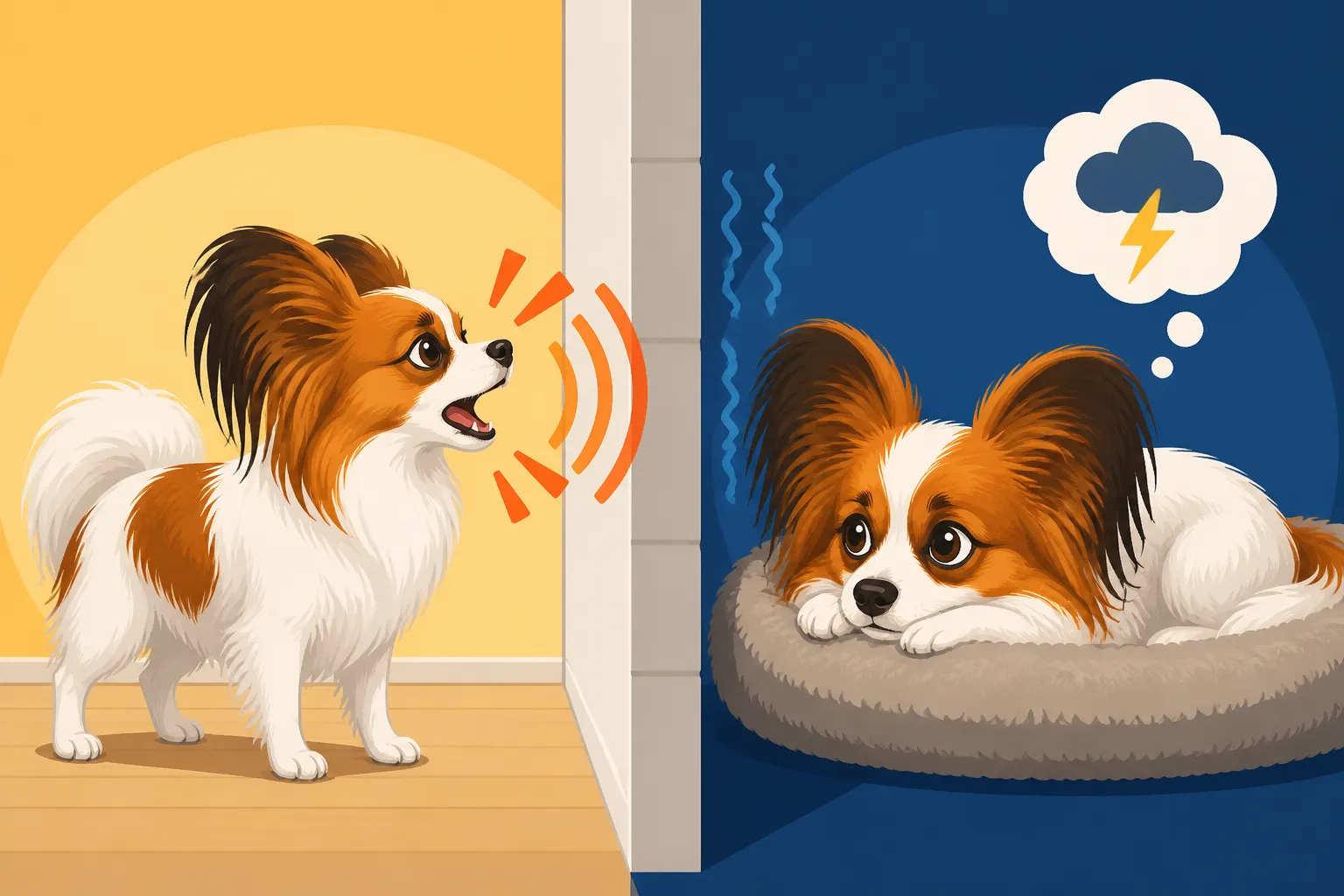
How a Papillon Does Behind a Shared Wall
Living in an apartment, condo, or even a townhouse with shared walls can be a delightful experience, bringing you closer to your community. But when you share your home with a lively, opinionated Papillon, those shared walls can quickly become a source of anxiety, especially if your little butterfly dog decides to vocally announce every passing shadow, distant door slam, or muffled conversation next door. The worry about neighbor complaints can steal the joy from your day-to-day life. This guide is here to dive deep into why your Papillon might be so sensitive to sounds behind those shared walls and, more importantly, offer practical, empathetic strategies to help create a more harmonious, quieter home for everyone.
Understanding Your Papillon's Inner Watchdog
It's easy to get frustrated when your Papillon barks, but understanding why they do it is the first step toward managing the behavior. These intelligent little dogs aren't just making noise for the sake of it; they're often responding to their innate instincts and acute senses.
The Papillon's Natural Alert System
Let's be real: Papillons are tiny but mighty, and they certainly don't see themselves as small dogs. Historically, their ancestors were companion animals often found in royal courts, but they also had a role as alert dogs. With their keen intelligence, a Papillon is incredibly aware of its surroundings, even when those surroundings are just outside a shared wall. They possess excellent hearing, a trait that makes them superb at picking up on the slightest auditory cues that we humans might completely miss or dismiss as background noise. They are, in essence, little alarm systems with big personalities.
When a Papillon hears something, their first instinct is often to investigate vocally. They're telling you, "Hey! Something's out there! I heard it! Pay attention!" This isn't malice or defiance; it's just how they're wired. Think of them as tiny, highly efficient security guards who take their job very, very seriously. Understanding this fundamental aspect of their breed character is crucial. You're not dealing with a dog that wants to annoy you or your neighbors; you're dealing with a dog that's simply doing what comes naturally, especially when triggered by unfamiliar sounds or perceived threats. This high level of sensitivity and intelligence also makes them incredibly receptive to training, which is good news for shared living situations. If you've ever wondered Why a Papillon Learns Faster Than a Poodle, it comes down to this keen intelligence.
Common Triggers Behind Shared Walls
The sounds that penetrate shared walls can be incredibly varied, and for a Papillon, each one can be a potential call to action. It's not just the loud, obvious noises. A dripping faucet next door, the faint murmur of a television, or even the soft creak of floorboards can be a significant trigger for a dog whose hearing is far more acute than ours. These are not just random sounds to them; they are signals.
Consider the classic culprits: footsteps in the hallway, the clang of a neighbor's door, hushed conversations, the distant whir of a vacuum cleaner, or even the playful yips of another dog down the hall. For Papillons, these sounds can escalate quickly from a curious tilt of the head to a full-blown barking frenzy. Sometimes, it's not even a direct sound, but vibrations traveling through the structure that sets them off. If your apartment has windows that overlook shared spaces like courtyards or balconies, visual triggers can also come into play – a person walking by, a cat slinking along a fence, or even leaves rustling in a specific way. Pinpointing these specific triggers is a detective's job, but it's vital. Start keeping a log of when and what your Papillon barks at to understand the patterns. What a Papillon Barks At can often be more varied than you might imagine.
Navigating the Challenges of Shared Living
Living with a vocal dog in a shared building isn't just about managing the dog; it's also about managing your own stress and your relationships with your neighbors. The challenges are multi-faceted and can weigh heavily on a conscientious pet owner.
The Acoustic Reality of Shared Walls
The construction of buildings varies wildly, and so does their ability to block sound. What sounds like a faint hum to you might be a distinct thud to your Papillon. Many modern apartments, unfortunately, are not built with robust soundproofing in mind, especially between units. Thin walls, shared ventilation systems, and even electrical outlets can act as conduits for sound. The high-pitched bark of a small dog, while not necessarily high in decibels, can be particularly piercing and carry surprisingly well through these structures.
This acoustic reality means that even if you feel like your dog isn't barking that much, the way the sound travels can make it seem much worse to your neighbors. It's a frustrating situation because you can't easily change the building's construction. This leaves you feeling caught between your beloved pet and the need to be a good neighbor. It’s important to acknowledge that this isn't just in your head; the architecture itself is often a contributing factor, intensifying the perceived problem.
The Impact on Neighborly Relations and Your Sanity
Let's be honest, few things are more stressful than receiving a complaint from a neighbor about your dog's barking. It can make you feel defensive, guilty, and even resentful. This stress can escalate to anxiety every time you leave your home, wondering if your Papillon will "act up" and cause another issue. You might start second-guessing your decision to get a dog, or feel like you can't ever truly relax in your own home. The fear of eviction or being asked to rehome your dog is a very real and terrifying prospect for many living in shared spaces.
Beyond official complaints, there's the unspoken tension. You might find yourself avoiding eye contact with neighbors, or rushing past them in the hallway. This constant state of low-level dread can significantly impact your mental well-being and diminish the joy of dog ownership. Remember, your feelings are valid. It's tough navigating this, and it takes patience and proactive strategies. This challenge is precisely why understanding Whether a Papillon Suits Close Neighbors is so important for prospective owners.
Practical Strategies for a Quieter Home
While you can't rebuild your apartment complex, there are many proactive steps you can take to mitigate barking and foster a calmer environment for your Papillon and your neighbors.
Environmental Management and Sound Control
One of the most immediate ways to tackle shared-wall barking is to manage the soundscape within your home. Think of it as creating a "cone of silence" around your Papillon. Start by placing your dog's crate or bed in the quietest part of your home, away from shared walls, especially if those walls back onto high-traffic areas like hallways or stairwells. Heavy curtains, thick rugs, and upholstered furniture can absorb sound within your own apartment, preventing it from reverberating and potentially reducing its transmission outside your unit.
White noise machines or even just a simple fan can be incredibly effective. These devices generate a consistent, low-level sound that masks external noises, making it harder for your Papillon to distinguish individual triggers. You can find many affordable options for white noise machines or even smart speakers on platforms like Amazon that can play ambient sounds or music specifically designed for calming dogs. While full soundproofing can be costly and isn't always feasible in rented properties, even adding peel-and-stick acoustic panels to a shared wall within your unit can help absorb some sound. Ensure they are placed safely and securely, out of your dog's reach.
Training for Calmness and Selective Barking
Environmental changes are a good start, but training is where you'll see the most significant long-term results. The goal isn't to stop all barking – after all, barking is a natural form of canine communication – but to teach your Papillon when it's appropriate to bark and, crucially, when to stop. The "Quiet" cue is invaluable here. Start by teaching your Papillon to bark on command, then immediately follow up by teaching them to be quiet on command. You can do this by letting them bark once or twice, saying "Quiet," and immediately rewarding them with a high-value treat when they stop, even for a second. Over time, they'll learn that "Quiet" means stopping the vocalization. For more in-depth guidance, check out resources like How to Teach a Papillon a Quiet Cue.
Desensitization and counter-conditioning are also powerful tools. This involves gradually exposing your Papillon to their barking triggers at a low intensity while simultaneously associating those triggers with something positive, like delicious treats. For example, play a recording of a neighbor's door closing at a very low volume. If your dog doesn't react, reward them. Gradually increase the volume over many sessions, always rewarding calmness. If your Papillon reacts, the sound is too loud, and you need to dial it back. Consistency and patience are key with these methods. If you feel overwhelmed, consider structured online training programs like those offered by BAXTER & Bella, which provide step-by-step guidance and support for common behavioral challenges.
Enriching Their Lives to Reduce Boredom Barks
A bored or under-stimulated Papillon is often a vocal Papillon. These intelligent little dogs need more than just physical exercise; they crave mental stimulation. If their minds aren't engaged, they might find "jobs" for themselves, and one of those jobs can become alerting you to every sound. Incorporate daily puzzle toys filled with treats, engage in short, fun training sessions, or play interactive games like fetch or hide-and-seek. These activities can burn off mental energy and reduce the likelihood of boredom-related barking. Explore articles like What Mental Work a Papillon Needs for more ideas.
Ensure your Papillon gets adequate physical exercise for their age and energy level. A good walk, a vigorous play session in a secure area, or even some indoor agility practice can tire them out both physically and mentally. A well-exercised and mentally stimulated dog is generally a calmer dog. Also, establishing a consistent daily routine can provide a sense of security and predictability, reducing anxiety that might manifest as barking. If your Papillon is left alone for periods, understanding What a Bored Papillon Destroys can give you insight into other behaviors that stem from lack of engagement, which often go hand-in-hand with excessive barking.
Long-Term Solutions and Support
Solving barking issues isn't a quick fix; it's a marathon, not a sprint. It requires ongoing commitment and, sometimes, outside help.
Building a Strong Foundation with Training and Routine
The earlier you start, the better. Socialization and puppy classes are invaluable for exposing your Papillon to various sights and sounds in a positive, controlled environment. This helps them develop confidence and learn to distinguish between truly threatening situations and everyday noises. Even if you have an adult Papillon, it's never too late to start a training class or work on socialization. Whether Puppy Class Is Enough for a Papillon often depends on the individual dog and owner commitment, but it's always a solid foundation.
Consistency in your daily routine is paramount. Papillons thrive on predictability. A regular schedule for feeding, potty breaks, exercise, and quiet time helps them understand what to expect and can reduce anxiety-driven barking. Always use positive reinforcement, rewarding desired behaviors rather than punishing unwanted ones. Papillons are sensitive dogs, and harsh corrections can damage your bond and make them more anxious, potentially increasing barking rather than decreasing it. How Sensitive a Papillon Is is a critical factor in choosing appropriate training methods.
When to Seek Professional Guidance
Sometimes, despite your best efforts, the barking persists, or it seems to stem from deeper anxiety. This is when a certified professional dog trainer or a veterinary behaviorist can be a lifesaver. They can assess your Papillon's specific triggers, body language, and temperament, and help you develop a customized training plan. They can also rule out underlying medical conditions that might be contributing to increased vocalization or anxiety. For instance, if your Papillon exhibits other signs like pacing, destructiveness, or excessive drooling when left alone, it might be a case of separation anxiety, which requires a specialized approach. Signs a Papillon Has Separation Anxiety can manifest in barking and needs careful management.
A professional can offer insights into the nuances of canine communication and behavior that you might miss. They can teach you advanced techniques for counter-conditioning, desensitization, and management. Don't view seeking professional help as a failure; view it as an investment in your Papillon's well-being and the peace of your home. It means you're committed to finding the best possible solution for your beloved companion.
Here’s a look at how different noise reduction techniques can help:
| Method | Description | Effectiveness | Effort/Cost (General Shape) |
|---|---|---|---|
| White Noise Machine | Generates constant ambient sound to mask external noises. | Moderate to High | Low effort / Low-Moderate cost |
| Heavy Furnishings | Adding rugs, curtains, upholstered furniture to absorb sound. | Low to Moderate | Moderate effort / Moderate cost |
| Soundproofing Panels | Acoustic panels applied to shared walls to absorb sound. | Moderate to High | Moderate effort / Moderate-High cost |
| Crate/Bed Relocation | Moving dog's resting area away from direct shared walls. | Low to Moderate | Low effort / No cost |
| "Quiet" Cue Training | Teaching dog to stop barking on command. | High (with consistency) | High effort / Low-Moderate cost (DIY to classes) |
| Desensitization | Gradual exposure to triggers at low intensity, paired with positive reinforcement. | High (with consistency) | High effort / Low cost (DIY) |
| Mental Enrichment | Puzzle toys, training games, chew toys to stimulate mind. | Moderate | Low effort / Low-Moderate cost |
| Increased Exercise | Ensuring adequate physical activity to tire them out. | Moderate | Moderate effort / Low cost |
Ultimately, living happily with a Papillon behind shared walls is about a multi-pronged approach: understanding their nature, managing their environment, consistent training, and providing ample mental and physical stimulation. With patience and dedication, you can create a tranquil home where both you and your Papillon can thrive, without constant worry about your neighbors.
Disclaimer
This article is for general informational purposes only and does not constitute professional advice. Laws, prices and regulations vary by location and change over time. Consult a qualified professional for guidance on your specific situation.