Whether a Papillon’s Coat Changes at a Year
A Papillon puppy coat transformation around one year old causes shedding and uneven texture before adult fur grows.
The daily stuff, done right.
Feeding amounts by life stage, coat and skin routines, dental and nail care, exercise needs, and what changes as they age.
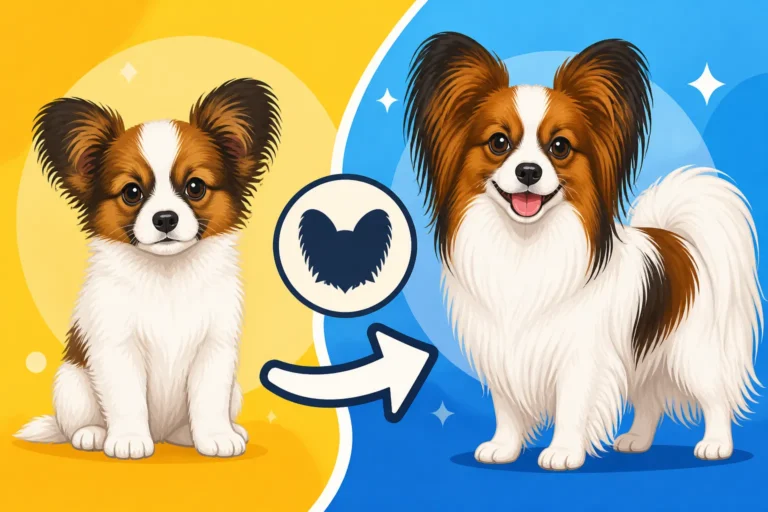
A Papillon puppy coat transformation around one year old causes shedding and uneven texture before adult fur grows.
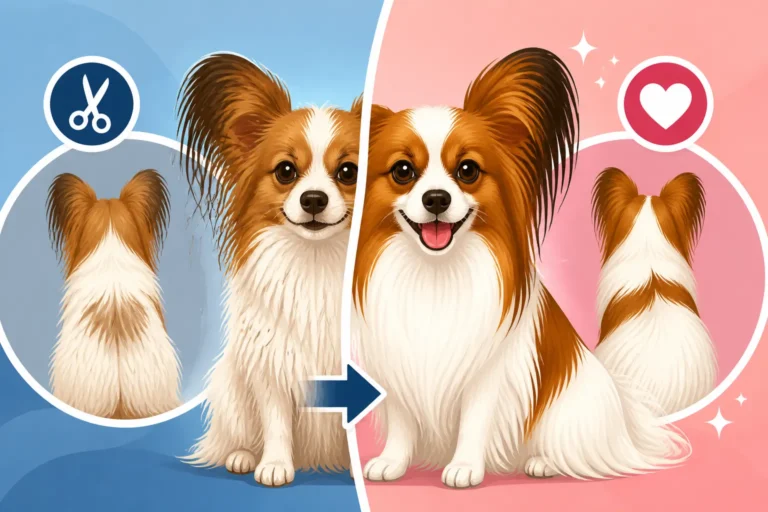
Spayed Papillon coat changes, including shifts in texture and softness caused by lower estrogen levels, explained clearly.
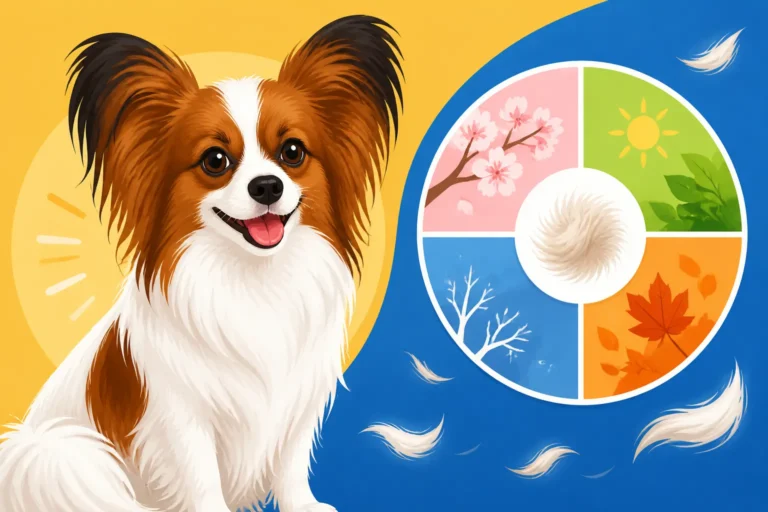
Papillon shedding cycles, spring and fall hair loss increases, and single coat growth phases explained for owners.
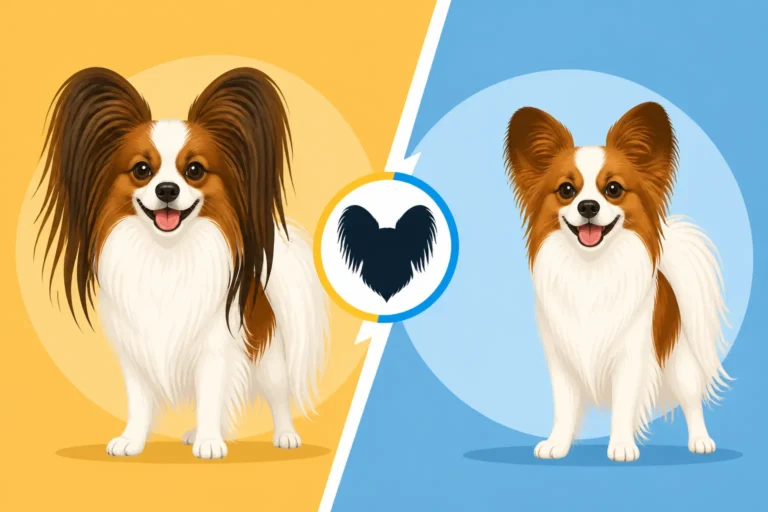
Papillon coat fringe on the ears, chest, and tail is distinctly longer than the fine hair on the main body of this single-coated breed.
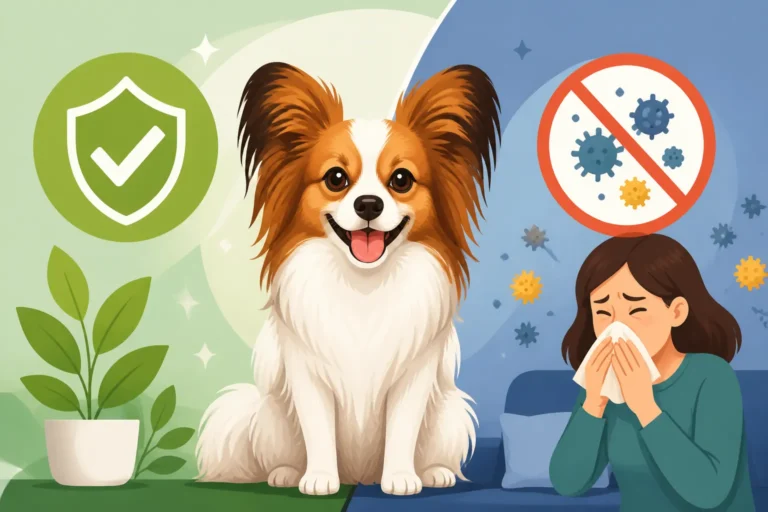
Papillon suitability for allergy households, explaining single coat shedding, dander production, and proactive grooming strategies.
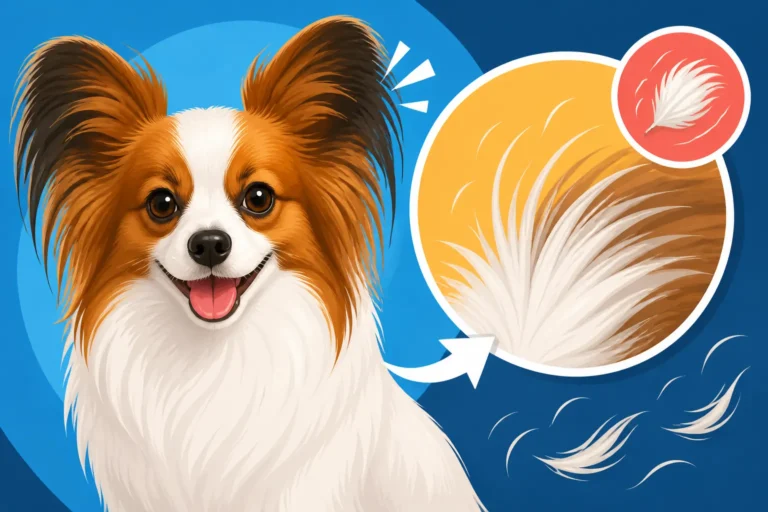
Papillon shedding causes confusion because their single coat lacks an undercoat, yet natural hair growth cycles still drop individual strands.
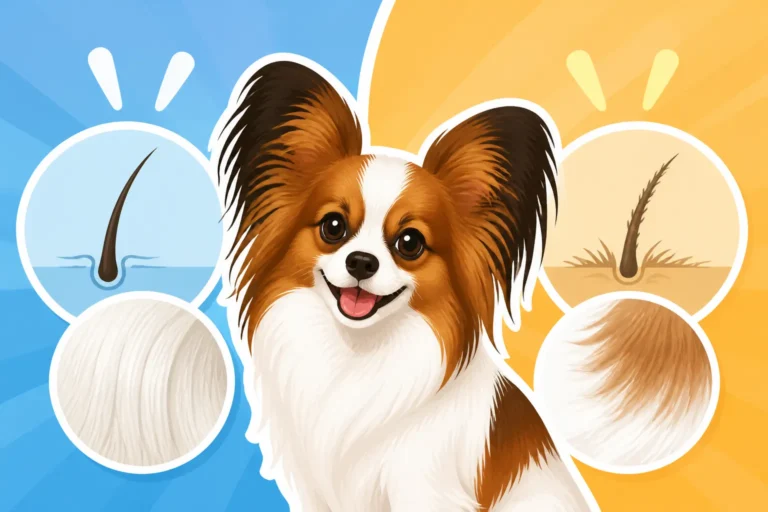
Papillon coat biology, single-layer structure, and continuous growth cycles explain why this dog breed has hair instead of fur.
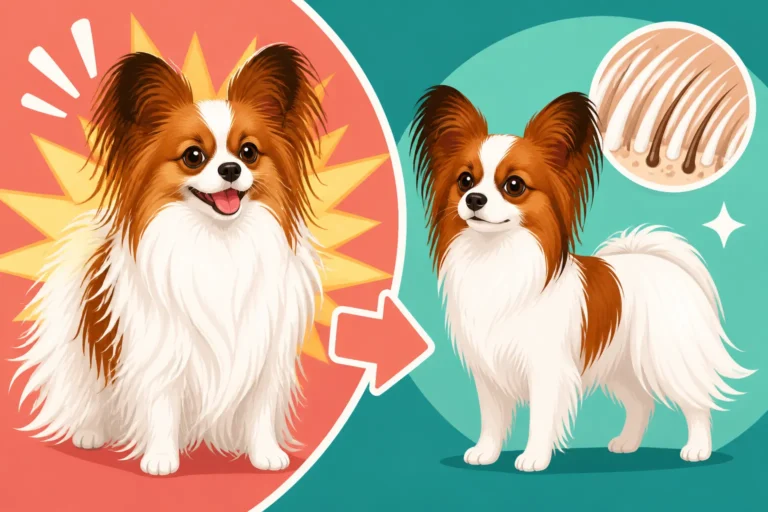
Papillon coat architecture explains why these single coated dogs with fine silky hair need only brushing twice weekly to prevent tangles.
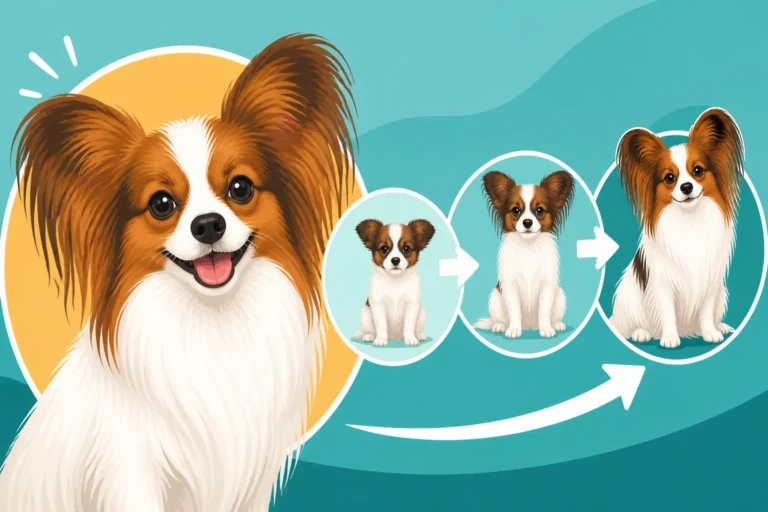
Papillon coat length, single coat features, and specific adult hair growth patterns explained for owners tracking development.

A Papillon dog coat achieves its silky texture from a single layer of fine hair and smooth cuticle scales without any dense woolly undercoat.