Whether a Papillon’s Chest Frill Mats
Papillon chest frill matting occurs from friction and moisture, and this explanation covers prevention methods.
The daily stuff, done right.
Feeding amounts by life stage, coat and skin routines, dental and nail care, exercise needs, and what changes as they age.

Papillon chest frill matting occurs from friction and moisture, and this explanation covers prevention methods.
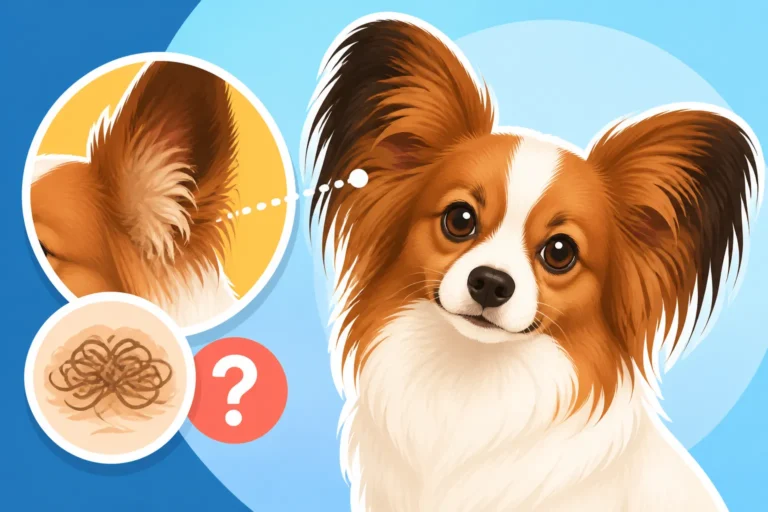
Papillon ear fringe matting causes and prevention methods explained based on coat texture, moisture, and friction.
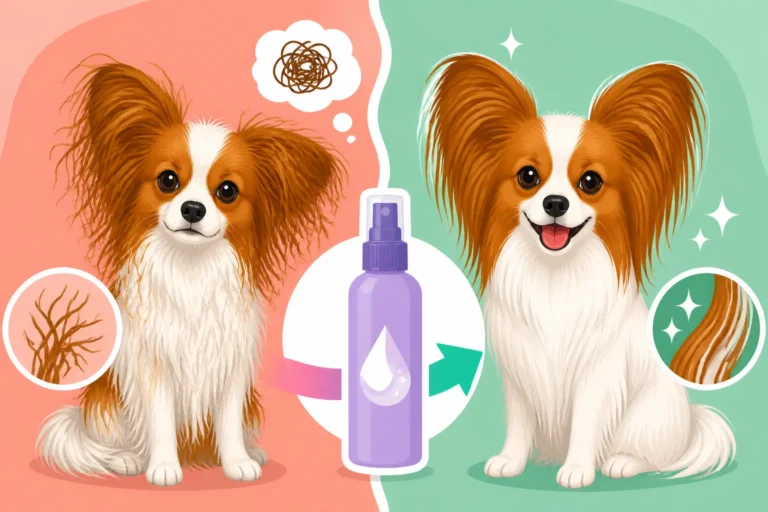
Papillon hair detanglers and how they work to manage fine single coat tangles behind ears, chest frills, and armpits.

Damp brushing for Papillons prevents coat static and tangles, explaining when and how to use moisture safely during grooming sessions.
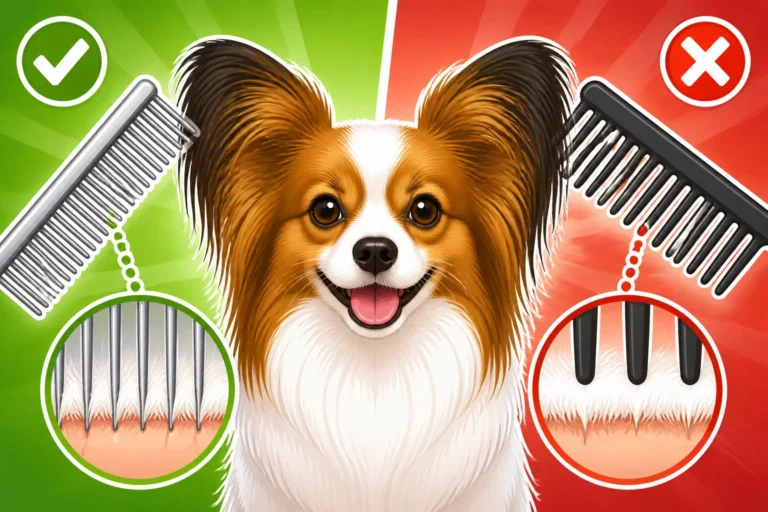
Papillon coat grooming technique and tool selection explains how to reach the skin and prevent painful matting in feathered areas.
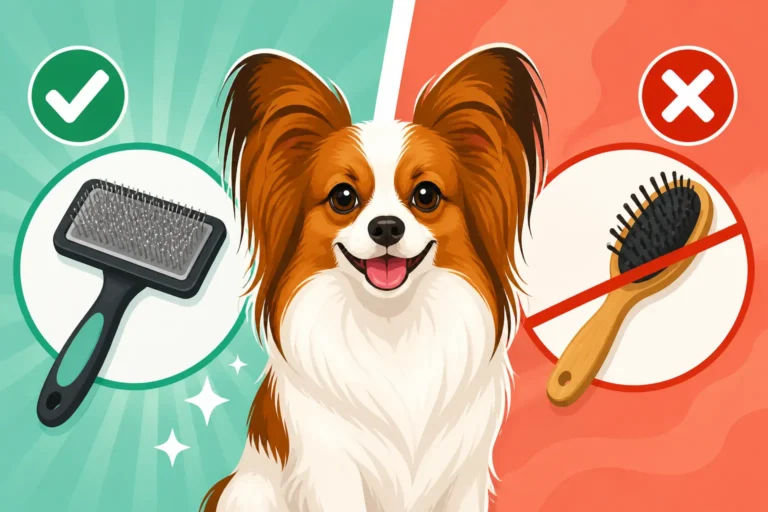
A slicker brush safely maintains a Papillon coat by removing small tangles without damaging the delicate single-layered hair.

Pin brush suitability for a Papillon coat determines how owners maintain fine, silky, single layer hair and prevent matting.

Papillon grooming duration and coat care factors determine how many minutes owners spend brushing the fine, single coat.

Papillon puppy coat development explains whether early soft fuzz predicts the stunning adult hair and majestic ear fringes.
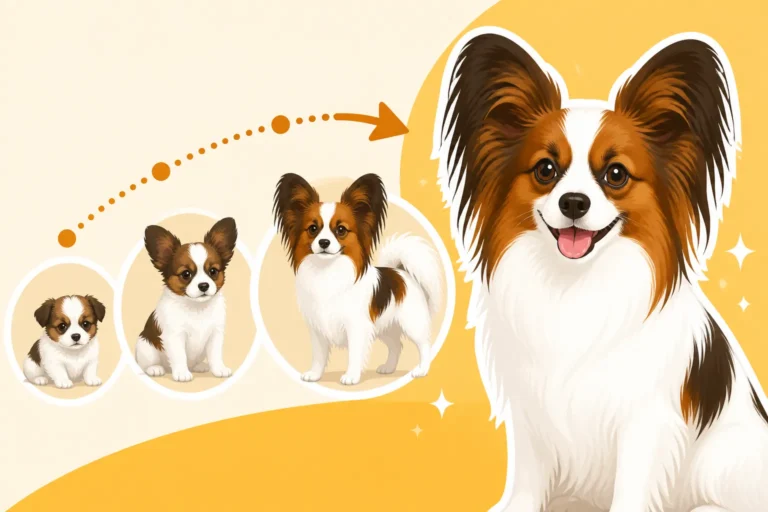
Papillon puppy coat transition timelines explain when soft fur sheds between four and six months to grow adult hair.