Whether a Papillon Skips a Step When Running
Patellar luxation in Papillons causes a skipped step or bunny hop when the kneecap slips out of its normal groove.
Know what to watch for.
Breed-specific conditions, screening and DNA tests, what surgery actually costs, and the daily habits that stretch a healthy lifespan.

Patellar luxation in Papillons causes a skipped step or bunny hop when the kneecap slips out of its normal groove.
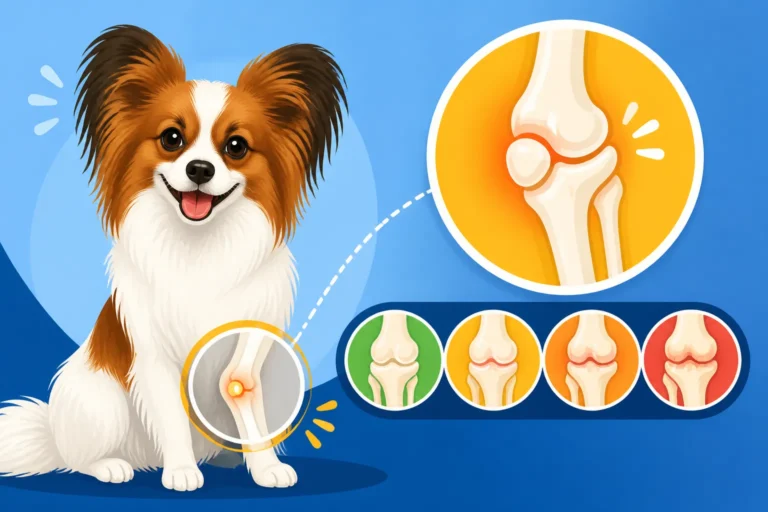
Patellar luxation grades one and two are the most common knee issues diagnosed in Papillons, causing intermittent lameness and occasional skipping steps.
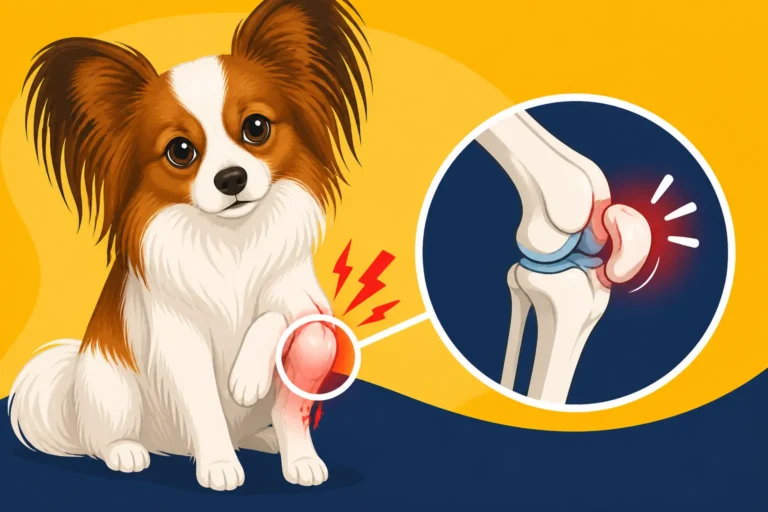
Patellar luxation in Papillons happens when genetics and delicate bone structures cause the kneecap to slip from the trochlear groove.

OFA CAER eye screenings for Papillons check eyelids, corneas, and retinas to detect inherited conditions like PRA and cataracts.

Papillon dry eye, medically known as Keratoconjunctivitis Sicca, causes irritation, corneal damage, and vision impairment if untreated.
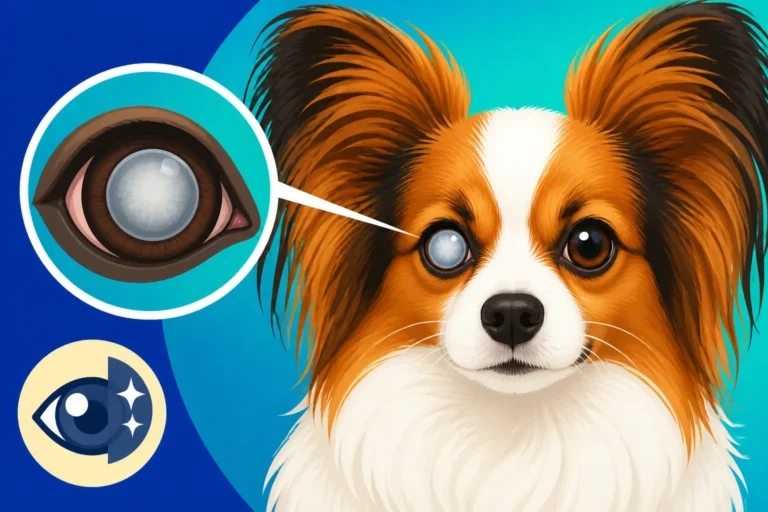
Cataracts in Papillons cause cloudy lenses and vision loss. Learn early signs, types, causes, and veterinary treatment options.

Papillon eye exams and regular veterinary screenings detect Progressive Retinal Atrophy and cataracts to protect vision.

Progressive Retinal Atrophy in Papillons and Phalenes explains inherited eye disorders, genetic mutations, and recessive inheritance patterns.

Papillon breeders and their handling of Progressive Retinal Atrophy test results, explaining how to find genetic information.

Papillon PRA1 DNA testing instructions explain how to collect a cheek swab sample for the laboratory to protect your dog.