Caring for a Papillon Past Eleven
Senior Papillons face physical and internal changes, requiring adjusted nutrition, veterinary care, and proactive daily routines.
Know what to watch for.
Breed-specific conditions, screening and DNA tests, what surgery actually costs, and the daily habits that stretch a healthy lifespan.

Senior Papillons face physical and internal changes, requiring adjusted nutrition, veterinary care, and proactive daily routines.
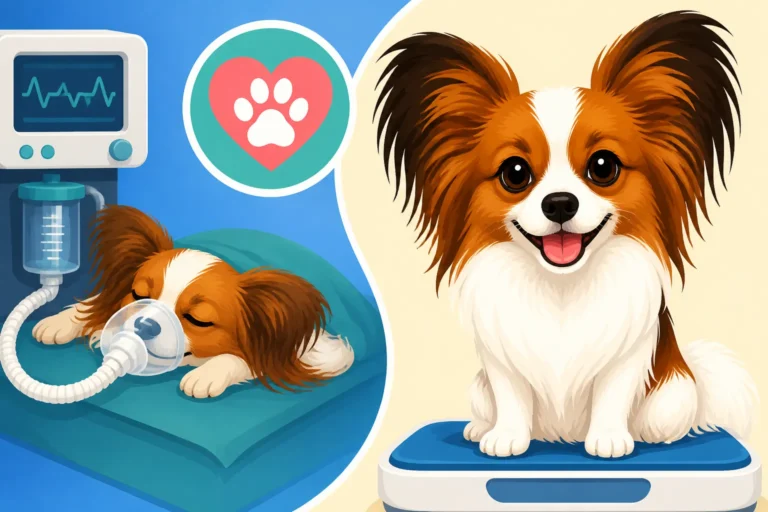
Small breed anesthesia considerations for a five pound Papillon include precise drug dosing, thermoregulation, and respiratory monitoring.
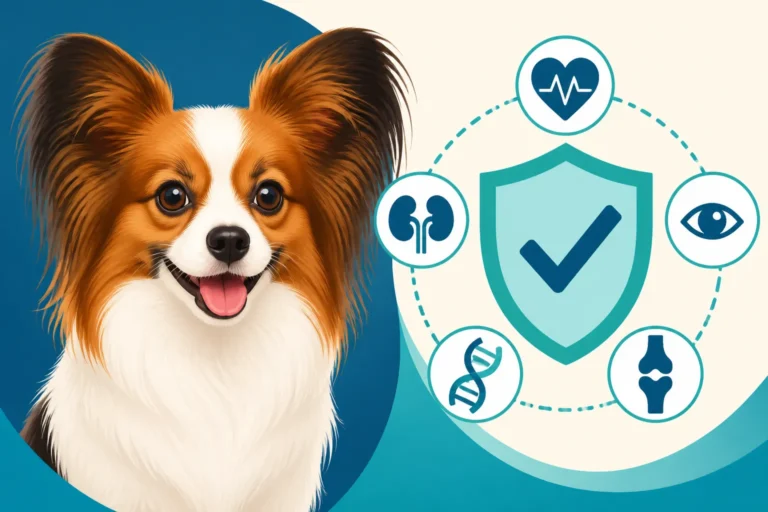
Papillon breeders need proper health testing to prevent inherited genetic diseases and ensure long, healthy lives for puppies.

Papillon dental health management explains how miniature jaws cause severe crowding, tooth rotation, and rapid tartar buildup.

Papillon lifespan expectations generally range from 12 to 16 years, with some individual dogs reaching 17 or 18 years of age.
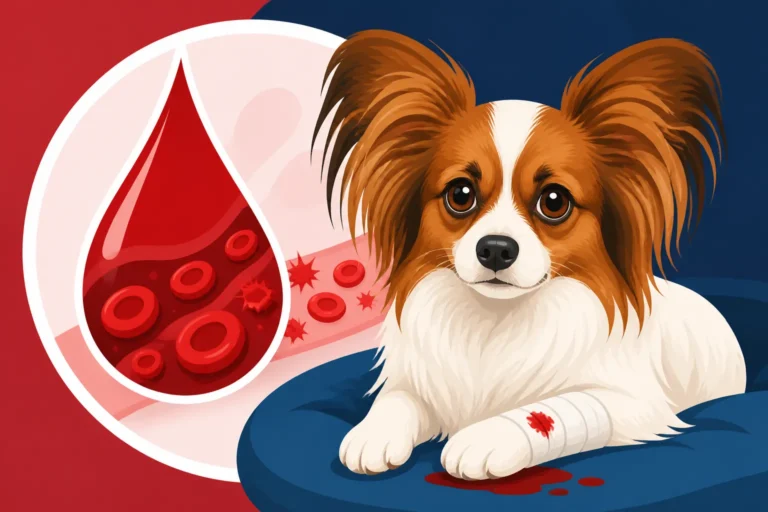
Von Willebrand Disease in Papillons explains the inherited bleeding disorder, its types, diagnosis methods, and daily management strategies.
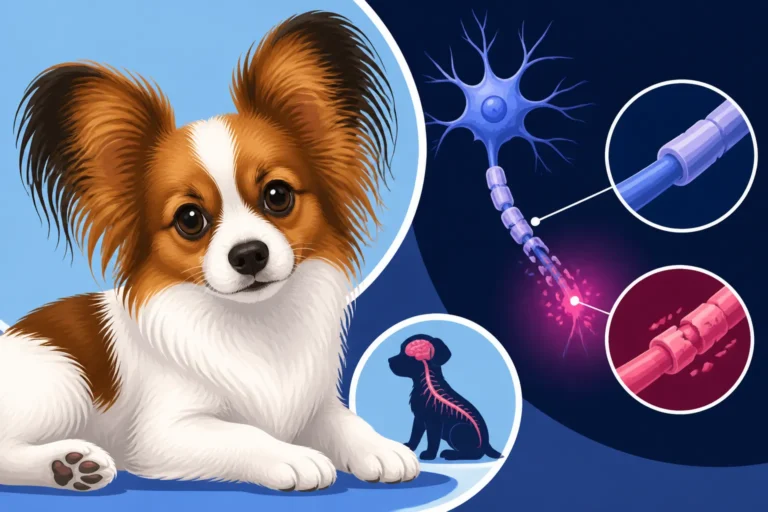
Neuroaxonal Dystrophy in Papillon puppies is a rare genetic disorder causing axon degeneration, movement issues, and nerve damage.
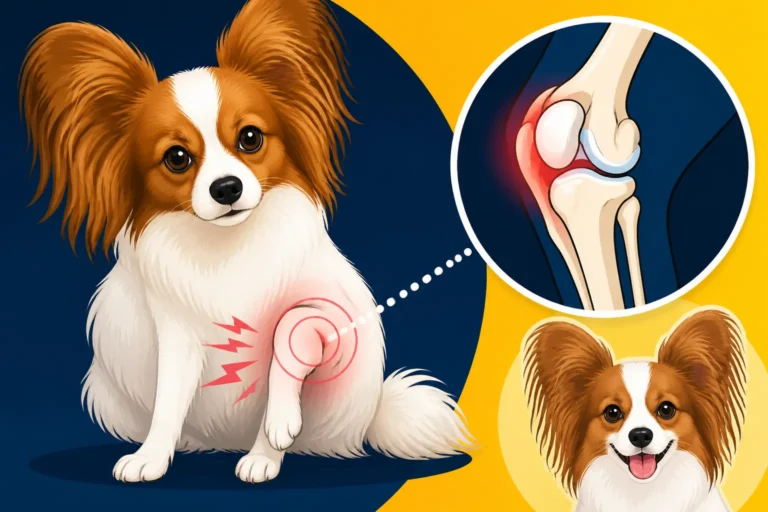
Papillon patellar luxation causes the small kneecap to slip out of the trochlear groove, making the dog skip or hold a back leg up.

Progressive Retinal Atrophy causes Papillons to lose night vision while retaining daylight sight through genetic cell degeneration.
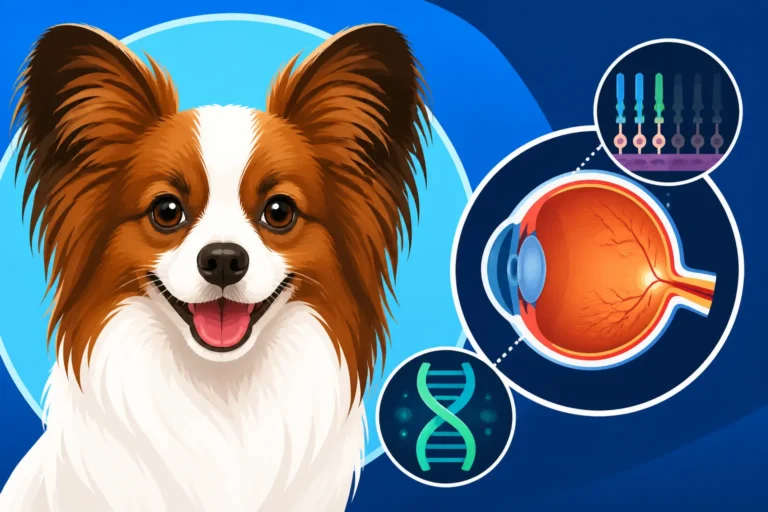
Progressive Retinal Atrophy in Papillons, caused by CNGB1 gene mutations, explains vision loss and supports affected dogs.