Neuroaxonal Dystrophy in a Papillon Puppy
Few things are as heartbreaking as watching a tiny Papillon puppy, full of potential and joy, suddenly begin to falter, stumble, or struggle with basic movements. These early, unsettling signs can be incredibly confusing and distressing for any new owner, leading to countless anxious vet visits and unanswered questions. This comprehensive guide aims to shine a light on one of the rarest and most devastating genetic conditions that can affect our beloved butterfly dogs: Neuroaxonal Dystrophy, helping you understand its origins, recognize its progression, and navigate the challenging path of diagnosis and care.
Understanding Neuroaxonal Dystrophy in Papillons
Neuroaxonal Dystrophy (NAD) is a term that sounds incredibly complicated, and in many ways, it is. But at its core, it's a devastating genetic disorder that primarily affects the nervous system. For Papillons, it’s a particularly cruel twist of fate, given their generally robust health and typically long lifespans. This condition isn't something you hear about every day, which often makes it even harder for owners and even some veterinary professionals to immediately recognize. Instead, it often presents as a perplexing set of symptoms that steadily worsen, leaving families feeling helpless and searching for answers.
What Exactly is Neuroaxonal Dystrophy?
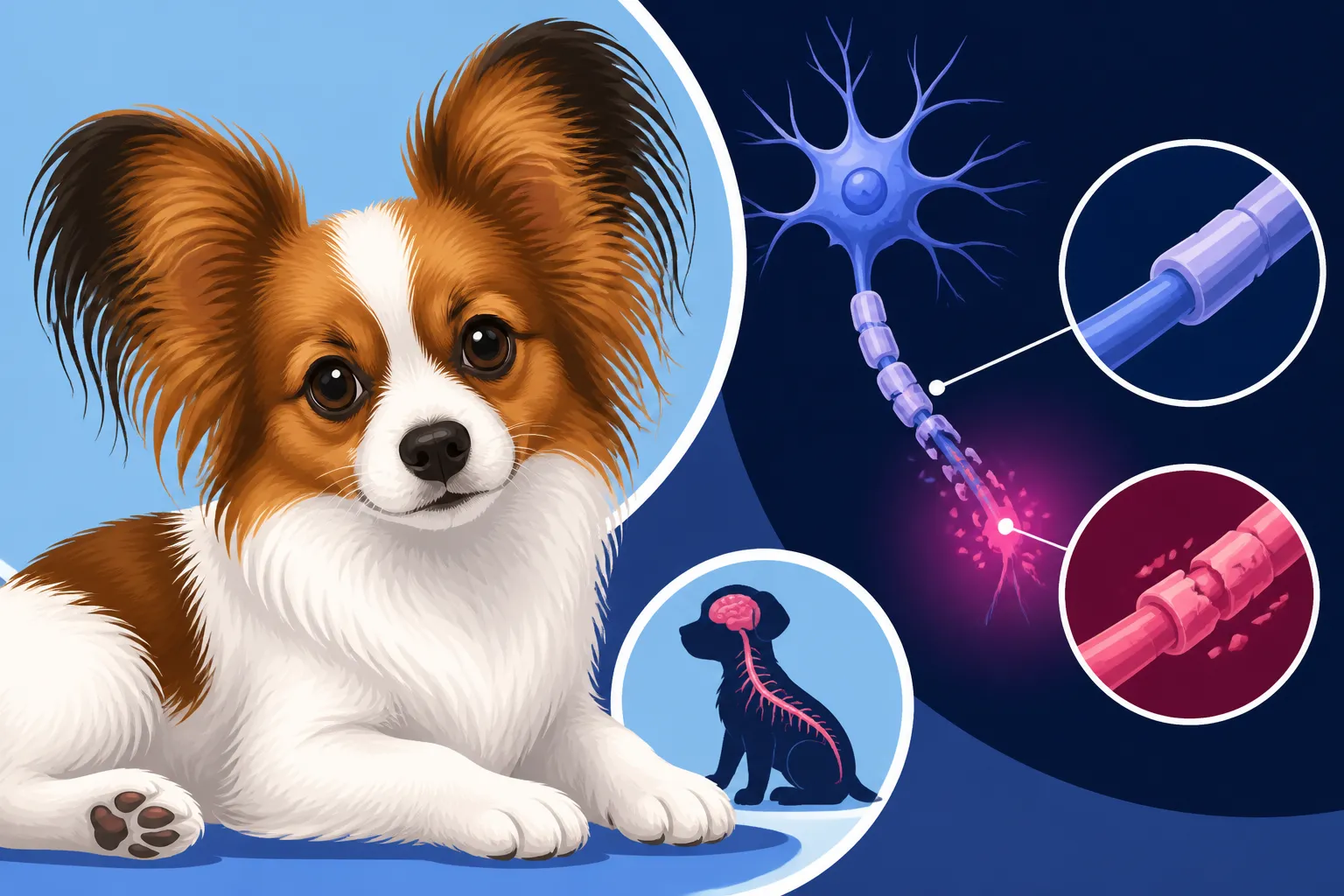
Imagine the nervous system as a vast network of electrical wires connecting everything in the body. These wires, or neurons, have long extensions called axons that transmit signals. In a dog affected by Neuroaxonal Dystrophy, these axons begin to degenerate, essentially breaking down. This breakdown primarily occurs in specific parts of the brain and spinal cord, disrupting the vital communication pathways that control movement, balance, and coordination. Because the signals can't get through properly, or they get distorted, the dog's body simply can't function as it should. It's a progressive disease, meaning it doesn't just appear and stay static; it continues to get worse over time, eroding the puppy's abilities bit by bit. This is a cruel reality, as the condition is often noted when the puppy should be at its most playful and agile.
How NAD Affects the Papillon's Brain and Nerves
The primary impact of NAD in Papillons is on the cerebellum and the brainstem, along with parts of the spinal cord. The cerebellum is essentially the control center for balance and coordination, making sure movements are smooth and precise. When the axons in this area degenerate, it leads to a host of problems with motor control. Think about trying to walk on a wobbly boat or trying to tie your shoes with numb fingers – that's a simplified way to envision the struggle an affected Papillon faces.
Furthermore, NAD can lead to the formation of abnormal swellings, known as spheroids or spherule bodies, along the damaged axons. These spheroids are essentially accumulations of cellular debris and damaged components, further impeding nerve signal transmission. Over time, this damage isn't just functional; it becomes structural. The affected areas of the brain, particularly the cerebellum, can actually show atrophy, meaning they shrink. This physical change is a clear indicator of the severe, irreversible damage occurring within the puppy's nervous system. It's truly a silent attack on the very core of what makes a Papillon so agile and bright.
The Genetic Basis of NAD in Papillons
Like many rare and devastating conditions, Neuroaxonal Dystrophy in Papillons is a genetic disease, specifically inherited in an autosomal recessive pattern. This means a puppy can only develop the condition if it inherits two copies of the faulty gene – one from its mother and one from its father. If a puppy inherits only one copy, it will be a "carrier." Carriers do not show any symptoms of the disease themselves because their single healthy gene copy is enough to prevent the condition from manifesting. However, carriers can pass the faulty gene on to their offspring.
This recessive inheritance pattern is why NAD can suddenly appear in a litter even if both parents seem perfectly healthy. If two carriers are bred together, there's a 25% chance with each puppy that it will inherit two copies of the faulty gene and be affected, a 50% chance it will be a carrier, and a 25% chance it will be completely clear. Understanding this genetic lottery is absolutely crucial for breeders aiming to eradicate this disease from their lines. It highlights the importance of genetic testing for potential breeding dogs, something that any responsible breeder committed to the long-term health of the breed will prioritize.
Recognizing the Early Signs and Symptoms
One of the most frustrating aspects of Neuroaxonal Dystrophy is how its early signs can be subtle, easily mistaken for normal puppy clumsiness, or even other, less severe conditions. As an owner, you want to believe your puppy is just going through an awkward phase or that they're a bit more uncoordinated than their siblings. But with NAD, those subtle cues become increasingly pronounced and concerning. It’s a slow, insidious progression that can catch even the most observant owner off guard.
When Symptoms Typically Emerge in a Papillon Puppy
The onset of Neuroaxonal Dystrophy in Papillon puppies typically occurs at a relatively young age, usually between 6 weeks and 6 months old. This is a critical developmental period where puppies are exploring their world, learning to coordinate their movements, and truly finding their feet. Initially, you might just notice a slight awkwardness, a bit more stumbling than their littermates, or a tendency to fall more often. For example, a puppy might struggle to keep up with siblings during playtime, taking wider turns or appearing a little off-balance when running. They might have difficulty navigating small obstacles that their peers clear with ease.
Sometimes, it's just a vague "something's not quite right" feeling you get when observing them. Perhaps they aren't as agile climbing onto a low pet bed, or they seem to trip over their own feet more frequently. These initial signs are often so mild that they are dismissed as normal puppy behavior, especially if the puppy is otherwise bright, engaged, and eating well. However, as the weeks pass, these fleeting moments of imbalance start to become more consistent and noticeable, demanding a closer look. You might notice them struggling to stand up after a nap, or having difficulty with stairs if they are introduced to them.
For a deeper dive into the typical age this condition manifests, you might find our article on The Age Neuroaxonal Dystrophy Shows in a Papillon particularly helpful.
Common Neurological Symptoms to Watch For
As NAD progresses, the symptoms become less ambiguous and more overtly neurological. Owners often report a "drunken" or uncoordinated gait, technically called ataxia. This isn't just clumsiness; it's a distinct lack of coordination, making the puppy look as if they're walking on ice or constantly off-balance. They might sway when standing still, have difficulty judging distances, or overstep when trying to walk. Their head might also bob or tremor, especially when they are focused on something or trying to eat or drink.
Other common signs include:
- Intention Tremors: Shaking that becomes more pronounced when the puppy tries to perform a deliberate movement, like reaching for a toy or bending down to drink.
- Balance Issues: Frequent falling, especially when turning quickly or trying to climb. They might struggle to right themselves once they've fallen.
- Exaggerated Movements (Dysmetria): The puppy might lift its legs too high or extend them too far, often appearing to march or goose-step, particularly with their front limbs.
- Muscle Weakness and Stiffness: While not always obvious early on, eventually, the sustained nerve damage can lead to a general weakness or stiffness in the limbs, making movement even harder.
- Trouble Eating or Drinking: Due to poor coordination, a puppy with NAD might struggle to aim for their food bowl, leading to messy eating or difficulty drinking water.
It's important to differentiate these from a typical playful puppy's tumbles. These are persistent and worsening patterns of movement. Our piece on How a Papillon With Neuroaxonal Dystrophy Moves provides more detailed descriptions and real-life examples.
Progressive Nature of the Disease
The most heartbreaking aspect of Neuroaxonal Dystrophy is its progressive nature. It’s not a static condition; it steadily worsens over time, inevitably leading to a severe decline in the puppy’s quality of life. What might start as a slight wobble at two months old could become significant difficulty walking by six months, and profound inability to move independently by a year. The puppy's physical abilities diminish, making simple tasks like eating, drinking, and eliminating increasingly challenging.
This progression often means that affected puppies rarely live beyond one to two years of age. As the neurological damage spreads and intensifies, vital bodily functions can become compromised. The constant struggle to move and maintain balance also takes a toll on their physical body, leading to muscle atrophy and general weakness. Owners are often faced with the agonizing decision of when to say goodbye, a decision made all the more difficult by the fact that many of these puppies retain their bright, loving personalities even as their bodies fail them. This is why understanding this progressive trajectory is essential for preparing for the difficult journey ahead. Sadly, Why Neuroaxonal Dystrophy Has No Treatment in a Papillon further explains the challenges of this disease.
Diagnosing Neuroaxonal Dystrophy
When you have a Papillon puppy exhibiting strange neurological symptoms, getting a definitive diagnosis can feel like searching for a needle in a haystack. Many conditions can cause similar signs, and the rarity of Neuroaxonal Dystrophy means it's often not the first thing a vet considers. The process typically involves a thorough physical exam, ruling out other possibilities, and eventually, specific advanced tests to confirm NAD. It’s a journey that requires patience, persistence, and a close working relationship with your veterinary team.
Initial Veterinary Examination and History
The first step, naturally, is a visit to your veterinarian. They will conduct a comprehensive physical and neurological examination. This isn't just a quick look-over; it involves assessing reflexes, proprioception (the sense of body position), gait, coordination, and general mental alertness. Your vet will watch your puppy walk, run, and interact, looking for those tell-tale signs of ataxia, tremors, and dysmetria.
Crucially, the veterinarian will also take a detailed history from you. This is where your observations become absolutely invaluable. Be prepared to discuss:
- When did you first notice symptoms? (e.g., "Around 10 weeks, he started stumbling a bit more than his siblings.")
- How have the symptoms progressed? (e.g., "It started with a mild wobble, but now he falls often, especially when he tries to run.")
- Are there any specific triggers for the symptoms? (e.g., "It's worse when he's excited," or "It's most noticeable after he wakes up.")
- What is his general demeanor like? (Is he still playful, alert, eating well?)
- Are there any other symptoms? (Changes in appetite, bathroom habits, vision, etc.)
- Any known health issues in the parents or littermates? (Though many breeders may not be aware they carry the gene unless they test.)
These details help paint a clearer picture and guide the vet toward appropriate diagnostic steps, narrowing down the possibilities from a vast array of potential issues.
Advanced Diagnostic Imaging
While the initial exam can point towards a neurological problem, it can't definitively diagnose NAD. To get a closer look at the brain and spinal cord, advanced imaging techniques are often necessary. The primary tool here is a Magnetic Resonance Imaging (MRI) scan. An MRI can reveal structural abnormalities within the brain.
In cases of Neuroaxonal Dystrophy, an MRI might show specific changes like:
- Cerebellar atrophy: A visible shrinking of the cerebellum, consistent with the degeneration of nerve tissue.
- White matter lesions: Areas where the myelin (the protective sheath around nerve fibers) or the axons themselves are damaged.
- Ventricular enlargement: Sometimes, the fluid-filled spaces in the brain (ventricles) appear larger due to loss of brain tissue.
While these findings are highly suggestive, it’s important to remember that an MRI shows the effects of the disease, not the disease itself at a cellular level. It's a critical piece of the puzzle, helping to rule out other structural issues like tumors, hydrocephalus, or severe congenital malformations, but it’s usually not the final conclusive step for NAD.
Genetic Testing for Confirmation
The definitive way to diagnose Neuroaxonal Dystrophy in a living Papillon, and the gold standard for breeders, is through genetic testing. This test identifies the specific mutation in the gene responsible for NAD in Papillons. It's a simple, non-invasive test, typically performed using a buccal swab (swabbing the inside of the dog's cheek for saliva containing DNA) or a blood sample.
The process usually involves:
- Collecting a sample: Your vet or you (if comfortable and guided) collect the sample.
- Sending it to a specialized lab: Several reputable veterinary genetic testing laboratories offer the Papillon NAD test. For example, labs like OptiGen or the University of Missouri's Canine Genetic Diseases Laboratory are well-known for offering genetic panels including NAD.
- Receiving results: The results will indicate whether the dog is:
- Clear: No copies of the faulty gene, cannot develop NAD, and cannot pass it on.
- Carrier: One copy of the faulty gene, will not develop NAD, but can pass it on.
- Affected: Two copies of the faulty gene, will develop or has developed NAD.
This genetic test is incredibly powerful because it can definitively confirm the diagnosis and, even more importantly, identify carriers who show no symptoms but could pass the disease to their offspring. This makes it an indispensable tool for responsible breeding programs focused on eradicating genetic diseases. Our article, The DNA Test for Papillon Neuroaxonal Dystrophy, goes into more detail about the testing process and its implications.
Differential Diagnoses: Ruling Out Other Conditions
When faced with a Papillon puppy showing neurological symptoms, a veterinarian's initial approach is often to cast a wide net and then systematically narrow down the possibilities. This process of considering and ruling out other conditions, known as differential diagnosis, is absolutely critical. Many common puppy ailments can mimic the signs of Neuroaxonal Dystrophy, leading to misdiagnosis if not carefully investigated. It's a testament to the complexity of veterinary medicine and why a comprehensive approach is so important.
Distinguishing NAD from Other Papillon Health Issues
Papillons, while generally a healthy breed, do have a few predispositions that can present with symptoms that might, at first glance, resemble NAD. It’s vital to distinguish between these to ensure appropriate treatment is sought.
Here are a few common Papillon health issues that might show overlapping symptoms:
- Hypoglycemia (Low Blood Sugar): Especially in very young, small Papillon puppies, or those stressed or not eating regularly, blood sugar can drop dangerously low. Symptoms can include weakness, wobbliness, disorientation, seizures, and even coma. Unlike NAD, hypoglycemia is usually sudden onset, often resolves quickly with sugar administration, and is not progressive in the same way. A simple blood glucose test at the vet can quickly confirm or rule out this very treatable condition. Our article, Whether a Papillon Gets Hypoglycemia as a Puppy, explores this in more detail.
- Portosystemic Shunt (Liver Shunt): This congenital condition, where blood bypasses the liver, prevents toxins from being filtered out of the bloodstream, leading to neurological signs. Symptoms can include disorientation, circling, seizures, weakness, and poor growth, often appearing after eating. While some signs overlap with NAD, liver shunts also cause gastrointestinal issues and can be diagnosed with specific blood tests (bile acids) and imaging. Read more about this in Whether a Papillon Gets a Liver Shunt.
- Patellar Luxation: While primarily an orthopedic issue, severe patellar luxation (slipping kneecap) can cause a dog to skip steps, limp, or have an abnormal gait. This might look like uncoordination. However, the signs are typically localized to the leg, not widespread neurological dysfunction, and the puppy generally remains alert and otherwise healthy. A vet can easily diagnose this through physical manipulation of the knee. Our pillar article, Patellar Luxation Is the Papillon Problem You Will Actually Meet, offers extensive information on this condition.
Table: NAD vs. Common Papillon Health Concerns
| Symptom / Condition | Neuroaxonal Dystrophy | Hypoglycemia | Portosystemic Shunt | Patellar Luxation |
|---|---|---|---|---|
| Onset | 6 weeks – 6 months, progressive | Sudden, often intermittent | Often after meals, can be subtle | Variable, can be intermittent |
| Gait Issues | Severe ataxia, dysmetria, tremors | Weakness, wobbliness | Disorientation, circling, weakness | Limping, skipping steps, favoring leg |
| Mental State | Alert, generally normal | Lethargy, disorientation, seizures | Disorientation, seizures, coma | Alert, generally normal |
| Progression | Steadily worsening, fatal | Episodic, resolves with treatment | Variable, can worsen | Can worsen, but not neurological |
| Diagnosis | Genetic test, MRI findings | Blood glucose, response to sugar | Bile acid test, ultrasound | Physical exam, X-rays |
| Treatment | Supportive, no cure | Glucose administration, diet | Surgery, diet, medication | Surgery, pain management |
Other Neurological Disorders in Young Dogs
Beyond breed-specific concerns, there's a broader category of neurological conditions that can affect puppies of any breed, including Papillons. These also need to be considered when NAD is suspected.
- Infections: Certain viral or bacterial infections (e.g., Canine Distemper, encephalitis) can cause neurological signs like seizures, tremors, incoordination, and behavioral changes. These typically come with other systemic signs of illness like fever, lethargy, and gastrointestinal upset.
- Toxins: Exposure to certain toxins (e.g., lead, pesticides) can lead to acute neurological dysfunction. A detailed history of potential exposures is vital here.
- Congenital Malformations: Structural abnormalities in the brain or spinal cord, present from birth, can cause neurological deficits. Hydrocephalus (fluid on the brain) is one example, which might cause a bulging fontanelle and developmental delays. These can often be identified with MRI.
- Trauma: Head or spinal trauma can lead to immediate neurological signs, though the history of an accident usually makes this clear.
- Other Genetic Neuropathies: While NAD is specific to Papillons (among certain other breeds), other inherited neurological diseases exist that can cause similar symptoms in young dogs, though often not specifically in Papillons.
A thorough diagnostic workup, including blood tests, urinalysis, imaging, and possibly cerebrospinal fluid analysis, helps to systematically eliminate these possibilities before arriving at a rare diagnosis like NAD.
Why a Definitive Diagnosis is Crucial
Pursuing a definitive diagnosis, even for a devastating condition like NAD, is not just about giving a name to the illness; it’s about clarity, appropriate management, and preventing future heartache.
- Avoiding Unnecessary Treatments: Without a clear diagnosis, a puppy might undergo various treatments, medications, or even surgeries for conditions they don't have, which can be costly, stressful, and ineffective. For instance, treating a dog for a liver shunt when it has NAD would yield no positive results and delay proper palliative care.
- Informed Decision-Making: Knowing precisely what your puppy is facing allows you to make informed decisions about their care, quality of life, and eventual end-of-life planning. It helps you focus on supportive care rather than chasing a cure that doesn't exist.
- Emotional and Financial Planning: A clear diagnosis, no matter how grim, brings a degree of certainty that can help owners process the situation emotionally and plan financially. Conditions like NAD often require significant supportive care, and pet insurance like Healthy Paws can be a lifesaver, but understanding the diagnosis is the first step in utilizing such resources.
- Breeding Program Impact: For breeders, a confirmed diagnosis of NAD in a puppy is crucial for identifying carrier parents and preventing further affected litters. Without this knowledge, the faulty gene could unknowingly continue to circulate within the breed, causing more suffering. This highlights the absolute necessity for breeders to perform health tests, as discussed in What a Papillon Breeder Should Have Tested and Which Health Tests a Papillon Breeder Should Run.
Living with a Papillon Puppy Diagnosed with NAD
Receiving a diagnosis of Neuroaxonal Dystrophy for your Papillon puppy is devastating. There's no sugarcoating it; it's a terminal condition for which there is currently no cure. The initial shock, sadness, and anger are entirely natural responses. However, as difficult as it is, the focus then shifts to providing the best possible quality of life for your puppy for the time they have left. This means a commitment to supportive care, managing symptoms, and ensuring their comfort and happiness as much as possible, while also caring for your own emotional well-being.
Supportive Care and Quality of Life
Since there's no treatment to stop or reverse the progression of NAD, care revolves around managing the symptoms and ensuring the puppy's comfort and safety. This approach is often called palliative or supportive care.
- Environmental Modifications: Your home environment needs to be adapted to prevent injuries and make movement easier.
- Soft Landings: Papillon puppies are fragile to begin with, and one with NAD is even more so. Place soft rugs or mats over slippery hard floors to provide better traction and cushion falls.
- Ramps and Steps: Provide ramps or low steps for furniture like sofas and beds. Even a slight jump can be dangerous for a dog with poor coordination, increasing the risk of sprains, fractures, or further injury.
- Safe Zones: Designate a safe, confined area where your puppy can move without encountering sharp edges, stairs, or other hazards. A soft-sided playpen or a gated-off room can work wonders.
- Padding: Consider padding sharp corners of furniture at puppy height, as they might bump into things due to ataxia.
- Physical Therapy and Gentle Exercise: While intense exercise is out, gentle physical therapy can help maintain muscle mass, flexibility, and range of motion. This might include:
- Passive Range of Motion (PROM) Exercises: Gently moving your puppy's limbs through their normal range of motion to prevent stiffness and muscle contractures.
- Supportive Walking: Using a sling or harness to help support their hindquarters (or even full body) during short, controlled walks to encourage movement without the risk of falling.
- Massage: Gentle massage can improve circulation and comfort.
- Mobility Aids: As the disease progresses, your puppy might benefit from a cart or wheelchair designed for small dogs. This can give them a sense of independence and allow them to explore, even if they can't walk on their own.
The goal is always to maximize comfort and joy, recognizing that their physical limitations will increase.
Nutritional Considerations
Feeding a puppy with NAD can become a challenge as their coordination declines. It's crucial to maintain their body weight and ensure they receive adequate nutrition.
- Easy-to-Eat Food: Dry kibble might become difficult to pick up or chew. Consider:
- Soaking Kibble: Soften dry food with warm water or broth to create a softer, more palatable consistency.
- Wet Food: High-quality canned or fresh wet food can be easier to manage.
- Hand-Feeding or Raised Bowls: If coordination is very poor, hand-feeding small amounts at a time can help, or using a raised bowl to reduce the need to bend down, which can be difficult.
- Frequent, Small Meals: Instead of one or two large meals, offer several smaller meals throughout the day to ensure consistent caloric intake and prevent fatigue from eating.
- Hydration: Ensure constant access to fresh water. If drinking from a bowl becomes difficult, try offering water from a shallow dish, a pet water fountain (if they can manage it), or even a syringe if necessary. Dehydration can quickly worsen their overall condition.
- Monitoring Weight: Regular weight checks are important. If your puppy starts losing weight, it's a sign that their caloric intake isn't meeting their needs or that the disease is progressing significantly. Consult your vet for advice on calorie-dense foods or supplements.
Remember, a Papillon is considered small even when healthy, so weight loss can happen quickly and be very detrimental.
Emotional and Practical Support for Owners
Living with a puppy diagnosed with a terminal condition like NAD is an immense emotional burden. It’s okay to feel overwhelmed, sad, and even angry. You didn't sign up for this, and your dreams of a long life with your Papillon are shattered.
- Seek Support: Don't go through this alone. Talk to trusted friends, family, or a support group for pet owners facing similar challenges. Online communities dedicated to specific diseases or pet loss can be invaluable resources.
- Veterinary Guidance: Your vet and veterinary staff are not just there for medical advice; they can also provide emotional support and guidance on practical aspects of care. Don't hesitate to ask them about resources for coping.
- Prioritize Quality of Life: As the disease progresses, you will inevitably face difficult decisions regarding your puppy's comfort and well-being. Focus on their quality of life above all else. Is your puppy still experiencing joy? Are they in pain that can't be managed? It's a deeply personal decision, and there's no right or wrong answer.
- Grief and Anticipatory Grief: It's natural to experience anticipatory grief, mourning the loss of your puppy even while they are still with you. Allow yourself to feel these emotions.
- Financial Planning: Managing a chronically ill pet can be expensive. Pet insurance like Healthy Paws can cover a significant portion of veterinary bills for accidents and illnesses, which can provide immense relief during such a trying time, allowing you to focus on care rather than cost. Consider discussing this with your vet to understand typical costs and potential coverage.
Ultimately, your goal is to cherish every moment you have with your Papillon, providing them with love, comfort, and dignity until their final day.
Prevention and Responsible Breeding Practices
The heartbreaking reality of Neuroaxonal Dystrophy in a Papillon puppy underscores the critical importance of prevention through responsible breeding. While it’s a rare condition, its devastating impact means that every effort must be made to eliminate it from the breed’s gene pool. This isn't just about individual puppies; it's about the health and integrity of the entire Papillon breed for generations to come. Responsible breeders are the frontline defense against such genetic diseases, armed with knowledge and the tools of modern genetic testing.
The Importance of Genetic Screening for Breeders
For any responsible Papillon breeder, genetic screening for diseases like Neuroaxonal Dystrophy is not an option; it's a fundamental ethical obligation. Since NAD is an autosomal recessive condition, dogs can be carriers without showing any symptoms themselves. This means that even seemingly healthy parents can produce affected puppies if both happen to carry the same faulty gene.
Genetic screening involves testing all potential breeding dogs before they are ever paired. This simple DNA test, often done via a buccal swab, reveals whether a dog is:
- Clear: No copies of the NAD gene.
- Carrier: One copy of the NAD gene.
- Affected: Two copies of the NAD gene (meaning they would develop or have developed the disease).
By knowing the genetic status of their breeding stock, breeders can make informed decisions to prevent the birth of affected puppies. For example, a carrier dog can still be bred, but only to a dog that is proven "Clear" of the NAD gene. This strategy ensures that no puppy born from such a pairing will ever be "Affected," though some may be carriers themselves. This approach allows valuable genetics to remain in the gene pool while systematically reducing the prevalence of the faulty gene. It's a proactive step that demonstrates a deep commitment to the well-being of the breed.
Understanding Inheritance Patterns
To truly grasp the importance of genetic screening, breeders and prospective puppy owners need to understand the basic principles of recessive inheritance. Imagine the NAD gene as 'n' (faulty) and the normal gene as 'N'.
- Clear dogs: Have two normal genes (NN). They cannot develop NAD and cannot pass on the faulty gene.
- Carrier dogs: Have one normal and one faulty gene (Nn). They are clinically healthy but can pass the 'n' gene to their offspring.
- Affected dogs: Have two faulty genes (nn). They will develop NAD.
Here's how different pairings work:
| Parent 1 Status | Parent 2 Status | Possible Offspring (Probability) | Outcome for Pups |
|---|---|---|---|
| NN (Clear) | NN (Clear) | 100% NN (Clear) | All puppies clear, no risk of NAD |
| NN (Clear) | Nn (Carrier) | 50% NN (Clear), 50% Nn (Carrier) | No affected puppies, but some carriers |
| Nn (Carrier) | Nn (Carrier) | 25% NN (Clear), 50% Nn (Carrier), 25% nn (Affected) | High risk of affected puppies, undesirable |
| NN (Clear) | nn (Affected) | 100% Nn (Carrier) | All puppies carriers, but no affected |
| Nn (Carrier) | nn (Affected) | 50% Nn (Carrier), 50% nn (Affected) | Very high risk of affected puppies, unethical |
| nn (Affected) | nn (Affected) | 100% nn (Affected) | All puppies affected, highly unethical |
As you can see from the table, breeding two carriers together (Nn x Nn) is the primary way affected puppies (nn) are born. This is why testing is non-negotiable. Ethical breeders will use this knowledge to make responsible breeding decisions, preventing affected puppies while slowly reducing the carrier rate in the breed. This long-term strategy is how breeds collectively manage and eventually eliminate genetic diseases. For more detail on how these patterns apply specifically to Papillons, see our article on How PRA1 Is Inherited in Papillons, which explains recessive inheritance in a similar context.
Finding a Reputable Papillon Breeder
For prospective puppy owners, navigating the world of breeders can be daunting. However, knowing about conditions like Neuroaxonal Dystrophy empowers you to ask the right questions and choose a breeder committed to health. A reputable breeder is transparent, knowledgeable, and dedicated to the health and welfare of their dogs.
Here’s what to look for and the questions to ask:
- Health Testing Documentation: A reputable breeder will openly share documentation of health screenings for both parents, not just verbal assurances. For NAD, specifically ask to see proof that both parents have been DNA tested and are "Clear" or, if one is a "Carrier," that the other parent is "Clear." They should also test for other known Papillon health concerns like PRA1 and patellar luxation. Our article, What a Papillon Breeder Should Have Tested, provides a comprehensive checklist.
- Transparency and Openness: The breeder should be willing to answer all your questions thoroughly, allow you to visit their facility (or conduct thorough virtual tours), and let you meet the puppy’s parents. Be wary of breeders who push for a quick sale, refuse to share health records, or seem evasive.
- Commitment to the Breed: Look for breeders who are involved in breed clubs (like the Papillon Club of America), participate in dog sports or conformation, and genuinely care about improving the breed's health and temperament. They should be able to discuss the breed's history, traits, and common health concerns.
- Lifetime Support: A good breeder will offer ongoing support and advice for the lifetime of your dog. They should also have a contract that outlines health guarantees and what happens if a genetic issue arises.
- Limited Litters: Be cautious of breeders who always have multiple litters available. Responsible breeders typically breed fewer, well-planned litters.
- Waitlists: Given the rarity and popularity of well-bred Papillons, don't be surprised by a waitlist. This often signals a responsible breeder who doesn't overbreed. If you're wondering about the demand, check out How Many Papillon Litters Are Bred a Year.
Choosing a reputable breeder is the single most important step you can take to minimize the risk of bringing home a puppy with a devastating genetic condition like Neuroaxonal Dystrophy. For more help finding a responsible breeder, refer to Finding a Papillon Breeder Who Tests Eyes and Knees. It’s an investment not just in a puppy, but in a healthy, happy future for your companion.
Disclaimer
Please remember that this article is intended for informational purposes only and should not be considered a substitute for professional veterinary advice. If your Papillon puppy is showing any concerning symptoms, please consult a qualified veterinarian immediately. They can provide an accurate diagnosis and recommend the best course of action for your specific situation.