What a Papillon’s PRA1 Test Costs
Genetic testing costs for Progressive Retinal Atrophy in Papillons help owners and breeders prevent canine blindness and disease.
Know what to watch for.
Breed-specific conditions, screening and DNA tests, what surgery actually costs, and the daily habits that stretch a healthy lifespan.

Genetic testing costs for Progressive Retinal Atrophy in Papillons help owners and breeders prevent canine blindness and disease.

Progressive Retinal Atrophy carrier status in Papillons means the dog will not develop blindness from this recessive genetic condition.

Breeding two carrier Papillons carries significant genetic risks for offspring, including conditions like Progressive Retinal Atrophy.
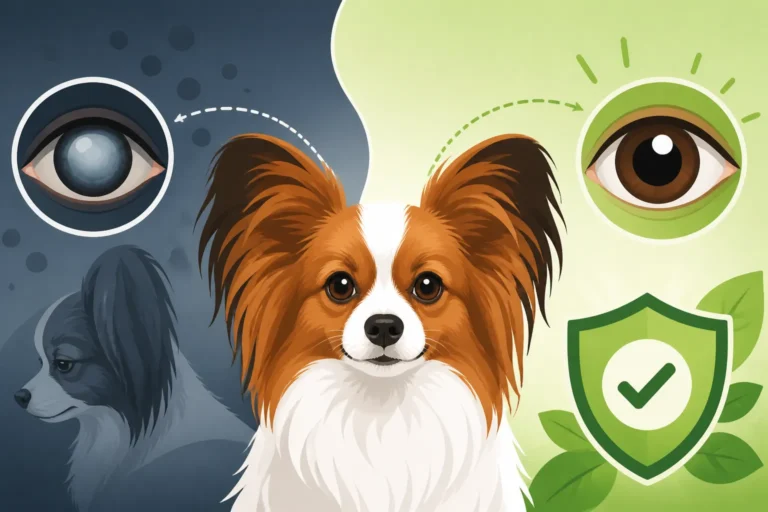
Progressive Retinal Atrophy type one in Papillons is a genetic eye disease causing gradual vision loss starting with night blindness.
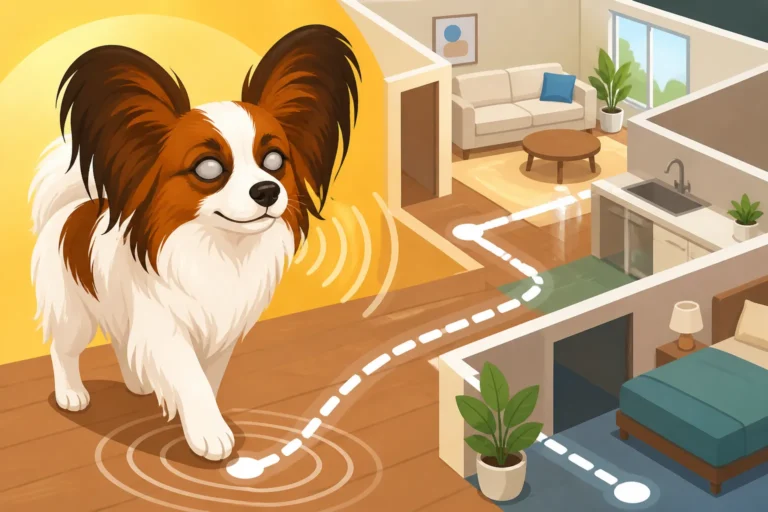
Blind Papillon home navigation steps help pets learn the house using whiskers and scent trails to build confidence and safety.

Progressive retinal atrophy in Papillons causes gradual rod and cone cell degeneration that explains why dogs bump into objects.

Progressive Retinal Atrophy in Papillons causes night blindness first while often leaving functional daylight vision intact for years.

Progressive retinal atrophy type 1 in Papillons causes night blindness first, followed by a slow, variable loss of daylight vision over many years.
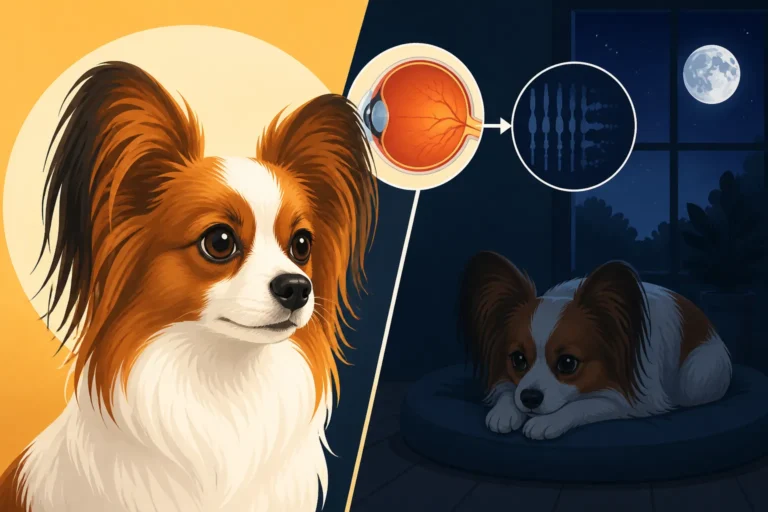
Papillon night vision loss stems from a genetic condition called progressive retinal atrophy that destroys sensitive rod cells first.
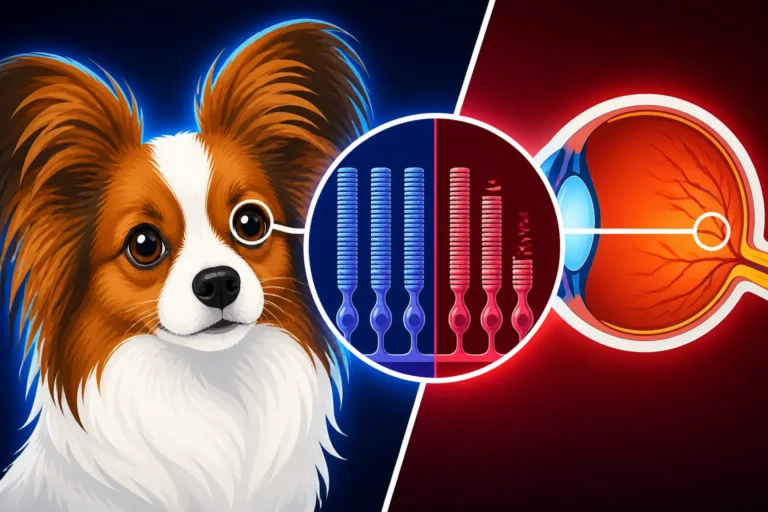
The CNGB1 frameshift mutation damages rod photoreceptor cells in Papillons, causing progressive loss of vision in low light.