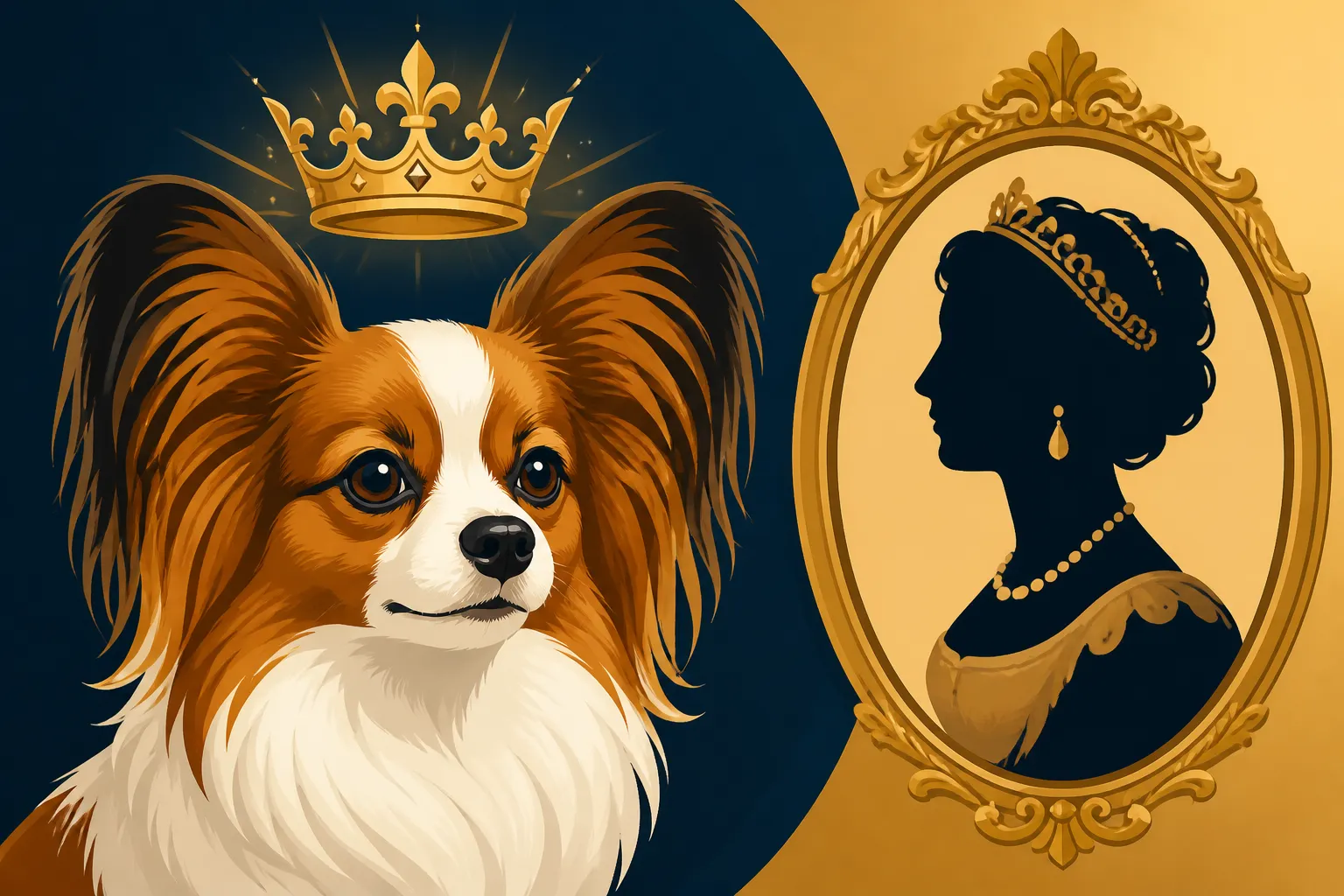
Whether a Dwarf Spaniel Signaled Rank in a Portrait
Have you ever gazed at a painting from centuries ago and wondered about all the hidden meanings? It’s not just about the people or the fancy clothes; often, the smallest details, like a tiny dog nestled in a noblewoman's lap, held a world of unspoken significance. When we see a dwarf spaniel, a direct ancestor of our beloved Papillons, in an old portrait, it's easy to assume it's just a pet, but these little canines were often powerful silent communicators, hinting at the sitter's place in society. This guide will explore how these charming little dogs were more than just companions, often acting as subtle, yet unmistakable, indicators of social standing and aristocratic status in historical portraiture.
The Historical Presence of Dwarf Spaniels in European Art
Before our modern Papillon with its distinctive butterfly ears, there were the dwarf spaniels, small, elegant dogs that graced the laps and canvases of European nobility for centuries. These aren't just mythical creatures; their lineage is deeply woven into the fabric of European aristocracy. You can trace their presence back through hundreds of years of artistic records, confirming that these little dogs were very much a part of upper-crust life. If you're curious, you might want to delve into The Papillon Has Seven Hundred Years of Portraits Behind It to truly appreciate the historical depth.
The earliest depictions often show a small, long-haired dog, sometimes with ears that were either dropped (like the Phalene, the "moth" eared variant of the Papillon) or partially erect. These were not working dogs in the traditional sense; they weren't herding sheep, nor were they hunting game. Their primary role was companionship, which, in itself, spoke volumes. To own a dog purely for pleasure, one that required care but offered no practical utility, was a luxury. It suggested a life of leisure, where resources weren't solely dedicated to survival or production.
Early Appearances and Courtly Life
Think of the lavish courts of the Renaissance and Baroque periods, where wealth and power dictated every aspect of life. These dwarf spaniels began appearing in portraits with increasing frequency during this era. They were especially popular among royalty and high-ranking aristocrats, who valued their delicate beauty and affectionate nature. It wasn't uncommon for these dogs to be constant companions, carried around by ladies of the court, sleeping in their chambers, and even accompanying them to official functions. Which Courts Kept Dwarf Spaniels provides a fascinating look into this aspect of their history.
For instance, Italian masters like Titian, who painted during the 16th century, often included these tiny dogs in his portraits. These "Titian Spaniels" are considered direct ancestors of today's Papillon. When you see such a dog nestled on a velvet cushion or gazing up at its owner in a painting, it’s not just a cute detail. It’s a deliberate choice by the artist and the patron, meant to convey certain messages to the viewer. These dogs were symbols of the good life, of a world far removed from the toil of commoners.
The Evolution of Their Depiction
As centuries passed, the depiction of these dwarf spaniels continued to evolve, reflecting changing artistic styles and societal norms. From the robust, sometimes almost abstract forms of earlier works to the more refined and lifelike renderings of the Baroque period, the consistent presence of these dogs tells a clear story. They were cherished possessions, often depicted with an intimacy that showed the deep bond between human and canine. This bond, however, was framed within the context of the owner's elevated status. It was a subtle flex, a way of saying, "Look at my beautiful, pampered pet, and infer what you will about my station in life."
General Canine Symbolism in Renaissance and Baroque Portraits
Before we zero in on our beloved Papillon ancestors, it's helpful to understand the broader symbolic language of dogs in historical portraiture. Not all dogs signaled rank, but most carried some kind of meaning. Depending on the breed, their posture, and their interaction with the sitter, dogs could convey loyalty, fidelity, protection, or even vanity.
Loyalty and Fidelity
Perhaps the most common and enduring symbol associated with dogs in portraits is loyalty and fidelity. A dog positioned at its owner's feet, looking up adoringly, or even resting a paw on their lap, was often an emblem of unwavering devotion. This was particularly significant in marital portraits, where a dog might represent the loyalty expected within a marriage. For women, in particular, a dog could symbolize faithfulness, chastity, and domestic virtue.
The presence of a dog could also speak to the sitter's own character, implying that they possessed these admirable traits. A noble or powerful figure depicted with a loyal hound might be suggesting their own steadfastness and trustworthiness. It was a visual shorthand that everyone understood, a way for the sitter to curate their public image.
Protection and Status for Hunting Dogs
Larger breeds, particularly hunting dogs like greyhounds or mastiffs, conveyed a different set of meanings. These dogs were expensive to keep, required extensive training, and were vital for aristocratic pastimes like hunting. Their presence in a portrait often signaled the sitter's wealth, their land ownership, and their engagement in noble pursuits. A hunting dog implied a master of a grand estate, with the means and leisure to participate in such activities. They were symbols of power, control over nature, and a certain masculine vigor.
However, these large, working breeds rarely appeared in the intimate, lap-dog contexts that dwarf spaniels did. Their symbolism was more about overt power and activity, whereas the small companion dogs spoke to a more refined, domestic, albeit still high-status, sphere.
Other Symbolic Nuances
Dogs could also represent less flattering traits, though these were rarer in formal portraits where the aim was usually glorification. Occasionally, a dog might symbolize sensual pleasure or idleness if depicted in a particularly languid or indulgent manner. More often, they were positive symbols, enhancing the sitter's image.
It's also worth noting that the rarity and exoticism of certain breeds played a role. Importing a unique dog from a distant land was a display of wealth and connections, much like owning a rare jewel or a piece of foreign art. While less about signaling rank per se, it certainly underscored affluence.
The Specific Status Symbolism of the Dwarf Spaniel
Now, let's bring it back to our tiny, butterfly-eared friends. While general dog symbolism is broad, the dwarf spaniel, in particular, carried a unique weight in terms of signaling rank. They weren't just "any dog"; their very existence in such an environment spoke volumes about the owner's lifestyle, wealth, and elevated position.
A Symbol of Leisure and Luxury
Imagine the life of a commoner in the 16th or 17th century. Every waking hour would be dedicated to labor, ensuring food on the table and a roof overhead. Owning a dog that offered no practical purpose – no hunting, no guarding, no herding – was unthinkable. It would be a drain on meager resources, a luxury that couldn't be afforded.
Enter the dwarf spaniel. These dogs were bred for companionship, for warming laps, and for their delicate beauty. To own one meant you had the leisure time to lavish affection on a creature that didn't earn its keep through labor. It meant you had servants to feed and care for it, or at least enough personal time not dedicated to physical toil. This immediately set the owner apart from the working classes. The dog itself became a living embodiment of leisure and luxury, a clear sign of rank.
Exclusivity and Expense
These small, well-bred dogs were not cheap or easily acquired. Breeding them required resources, knowledge, and connections. They were often gifts exchanged between royalty or purchased from specialized breeders who catered exclusively to the elite. The rarity of truly exquisite examples, combined with the cost of their upkeep (even for a small dog, there were expenses for food, grooming, and specialized care), made them a significant investment.
Just as a modern pet owner might invest in premium food from a brand like Chewy, or specialized training, historical elites spared no expense on their beloved companions. This financial aspect, though often unseen in the painting, was a well-understood subtext for anyone viewing the portrait. Only those with considerable wealth could afford such "frivolities." What a Dwarf Spaniel Was explains how these breeds were developed specifically for this aristocratic niche.
Delicate Nature, Refined Tastes
The delicate nature of the dwarf spaniel also played into its symbolic role. These were not rugged outdoor dogs; they were house dogs, requiring a sheltered, refined environment. Their presence suggested a refined interior, soft furnishings, and a generally elegant way of life. They were often depicted on expensive carpets, silken cushions, or held by hands adorned with rings and lace, further emphasizing the opulence of the setting.
Consider the stark contrast between a robust hunting dog, typically seen outdoors or in a stable, and a tiny spaniel, almost always indoors, often on a lady's lap. This contrast alone highlights the divergent lifestyles and, by extension, the different social strata they represented. The dwarf spaniel signaled an owner of refined taste, who appreciated beauty and companionship, and who existed in a world of comfort and elegance.
| Feature | General Dog Symbolism (e.g., hunting dogs) | Dwarf Spaniel Symbolism (Papillon ancestors) | Signified Rank Through |
|---|---|---|---|
| Primary Role | Utility (hunting, guarding, herding) | Companionship, ornamental | Leisure, non-utilitarian expense |
| Appearance | Large, muscular, robust | Small, delicate, often long-haired | Fragility, requiring pampering |
| Environment | Outdoors, kennels, estates | Indoors, laps, boudoirs | Indoor luxury, refined living |
| Associated Trait | Strength, power, activity, loyalty | Affection, beauty, elegance, preciousness | Wealth, social grace, sophisticated taste |
| Cost Implication | Acquisition & upkeep for practical purpose | Acquisition & upkeep purely for pleasure | Disposable income, excess wealth |
Beyond Rank: Other Reasons for Including a Papillon Ancestor in a Portrait
While signaling rank was undoubtedly a major factor in the inclusion of dwarf spaniels in historical portraits, it wasn't the only reason. These dogs were, after all, beloved pets, and their presence could also communicate affection, personal identity, and even sentimental value. It's a mistake to view every artistic choice as purely symbolic; sometimes, a dog was simply a dog.
Genuine Affection and Companionship
Let's not forget that people genuinely loved their pets, even centuries ago. The deep bond between humans and their canine companions is timeless. Many historical figures, from royalty to wealthy merchants, were known to be incredibly fond of their small dogs. When you look at paintings by artists like Rubens or Fragonard, who often captured intimate scenes, the interaction between the sitter and their dog sometimes feels truly tender and natural. Whether Rubens Painted a Dwarf Spaniel and Whether Fragonard Painted a Dwarf Spaniel offer glimpses into these artistic interpretations.
The dog might be licking the sitter's hand, gazing up with wide, trusting eyes, or nestled comfortably against them. These moments capture a very real affection, suggesting that the dog was a cherished member of the household, not just a status symbol. While the ability to own such a pet still spoke to the owner's means, the emotional connection was often palpable. It added a layer of humanity and warmth to an otherwise formal depiction.
Personal Identity and Storytelling
A dog in a portrait could also be an extension of the sitter's personal identity or a way to tell a subtle story. Perhaps the dog was a gift from a loved one, a reminder of a particular event, or a representation of the sitter's personal qualities. For example, a young noblewoman might be portrayed with her devoted lapdog to emphasize her innocence and purity, or her capacity for nurturing and loyalty.
These dogs were often part of the sitter's daily life, much like our dogs are today. If you're passionate about dog sports, your Papillon might be wearing a special agility collar, or if you pamper them, they might have a favorite plush bed from Chewy. In a similar vein, historical portraits aimed to capture a snapshot of the sitter's world, and their beloved companion was very much a part of that. Why Painters Put a Small Spaniel Beside a Sitter expands on this idea of personal connection in art.
Artistic Composition and Detail
From a purely artistic standpoint, including a small dog could also serve several practical purposes for the painter. It could add visual interest, balance the composition, or introduce a touch of life and movement to an otherwise static scene. The soft textures of a dog's coat, the sparkle in its eyes, or the playful tilt of its head could provide an opportunity for the artist to showcase their skill in rendering detail and capturing subtle expressions.
Furthermore, these dogs often provided a vertical or diagonal line that helped guide the viewer's eye through the painting. They could break up large expanses of fabric or shadow, adding depth and dimension. So, while the symbolism was rich, the aesthetic contribution of these charming creatures shouldn't be overlooked. Sometimes, a beautiful detail is just that – a beautiful detail that enhances the overall artistic impact.
Ultimately, whether a dwarf spaniel signaled rank in a portrait is a resounding "yes," but it was a nuanced "yes." It was a symbol interwoven with genuine affection, personal stories, and artistic considerations, all against a backdrop of societal expectations. These tiny dogs were indeed powerful communicators, quietly affirming the elevated status of their human companions, while simultaneously warming their hearts.
Disclaimer
This article is for general informational purposes only and does not constitute professional advice. Laws, prices and regulations vary by location and change over time. Consult a qualified professional for guidance on your specific situation.