Whether Papillon Puppies Are Priced by Color
It’s a common misconception, especially with small, visually distinctive breeds like the Papillon, that a puppy with a "rare" or particularly striking coat color will command a much higher price tag. Many prospective puppy parents envision finding that one-of-a-kind pup and expect to pay a premium for it. However, if you're looking at a responsible, ethical Papillon breeder, you'll discover that coat color is actually one of the least influential factors when it comes to pricing their precious puppies. This guide will walk you through what truly drives the cost of a Papillon puppy and why focusing on color can lead you down the wrong path.
The Real Factors Influencing a Papillon Puppy's Price
When you start researching Papillon breeders, you'll quickly learn that the price of a puppy isn't simply pulled out of thin air. There's a significant investment that goes into ethical breeding, and these investments are what primarily dictate the final cost you'll see. It’s far more complex than just a pretty coat! If you want to know What a Papillon Puppy Costs From a Breeder, you'll find it's a reflection of care, not just color.
Health Clearances and Parental Lineage
This is arguably the most crucial factor in a Papillon puppy's price. Reputable breeders spend a considerable amount of money and time ensuring their breeding dogs are healthy and free from genetic conditions common in the breed. This isn't just a casual vet check-up; it involves specific screenings and certifications.
For Papillons, this includes screening for conditions like Progressive Retinal Atrophy (PRA1), patellar luxation (slipping kneecaps), and sometimes other checks like cardiac exams. Each of these tests costs money, and they are typically done regularly throughout a dog's breeding life. A breeder who consistently performs these tests, even if the results are clear, is already incurring substantial costs to ensure they are producing the healthiest puppies possible. They aren't just selling you a puppy; they're selling you a puppy backed by generations of careful health management. Think about it: a puppy from parents with clear eyes and sound knees is a much better investment in the long run than one whose background is a mystery. These costs are simply built into the price of every puppy in the litter, regardless of whether one is a stunning tri-color or a classic red and white.
Breeder Expertise and Rearing Practices
The journey of a Papillon puppy from conception to going home with you is filled with dedicated care from a responsible breeder. This care comes at a cost, both in time and finances. First, there's the stud fee (if an outside male is used), then the prenatal care for the mother, including special diets and veterinary check-ups. Once the puppies arrive, the real work begins.
Puppies need constant supervision, especially in their first few weeks. They need proper nutrition, which often means high-quality food for the mother and later for the weaning puppies. Brands like Ollie or Chewy offer excellent options that ethical breeders often rely on for their superior nutritional content. There are also multiple vet visits for the puppies themselves, including initial health checks, deworming, and their first round (or two) of vaccinations. Good breeders also prioritize early socialization, exposing puppies to different sounds, textures, people, and gentle handling to build confident, well-adjusted adult dogs. This intensive rearing environment, complete with proper veterinary care and enrichment, is a significant part of the puppy's final price. These costs apply universally to the litter; a breeder doesn't spend more on a "fancier" colored pup's vet bills or socialization.
Conformation, Temperament, and Pedigree
While the core intent of a reputable breeder is to produce healthy, well-socialized companions, many also strive to breed dogs that align closely with the Papillon breed standard in terms of physical conformation and temperament. Puppies might be priced differently based on their potential for show competition or performance sports like agility, rather than their color.
A puppy deemed to have excellent conformation, meaning it adheres closely to the breed's physical ideal, might be priced higher, especially if it's from a lineage of champion show dogs. Similarly, a puppy showing exceptional drive or focus might be earmarked for a performance home. Temperament is also key: some puppies are naturally bolder, others more reserved, and a breeder might guide you towards a pup that best fits your lifestyle. Pedigree, meaning the documented ancestry of the dog, can also play a role, as certain lines are known for specific positive traits or achievements. These factors are carefully assessed by the breeder over several weeks and are far more significant than the puppy's coat color. Sometimes, Why Papillon Prices Vary depends on the breeder's goals for a particular litter.
Understanding Papillon Coat Colors and Breed Standards
The Papillon is known for its exquisite, butterfly-like ears and delicate appearance, but also for its vibrant and varied coat colors. However, what constitutes an "acceptable" color according to breed standards is important to understand.
Accepted Colors and Markings
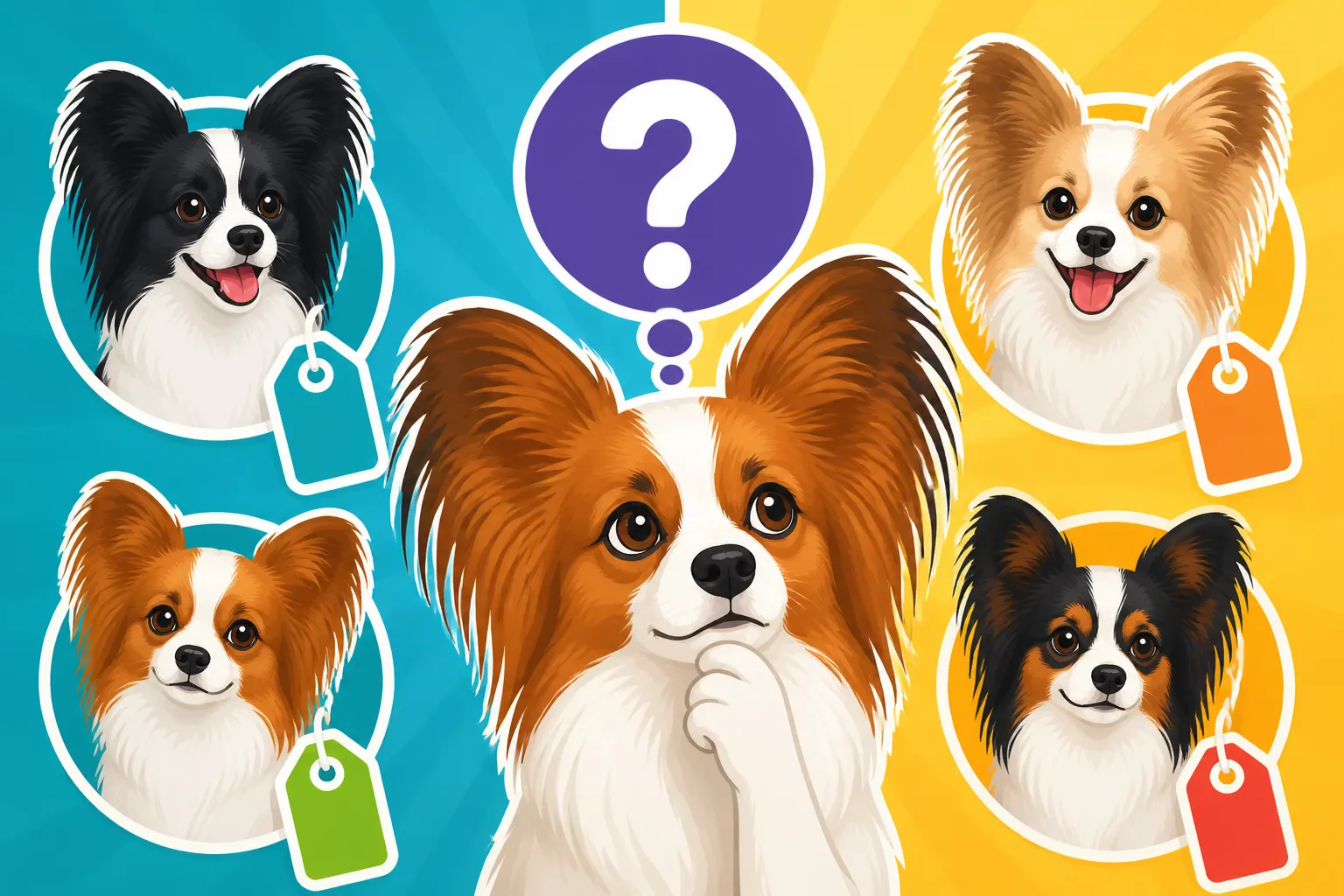
The breed standard for Papillons is quite generous when it comes to color, as long as it's a parti-color, meaning white with patches of any other color. You'll see a beautiful array of combinations: black and white, red and white, sable and white, tri-color (black, white, and tan), lemon and white, and more. What's crucial is that no single color is inherently "better" or more valuable than another in the eyes of the breed standard or a reputable breeder. All standard colors are equally correct.
For instance, a classic black and white Papillon is just as desirable and "correct" as a striking sable and white. The focus is on the clear markings, the distribution of color, and the overall quality of the coat, not the rarity of the specific hue. If you're curious about the range, Which Colors a Papillon Comes In covers it well. The idea that a particular color should demand a higher price simply doesn't align with ethical breeding practices in the Papillon world.
Why Exotic Colors Are a Red Flag
This is where the idea of pricing by color can lead to trouble. While a responsible breeder won't charge more for a standard, beautiful black and white Papillon than a standard red and white one, you might encounter less scrupulous individuals attempting to inflate prices for "rare" or "designer" colors that fall outside the accepted breed standard. These might include solid-colored Papillons (which the standard specifically states are not preferred, requiring a certain amount of white), or even colors like merle or blue, which are not natural to the Papillon breed. Whether a Solid Colored Papillon Is Standard can shed more light on this.
Such "rare" colors are often the result of crossing with other breeds or breeding for novelty without regard for health or temperament. If a breeder is advertising "exclusive" or "one-of-a-kind" Papillons in non-standard colors at exorbitant prices, this should immediately raise a red flag. These breeders are typically prioritizing profit over the health and integrity of the breed, and puppies from such backgrounds are often more prone to genetic health issues and may lack the stable temperament characteristic of well-bred Papillons. You might find yourself paying more upfront for a perceived rarity, only to face significant veterinary bills down the line. It's a classic case of What a Cheap Papillon Puppy Signals, but in reverse – an overpriced puppy might signal a dubious breeder.
Navigating the Puppy Market: What to Prioritize
So, if color isn't the key, what should you focus on when bringing a Papillon puppy into your life? The answer lies in diligence, research, and a healthy dose of skepticism for anything that seems too good to be true or too "unique" to be real.
The Importance of a Reputable Breeder
Your primary mission should be to find a reputable breeder. This means someone who is deeply knowledgeable about the breed, passionate about their dogs, and committed to producing healthy, well-socialized puppies. They will prioritize health clearances, proper puppy care, and finding the right homes for their pups.
When you contact a breeder, ask lots of questions. Inquire about the health tests performed on the parents, their experience, and their breeding philosophy. A good breeder will be transparent and happy to share this information, often providing proof of health certifications. They will also ask you plenty of questions to ensure you're a good fit for one of their puppies. Don't be afraid to visit their facility, meet the parent dogs, and observe the puppies in their environment. This is how you can truly gauge the quality of their program, far more accurately than by simply looking at a puppy's coat color. Resources like Finding a Papillon Breeder Who Tests Eyes and Knees offer invaluable guidance on this process.
Beyond Price: Long-Term Costs and Considerations
Remember, the initial purchase price of a Papillon puppy, regardless of its color, is just the first expense in a long and happy journey. Over the average How Long a Papillon Lives, you'll encounter a myriad of other costs. You'll need quality food, regular veterinary check-ups, vaccinations, parasite prevention, grooming supplies, and toys. If your Papillon develops a health issue, or even just needs routine care like dental cleanings (which are common for the breed), those costs can add up quickly.
This is where planning for the long-term truly matters. Many experienced Papillon owners wisely invest in pet insurance early on, with providers like Healthy Paws, which can help mitigate unexpected veterinary expenses. Whether you choose kibble from Chewy or fresh food from Ollie, consistent, high-quality nutrition is an ongoing expense. While a "rare colored" Papillon might entice you with a higher upfront cost, a Papillon from health-tested parents and a responsible breeder will ultimately be a more secure investment, both emotionally and financially, reducing the likelihood of costly health problems down the line. Prioritize health and temperament, and the beauty of your Papillon's coat, whatever its color, will be a delightful bonus.
Table: What Truly Influences Papillon Puppy Pricing
Here's a quick look at factors that genuinely impact a Papillon puppy's price, and where color typically stands:
| Factor Influencing Papillon Puppy Price | Relevance to Price | Why It Matters |
|---|---|---|
| Parent Health Clearances (e.g., PRA1, Patellar Luxation) | High | Essential for long-term health; reflects breeder's investment in preventative care and genetic screening. |
| Breeder's Reputation & Experience | High | Indicates knowledge, ethical practices, and commitment to the breed. Includes extensive socialization, proper nutrition, and early vet care for puppies. |
| Quality of Pedigree / Show Potential | Medium to High | Puppies from champion lines or those with strong conformation for show/sport may be priced higher. |
| Temperament & Training Foundation | Medium | Well-socialized, confident puppies often reflect a breeder's significant time investment; specific temperaments may suit certain homes. |
| Overall Supply & Demand for the Breed | Medium | General popularity of the breed in a region can influence baseline prices. |
| Geographic Location | Medium | Costs of living, veterinary care, and advertising vary by area, impacting overall pricing. |
| Coat Color | Very Low | Among reputable breeders, all standard colors are equally accepted and priced. "Rare" or non-standard colors can be a warning sign of unethical breeding. |
| Sex of the Puppy | Low | Slight variations may exist, but typically not a primary driver of significant price differences. |
Disclaimer
This article is for general informational purposes only and does not constitute professional advice. Laws, prices and regulations vary by location and change over time. Consult a qualified professional for guidance on your specific situation.